




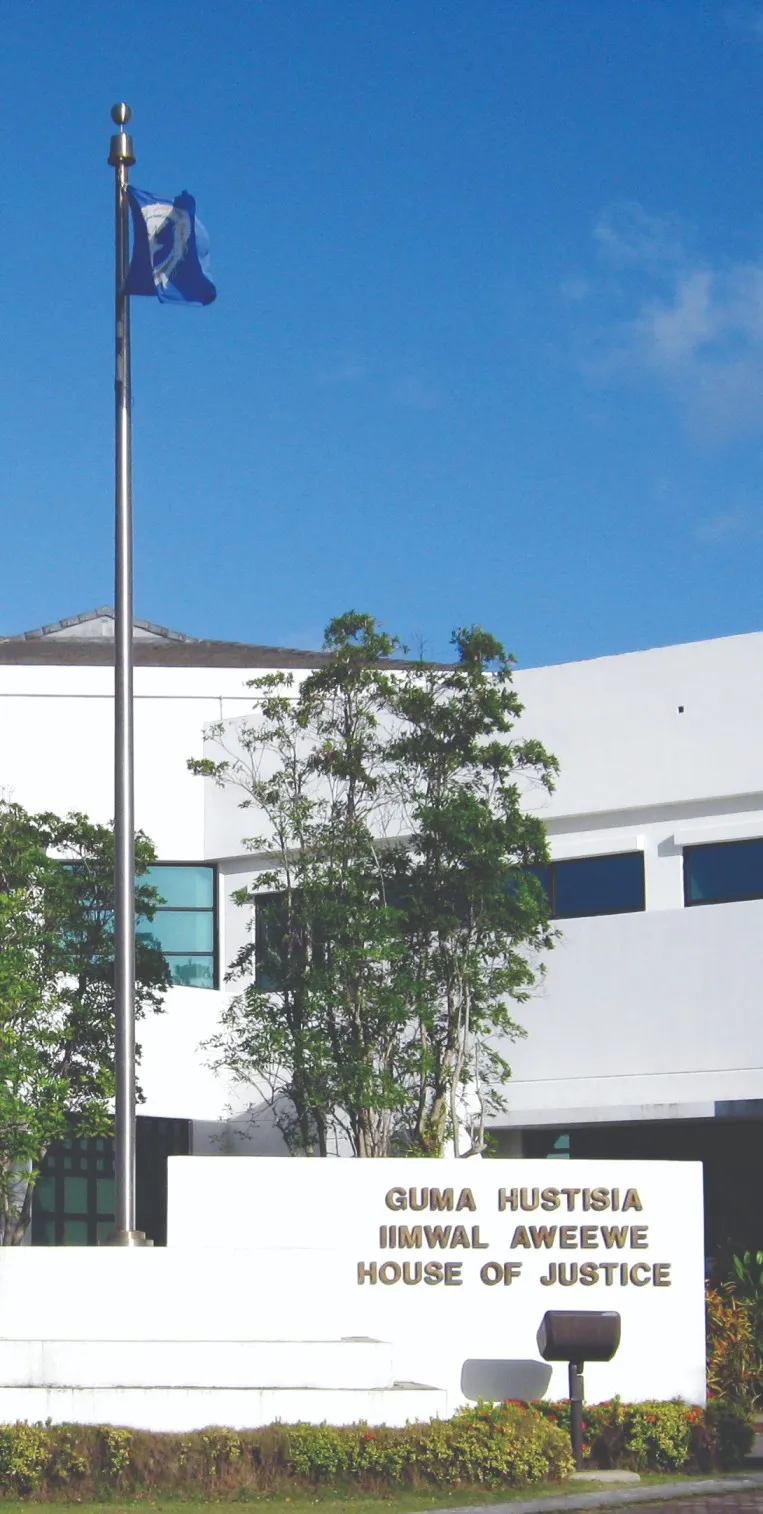



THE local judiciary is asking the Legislature for a $15.24 million budget in fiscal year 2023.
In FY 2022, the judiciary was allotted a $5.9 million budget of which $4.49 million was for personnel costs.
In their joint letter to Speaker Edmund S. Villagomez and Senate President Jude U. Hofschneider last week, Chief Justice Alexandro C. Castro and Presiding Judge Roberto C. Naraja said their FY 2023 budget submission “reflects what the Judiciary truly needs to run effectively.”
They said the judiciary aims to have a new court house on Tinian. The court house there, they said, is nearly 30 years old and is not equipped for social distancing, nor does it have adequate space for additional judicial services.
They said a new court house on Tinian will help alleviate these concerns and will be “a welcome sight” on Tinian and could be utilized by generations to come for judicial and other public services.”
They said once the Covid-19 precautionary measures are rolled back, the judiciary anticipates a rise in demand for judicial services.
In order to meet this demand, the judiciary is also requesting assistance in retaining its current personnel, granting all requested new employees and approving a 10% across-the-board pay raise for employee retention.
With American Rescue Plan Act funding, the chief justice and the presiding judge said, “We have been able to employ 24 employees on Saipan, three employees on Tinian and two employees on Rota. This is an extraordinary achievement in light of the expiration of the Pandemic Unemployment Assistance program.”
Challenges
The judiciary said various challenges encountered in FY 2021 have continued into the current year. “Normalcy has been severely disrupted by the Covid-19 pandemic, affecting staff, their daily operations, ability to deliver services, and day-to-day living. Amid these difficulties, the Judicial Branch has evolved, adapted and explored effective ways to provide access to justice.”
Using ARPA funding, “the court implemented new technology in every courtroom and division, allowing judges to hold virtual hearings and staff to work remotely. They also enhanced surveillance, retrofitted facilities for safety, provided for sanitation of facilities and equipped alternate sites.”
“This pandemic has been disruptive but it has also driven innovation to create efficient practices and expand services,” the judiciary stated.
The judiciary said it established a mental health court docket, bringing together criminal justice agencies and mental health professionals to identify and treat participants with serious mental illness.
The judiciary said participants have been successfully admitted to the program despite initial struggles with setting up the docket from the ground up, and the court continues to research and prepare to open other specialty dockets.
According to the chief justice and the presiding judge, “This new expansion of services and innovation will continue post-pandemic and was made possible through the hard work and dedicated employees within the court system. Over time they have shown adaptability, resilience, and strength. Truly, they are the greatest assets to the Judiciary.”
They said without federal assistance, the judiciary staffing was “anticipated to be downsized, on top of reduced hours for the remaining staff as the courthouses were on the brink of shutdown.”
Instead, the judiciary was able to bring back furloughed employees, “keeping the courthouses open on all three islands, and provide competitive salaries, thereby investing in good and dedicated employees.”

