





HOUSE Speaker Edmund S. Villagomez on Thursday declined to file a notice of appearance as requested by Sen. Karl R. King-Nabors, presiding hearing officer of the Senate Special Committee on the Impeachment Hearing.
In a letter to Senate President Jude U. Hofschneider, Speaker Villagomez said Vice Speaker Blas Jonathan T. Attao, Reps. Celina R. Babauta, Corina L. Magofna, Donald M. Manglona, and Leila Haveia F. Staffler have been preparing as a team to prosecute the impeachment case together and bring this matter, diligently and expeditiously before the Senate.
“I have every confidence that together, these members selected by the House and not the Senate, would be able to bring to light all the facts and evidence in support of the six Articles of Impeachment, so that the Senate could make an informed decision on the merits and, in doing so, the process of the impeachment could be objectively seen to be both fair and reasonable, whichever way the Senate decides,” Villagomez said.
He offered his thanks and appreciation to Hofschneider and the Senate on the prompt and diligent efforts that have been taken in response to the House’s adoption and transmittal to the Senate of House Resolution 22-14 relative to impeaching Gov. Ralph DLG Torres.
“I have the utmost respect for you, as the presiding officer of the Senate, and it is my hope that the Senate has a similar respect for the House, as a coordinate body,” he said.
Citing Nixon v. United States, Villagomez said the Legislature has a duty to conduct the impeachment by rules that are not so unreasonable that “judicial interference might well be appropriate,” expressing some concerns that he believes are of constitutional significance.
Villagomez believes that the Senate impeachment rules violate the NMI Constitution in that they deny the House and the Legislative Bureau their constitutional right to perform their respective duties in a fair and reasonable manner.
In addition, he said the Senate rules were also promulgated in clear violation of the Open Government Act to the extent that adequate notice and opportunity to comment on the rules prior to their adoption was not provided to the public or to members of the Senate.
Moreover, he noted that the Constitution does not impart the right to prosecute the impeachment to any entity other than the House.
“It also clearly does not countenance any interference with the House’s ability to present its case, nor the entire Senate’s ability to hear it,” he added.
Article II, Section 8 of the CNMI Constitution states:
“The legislature may impeach those executive and judicial officers of the Commonwealth subject to impeachment under this Constitution. The house of representatives may initiate impeachment proceedings by the affirmative vote of two-thirds of its members and the senate may convict after hearing by the affirmative vote of two-thirds of its members.”
Villagomez said Rule 7 of the current Senate impeachment rules “violates this principle of respect by prescribing who shall be the House impeachment prosecutor, limiting it to just one person, with only the House counsel and staff at his or her disposal.”
The current Senate Impeachment rules do not place such limitations on the impeached official, the speaker said.
Villagomez noted that in the impeachment proceedings of former President Donald J. Trump, even the Republican-led Senate allowed the Democrat-led House to appoint its own impeachment managers by resolution.
He likewise noted that in the impeachment proceedings of former Gov. Benigno Fitial in 2013, the Senate committee responsible for drafting the rules, led by then-Senator Ralph DLG Torres, allowed the House managers — defined as “the members elected or as designated by the Speaker of the House of Representatives to prosecute the Articles of Impeachment” — or counsel acting on their behalf to be the House impeachment prosecutor.
At that time, Hofschneider was also the Senate president.
Fitial resigned before the Senate could hold an impeachment trial.
Villagomez said Rule 7 of the current Senate impeachment rules “will have a chilling and deterring effect on any future Speaker from exercising oversight when the executive or judicial branches engage in misconduct and it will significantly dissuade any Speaker of the House and indeed, any House super majority in any future potential impeachment from exercising its sole constitutional authority to ‘initiate impeachment proceedings.’”
He also believes that retaining attorney Joe McDoulett as special counsel is in violation of Article II, Section 17 of the NMI Constitution, which provides that “the bureau shall provide all required services to the legislature in connection with the duties and responsibilities during sessions and committee meetings.”
“By this provision, it is clear that the Legislative Bureau alone, through their counsels, can provide official legal assistance to the NMI Legislature. When Mr. McDoulett sat in the floor leader’s chair during session and provided legal assistance during a committee meeting, this was unconstitutional,” Villagomez said.
Moreover, because the current Senate impeachment rules give the right to dispose of the Articles of Impeachment by allowing a simple committee majority prior to the whole Senate’s review, all nine Senate members would be unable to exercise their right to consider all Articles of Impeachment and all evidence that the House would present for themselves.
“Accordingly, in addition to the concerns with respect to the House, the rules also limit the ability of the senators to see and hear all the evidence relating to each of the Articles, too,” Villagomez said.
He added that these rules also violate the NMI Open Government Act in that it was not present on either the Senate agenda or the official Senate session notice 72 hours prior to the session that adopted them.
During the Senate joint committee meeting on Feb. 25, 2022, these rules were adopted, prohibiting oral testimony by the public unless they provided 24-hour notice, the speaker said.
“This is unreasonable when the rules are not even on the agenda until after the agenda is amended after the public comment portion of the session,” Villagomez said.
“I bring these issues to your attention so that we can address these concerns and ensure that the Senate conducts a fair and just hearing and that the outcome may be free from concerns regarding the legality of the rules.
“As we embark on this legislative process, let us set aside partisan politics and be motivated and guided by one thing: the best interest of the Commonwealth. As presiding officers, we know that justice will be denied to the House, to the Senate, to the Governor, and the people of the Commonwealth when the rules restrict the performance of our constitutional duties. Regardless of whether the Senate decides to acquit the Governor or convict him, neither outcome will be free from the taint of the violations of the CNMI Constitution and the CNMI Open Government Act that will result from the enforcement of the Senate’s current rules and procedures.”
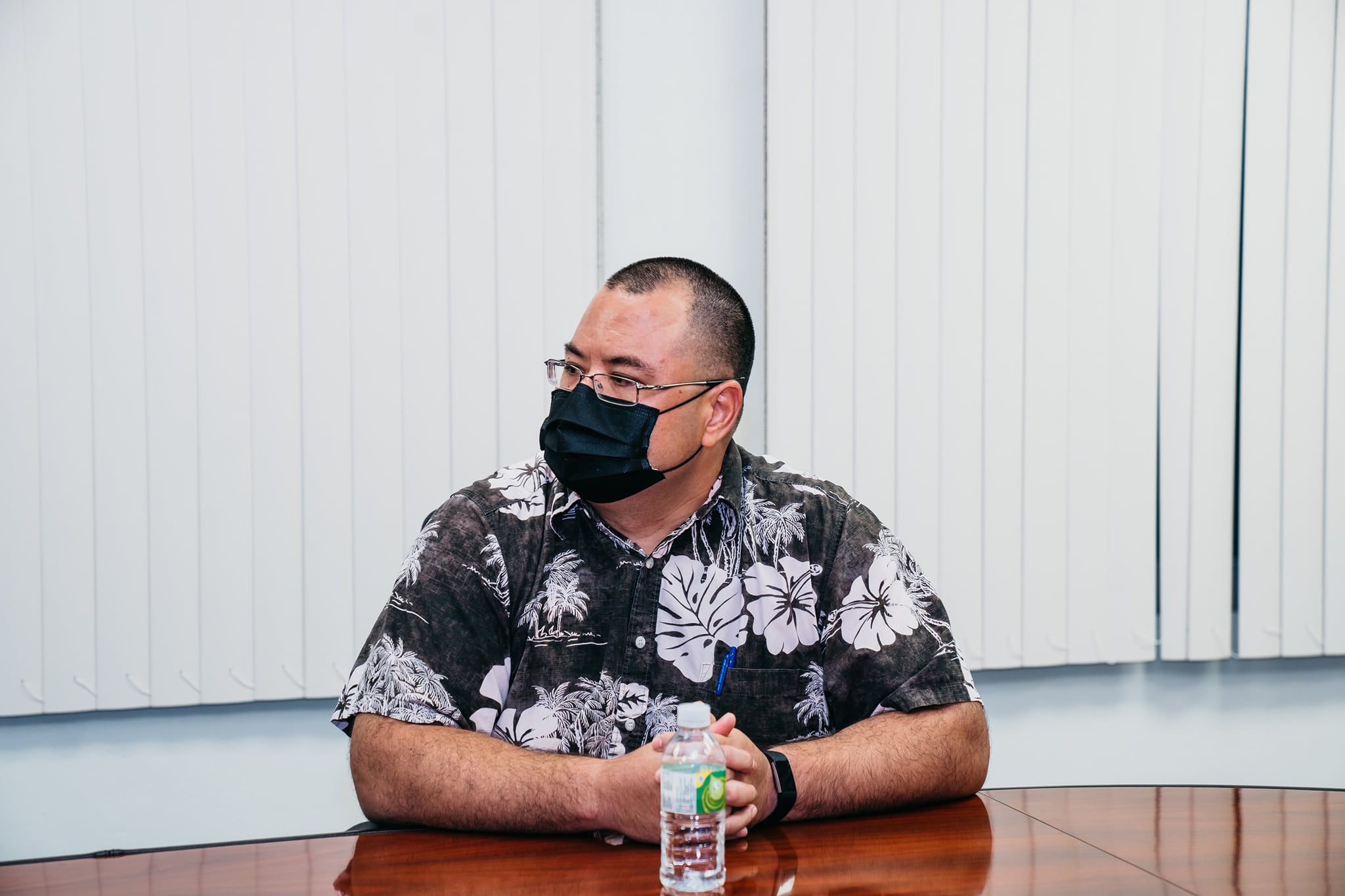
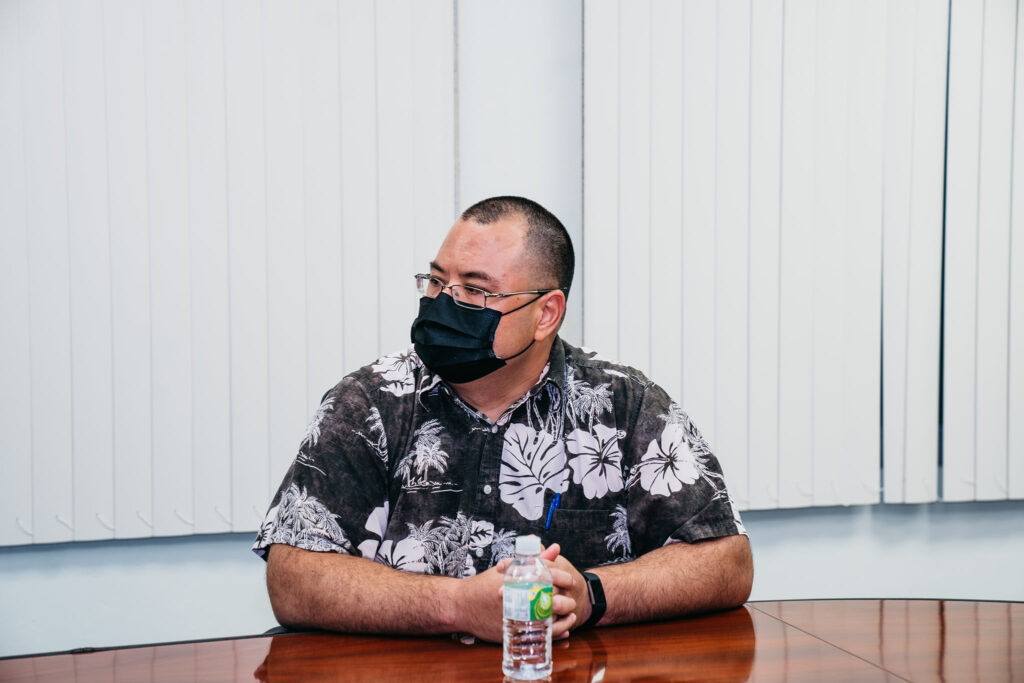
Speaker Edmund S. Villagomez attends an official event in the governor’s conference room in this file photo.
