


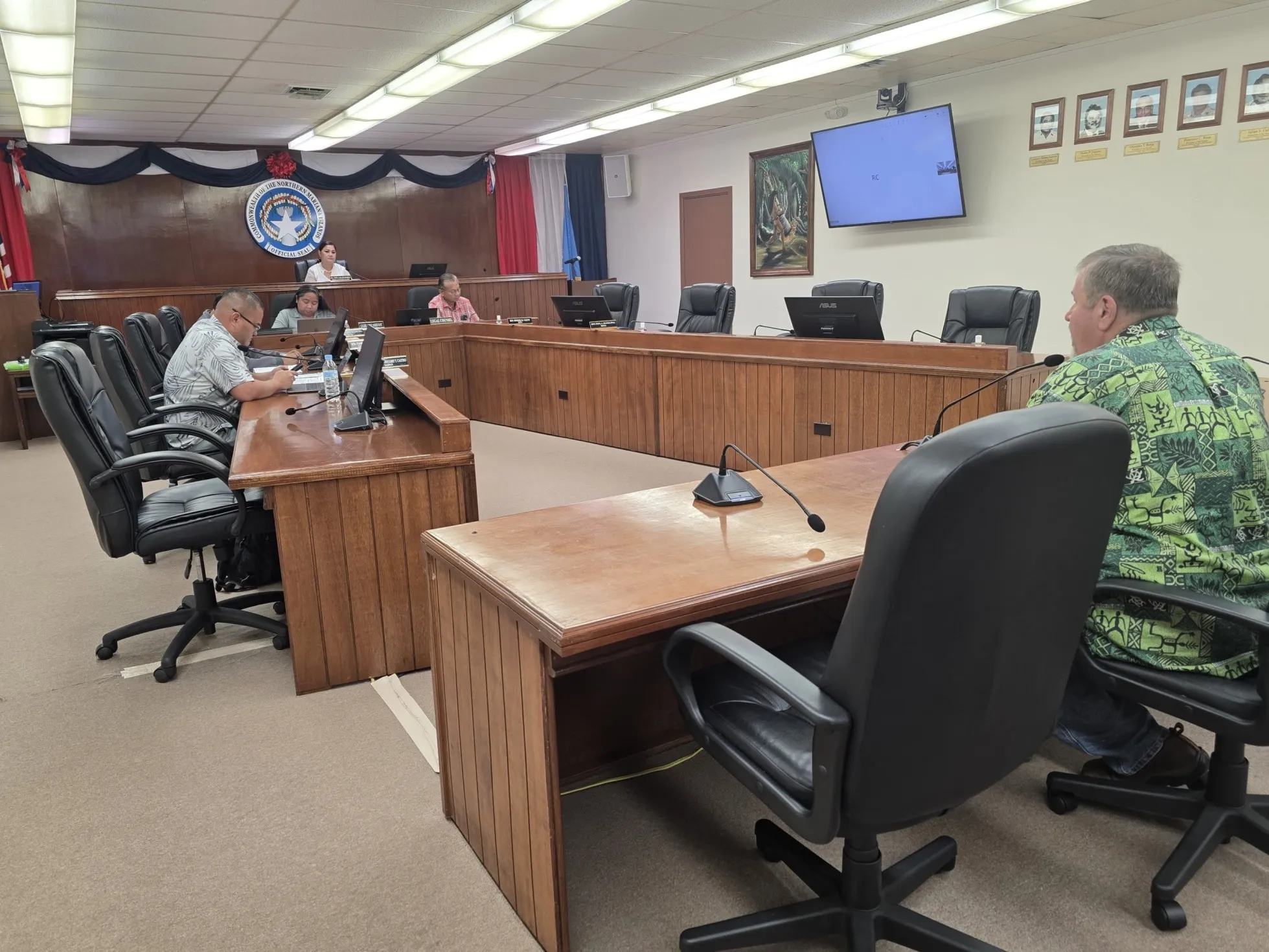


THE Public School System and the Commonwealth Healthcare Corp. on Tuesday hosted a virtual meeting to educate parents about Covid-19 vaccines for eligible children.
CHCC Chair of Pediatrics Dr. Sadie LaPonsie shared information about the vaccine and answered questions from parents.
“Vaccines work as partners with our immune system,” she said. “They…help us fight infection. They do this by containing the harmless parts of a virus or bacteria that our immune system learns to recognize. In that way when a real infection comes along later, our body has already read the ‘instruction manual’ on how to respond,” she said.
According to the Centers for Disease Control and Prevention, the Pfizer vaccine against Covid-19 is a messenger RNA or mRNA vaccine which teaches our cells how to make a protein that will trigger an immune response inside our bodies.
The Pfizer vaccine is currently the only one authorized for children under 18 years old, Dr. LaPonsie said.
“The vaccines are safe,” she added. “Although widespread use of mRNA vaccines is new, the technology to make the vaccine has been studied for decades before the pandemic. Scientists have also spent decades studying coronaviruses, like the one that causes Covid-19.”
Dr. LaPonsie said nearly half of all children 12 to 17 years old in the United States have been fully vaccinated or more than 11 million children who have had both of their doses of the Covid-19 vaccine.
In the CNMI, as of Nov. 8, 4,609 children 12 to 17 years old had received at least one dose of the vaccine.
Dr. LaPonsie said healthcare providers administer lower doses of vaccine for children — 10 micrograms only.
“The Pfizer vaccine’s safety was studied on more than 3,000 children, aged five to 11 years old, with no serious side effects detected,” she added. “Just like adults, children receiving the Pfizer vaccine need two doses, three weeks apart,” said Dr. LaPonsie who joined CHCC in the summer of 2020.
She also addressed the concern that the Covid-19 vaccine may cause myocarditis, an inflammation of heart muscles.
She said the risk appears to be one in 10,000 in the male group 14 to 30 years old.
While she takes the illness seriously and said parents should not take the possibility lightly, she noted that cases of myocarditis related to Covid-19 vaccine are rare.
“Most patients with myocarditis related to Covid-19 vaccine who received care responded well to medicine, and the patients can usually return to their daily normal activities after the symptoms improve,” she said.
Dr. LaPonsie said Covid-19 itself can cause myocarditis “five to 30 times more than the vaccine, and this is in addition to the many other risks…from the virus infection.”
She added, “There have been no deaths reported from myocarditis related to the Covid-19 vaccine. But there have been hundreds of deaths of children under 8 years old in the United States from Covid infection.”
She said there are no reports regarding vaccine-related myocarditis among children 5 to 11 years old, but monitoring will continue.
Acting Education Commissioner Eric Magofna expressed hope that the presentation provided parents more information about the vaccine.
“We at PSS understand the importance of knowledge and information,” he said. “Having our parents and our stakeholders educated on the importance of vaccination is critical in ensuring that all our students and all our parents are informed when it comes to making the decision of whether or not to vaccinate their children. Vaccination is the best protection that we have [against Covid-19],” Magofna said.
In a separate interview, Parents Advisory Council president Rob Harrell encouraged parents to get their children vaccinated.
He said vaccinating children 5 to 11 years old will help PSS reach the 80% rate of herd immunity, especially in elementary and middle schools.
“I think what we have learned in the past two weeks is that vaccination helps stop the spread and in some instances makes Covid-19 a minor symptom,” he said.
“We also learned recently that through the antigen testing at PSS the health community was able to identify, quantify and isolate individuals who tested positive.”
Harrell said the Parents Advisory Council supports CHCC’s proposal to add Covid-19 vaccination as a requirement for a student’s health clearance.

