






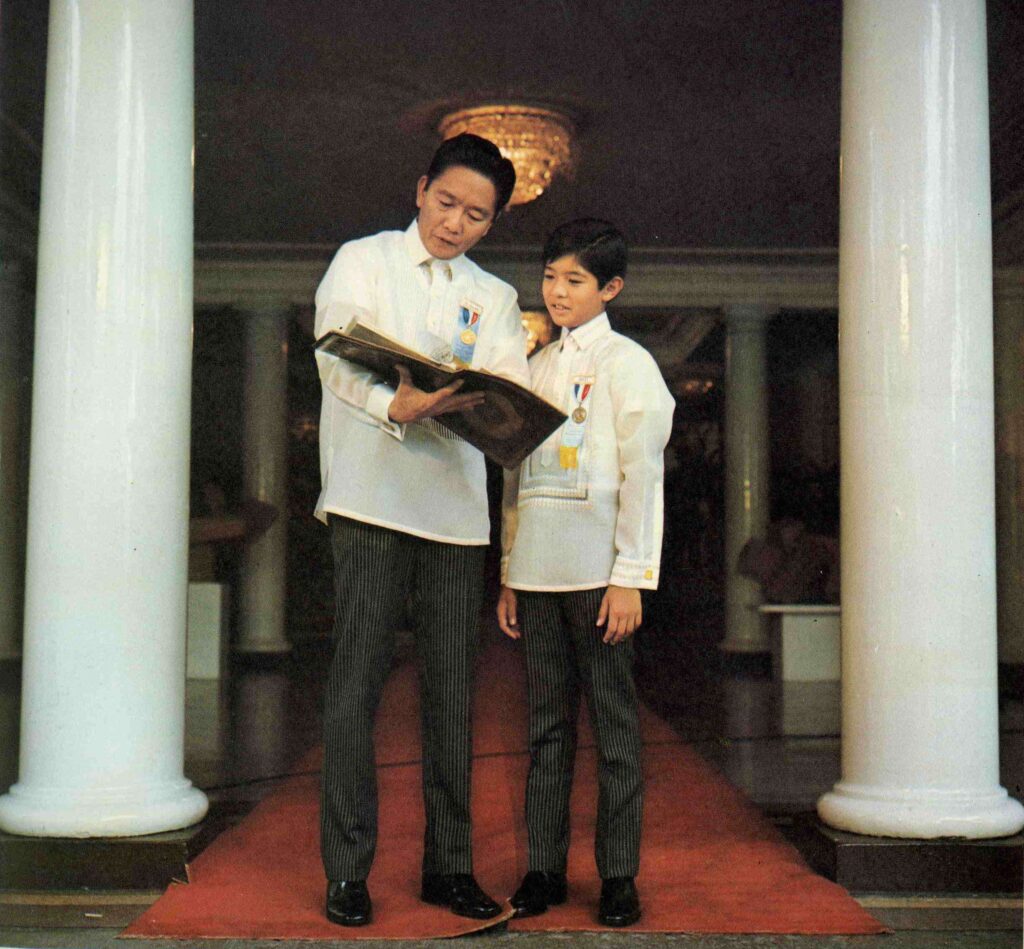
THE acknowledged frontrunner in the Philippine presidential election set for May 9 is former Sen. Ferdinand “Bongbong” Romualdez Marcos Jr. He is the 64-year-old son of the late former strongman Ferdinand Edralin Marcos Sr. who is considered by many historians as the worst president in Philippine history based on his record in office. Bongbong, who is not a fool, would rather not talk about the details of his father’s presidency. He has also, so far, refused to participate in debates with the other leading candidates. He believes he is way ahead — reputable surveys say so — so he is now basically running down the clock.
Bongbong, or BBM, spouts the usual election-year populist boiler plate: he is for reducing the electric rate, he is for job creation, he is for small businesses, and he is for “jumpstarting” the economy, etc.
But investors and business analysts who participated in a recent Bloomberg poll believe that the Philippine economy would “continue to underperform” if BBM is elected president. BBM’s better informed supporters, for their part, are telling everyone that BBM is not his father.
Let’s hope so. There should be no going back to Marcos Sr.’s failed policies. And I’m not talking about the abuse of power, the shameless cronyism, the world-record-breaking corruption, the illegal detentions, the tortures and the summary killings, etc.
Marcos Sr. was supposed to be a great president who knew exactly what to do, and how to do it well. As even his critics would readily admit, he was a highly intelligent, well educated leader whose top advisers were other highly educated technocrats and experts.
One of his admirers was Gen. Carlos P. Romulo who served as aide to Gen. Douglas MacArthur during World War II, and was the Philippine delegate to the U.S Congress before the P.I. became independent. Romulo was also a former president of the United Nations General Assembly and the U.N. Security Council. In 1942, he won the Pulitzer Prize as a journalist. He served in the cabinet of eight Philippine presidents. Marcos Sr., he said, “was, without question, a brilliant man. He was, to my certain knowledge, the best-read of all our Presidents…. There were many of us who found his intelligence, his leadership qualities, his grasp of history and his apparent sense of purpose enormously attractive.”
Jack Valenti, the special advisor of President Lyndon Baines Johnson, reported to his boss that Marcos Sr. was a “most magnetic” speaker who was “enormously intelligent,” and “tough.” Valenti met with Marcos Sr. before his inauguration as president in December 1965. “We had lunch with him, dinner with him, spent an enormous time with him,” Valenti recalled. On the day before his inauguration, Marcos Sr. told Valenti, “Let’s play golf tomorrow.” “Mr. President,” Valenti replied, “you’re being inaugurated tomorrow.” “I know,” Marcos Sr. said, “so we’ll tee off at six in the morning.”
In Nov. 1969, Marcos Sr. became the first Philippine president to be re-elected since Manuel L. Quezon in 1941. In Sept. 1972, Marcos Sr. declared martial law. He shut down the Philippine Congress, muzzled the media, arrested his political opponents and ruled by decree until a military-backed popular uprising ousted him in Feb. 1986.
He had justified his seizure of power by pledging the creation of a “New Society.” He vowed to fight corruption. No more media misinformation and sensationalism, he said. He would end the dominance of the “elite” and the “oligarchs.” He announced a nationwide crackdown on criminality and criminals, including and especially drug pushers. He promised a government of selfless intellectuals, technocrats and other experts who would create a better life and a better economy for the common people.
And what was the result of his over 13-year New Society rule of intelligent, highly educated experts?
Corruption remained widespread. A new group of “oligarchs” emerged, all of whom were friends and/or relatives of the Marcoses. The major media outlets became conduits of Marcosian propaganda. Criminals and drug peddling flourished. The Maoist New People’s Army became stronger and deadlier. And by the 1980s, the era of booming Asian “tiger” economies, the Philippine economy was in a coma.
“In both rural and urban areas, the incomes of Filipino wage laborers declined substantially,” wrote University of Massachusetts, Armhest economics professor James K. Boyce in his data-filled book on the Marcos-era economy. Agricultural wages fell by roughly one-third, the professor said, while urban wages declined even more dramatically. Philippine “Central Bank data reveal that skilled and unskilled urban workers experienced a remarkable decline in real wages during the 1970s. In 1980, their real wages were less than half the 1962 level.”
Boyce noted that the Central Bank reports were discontinued by President Marcos in 1980 most likely because of the “embarrassment the data caused” his government. In metropolitan Manila, wage laborers “experienced a collapse in real wages in the 1970s and 1980s on a magnitude with few precedents in modern economic history.” Unemployment data, moreover, showed “substantial unemployment throughout the period.” About 31% of the potential labor force was unemployed in the late 1970s, Boyce said.
Under the leadership of Marcos Sr., who was pro-poor and anti-oligarchy, “the richest fifth of Philippine families consistently received more than half of total income, while the poorest fifth received as little as three per cent. This income distribution ranks among the most inequitable in the world.” Worse, income inequality was “exacerbated by regressive government tax policy…. [R]evenue collections fall more heavily on the poor than the rich…” Not surprisingly, “poverty incidence rose from 36 per cent in 1971 to 52 per cent in 1985.” In addition, “data on nutrition and infant mortality confirm that millions of Filipinos lack access to basic human needs.”
Boyce said a 1985 survey of preschool children found that “22 per cent were moderately to severely underweight (less than 75% of the weight-for-age standard); 14 per cent were wasted (less than 85 per cent of the weight-for-age standard); and 25 per cent were stunted (less than 90 per cent of the height-for-age standard).”
On top of everything else, the Marcos regime left behind a crushing foreign debt burden: $26 billion in 1986 (worth over $67 billion today).
So one more Marcos for the road?
Send feedback to [email protected]
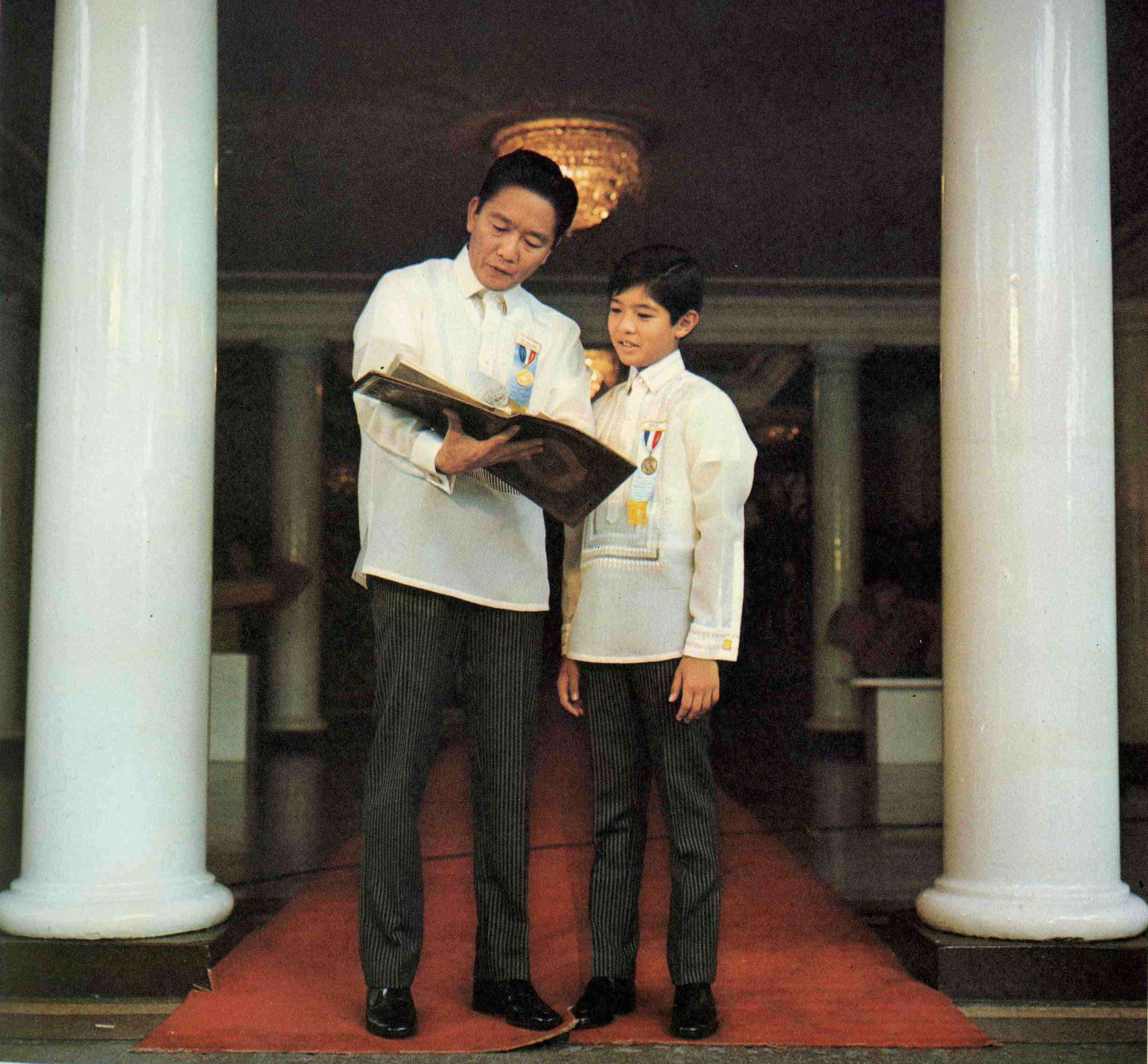
FM & BBM
