





WE shouldn’t be too hard on politicians running for office. Regardless of their political beliefs, they have to say what voters want to hear, and they have to make the same old promises to voters who no longer remember or are unaware of the previous campaign promises made in previous election years.
Not surprisingly, to someone who has witnessed, reported or wrote about CNMI gubernatorial elections since 1993, these quadrennial political contests are starting to look — and sound — the same.
The incumbent, whoever he is, will say that things are not as bad as they seem, and are even better than they should be, and will definitely improve once he’s re-elected. His opponents, whoever they are, will say that these are the worst of times, if not already beyond the pale, and what we need, desperately, is change for a better tomorrow.
“Campaign in poetry and govern in prose,” a New York politician once said. That’s another way of saying: make grandiose promises you will try to fulfill, and, once elected, explain why you can’t, and why it’s not your fault.
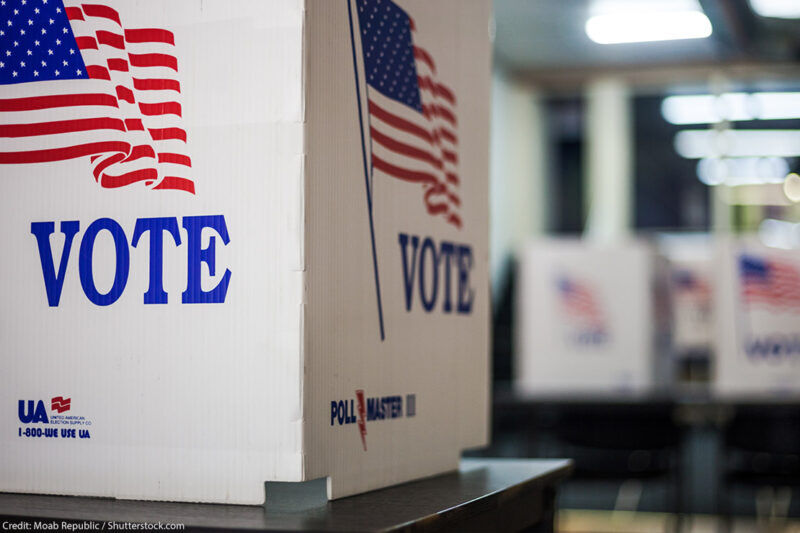
As for this year’s gubernatorial debate, it seems to be more theatrical than the previous ones, but as Scientific American pointed out in 2020 regarding the Biden-Trump verbal-tussle, debates “have shockingly little effect on election outcomes.” Why? Says a political scientist, “People aren’t really watching debates because they’re like, ‘I’m gonna take this time and really compare these…candidates on their merits.’ Most people watching have already chosen their candidate…and even if that candidate does not perform well, they already have a decision as to how they’re going to vote.”
You want to know who “won” the debate? Easy. Ask the supporters of each candidate.
So why watch debates then? What’s the point? Perhaps it’s because many of us are partial to melodrama, including the political kind. And there’s always a chance that one of the candidates will say or do something s/he will regret. Which many of us find perversely entertaining.
As in previous campaigns and debates, moreover, many of this year’s candidates want us to believe that “so much is at stake” in this year’s election, and that we are “at a crossroads.”
Not really.
What’s actually at stake and are “at a crossroads” are the candidates’ political careers as well as the job and livelihood opportunities of many of their staunchest supporters — and the sanity of some of their true believers.
“Same as it ever was,” as David Byrne of the Talking Heads would put it.
Right now, what truly matters the most to the CNMI is economic recovery through the revival of the tourism industry and the entry of one or two major investors so that the Commonwealth government can continue delivering and paying its so many obligations to the local community in terms of government payroll, pension benefits, healthcare, education, utilities, public safety, the justice system, public works, disaster/emergency response, etc., etc.
But right now, economic recovery depends on so many things that are way beyond a CNMI politician’s control: Covid-19 restrictions, supply chain issues, the war in Ukraine, the festering dispute between the U.S. and China, the global economic uncertainty compounded by inflation and an energy crisis, etc. etc.
Whoever wins in November will face exactly the same set of challenges that the CNMI has now, and with exactly the same set of available “tools” — not much to begin with. The CNMI will remain a welfare state, and its elected officials will always end up spending more than what the government can collect because if they don’t, they won’t win another election.
Some voters may say, at least we live in a democracy and we can always “throw the rascals out” at the next election. True and hooray for that. However, as economist and historian Robert Higgs has noted, “Here in the United States we have been flinging rascals hither and yon for more than two centuries. But what do we have to show for it?”
Send feedback to [email protected]

