


WITH an entire decade of experience under its hulls, 500 Sails is set to continue sailing into new horizons as a nonprofit organization.
Incorporated in 2014, 500 Sails has since set up a boatyard facility in Lower Base to locally fabricate sailing canoes, among other notable accomplishments. In Susupe, it has the Guma Sakman—literally “canoe house” in Chamorro—where their completed canoes are stored in between programmatic activities. On top of that are many community activities that build on the group’s original vision to revive the seafaring traditions of the islands.
To celebrate its 10-year milestone, 500 Sails hosts a celebratory gala on November 15, tonight, at the Crowne Plaza Resort Saipan.
According to the organization’s CEO, Milton “Junior” Coleman, “big dreams” moving forward for the organization include building the sailing capacity of island residents, voyages well beyond the Saipan Lagoon, and creating around 20 new canoes—all in support of 500 Sails’ strategic mission to “revive, promote, and preserve the maritime cultural traditions of the Marianas Islands through community engagement in canoe culture values and activities.”
In a November 13 interview, Coleman told Marianas Variety that 500 Sails is connecting with organizations in the CNMI and beyond in order to encourage more island residents to sail these waters.
For example, the Northern Marianas College announced on November 8 that it was offering the Basic Traditional Seamanship Lalayak Certificate Program starting November 23.
The 10-week course teaches participants to sail Chamorro canoes and offers “both historical insights and hands-on skills that have guided seafarers for generations,” a news release states.
500 Sails is organizing programs in order to create more large canoes that can be used for voyages to Pagan or Taiwan, Coleman said. As part of the development of these canoes, capacity building would go hand in hand with canoe building.
“That would be the ultimate goal—to continue to build skilled sailors to get the skills and learn how to operate the vessels so when the longer voyages come around we can see from a larger pool of people who may be interested in doing different legs,” he said. “We have big goals to sail to Taiwan and Japan, really reconnecting with the ancestral lands.”
Coleman adds that in the near future, perhaps this coming year, 500 Sails will be testing out a double-hull canoe configuration by lashing together their leklek—or 26-foot-long canoes. The organization has four lekleks, and the results of the experiments will guide them on how to design and build large double-hulled canoes. These double-hulled vessels could be in excess of 40 feet in length and would be used for interisland transportation or cargo ferrying.
Additionally, 500 Sails hopes to create enough leklek-sized canoes to support the hotel industry; plans may include giving tourists rides around the Saipan Lagoon.
As the organization turns 10, 500 Sails co-founder Emma Perez is feeling “happy, optimistic, and grateful.”
She’s looking most forward to “well-paying culturally based jobs on the water for sailors and captains on traditional sailing canoes [that offer] rides for visitors, transportation, and cargo between our Mariana Islands.”
Of the various programs 500 Sails has operated in the past decade, the three she’s most proud of are the Gamsun Project, which teaches teens to swim in order to obtain lifeguard certification courses; the Sirena Project, an all-female swim class held weekly at the Guma Sakman; and Lalayak, the organization’s in-house sailing course.
Coleman says that learning to sail is character development, underscoring the value of the organization’s work.
“I’ve seen the value of gaining these kinds of skills to help you in other aspects of your life,” he said. “It will help you in every part of your life. …You have better focus and [will] be more appreciative of the environment and nature. And also, on a canoe, the people on board have to operate like a family. Everybody has to take care of each other, help each other out. We can use those same skills to nurture our children and strengthen our families so our voyage in life will be successful. It will make them a better person and help them be proud of our Chamorro and Carolinian heritage and just elevate all of these islands to the level that our ancestors were, where they lived in harmony with nature and they survived for a very long time because they had deep respect for this place.”
Congratulations on 10 years of impacting the community, 500 Sails!
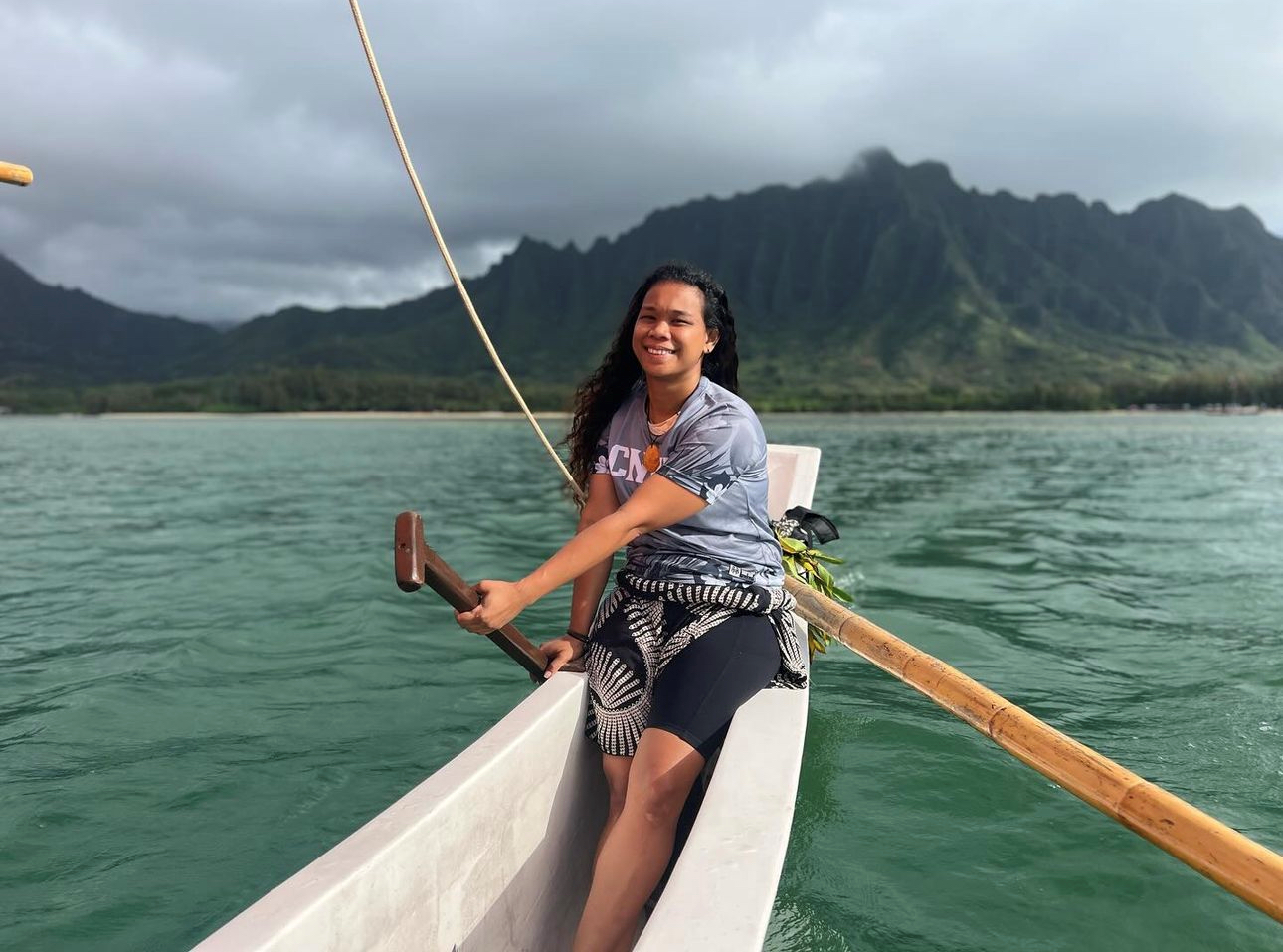
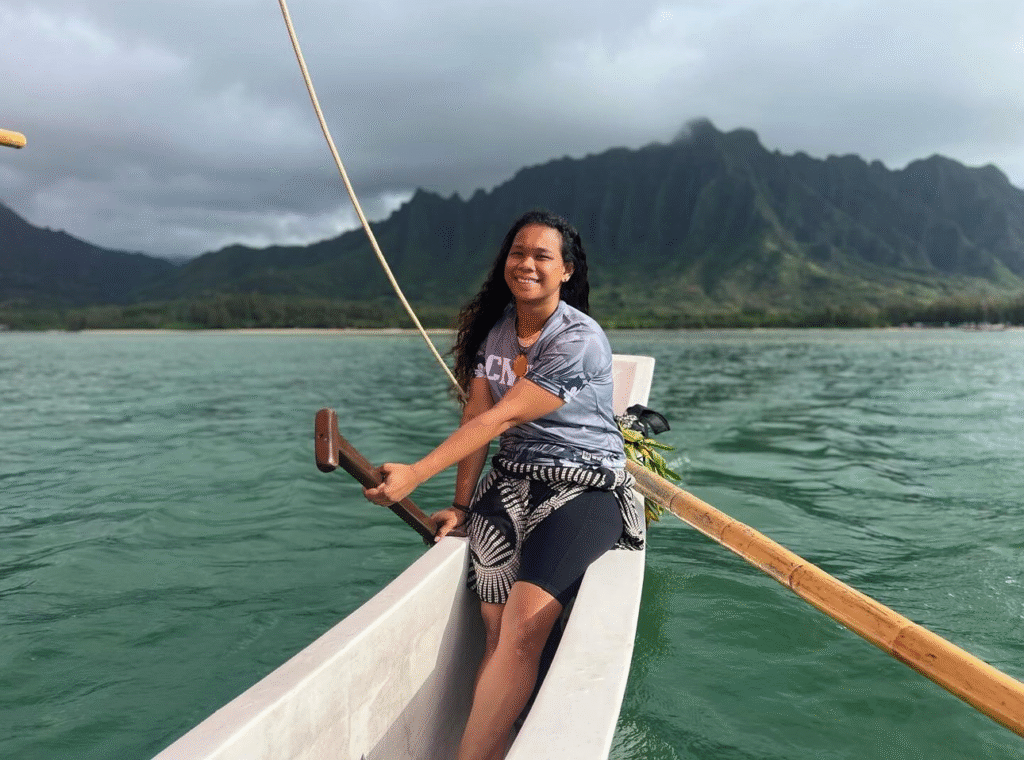
April Repeki, a longtime 500 Sails volunteer, steers the canoe Aunty Oba in Hawaii during the Festival of Pacific Arts and Culture.
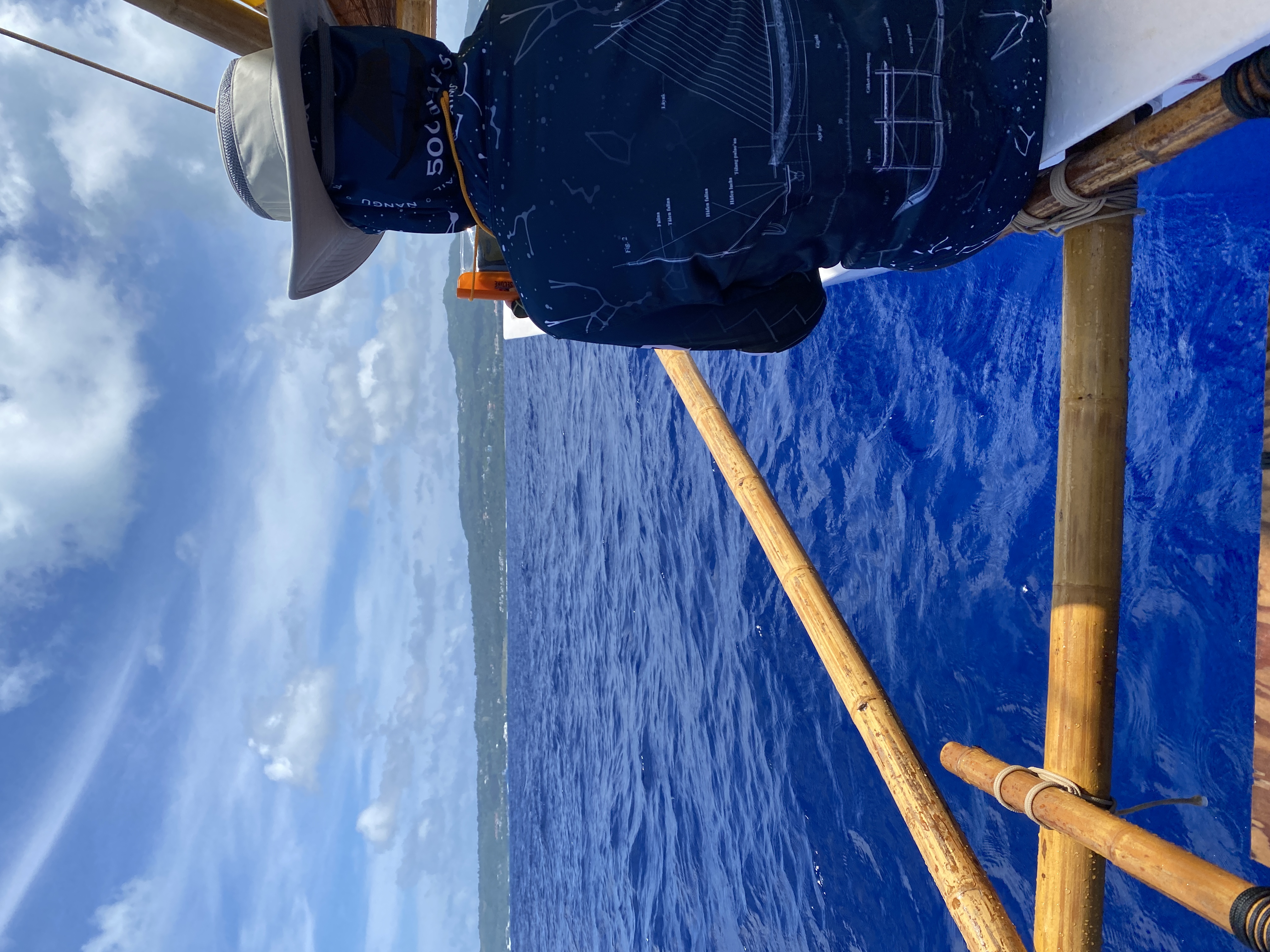
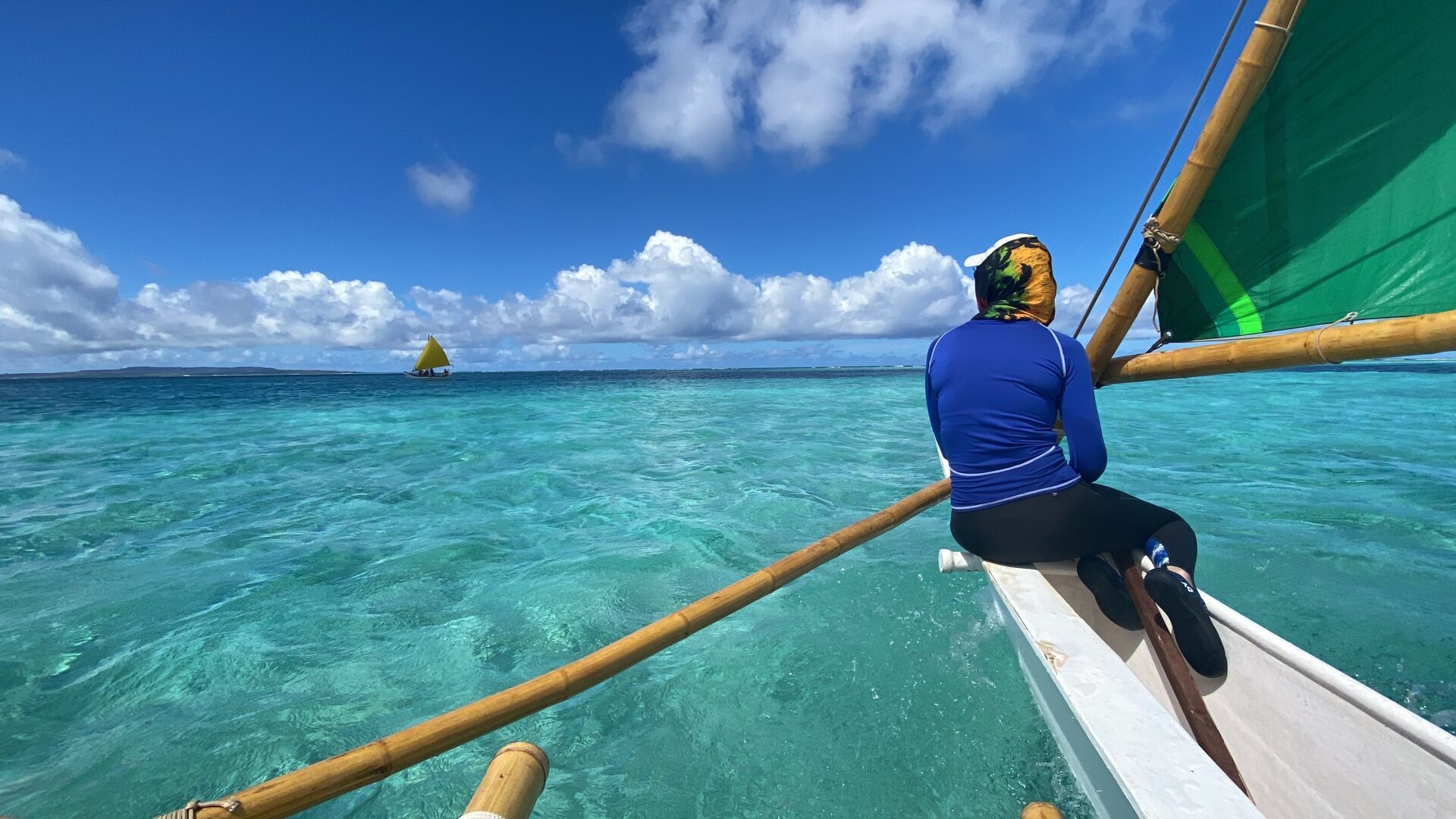
Ellie Roark sits on the gunwale of canoe Aunty Oba while sailing just outside the reef of the Saipan Lagoon.
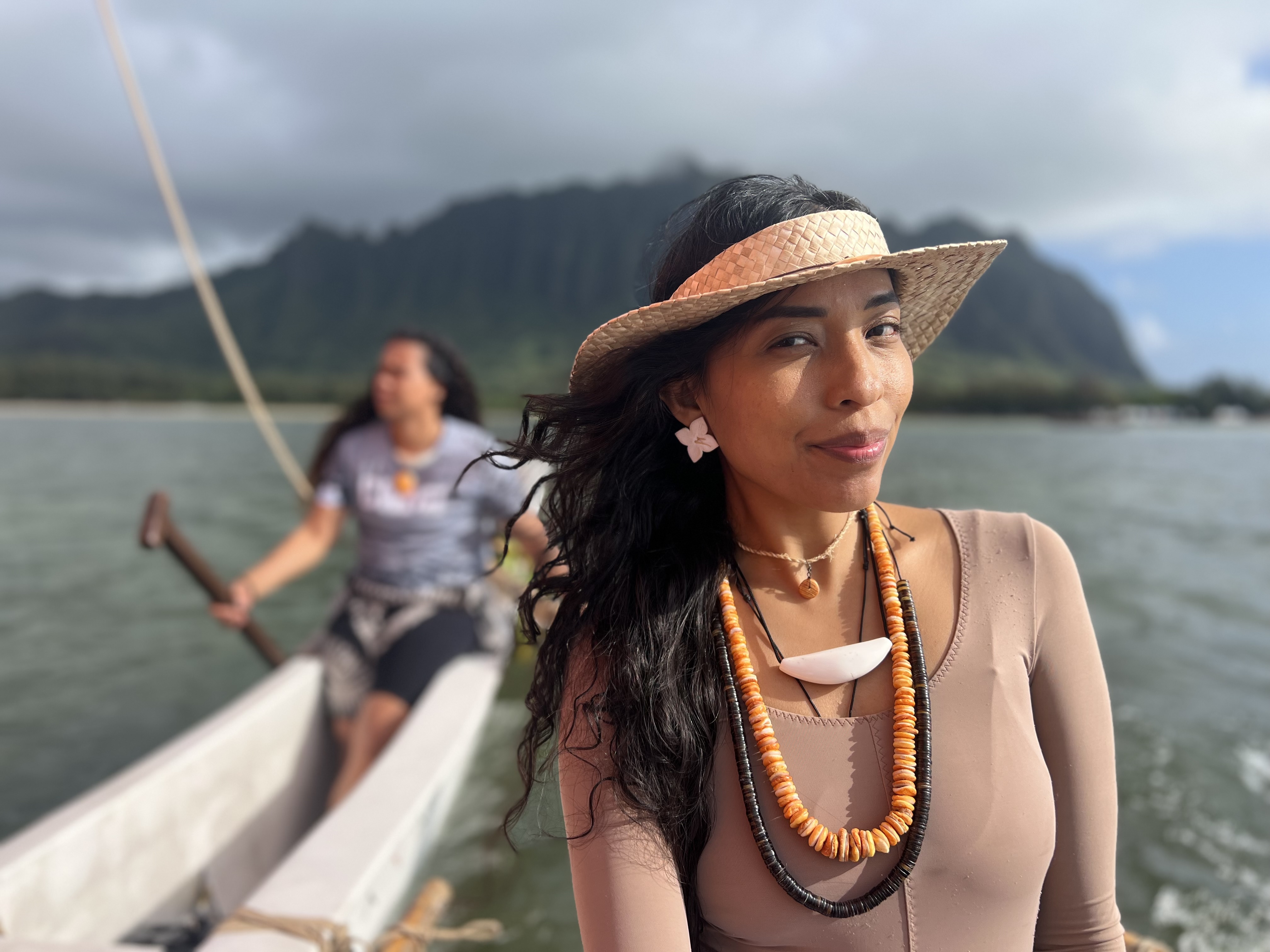
Eva Cruz, foreground, and April Repeki sail together during the festivities of the 13th Festival of Pacific Arts and Cultures.
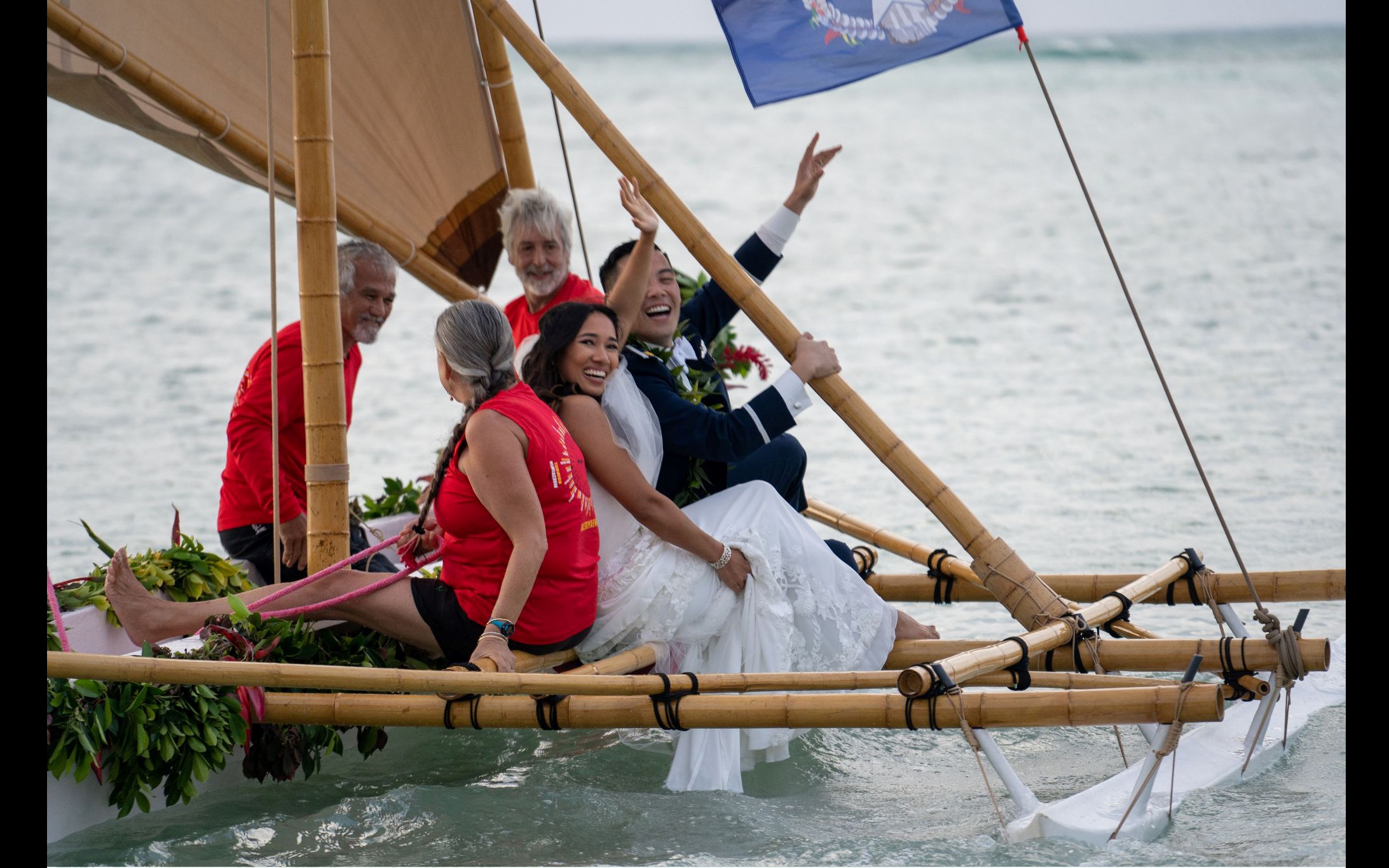
500 Sails has completed many activities as an organization during the past decade, to include being part of a beachside wedding ceremony
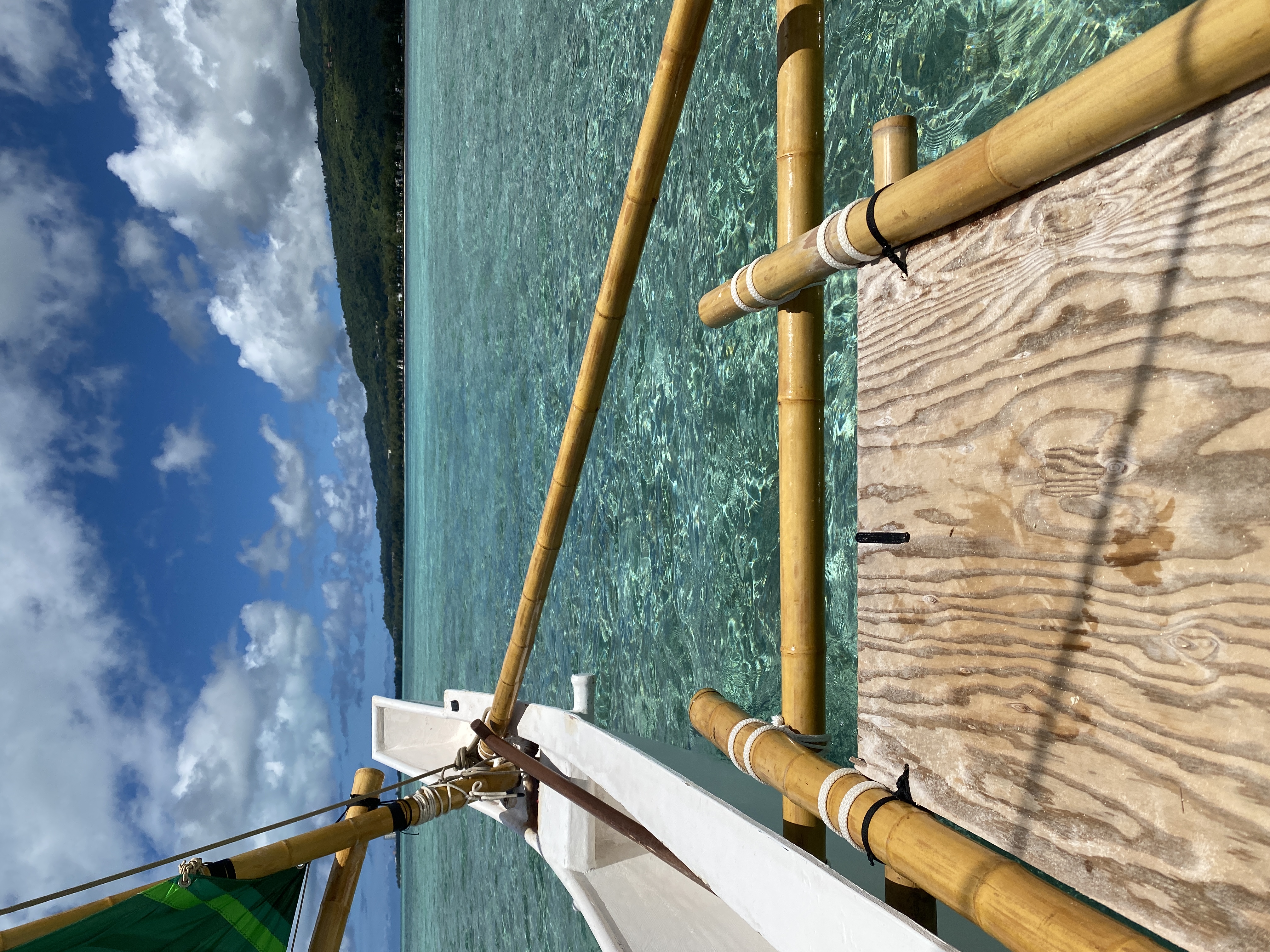
This photo demonstrates the beauty of the Saipan Lagoon as seen from the deck of Neni.
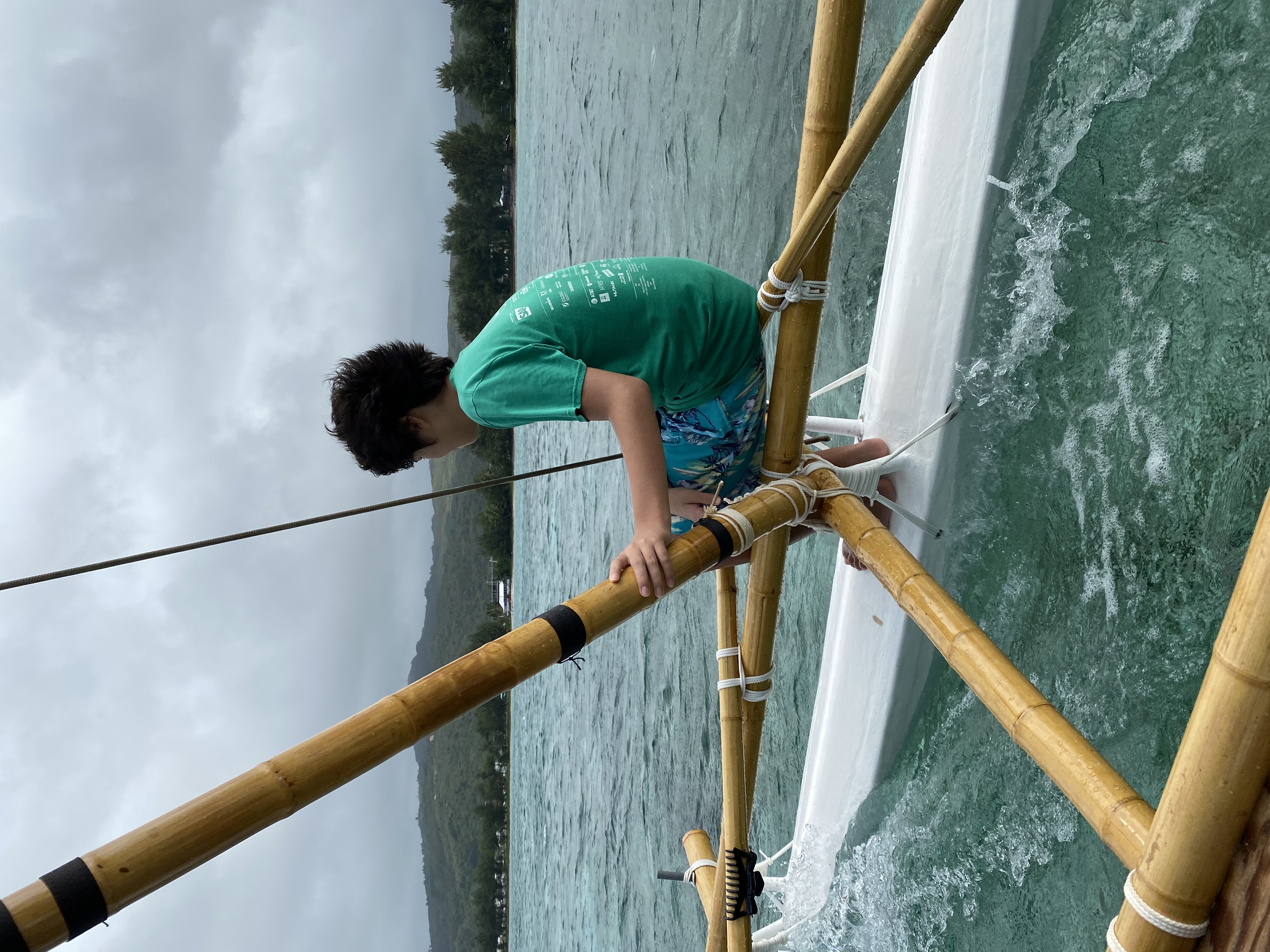
Issac Wright, who at the time was a Lalayak student, sits aboard the lucha, or outrigger of one of the canoes in 500 Sails’ fleet. 500 Sails aims to continue building the sailing capacity of island residents in the coming years.
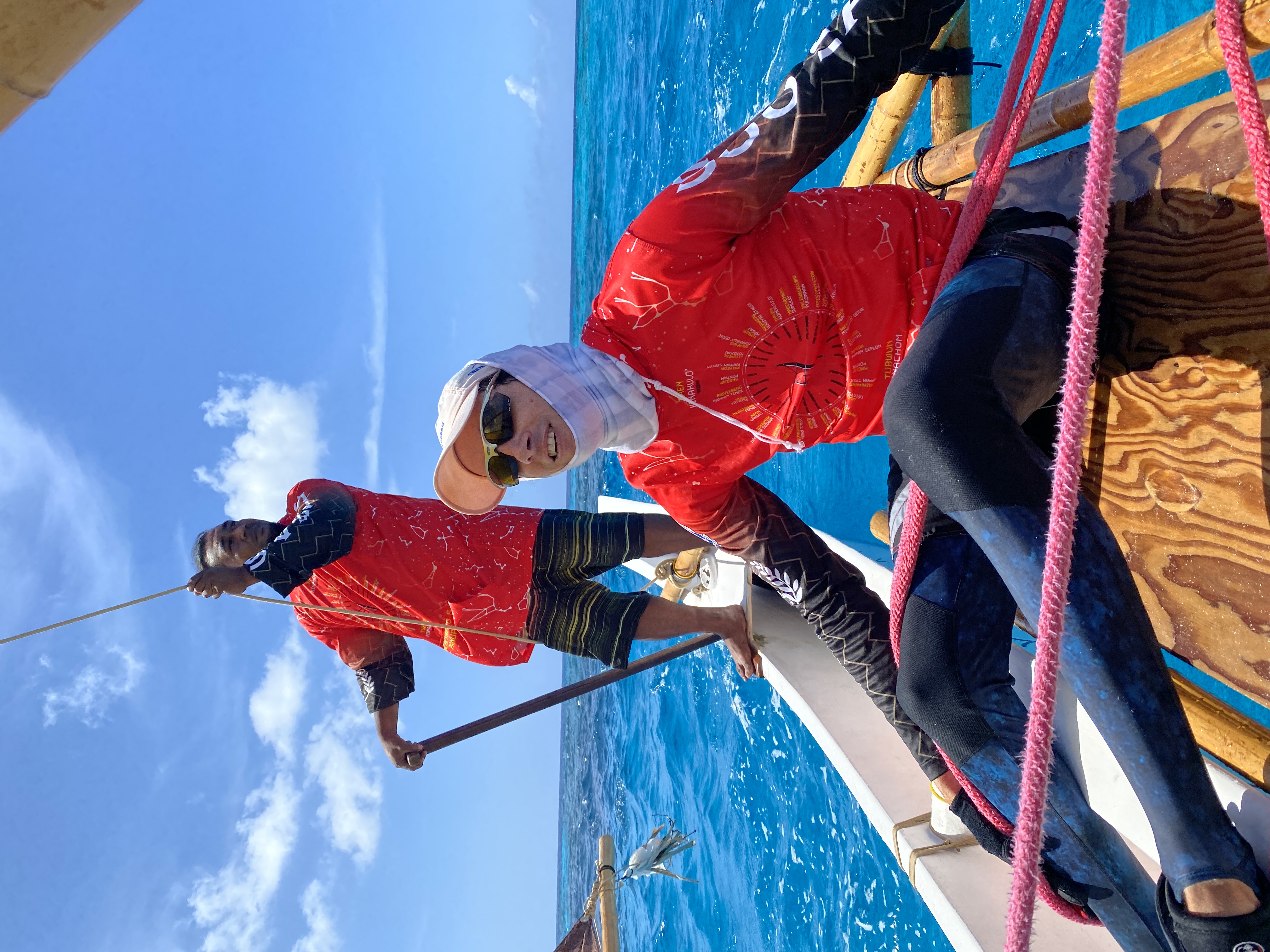
Sanjo Maras, standing, steers Aunty Oba and keeps a lookout ahead while Wilson Gaul mans the gigehi, or sheet.