

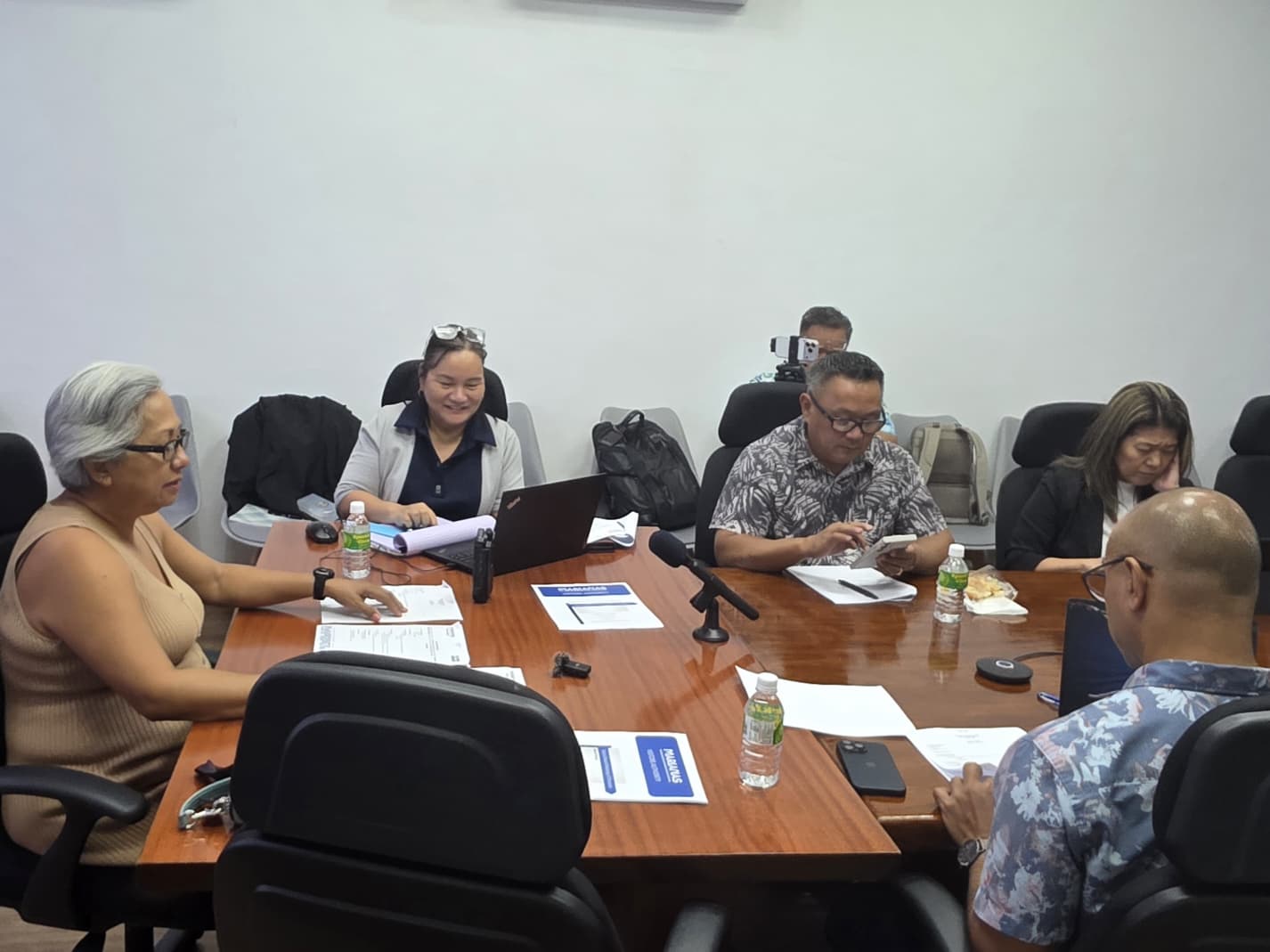



Participants are from Bureau of Fisheries, Bureau of Marine, PNCC, Palau Visitation Authority, Bureau of Land Surveys, Foreign Affairs, National Emergency Management Office, National Weather Service, Ngardmau State, Ngarch State, Office of Environmental Response and airport.
The goal of the workshop is to promote awareness of the development concept of disaster risk management, introduce regional and international policies and mainstreaming principles for disaster risk management, discuss the strengths and weaknesses of the 1999 National Disaster Plan and to collect views on national arrangements to mainstream the disaster risk management.It was a one-day and a half of workshop and was facilitated by two officers from South Pacific Applied Geoscience Commission or SOPAC, Dr. Netatua Pelesikoti, Sustainable Development Adviser and Mosese Sikivou, Manager for Commuity Risk Programme.Director of Foreign Affairs Isaac Soaladaob and Director of the National Emergency Management Office Alonzo Kyota welcomed the SOPAC facilitators and the participants when the workshop opened on Wednesday.Sikivou in an interview said that it is the first review since the national disaster plan was established in 1999.The objective is to review the 1999- disaster plan for Palau to strengthen the plan to make Palau a safer place for the community.He said a lot of concerns were discussed during the workshop and among them was the need to have a better understanding of the system in the community and the state levels, the need of the state to have their own disaster plan to take care of the needs of the state.Sikivou said they may make some recommendations and these recommendations will be submitted to the Palau government by end of this year or early next year.Soaladaob said that the assistance from SOPAC for the review of the National Disaster Plan is part of a continuing and growing programme that SOPAC is providing to Pacific countries in support of the national sustainable development priorities.He said the review of the national disaster arrangement was timely because of so much happening in the world today in because of potential hazards.“We need to see what we need to implement in terms of measures to reduce disaster risk and we need to ensure that if a disaster does strike, are we in good position to respond effectively and efficiently?The review of our national arrangements and more so the strengthening of the arrangements will hopefully move us in the right direction,” Soaladaob said.
