





ABOUT 28% of employers in the Commonwealth are in compliance with the law that requires them to report the status of their employees, U.S. citizens and foreigners alike.
During a Saipan Chamber of Commerce meeting earlier this month, board member Alex Sablan said this information is supposed to be filed with the CNMI Department of Labor.
“We need to do our part by following the law, and then also following the federal law which requires an I-129 to be filed,” he added.
An I-129 is a petition for a nonimmigrant worker that is supposed to be refiled within six months of a CNMI-Only Transitional Worker, or CW-1, arriving in the Commonwealth.
Sablan said only about 30 to 35% of CNMI employers are in compliance with the I-129 requirement.
“We are encouraging our employers to follow the federal law, or they are going to get a large number of denials, which is what has happened in the course of the last round of renewals. What we thought were arbitrary and capricious reasons for denying [visas] in large part was because of this issue,” Sablan said.
“Now, don’t get me wrong, there are arbitrary and capricious reasons that they have given for denying [visas]…and we’re questioning those as well. [This is] why we want to bring the [temporary labor certification or TLC] closer to home. That’s why we want to be able to have the ground game here, [so they’ll] understand what our needs are [while we] follow the federal law and [seek out] U.S. citizens first, then when that is not achieved, provide the opportunities for businesses to avail themselves of the CW-1 workforce.”
Sablan said this process is already in place on Guam.
“There is a provision within the labor law that allows Guam to process labor certifications in concert with the U.S. Department of Labor after the governor of Guam certifies that there are no available U.S. citizens for a particular vocation. We’d like to have this process for the CNMI as well,” he said.
He added that this does not resolve the roughly 2,800 visas that have already fallen out of the process, but it does help a few hundred other visas that are in the lengthy process of being extended.
“So, what are we doing? We are meeting again with Congressman [Gregorio Kilili Camacho Sablan] to have him…champion…our [proposal regarding] the TLC process, and my understanding is that they are looking at it as an administrative review — to possibly make the change administratively and not require legislation,” he said.
According to the chamber official, in a conversation last month with the U.S. DOL and U.S. Citizenship and Immigration Services, federal authorities made it very clear that there was a specific timeline crunch that they had to meet, so every other visa took the backseat during that process.
“That’s, in large part, why we were delayed significantly,” Alex Sablan said.
“We’re not lobbying for the CW-1 program,” he added. “We’re lobbying for the workforce in general, the economy in general, because without a viable workforce, I think we all understand that we are going to see a mass exodus [of workers]…. Until we are able to build a pipeline with our tourism and all of the other ancillary businesses that are in the Commonwealth, it’s going to be a tough road ahead for our only economic driver — tourism.”
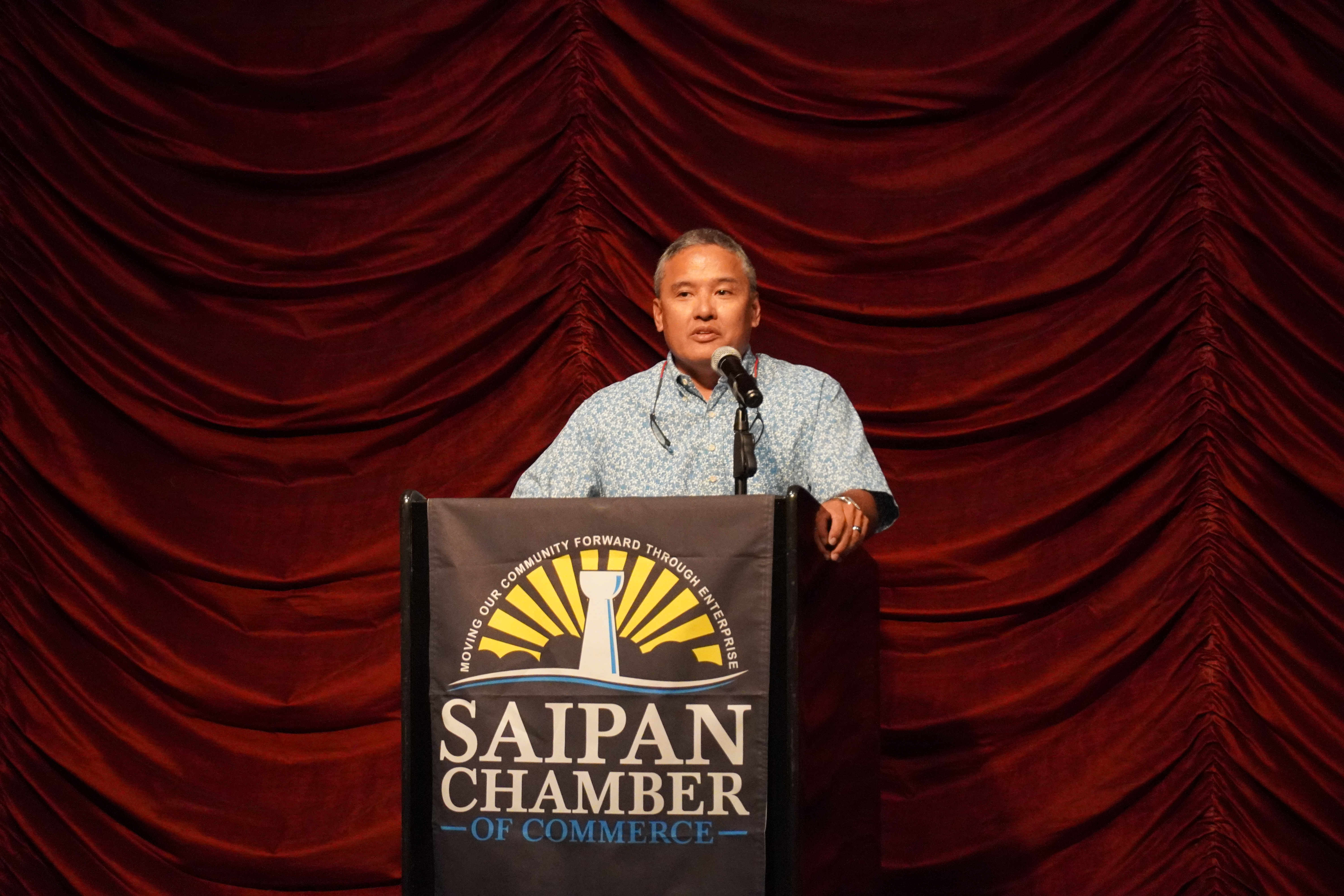
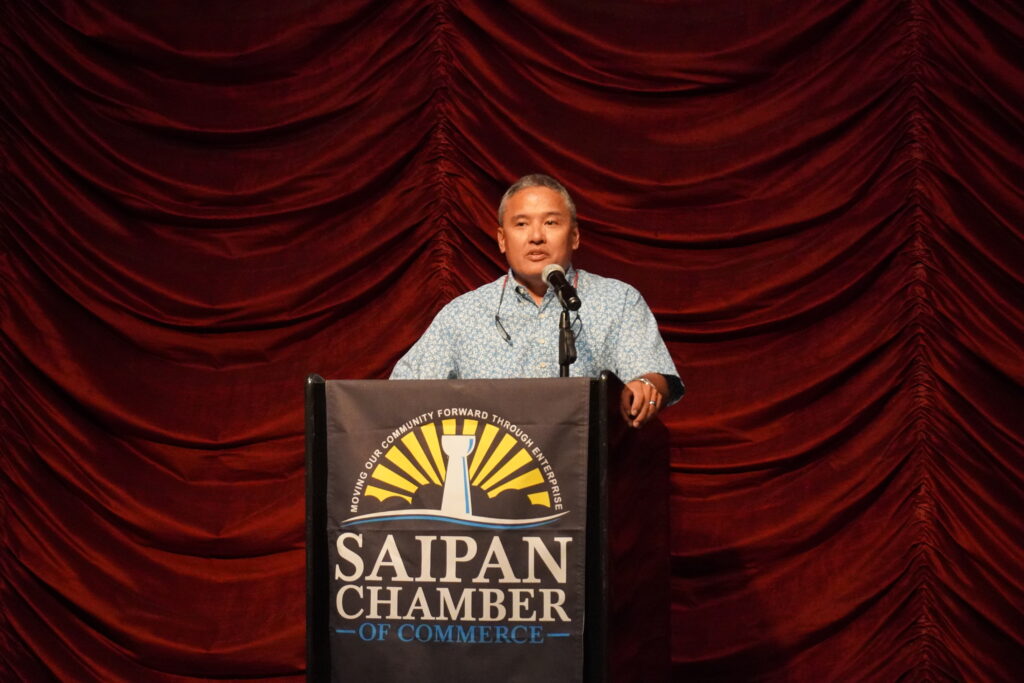
Alex Sablan speaks at the Saipan Chamber of Commerce’s November general membership meeting.
