




ON Sunday morning, 500 Sails launched its newest canoe, “Auntie Oba,” named after Jacoba Seman.
Donning a bright yellow sail, Auntie Oba is the fifth proa, or sailing canoe, joining Neni, Richard Seman, Anåguan, and Dee Dee for both the Sunday Sails program and the more formal lalåyak, or sailing classes.
She was built using the “Anson Drawing” of a 1742 Chamorro sakman made on Tinian when an English ship, the Centurion, was under repairs for several months.
500 Sails continues to build traditional Chamorro canoes using that drawing with modern materials like fiberglass, which are more available than big trees that provide food.
Asked for comment, 500 Sails co-founder Emma Perez said, “It was an honor that many of Jacoba Seman’s family was there. To have them there was very special.”
She added, “It was breathtaking to be on the shore with all five canoes at once. I can’t wait to see 10 or 20 or more out on the water. It really makes the CNMI an even more special and unique place. I hope that more people can join us for Sunday sails.”
Every Sunday from 10 a.m. to 2 p.m., free canoe rides are given to the community as well as an introduction to sailing these canoes. A potluck BBQ is also part of the regular family friendly activities.
“It is an introduction on how to sail. We hope to inspire community members to become sailors. We have five canoes on the water and seven in the boatyard. We’re ready to grow a generation of sailors,” said Perez.
The organization is trying to get more people in and on the water as quickly as possible as part of its mission to revive, promote, and preserve the maritime cultural traditions of the Mariana Islands through community engagement in canoe culture activities and values.
“What’s happening would not be possible without the help of the Carolinian seafarers here in the CNMI,” Perez said.
With the generous help of Carolinian Master Navigators Mario Benito and Cecilio Raiukiulipiy and their families, sailing programs have been developed and the building of canoes has intensified in the CNMI.
Perez said on average, it takes about two months to a year to build a canoe, depending on the skill level of the laborers.
She noted that with “Auntie Oba,” Benito, Raiukiulipiy, their relatives, co-op students, and volunteers all worked together to build her.
“It took less than a year to build her. The pandemic had a lot to do with why it took so long. We had to pretty much change our operations,” said Perez.
“A lot of hearts and hands went into it. What we’re doing is teaching people how to build rather than just being an assembly line. Every canoe is a labor of love because so many hours go into it.
“Just the fact that any children born in the CNMI will have canoes in their lives, which wasn’t true for me, my father, or my grandfather. Canoes are here to stay now. They’re back,” she said.
500 Sails is grateful to all the hands and hearts that have brought Auntie Oba to life, especially to partner Indigenous Affairs Office for housing 500 Sails in the 500 Sails Boatyard and the Guma Sakman.
For more information, email [email protected], follow 500 Sails at https://www.facebook.com/500SailsDolphinClubSaipan, or call 500 Sails co-founder Emma Perez at 285-4268.

500 Sails launched its fifth proa, which was named after Jacoba Seman, on Sunday.
Contributed photo
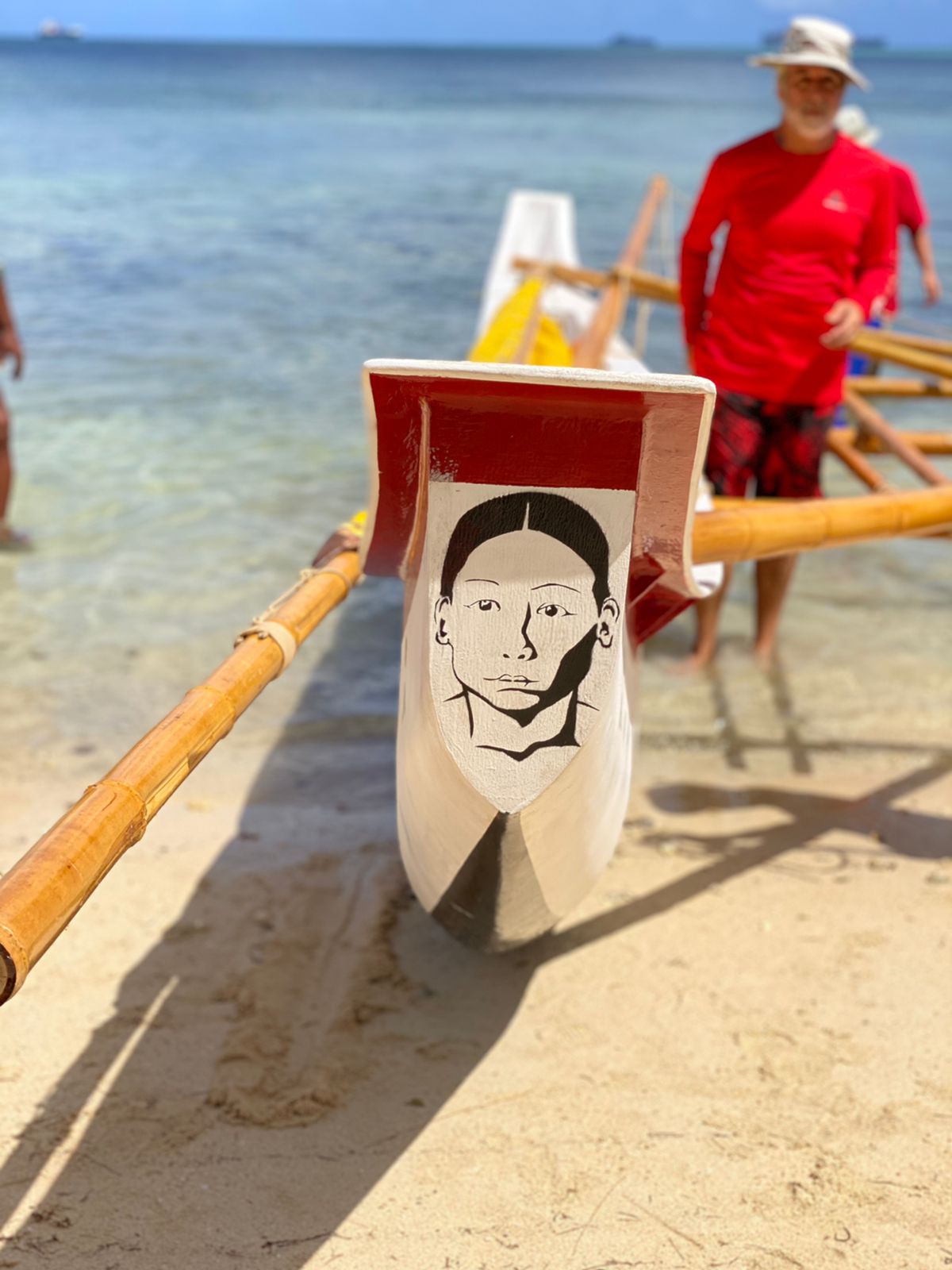
The image on the proa is based on the oldest drawing of a Chamorro.
Contributed photo
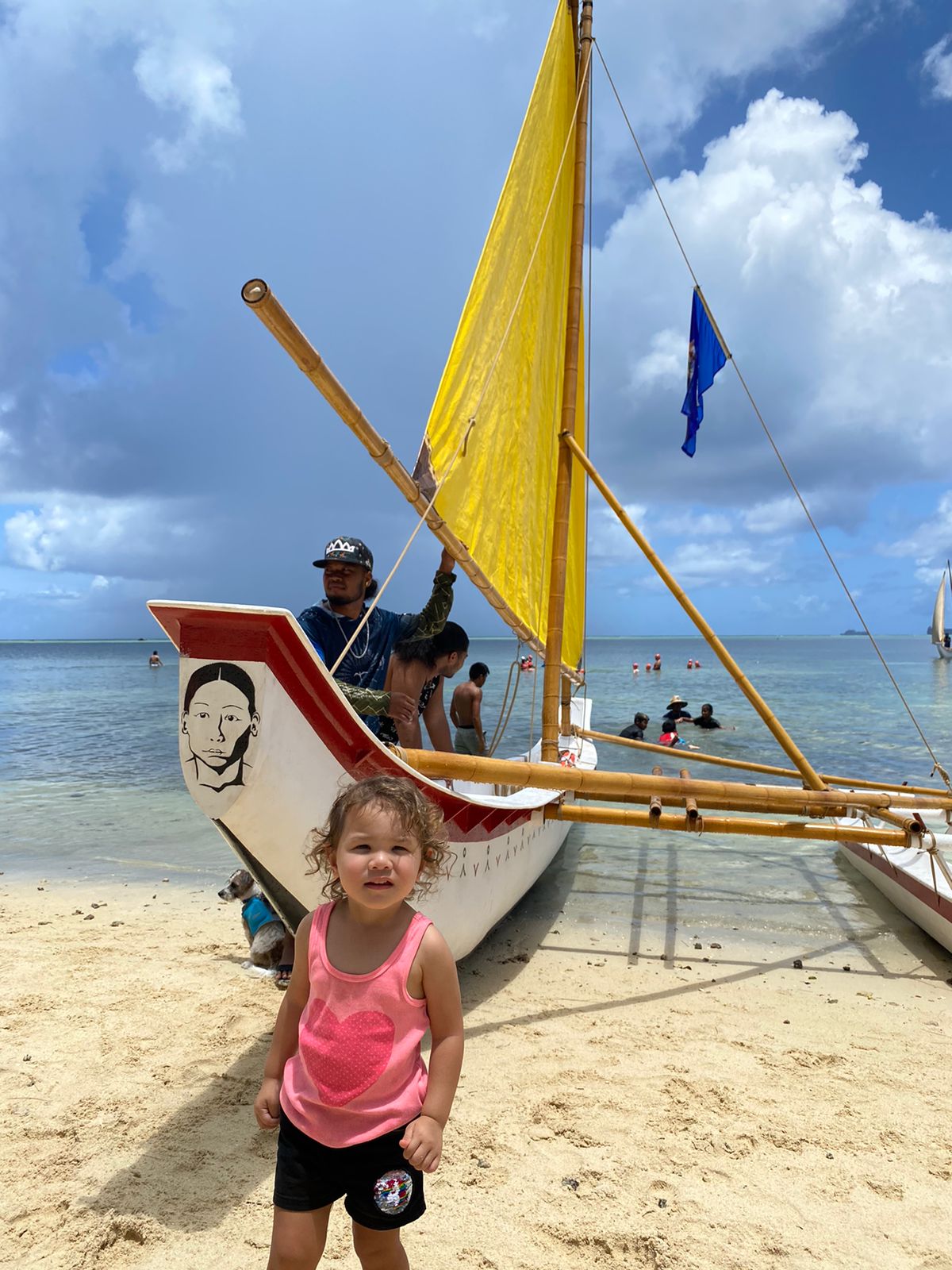
Victoria Jacoba Furey Maratita poses for a photo near “Auntie Oba.”
Contributed photo
