




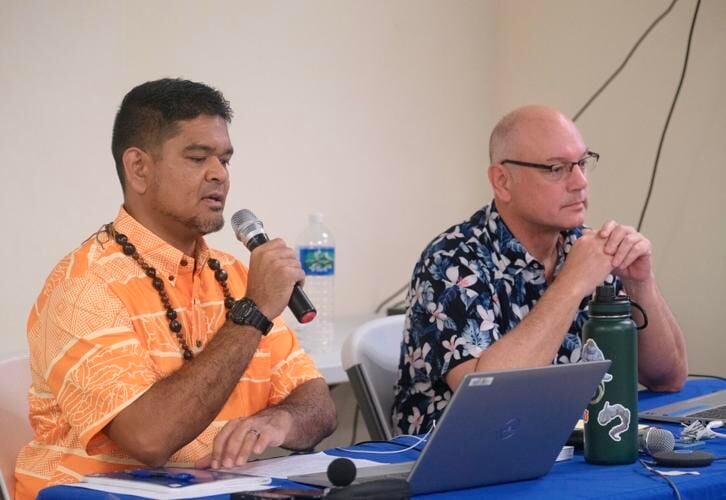

Kalani Quiocho, left, a cultural resources coordinator with the National Oceanic and Atmospheric Administration Office of National Marine Sanctuaries, and NOAA policy specialist Brady Phillips speak Wednesday, May 17, 2023, at the Guam Museum in Hagåtña during a public scoping meeting held on Guam for the proposed Pacific Remote Islands National Marine Sanctuary.
HAGÅTÑA (The Guam Daily Post) — A proposal to turn large swaths of ocean into a protected marine sanctuary was met with pushback from residents concerned about the federal government taking more control over the waters of the Western Pacific.
Officials with the National Oceanic and Atmospheric Administration Office of National Marine Sanctuaries were at the Guam Museum in Hagåtña on Wednesday night to field questions and hear comments about the proposal. It would turn the reefs and waters around the area designated as “Pacific Remote Islands” into a sanctuary.
The Pacific Remote Islands comprise Baker, Howland and Jarvis Islands; Johnston, Wake and Palmyra Atolls; and Kingman Reef. NOAA officials said the area is home to some of the most diverse tropical marine life on the planet, including threatened and depleted species such as hawksbill sea turtles, giant clams and melon-headed whales.
Wake, the closest of the landmasses to Guam, is about 1,500 miles away.
Taking a resource away
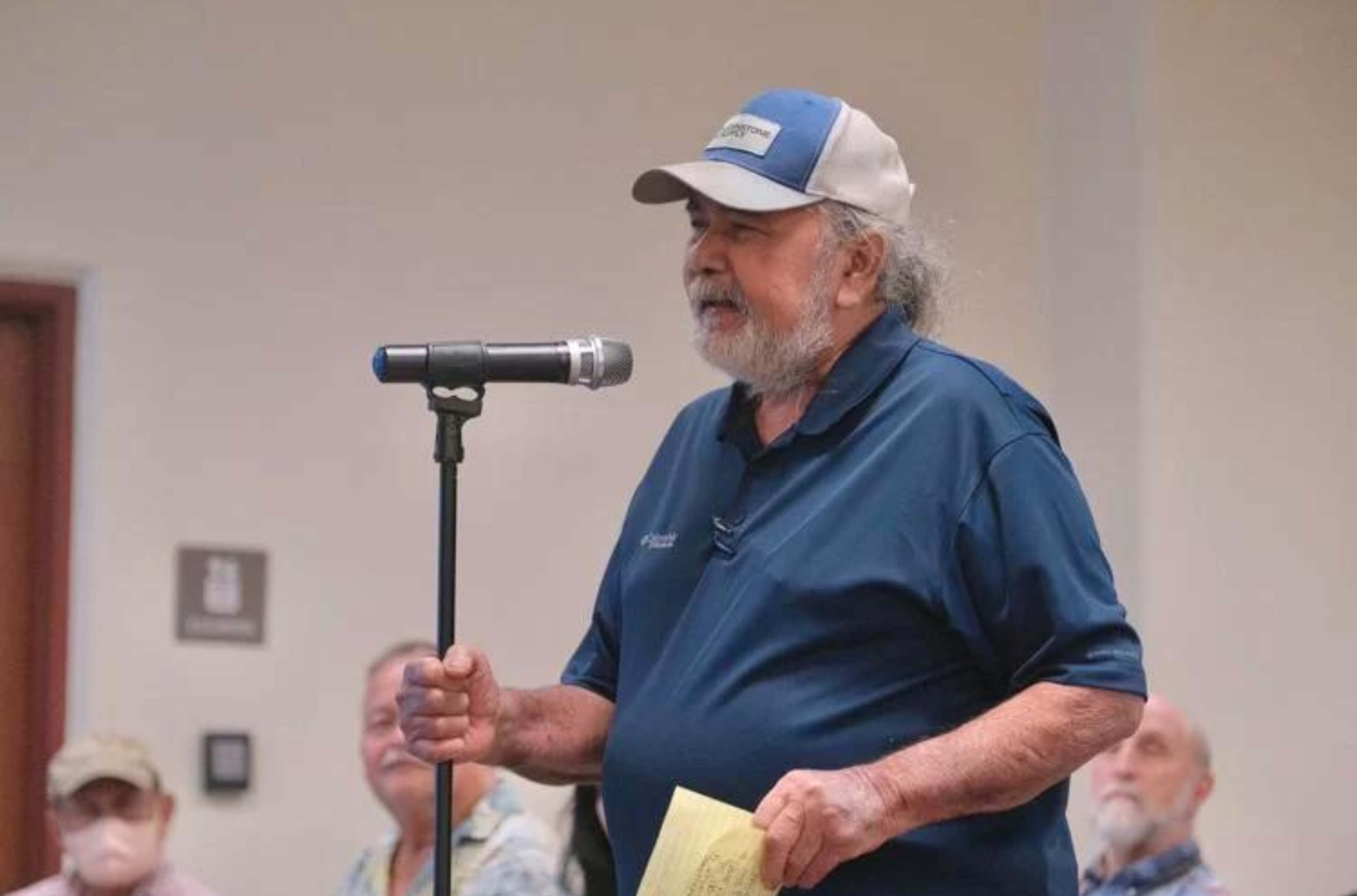
Manny Duenas delivers a public comment Wednesday, May 17, 2023, at the Guam Museum in Hagåtña during a public scoping meeting on Guam for the proposed Pacific Remote Islands National Marine Sanctuary.
“Leave us natives alone,” said Manny Duenas, president of the Guam Fishermen’s Co-op.
The sanctuary would benefit scientists at the expense of Chamorus, Carolinians and Samoans in the region, he said. He asked that the comment period for the sanctuary be extended beyond June 2, so more people could weigh in.
“We are suffering. The military buildup is going to make rental … $2,500 a month. I can’t even afford that. So, I’m very disturbed that you guys want to take a resource away because you want to feel good about something,” said Duenas.
An exclusion of commercial fishing around the Pacific Remote Islands would not benefit the tuna stocks that support fishing, said Mike Gawel, former manager of natural and cultural resources for the National Park Service in Guam and the Mariana Islands. The highly migratory tuna were not overfished, despite decades of regulated fishing, he said.
Gawel added that a number of bodies already monitored and regulated the fisheries in the area. Though the designation would be valuable for protecting coral reefs and sea bottom resources, and preventing illegal, unregulated fishing, commercial fishing should continue to be allowed in the area, he testified.
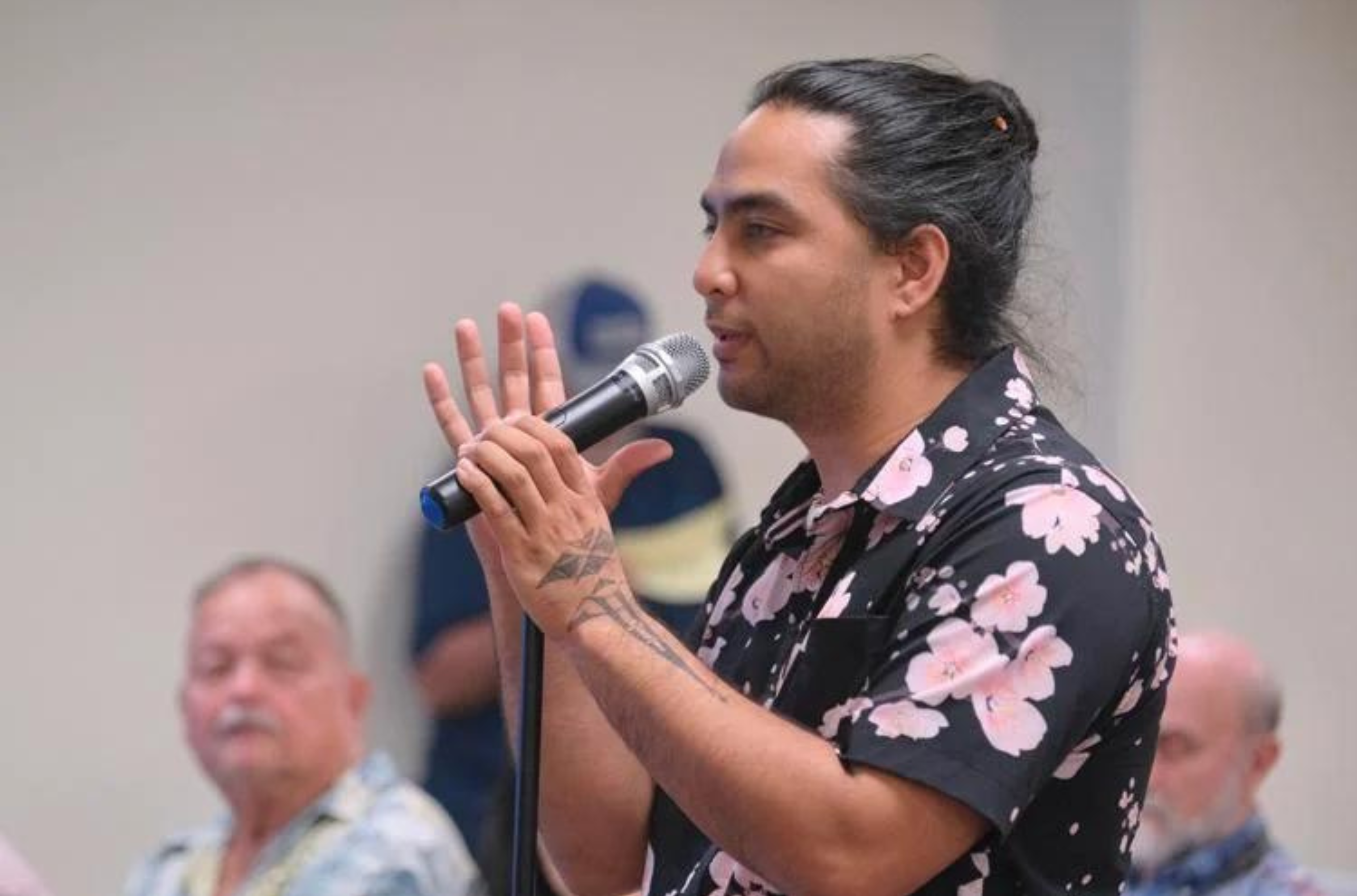
Dakota Camacho raises concerns about restrictions that would be imposed through the proposed Pacific Remote Islands National Marine Sanctuary during a public scoping meeting Wednesday, May 17, 2023, at the Guam Museum in Hagåtña.
Resident Dakota Camacho said the sanctuary would further sever the ability of Indigenous people in the Pacific to connect with their surroundings.
“I’ve heard stories that in the old days, our navigators would go and meet in all of these islands and have ceremonies. We’re not allowed to do that anymore. Because the federal government is making the rules about what we’re supposed to be doing in our waters,” Camacho said.
Increased federal control in the region could lead to increased militarization, said local activist Monaeka Flores. Wake Island had served as a missile defense testing ground, while many of the Pacific Remote Islands had a history of military use.
“Of course, we want to see conservation. Of course, we want to see these islands where our ancestors navigated protected. Of course, we want to see our fishing resources protected. But the truth of the matter is, is that for years now, military experts … have been saying that these (areas) are prime for hiding submarines.”
