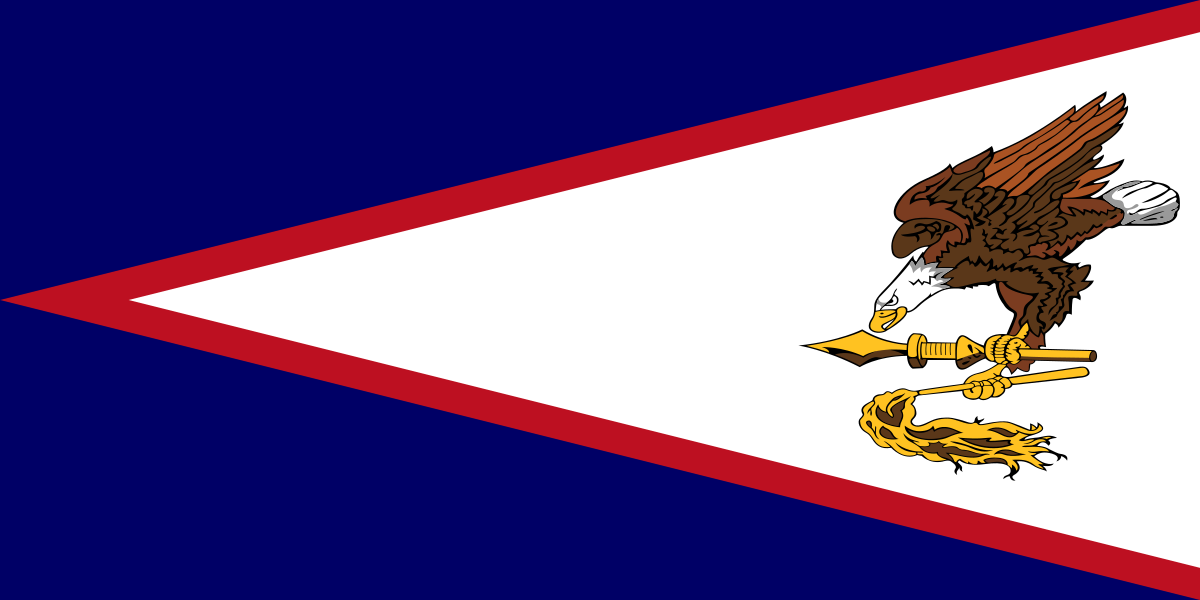




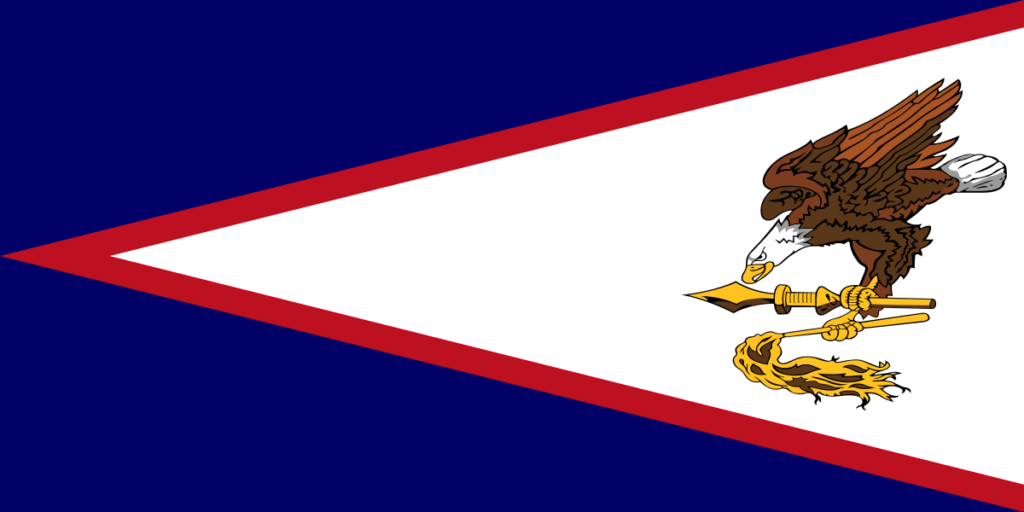
HONOLULU (AP) — In a decision citing American Samoa cultural traditions, those born in the U.S. territory shouldn’t have citizenship automatically forced on them, a federal appeals court ruled Wednesday.
The 10th U.S. Circuit Court of Appeal ruling reverses a lower court ruling that sided with three people from American Samoa who live in Utah and sued to be recognized as citizens. The judge ruled the Utah residents are entitled to birthright citizenship under the 14th Amendment. He then put his ruling on hold pending appeal.
U.S. Congress should play a bigger role than the courts in deciding citizenship for those in territories, the appeals court ruling said.
American Samoa is the only unincorporated territory of the United States where the inhabitants are not American citizens at birth.
Instead, those born in the cluster of islands some 2,600 miles (4,184 kilometers) southwest of Hawaii are granted “U.S. national” status, meaning they can’t vote for U.S. president, run for office outside American Samoa or apply for certain jobs. The only federal election they can cast a vote in is the race for American Samoa’s nonvoting U.S. House seat.
The ruling notes that American Samoa government leaders and others opposed the lawsuit because they are concerned automatic citizenship could disrupt cultural traditions, such as communal land ownership and social structures organized around large, extended families led by matai, those with hereditary chieftain titles.
“There is simply insufficient caselaw to conclude with certainty that citizenship will have no effect on the legal status of the fa’a Samoa,” or the American Samoan way of life, the ruling said. “The constitutional issues that would arise in the context of America Samoa’s unique culture and social structure would be unusual, if not entirely novel, and therefore unpredictable.”
Drawing on the views of the American Samoa people is one of the more gratifying aspects of the ruling, said Michael Williams, an attorney representing the American Samoa government, which intervened to oppose the lawsuit.
“It is also vindication for the principle that the people of American Samoa should determine their own status in accordance with Samoan culture and traditions,” he said.
A path toward U.S. citizenship exists for those who want it. But some say it’s costly and cumbersome. Non-citizen nationals of American Samoa are entitled to work and travel freely in the United States and receive certain advantages in the naturalization process.
Neil Weare, one of the attorneys representing the plaintiffs, said they are disappointed by the ruling, and are reviewing next steps. Options included asking a wider panel of appeals court judges to hear the case or taking it to the U.S. Supreme Court.
Weare is president of Equally American, which advocates for equality and civil rights for people in U.S. territories.
He said he was impressed with a dissenting judge’s opinion.
”When the Fourteenth Amendment was ratified, courts, dictionaries, maps, and censuses uniformly regarded territories as land ‘in the United States,’” wrote Judge Robert E. Bacharach in his dissent.
Self-determination is a highly valued principle in American Samoa, said Line-Noue Memea Kruse, adjunct faculty in Pacific islands studies at Brigham Young University-Hawaii and whose book is cited in the ruling.
“There are many foreign interests looming over these citizenship cases,” she said. “This is not the end. They will keep pushing. This to me is a form of inter-territorial hegemony.”
Amata’s statement on appellate decision
On Tuesday in Washington, D.C., U.S. Congresswoman Uifa’atali Amata of American Samoa released the following statement regarding the appellate decision:
“Thank you first of all to the judges for their considered opinion that respected the people of American Samoa and the Samoan Way. Thank you to Mike Williams and the other attorneys at Kirkland & Ellis for their tireless work on behalf of American Samoa and the preservation of our family land and matai heritage. This is truly a blessing, and should set this issue to rest. American Samoa has the right of self-determination. We will continue to insist on our self-determination with great love for the United States. Congress should now act to pass my bill, H.R. 1941, so that U.S. nationals who choose citizenship can quickly, sensibly and affordably make that change. Individuals should not have roadblocks to their self-determination if they choose citizenship. We thank God for this outcome and will continue to work for these next steps.
“Following the U.S. Supreme Court’s decision not to hear an appeal rejecting an almost identical lawsuit in 2016 and a decision by the Biden Administration just last week to continue to use the so-called Insular Cases as a basis for defending federal policy towards the territories, I am calling on the plaintiffs and the special interests behind them in this case to end their assault on the right of the American Samoa people to determine for themselves whether or not to become U.S. citizens.
“I have been very frustrated by this process, which was already underway when I took office in 2015 in the Tuaua case. My predecessor, Faleomavaega, was an intervenor in that suit and I readily agreed to replace him when he left office. That suit, which was first filed in 2012, was rejected first by the district court, then by the Court of Appeals in 2015 and finally by the Supreme Court in 2016 by not hearing a further appeal.
“It seemed so straight forward to me at the time that this issue was for the people to decide that I thought the Supreme Court disposition of the case would be the end of it. So, I was surprised when the special interests, who apparently are looking for a path to national voting rights for territorial residents, found yet another plaintiff and another court to hear the same complaint all over again.
“If the special interests are truly interested in the citizenship status of our people, then I hope this court action is sufficient to convince them to take their complaint where it belongs — the government and the people of American Samoa. If special interests want Samoans in the states to have citizenship, then they should limit future legal action to Samoans in the states. Their efforts should not sweep up the people in the islands against their will.
“It is the height of irony that those claiming to right the wrongs of the past fail to see they are perpetuating them by seeking to override American Samoa’s precious self-determination from without.
“I can assure everyone that if these special interests persist in pursing this case to the full appellate court or to the Supreme Court, I will fight them all the way. And thanks to President Biden’s decision last week, I will have Secretary of State Blinken and Attorney General Garland by my side.”