






HAGÅTÑA (The Guam Daily Post) — While the courts continue to weigh the status of existing Guam abortion laws, it appears the public will get the chance to weigh in on two measures seeking to protect and expand access to the practice after the Legislature completes ongoing budget talks.
Bill 106-37 would prohibit restrictions or limitations on abortion, including mandates for medically unnecessary in-person visits and restrictions on the ability to provide abortion services through telemedicine. It’s scheduled to be heard in mid-September, according to its main sponsor, Sen. Thomas Fisher. The bill is co-sponsored by Vice Speaker Tina Muña Barnes.
Bill 106 would let voters decide if these protections should be put in place.
Another measure, Bill 111-37, proposes to enact the protective provisions of Bill 106 without requiring a vote.
Both measures are under the legislative health committee led by Speaker Therese Terlaje.
Bill 111 was introduced by Sen. William Parkinson who said the measure is slated to be heard after government budget discussions.
The Guam Legislature is debating the annual budget law this session as Guam enters the last couple of months of the fiscal year, which will close at the end of September.
Existing laws
Bills 106 and 111 were introduced around late April and early May.
Since then, the Supreme Court of Guam has heard oral arguments over the validity and enforceability of Guam’s inert abortion ban, Public Law 20-134.
The ban was enacted about 30 years ago but was quickly determined unconstitutional and placed under an injunction. At that time, abortion was considered a constitutional right in the United States.
That changed with the U.S. Supreme Court’s decision in Dobbs v. Jackson Women’s Health Organization in 2022. Now, states and other jurisdictions have greater latitude to regulate abortion, including implementing bans.
Attorney General Douglas Moylan is attempting to revive the Guam ban, which was never explicitly repealed, in light of the Dobbs decision. He is seeking to remove the injunction through the federal courts.
At the local level, arguments have been made against the validity of the ban due to the Organic Act mandate against creating laws inconsistent with the act and the laws of the U.S. applicable to Guam. That’s relevant to the timing of the ban, which was enacted when abortion was considered a right.
There also are questions on whether the ban was implicitly repealed by subsequent laws allowing for abortion.
The Guam Supreme Court heard oral arguments on July 25. There isn’t any rule about when the court must render a decision, but under normal circumstances, opinions on appeals before the Guam Supreme Court are issued within six months of oral arguments, according to Sarah Elmore-Hernandez, the director of policy, planning and community relations at the Judiciary of Guam.
“That said, the court generally treats these cases (where there is a matter of great public importance) more expeditiously than regular appeals,” Elmore-Hernandez said.
In a related issue, the 9th U.S. Circuit Court of Appeals recently decided to vacate a preliminary injunction placed on Guam’s “in-person” consultation mandate for abortion.
While current law allows for abortion on Guam, it also sets up certain walls. These include “in-person” consultation requirements as part of informed consent laws.
Guam has no abortion provider physically present on island. Two Hawaii-based doctors wanting to provide medication abortion services through telemedicine challenged the “in-person” mandate at the District Court of Guam in 2021 with assistance from the American Civil Liberties Union.
The District Court granted a preliminary injunction, which the Office of the Attorney General appealed to the 9th Circuit. This all took place before the Dobbs decision.
On Aug. 1, the 9th Circuit issued its opinion vacating the injunction, citing the new legal landscape created by Dobbs.
Bills on consultation
Parkinson introduced Bill 160-37 a day after the 9th Circuit decision. The bill sought to specifically allow for virtual consultations and eliminated language related to printed materials in Guam’s consultations laws for abortion.
However, Bill 160 was rescinded. On Tuesday, another measure was introduced essentially aiming to do the same thing but with stronger provisions.
Parkinson and Fisher are sponsors of Bill 162-37, which would amend the Women’s Reproductive Health Information Act of 2012, the law containing the general provisions for informed consent to an abortion including the in-person consultation mandate.
Under current law, information on abortion and the availability of assistance for the pregnancy, including adoption services or assistance with supporting a child, must be provided to a woman at least 24 hours before the abortion.
Bill 162 does away with the 24-hour requirement and many informational mandates, such as the requirement to tell a woman seeking an abortion the probable gestational age of the fetus and its probable anatomical and physiological characteristics. Bill 162 also allows for virtual consultation.
A news release from Parkinson’s office stated Bill 162 was drafted with input from legal scholars and advocacy groups. Parkinson aims to empower individuals to make decisions aligned with their personal values and circumstances by removing barriers to abortion services, the release stated.
“The bill takes out a lot of unnecessary procedural requirements that abortion patients go through when having a consultation,” Parkinson stated in the release. “Not only would it allow for virtual medical consultations for those seeking abortion, but it also removes the requirement that physicians must inform the patient of unnecessary information such as the possible sex of the fetus, the anatomical makeup of the fetus, and other information that aims to essentially guilt-trip a patient into not getting an abortion.”

William Parkinson

Thomas Fisher
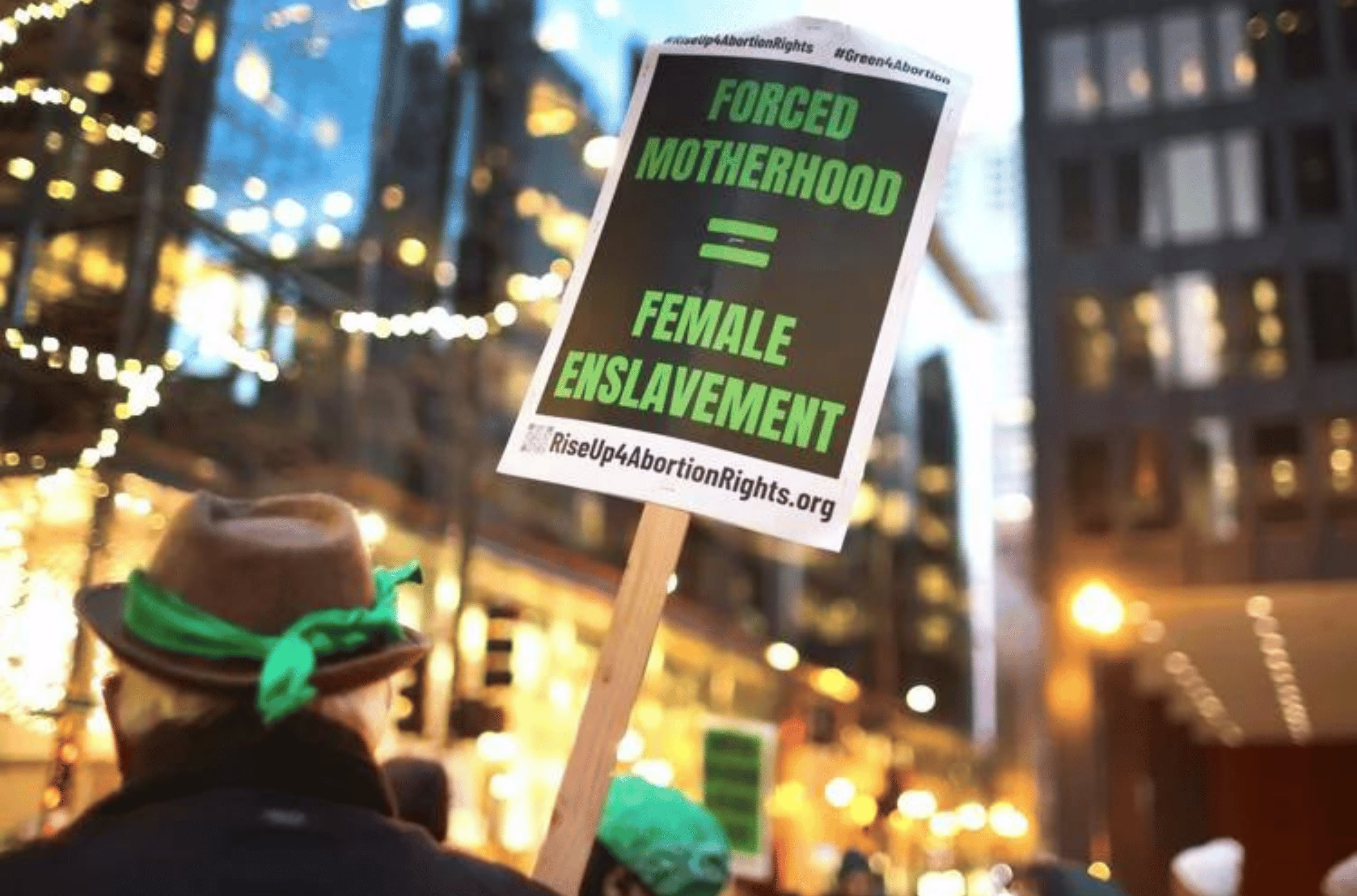
Activists protest at the federal building plaza on Dec. 1, 2022, in Chicago.
