






TOMS RIVER, New Jersey (Reuters) — Ciara Clark, a Black doula, labored for more than nine hours at home before making a last-minute switch to go to the hospital to give birth.
With her own Black doula and mother by her side, Clark had hoped to have her baby at home with no medical assistance at all. She wanted to have a “wild” pregnancy – one that is medically unassisted.
“I wanted to go through this birth without having any medical intervention,” said Clark, 34.
After four cesarean sections with her previous pregnancies, Clark said she feared that her birth plan would not be supported by the medical staff. But after a long labor, Clark said she became anxious and decided to go to the hospital, where she gave birth to a healthy son.
Clark is not alone in her distrust of medical intervention in the birthing process. Nine Black pregnant women and new mothers Reuters spoke to for this story voiced similar comments. All of the women spoke of feeling unseen and unheard at times through their pregnancy and postpartum period.
Centers for Disease Control and Prevention (CDC) April data shows that Black women in the United States are three times more likely to die of pregnancy-related causes than white women. The CDC said this was a result of multiple factors, including variation in the quality of healthcare, underlying chronic conditions, structural racism, and implicit bias.
For Chelsea Ward, 32, a nursing student from Fords, New Jersey, who recently gave birth to twins, the state of Black maternal health in the United States is “inadequate.”
“It’s challenging when you’re fighting and advocating for your maternal health rights, and having to educate your peers as well,” Ward said.
Obtaining knowledge and self-advocating is key to making informed decisions, Ward added.
RESILIENCE AND JOY
Despite their challenges, the women described their resilience as they navigate maternal healthcare and motherhood.
Soyal Smalls, 37, from Poughkeepsie, New York, who was pregnant when Reuters photographed her in August 2022, believes increasing the number of Black healthcare providers would help Black mothers, along with having more hospitals with birthing units to support the mother and allow for more vaginal births.
Ashlee Muhammad, 37, agreed, saying her doctors had assumed she would have a cesarean and she had to advocate for herself to have a vaginal birth for her twins.
Many of the women also emphasized the importance of postpartum care.
“If we are not whole as mothers, I don’t know how anyone expects us to care for these children,” Clark said.
Ward said she thought more education for the Black community on innovations in birthing, postpartum care, and parenting would be beneficial. “I truly believe that if we know better, we would do better,” she said.
Shariah Bottex, a 30-year-old program manager in Flushing, New York, pumped milk while her fiance fed their newborn son when Reuters photographed her in March. She said her biggest hope for her children is that they will feel comfortable in their skin and that they get to enjoy their childhood.
“My greatest joy as a mother is seeing my baby smile so big and knowing that I’m the cause of that smile and his happiness,” Bottex said.
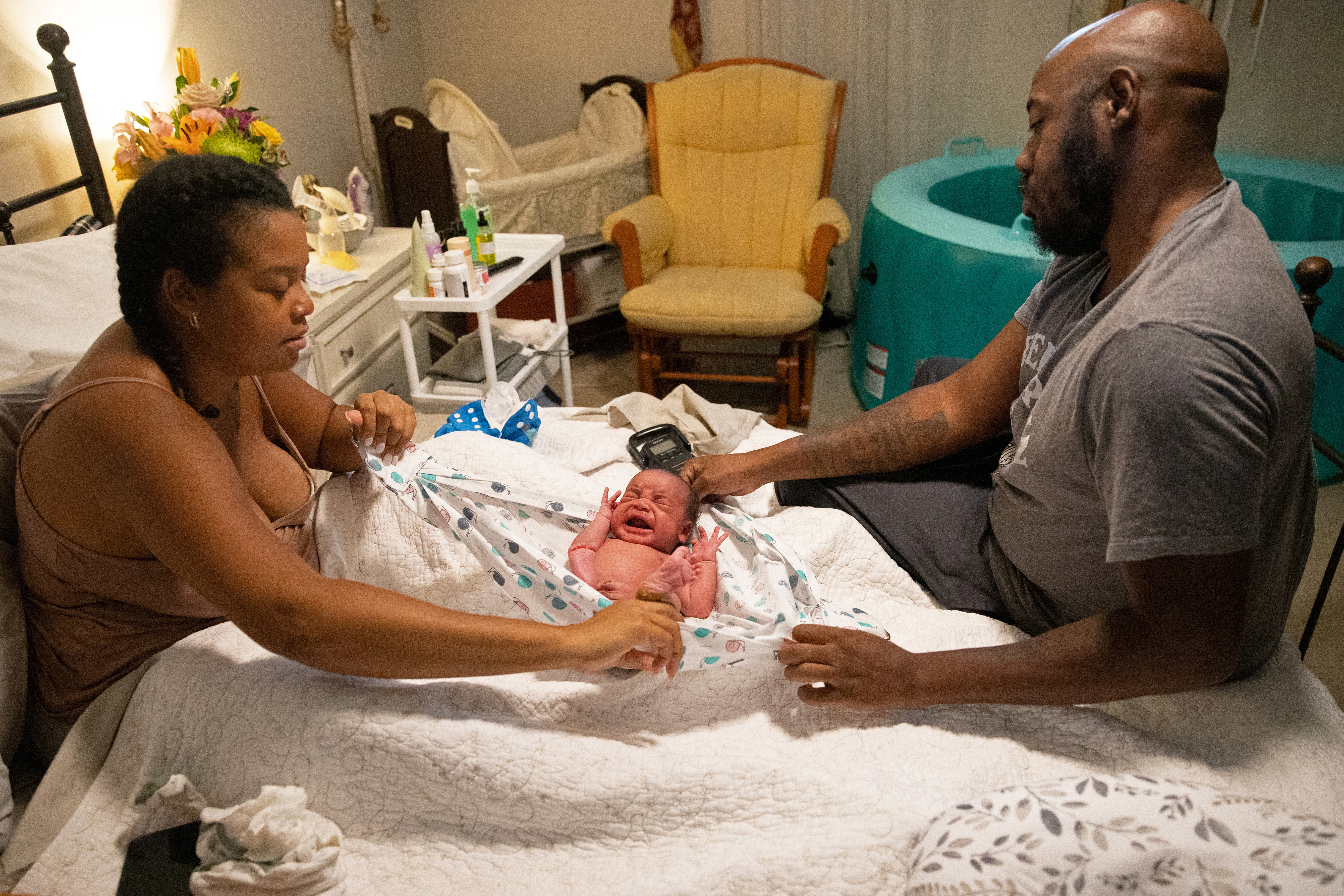
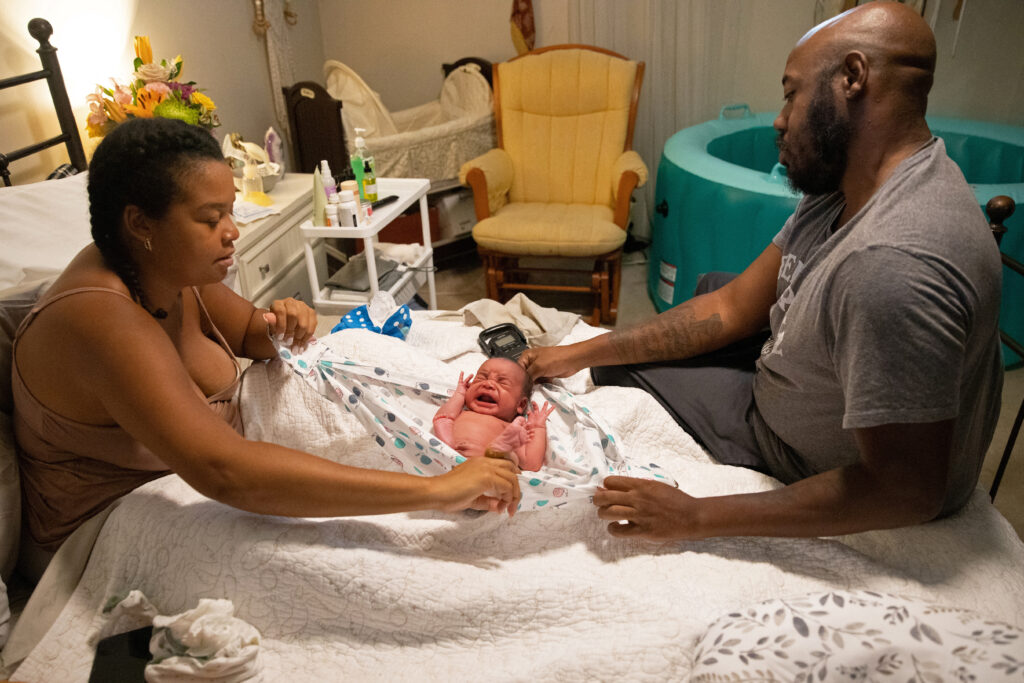
Holistic doula Ciara Clark, 34, and her husband Anthony Clark, a 38-year-old VIP associate for a sports betting company, prepare Evan, their crying newborn, to be weighed in Toms River, New Jersey, U.S., September 18, 2023. REUTERS/Joy Malone
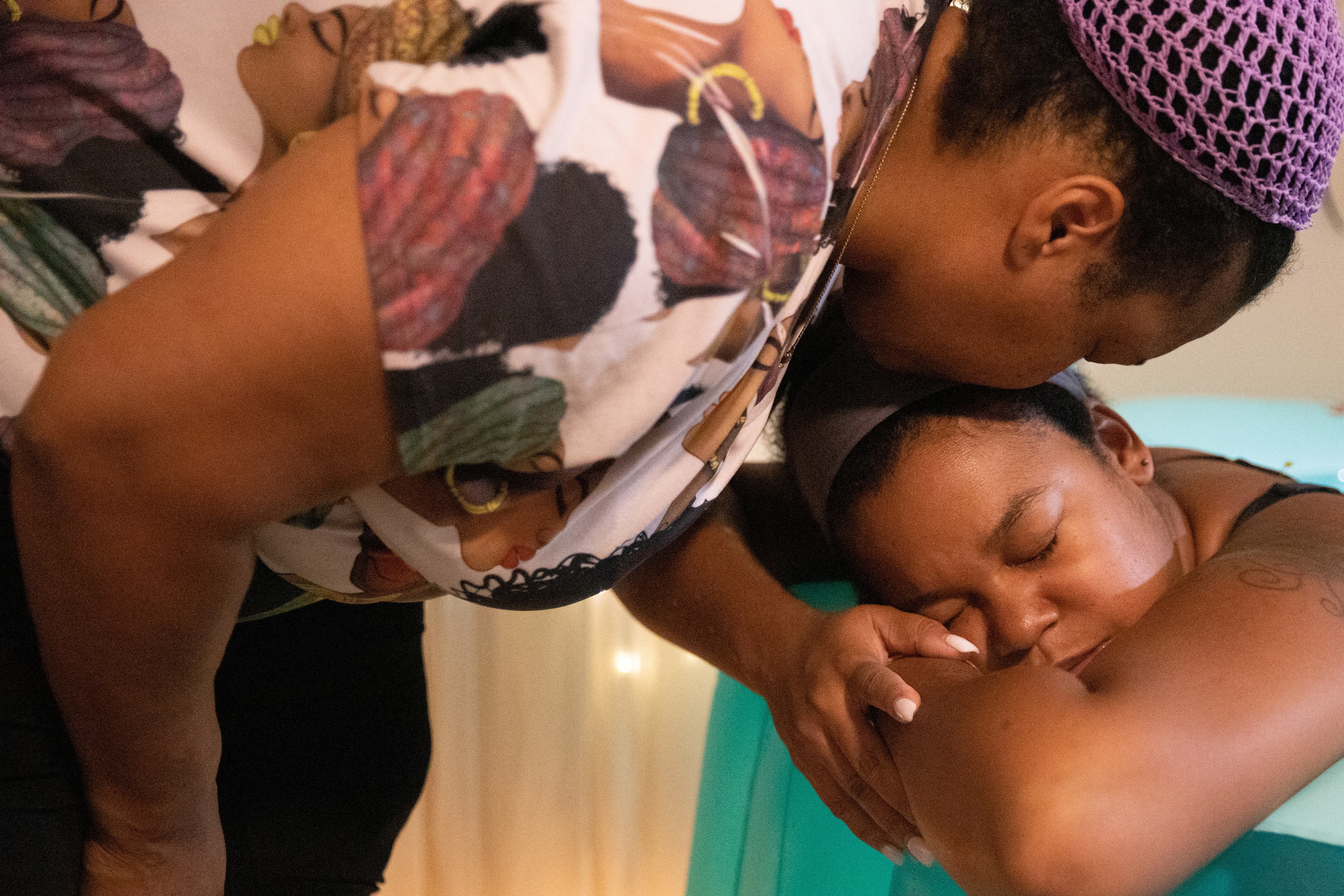
Holistic doula Ciara Clark, 34, receives a kiss from her mother Elle T Parker, 53, while she labors in her birthing pool at her home birth in Toms River, New Jersey, U.S., September 11, 2022. REUTERS/Joy Malone
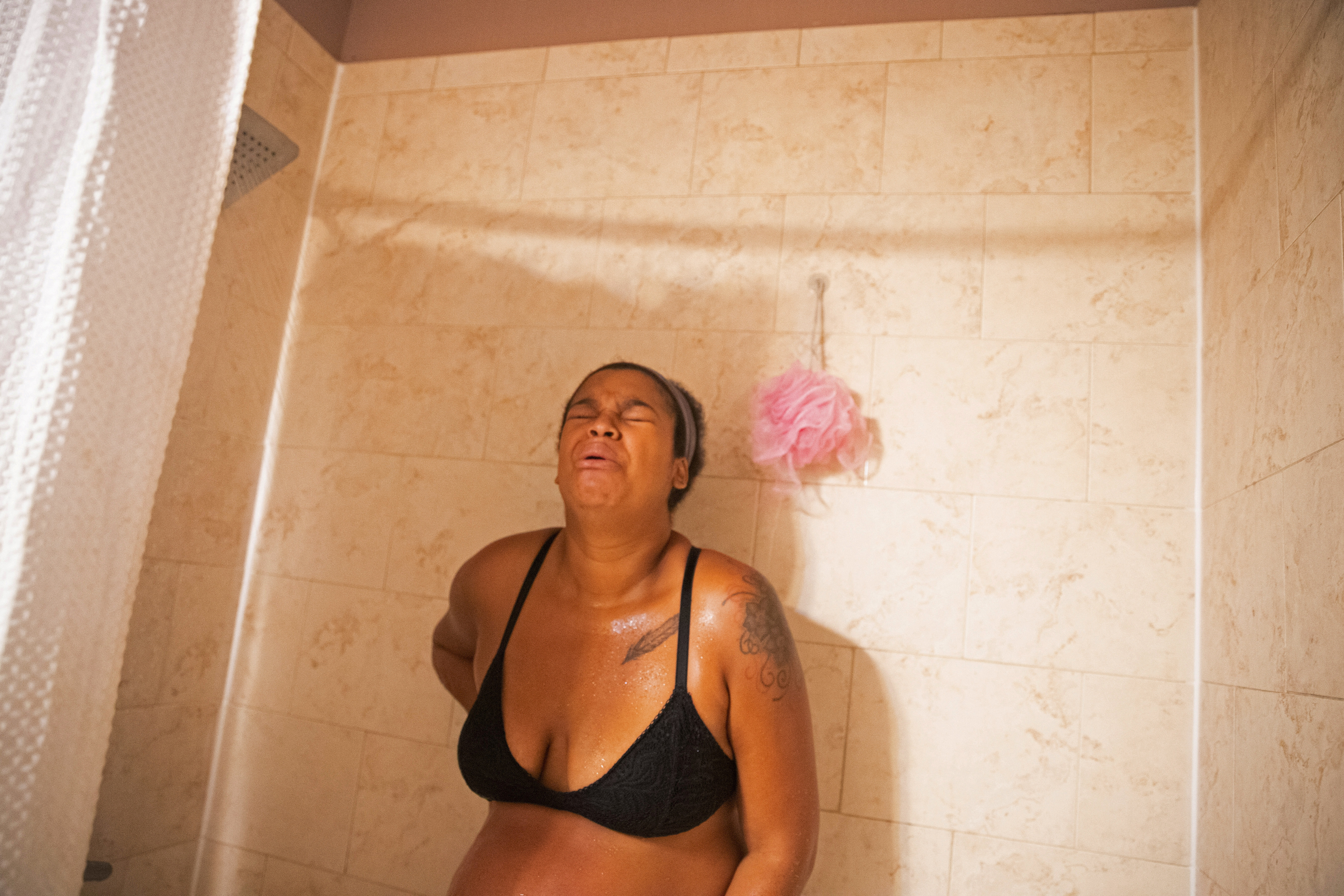
Holistic doula Ciara Clark, 34, labors in her shower at her home birth in Toms River, New Jersey, U.S., September 11, 2022. REUTERS/Joy Malone
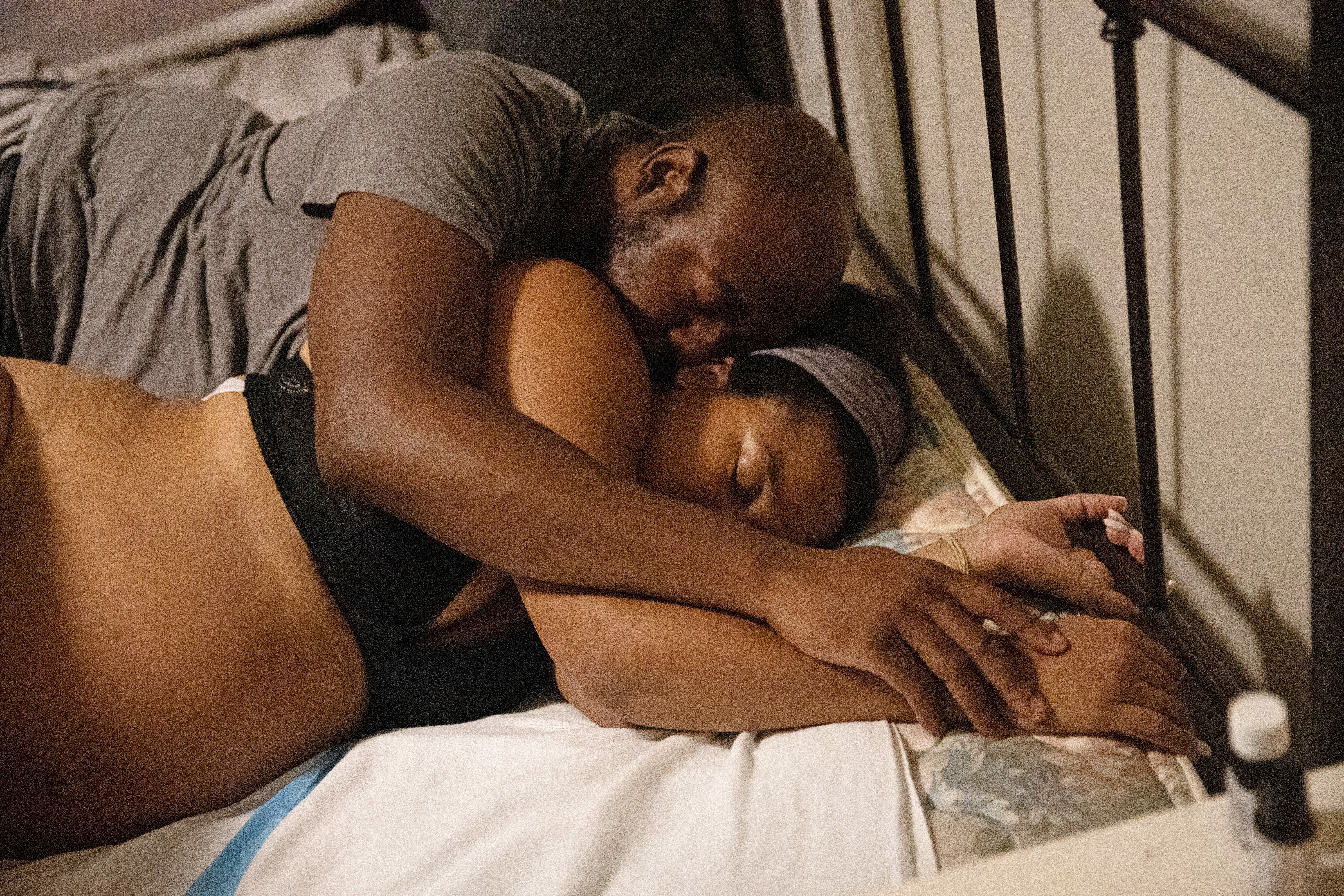
Holistic doula Ciara Clark, 34, receives support from her husband Anthony Clark, a 38-year-old VIP Associate for a sports betting company, while she labors in her bed at her home birth in Toms River, New Jersey, U.S., September 11, 2022. REUTERS/Joy Malone
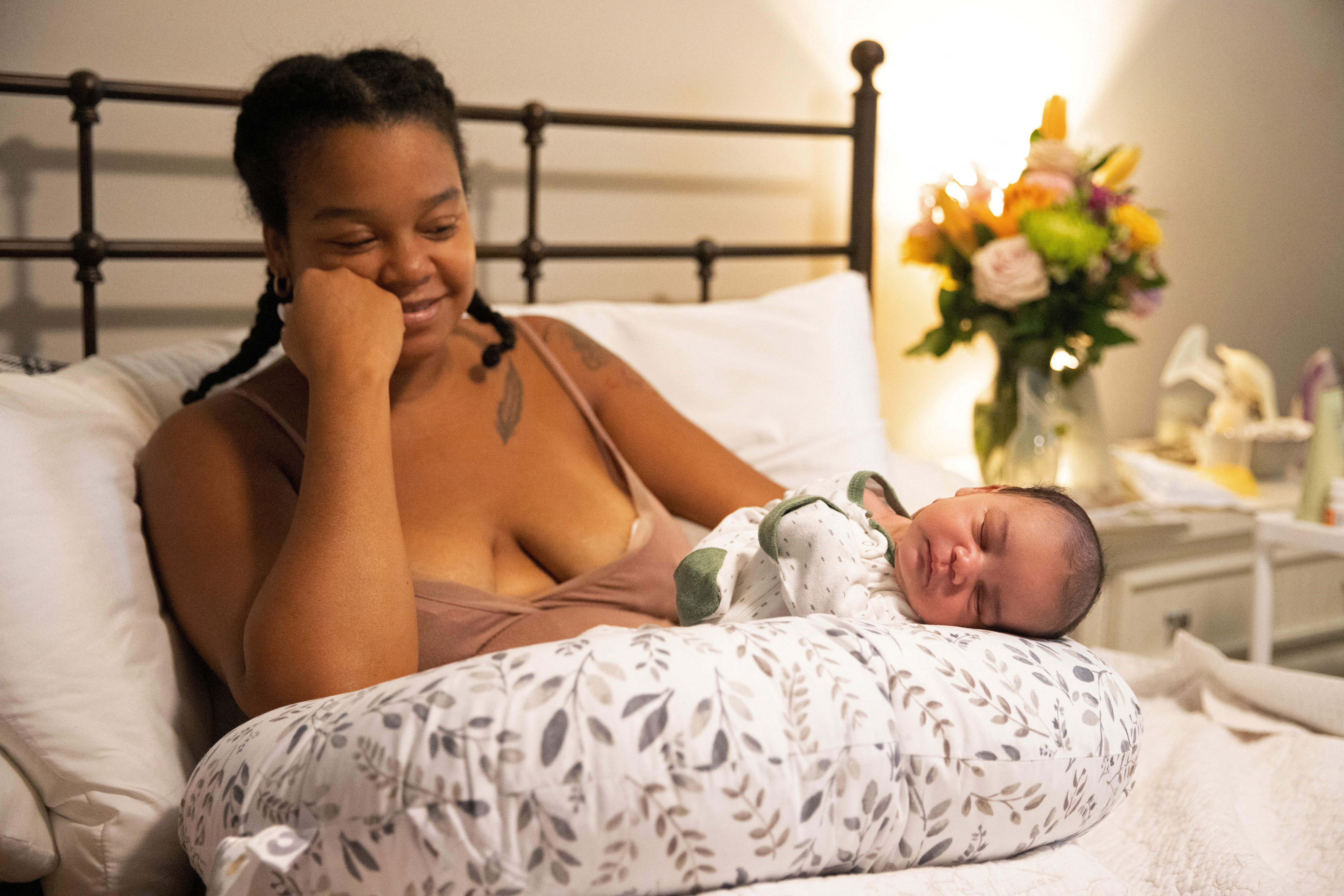
Holistic doula Ciara Clark, 34, looks lovingly at Evan, her sleeping newborn, in Toms River, New Jersey, U.S., September 18, 2022. REUTERS/Joy Malone
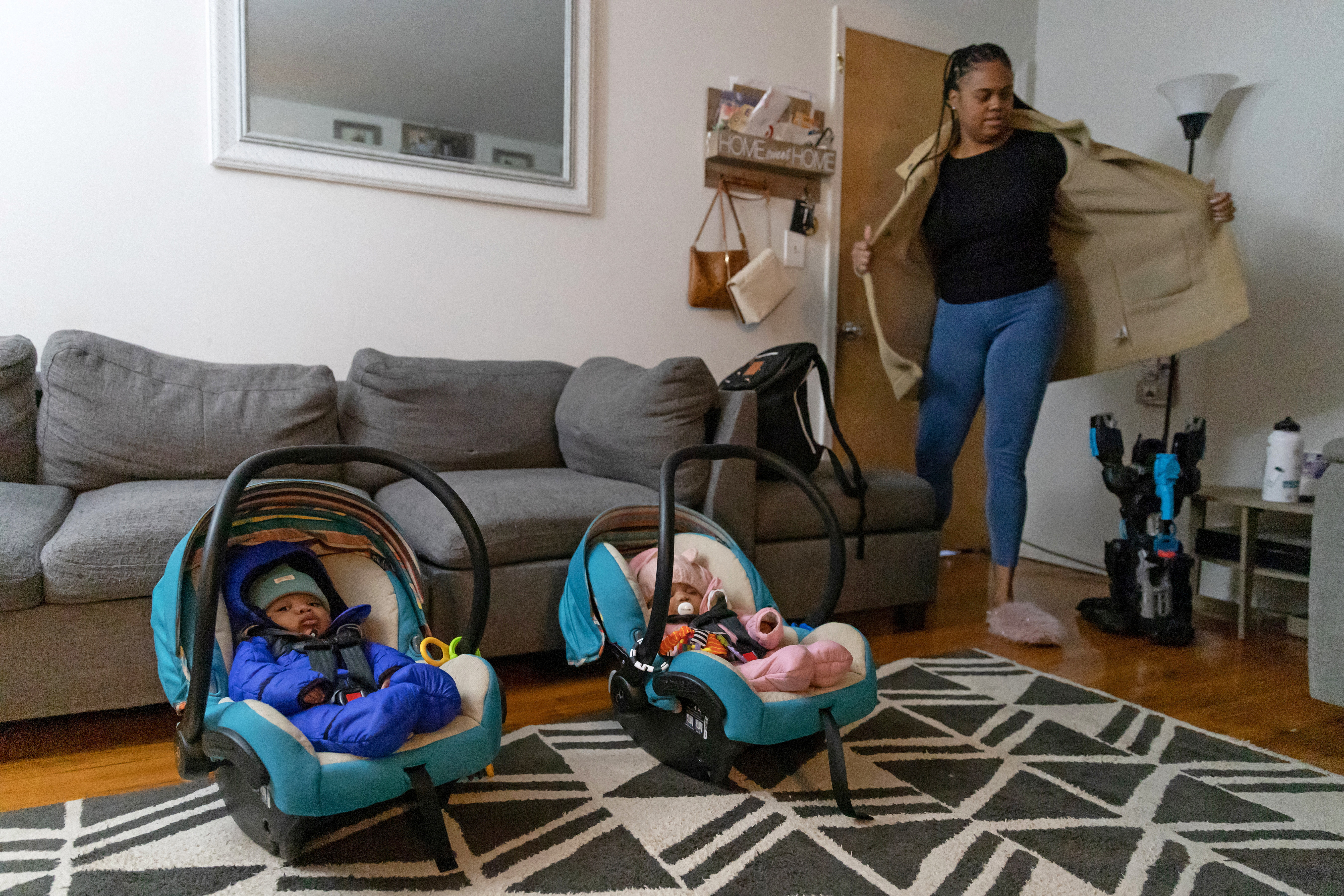
Chelsea Ward, 32, takes her coat off after picking up her seven-month-old twins, Callie Rae Polen and Cai Ryan Polen, from daycare in Fords, New Jersey, U.S., January 13, 2023. REUTERS/Joy Malone
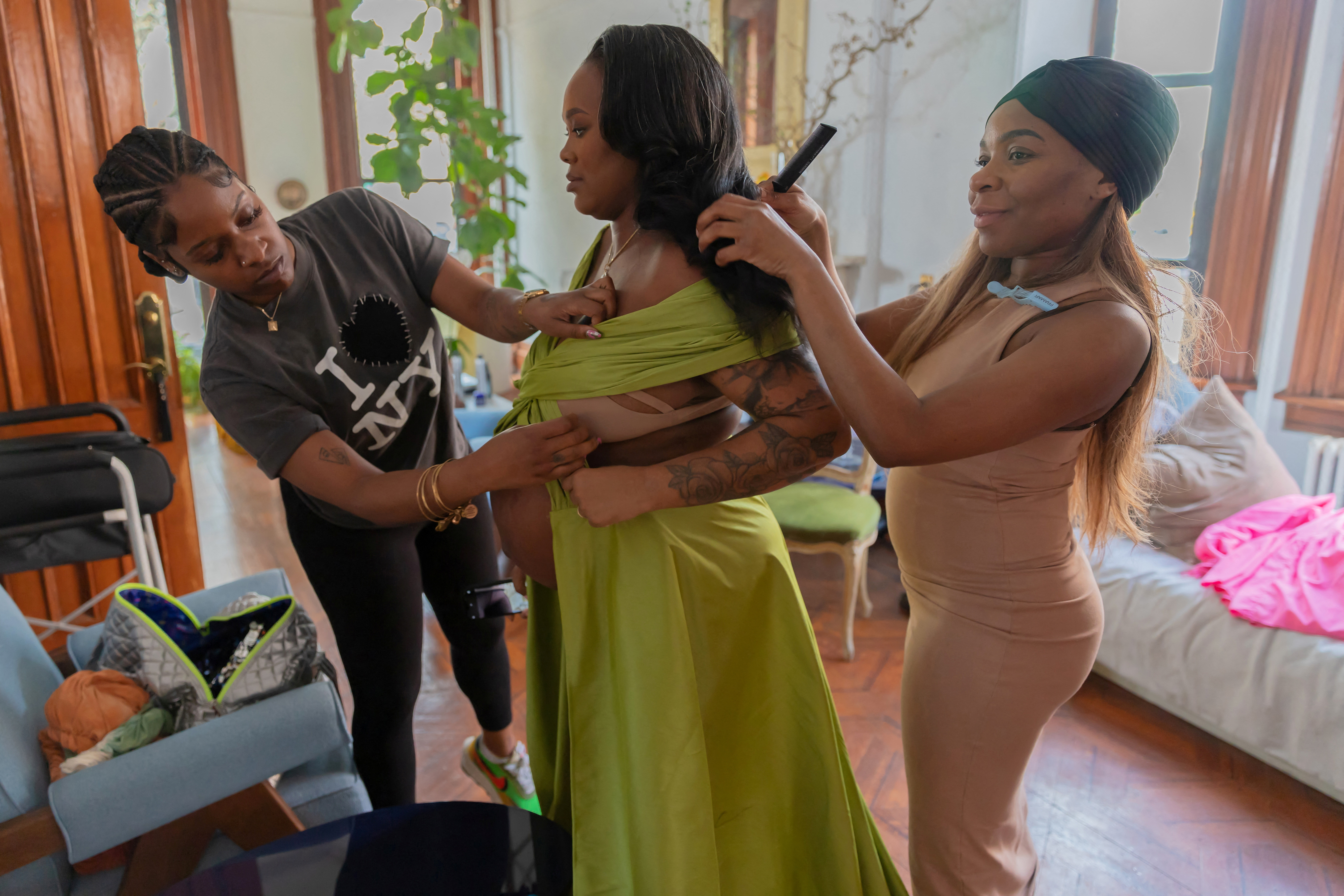
CEO Ashlee Muhammad, 37, has her hair, make-up, and wardrobe fixed during her last maternity shoot in Brooklyn, New York, U.S., April 6, 2023. REUTERS/Joy Malone
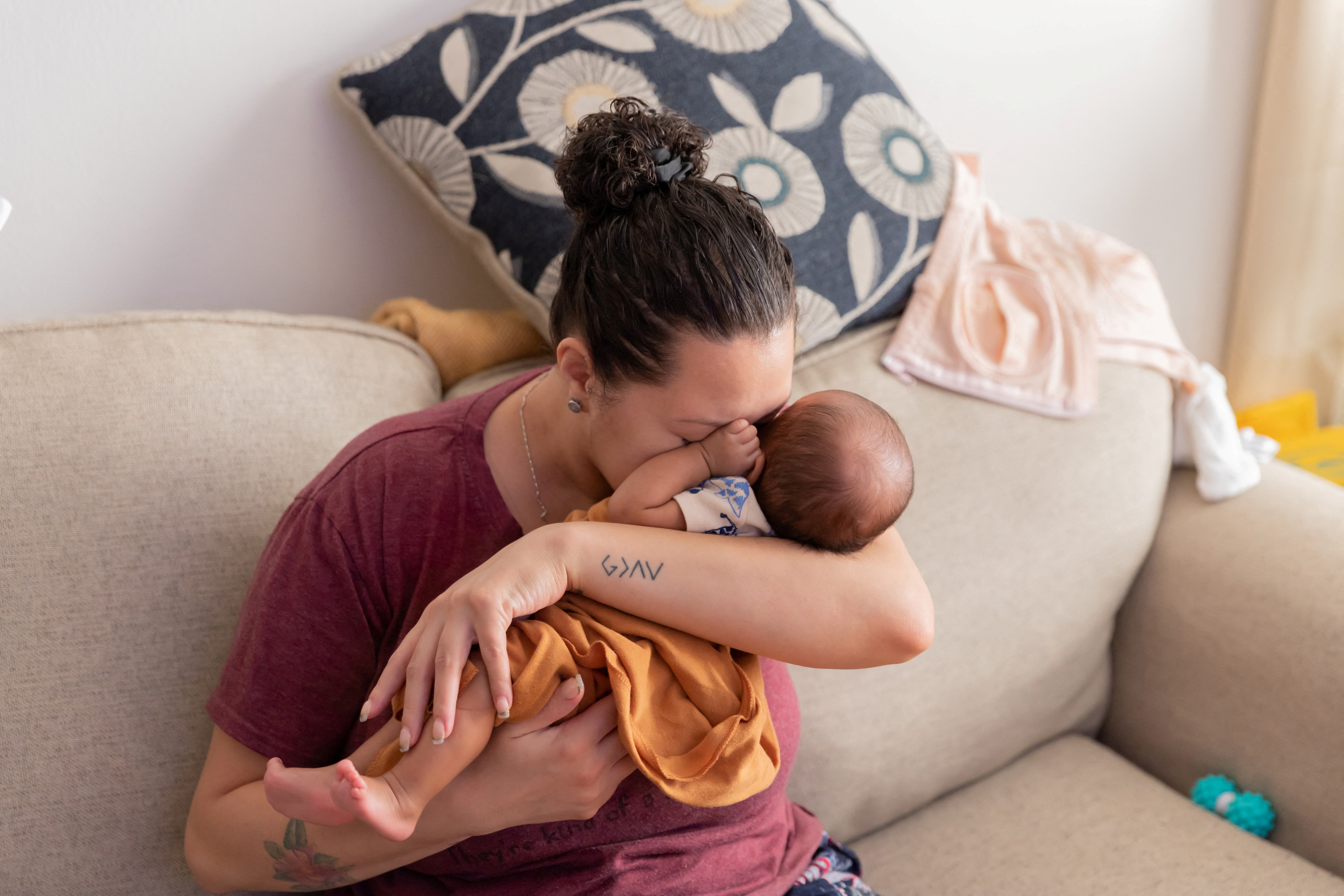
Program manager Shariah Bottex, 30, cuddles her newborn son Kaiel in Flushing, New York, U.S., March 16, 2023. REUTERS/Joy Malone
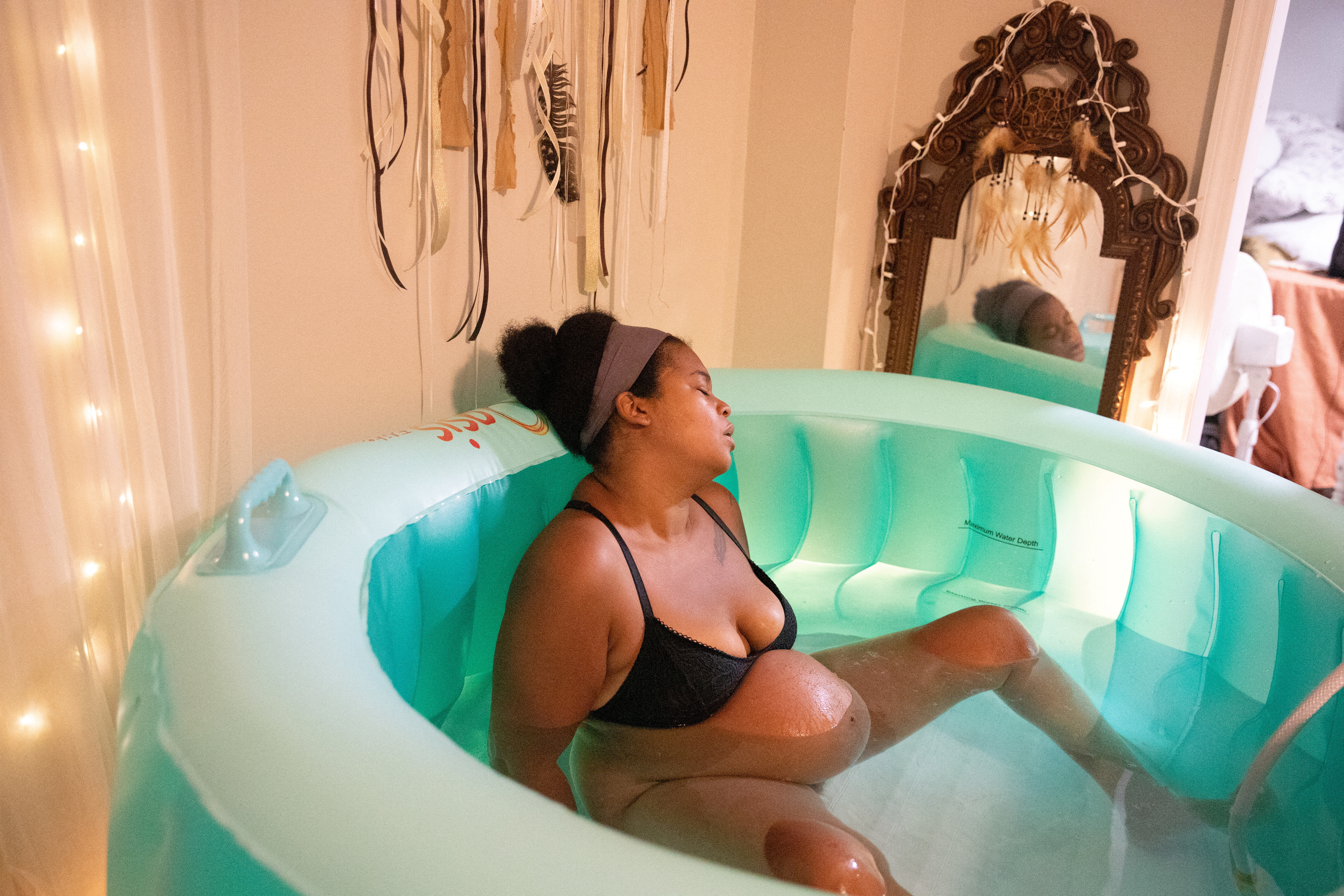
Holistic doula Ciara Clark, 34, labors in her birthing pool at her home birth in Toms River, New Jersey, U.S., September 11, 2022. REUTERS/Joy Malone
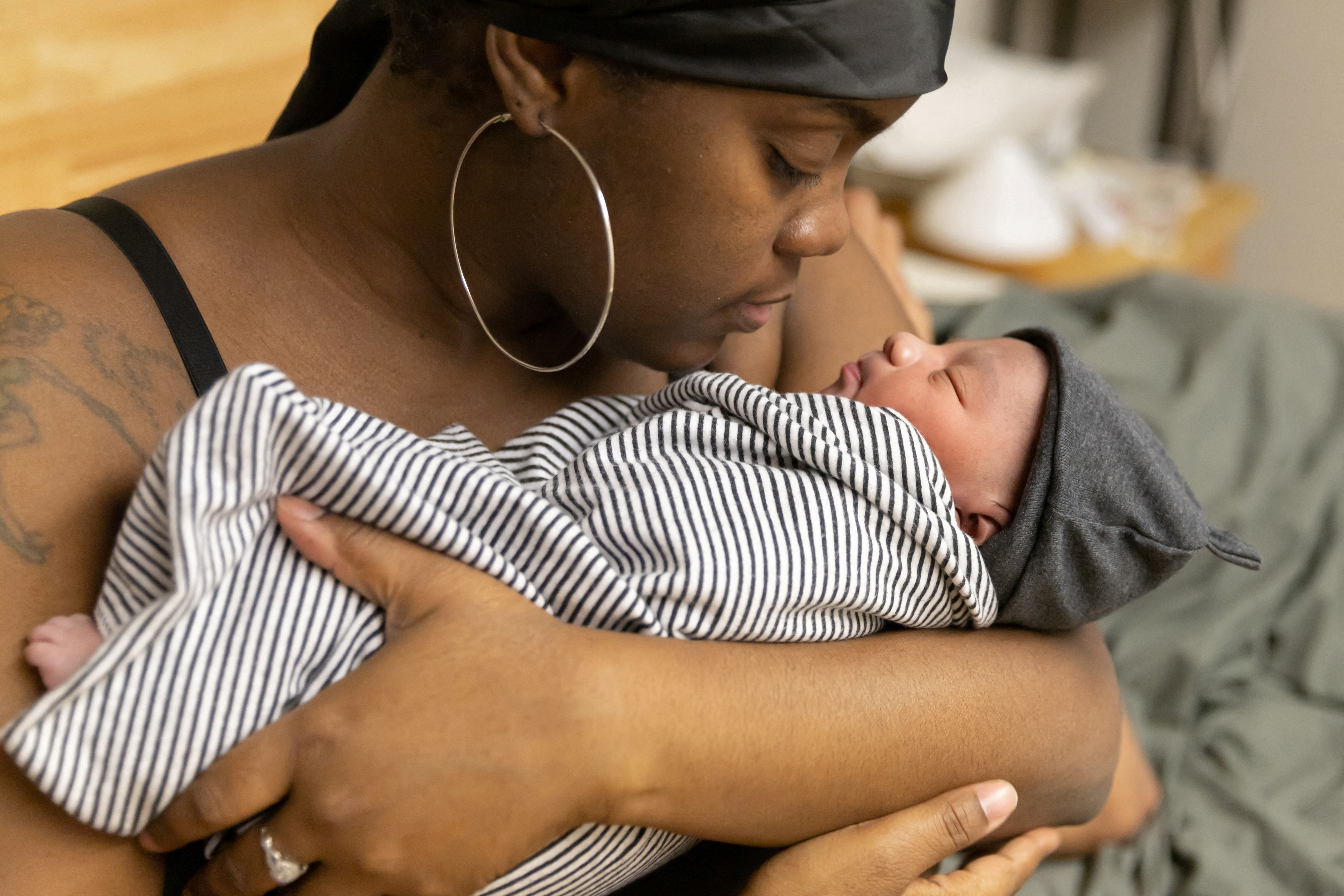
Medical assistant Lakayla Sobers, 31, holds her newborn son Alfonso Jr a few hours after giving birth, in a birthing center Brooklyn, New York, U.S., February 8, 2023. REUTERS/Joy Malone
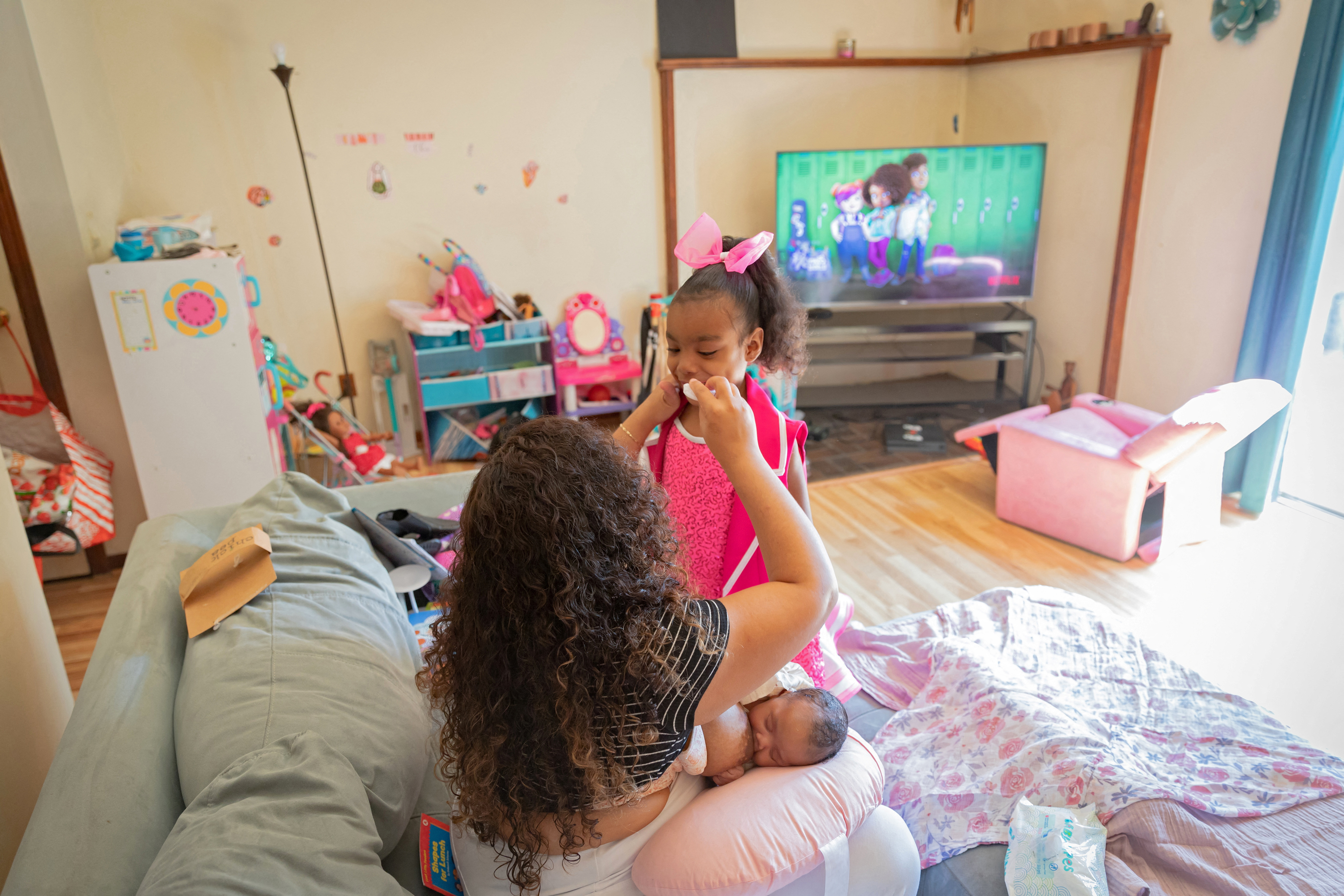
Bianca Haynes wipes her six-year-old daughter Afena’s mouth while breastfeeding her newborn daughter Zuri in Elmwood Park, New Jersey, U.S., May 30, 2022. REUTERS/Joy Malone
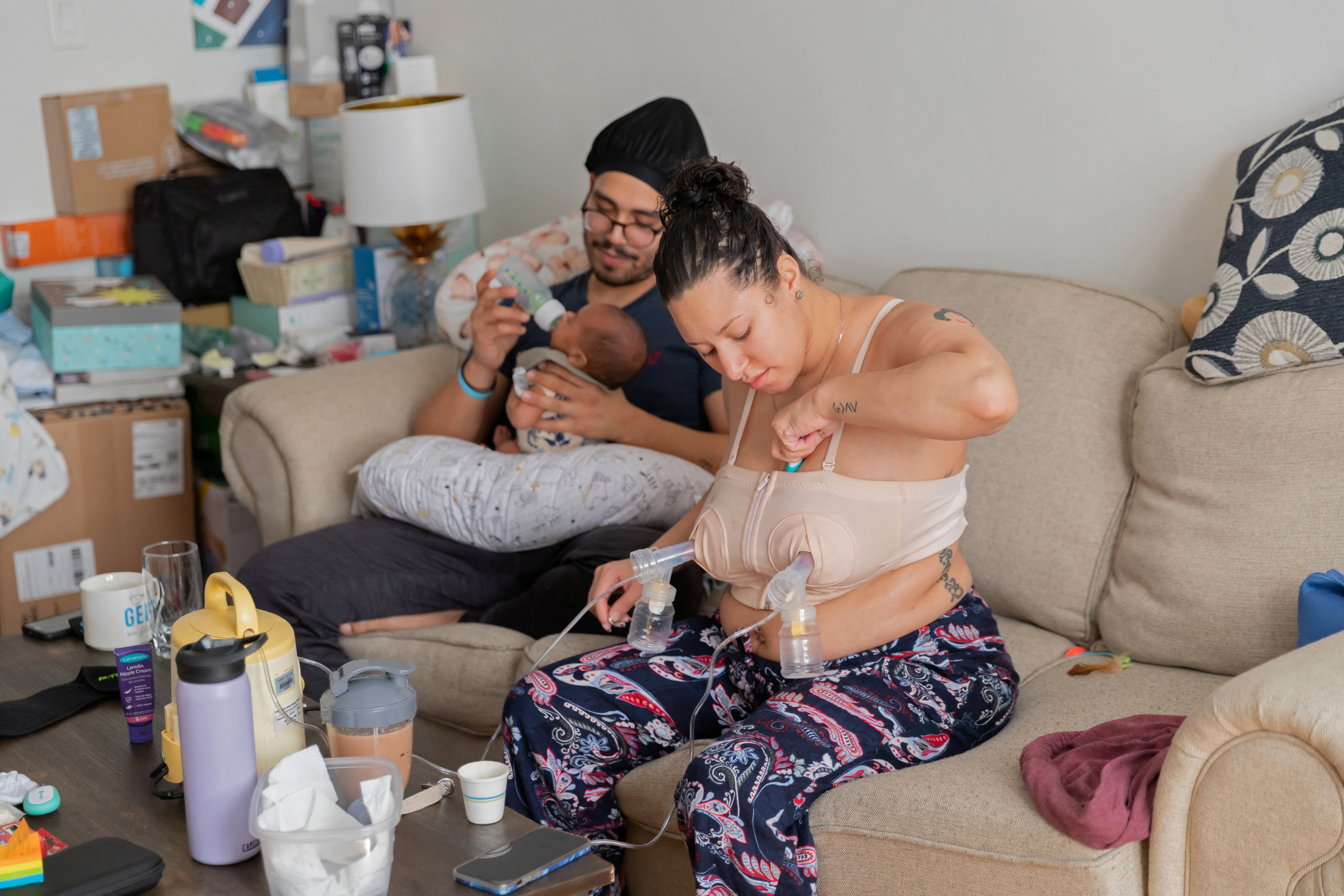
Program manager Shariah Bottex, 30, pumps milk while her fiance, paramedic Jose Quinonez, 30, feeds their newborn son Kaiel in Flushing, New York, U.S., March 16, 2023. REUTERS/Joy Malone
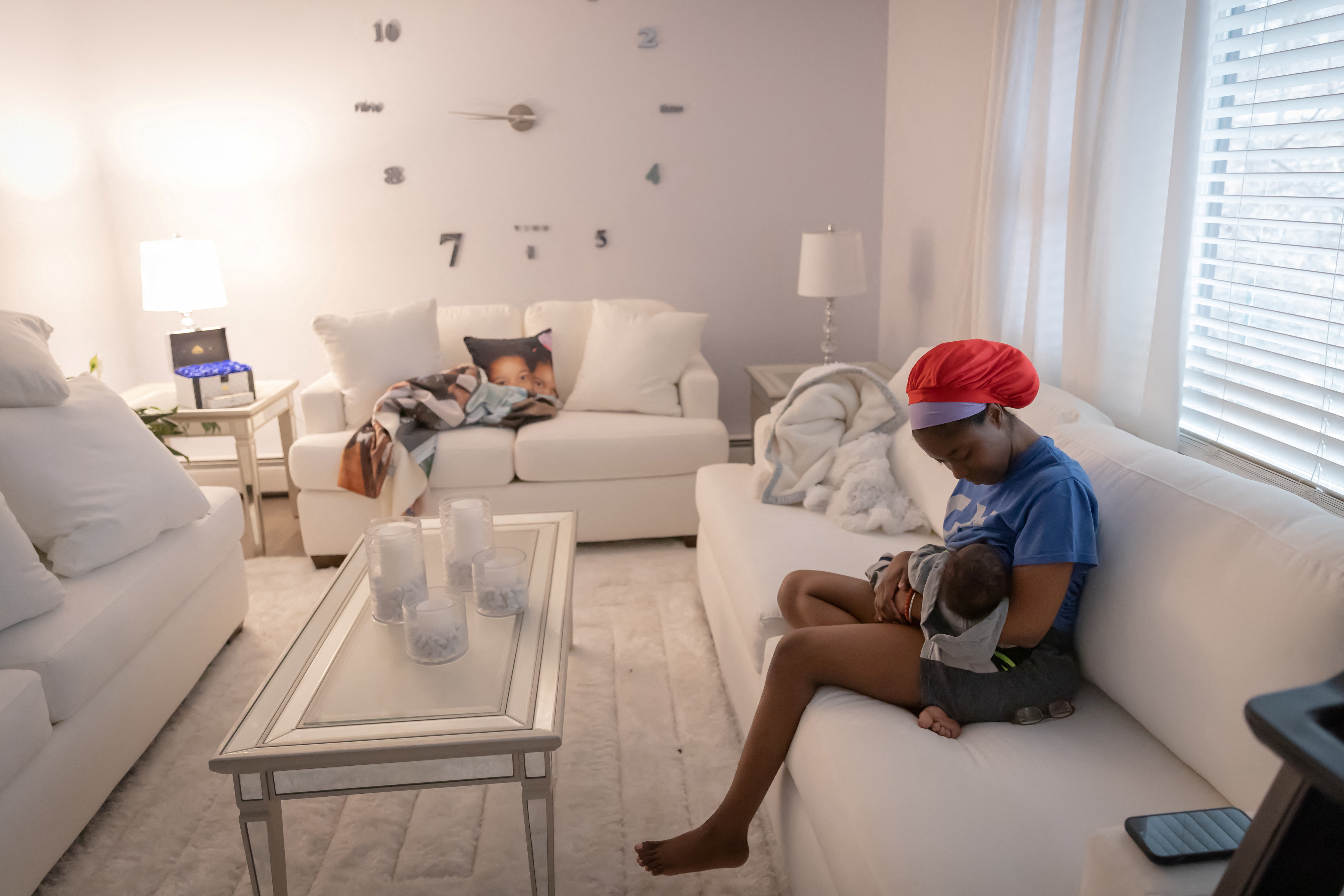
Accountant Aliyah Ponton, 25, breastfeeds Savion, her newborn son, while she sits in her living room in Sparta, New Jersey, U.S., February 25, 2023. REUTERS/Joy Malone
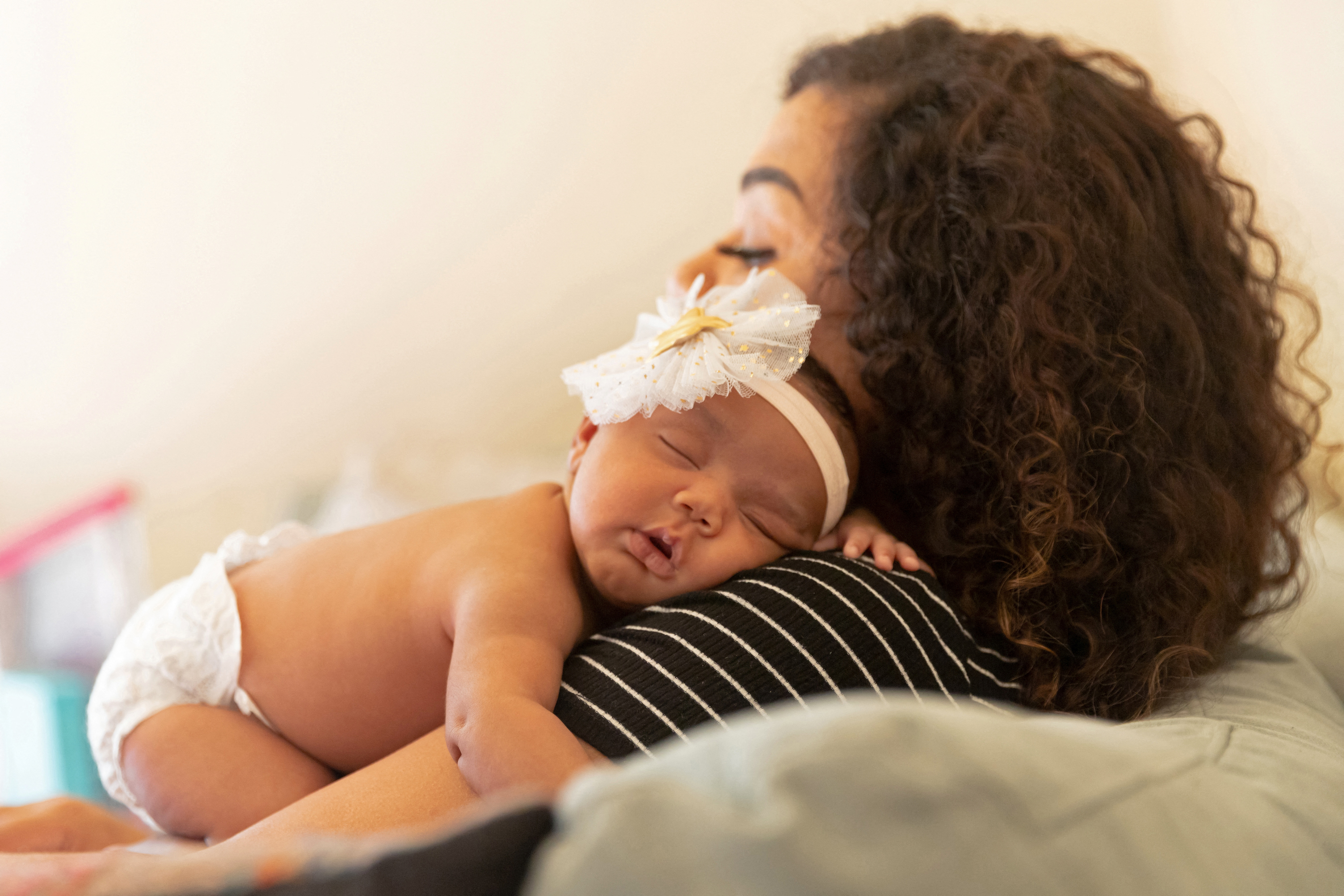
Bianca Haynes holds her sleeping newborn daughter Zuri in Elmwood Park, New Jersey, U.S., May 30, 2022. REUTERS/Joy Malone
