

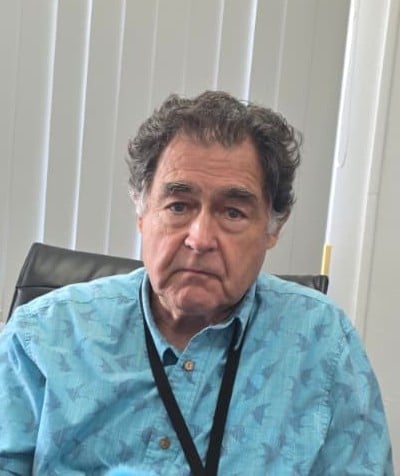




DISTRICT Court for the NMI Chief Judge Ramona V. Manglona has granted the request of Bonifacio “Boni” Sagana to reschedule his jury trial.
Sagana, through his court-appointed attorney David Banes, sought to continue the jury trial set for Oct. 4, 2022 to at least early December so he can review extensive discovery materials with an appointed investigator, who is currently off-island and unable to assist until one month before the currently set trial date.
The federal government, through Assistant U.S. Attorney Albert Flores Jr., does not oppose the continuance of the trial date and the extension of the pre-trial motions’ deadline.
Judge Manglona finds that Sagana’s motion has set forth adequate grounds for an ends-of-justice continuance under the Speedy Trial Act and that the continuance is reasonable.
The judge rescheduled the jury trial for Dec. 13, 2022 at 10 a.m.
“Pretrial motions shall be filed no later than Oct. 25, 2022 and any motions in limine shall be filed no later than Nov. 8, 2022. The motion hearing set for Friday, Aug. 19, 2022 is hereby vacated,” the judge said.
According to an online legal dictionary, a motion in limine is a motion, discussed outside the presence of the jury, to request that certain testimony be excluded.
Sagana has pleaded not guilty to the charge of conspiracy to unlawfully produce an identification document.
He was accused of involvement in producing counterfeited CNMI driver’s licenses.
Sagana remained released, under his personal recognizance, but is prohibited to leave the CNMI.
On Jan. 31, 2022, the federal court issued an arrest warrant for Sagana after he was indicted on the charge of conspiracy to unlawfully produce an identification document.
But U.S. Department of Homeland Security agents learned that Sagana had already left Saipan before they could arrest him.
On May 16, 2022, Sagana was arrested in Wisconsin.
A former longtime guest worker in the CNMI, Sagana was one of the advocates who sought improved immigration status for nonresident workers in the early and late 2000s.

