





THE Commonwealth Healthcare Corporation’s Oncology Center is now offering a cancer screening and prevention program, free of charge to all patients, regardless of citizenship.
The oncology center launched the pilot program in-house first before opening it up to the community two weeks ago.
The CNMI welcomed its very first and only oncologist, Dr. Peter Brett, three years ago, and since then, he has been working diligently with the oncology team and the hospital administration to help address cancer cases in the island community.
Brett said prior to his arrival, cancer patients were referred to the Philippines, Guam, Hawaii, or the U.S. mainland for treatment.
“Now, if you develop cancer here, we’re able to treat mostly here locally and provide local care,” he added. “We can provide, we think, state-of-the-art care — so, any kind of cancer medication treatment, like chemotherapy, immunotherapy, and targeted cancer treatment medicines, too.”
This also includes follow-up on a number of treatments, he added.
However, the CHCC oncology center is unable to provide certain services, such as radiation treatment and complex cancer surgery.
“Largely, we’re a cancer treatment and follow-up clinic,” he said.
Together with his team of oncology nurses, medical assistants, nursing assistants, financial counselor, dietitian, nurse practitioners, and physician assistants, Brett spends all day every day taking care of people with cancer.
“As soon as I arrived here three years ago. I was struck by the fact that so many people had cancer. It’s amazing how common cancer is here, particularly some kinds of cancers,” he said.
These include young women with very advanced cervical cancer, as well as individuals with colorectal cancer, breast cancer or mouth cancer.
He said patients were showing up with cancers that were very advanced.
“If cancer is detected early on…it is easier to treat and is more likely to have a better outcome compared to stage three or stage four cancer where it is spreading all over the body, Dr. Brett added.
“We can still treat people [with stage three or stage four cancer], but the chance of curing that is much lower [and] the chance of a good long-term outcome is much lower.”
He noted that CHCC’s oncology team offers a cancer screening and prevention program.
“We should do what we can to lower the chance of getting cancer here — it’s called prevention, and if you get cancer anyway, hopefully it gets detected when it’s an early stage when we have much better treatment available.”
He added, “It’s a big effort, but we think we can do it. You don’t see this kind of program even in the U.S. mainland. Because we’ve got a population of 50,000 people, we want to get out and engage all 50,000 people who live on the island, and see what we can do to lower their chance of getting cancer or pick it up early if they ever get cancer…. We’re looking at common cancers and what we can do to screen for them.”
Late stage
Dr. Brett noted because lots of women in the islands have not been getting mammograms on a regular basis, oftentimes than not, breast cancers are detected at a late stage.
With colorectal cancer, the oncology center has been taking stool samples from patients to see if there are any abnormalities.
Other common cancers in the islands are lung cancer and oral cancer, given the massive number of smokers, betel nut chewers, and tobacco chewers in the island community.
The oncology center has also been talking to patients about general lifestyle factors that can decrease the likelihood of cancer, such as physical activity, having a diet rich in fruits and vegetables and low in fat; as well as, as much as possible, not smoking, drinking alcohol, chewing tobacco, and/or chewing betel nut.
It is recommended that individuals have about 30 minutes of physical activity three times a week.
“Physical activity seems to lower the risk of getting cancers as well. So, diet, activity, and healthy habits are important,” said Brett.
“We’re trying to make a big comprehensive cancer screening and prevention program that reaches all people on the island, that’s free to everybody, to lower the risk of getting cancer in the first place or, if you ever get cancer in your life, that gets caught early and you get to cure it much more easily,” he said.
“We think there’s a lot of big impact on families and people here. This is unique. You don’t see this, even in the U.S. mainland. I came from California. I was a cancer doctor there for 27 years and there are no programs like this that are really devoted, led by clinicians. We think we can make this work here. The hospital is so behind it and public health is very much behind it…. We just need to engage people.”
The cancer screening and prevention program offers counseling on a healthy diet, activity, and healthy habits.
It also includes any applicable referrals for screening mammogram, pap smear, HPV testing, FIT test, low-dose screening CT chest, and tobacco/alcohol/betel nut cessation.
On a case-by-case basis, patients are encouraged to return to the center for a follow-up visit one-month and a year after their initial screening.
Screening
Based on clinical evaluation and recommendations from the American Cancer Society, it is recommended that males and females of all ages be screened for cancer.
“We start screening for cancer at different ages. Cancer is a disease that increases as we age,” said physician assistant Mary Lou Stevens.
For females, breast cancer screening is recommended beginning at the age of 40 with an optional mammogram annually until the age of 44.
At the age of 45, it is recommended that women have an annual mammogram until the age of 54.
For women at least 55 years of age, it is recommended that they receive a mammogram every one to two years if they are in good health.
For cervical cancer screening, for women under the age of 25 and for women who have had a total hysterectomy — meaning that they have had their uterus and cervix removed, no cervical cancer screening is necessary.
Beginning at the age of 25, women should take a primary human papilloma virus, or HPV, test and/or pap smear every five years until the age of 65.
For women at least 65 years of age, a primary HPV test or HPV+Pap co-test is recommended every five years, unless their screening results have always been negative since they were 40 years of age.
Colorectal cancer screening for males and females begins at the age of 35 with a fecal immunochemical, or FIT, test annually, but only if their first degree relative had colorectal cancer.
At the age of 45, it is recommended that said individuals receive an annual FIT test, until the age of 75.
Individuals at least 75 years of age are recommended to only take the annual FIT test if they are in good health.
No colorectal cancer screening is needed for individuals over the age of 85.
Lung cancer screening for males and females is recommended beginning at the age of 55.
An annual low-dose chest CT scan is recommended for individuals 55 to 74 years of age, and current or former smokers who have smoked for more than 20 years.
No lung cancer screening is recommended for individuals below 55 years of age or over 75 years of age.
Oral cancer screening for males and females is recommended beginning at the age of 25/
An annual oral cancer screening exam is recommended for individuals 25 to 74 years of age, and current or former betel nut and/or tobacco chewers who have been chewing for more than 10 years.
Hereditary cancer screening is recommended for individuals at least 18 years of age who have at least one first-degree relative who was diagnosed under age 50 with prostate, breast, ovarian, endometrial, gastric, colorectal, pancreatic, or melanoma cancer.
It is also recommended for individuals at least 18 years of age who have at least two first-degree relatives who were diagnosed at any age with the same cancer type, such as a mother and sisters who both had endometrial cancer in their 60s.
Prevention
For cervical cancer in males and females, it is recommended that individuals 9 to 26 years of age receive the HPV vaccine, which is available through the CHCC Population Health Immunization Program.
Studies have shown that cervical cancer is caused by the HPV, so the HPV vaccine helps to prevent and cure cervical cancer.
“No one should ever really die of surgical cancer because now there is a vaccine. Cervical cancer is caused by the HPV, and so there’s a free vaccine for it. It’s offered free by the hospital and if you get a vaccine when you’re younger than about 26 years old, it will prevent you from ever getting a cervical cancer any time in your life,” said Dr. Brett.
For males and females with or at high risk of lung cancer, smoking cessation is encouraged for smokers of all ages.
Smokers are referred to the CHCC Tobacco and Prevention Control Program for further assistance.
A similar advisory is given for males and females with or at high risk of oral cancer, with a chewing cessation program offered also through the CHCC Tobacco and Prevention Control Program.
Tests and procedures
Testing and procedures for breast cancer include a screening mammogram offered at CHCC Radiology.
A screening breast ultrasound and a diagnostic mammogram are recommended only if there was an abnormality found in the initial screening mammogram.
Testing and procedures for cervical cancer include a screening HPV test or HPV+Pap co-test of the cervix, performed by a gynecologist at the CHCC Women’s Clinic.
A cytology and HPV interpretation and report is conducted by the Hawaii Pathologists’ Laboratory.
If an abnormal pap or HPV test is found, and if recommended by the gynecologist, a diagnostic and therapeutic colposcopy is conducted by the CHCC Women’s Clinic.
If a colposcopic biopsy is performed, a pathology interpretation and report is conducted by the Hawaii Pathologists’ Laboratory.
For colorectal cancer, tests and procedures include a FIT test at the CHCC lab.
If there are abnormalities found in the FIT test, a screening colonoscopy is conducted. with a possible biopsy, by the CHCC Family Care Clinic surgeon.
Should a colonoscopic biopsy be performed, the pathology interpretation and report would be prepared by the Hawaii Pathologists’ Laboratory.
For lung cancer, tests and procedures include a low-dose screening chest CT scan at CHCC Radiology.
A follow-up diagnostic CT chest scan would only be performed if the screening CT chest was found to be abnormal, and if recommended by a radiologist at CHCC Radiology.
If a lung biopsy is performed, the pathology interpretation and report would be prepared by the Hawaii Pathologists’ Laboratory.
For oral cancer, a screening exam can be conducted at CHCC dentistry, other Saipan dentistry, or an ear, nose, and throat doctor.
If an abnormal lesion is seen, a biopsy of the lesion will be performed, and the pathology interpretation and report would be prepared by the Hawaii Pathologists’ Laboratory.
For hereditary cancer, a Color Genomics saliva test kit is used on a patient, requiring them to spit into a test tube and await results from experts.
“Some patients…are predisposed to cancers because of genetics. We like to screen [these] patients…and also identify whether or not they have children who may be predisposed, then do the testing so that we can monitor them more closely and they will know if they need to have more frequent testing or start testing earlier,” said nurse manager Mary Quinn Rozkydal.
If an individual tests positive for hereditary cancer, the test result is given to the patient with the recommendation to have genetic counseling with a trained genetic counselor.
It is also recommended that the patient notify family members since they may also want screening after learning of these results.
The patient is then referred to a primary care physician for advice on future screening and prevention tests or procedures, and the patient is no longer part of the CHCC Cancer Screening and Prevention program.
The CHCC Oncology Center is open 8 a.m. to 5 p.m., Monday to Friday.
Dr. Brett is available on-call 24/7 to all cancer patients in need of urgent care.
For more information, go to https://www.chcc.health/cancercenter.php
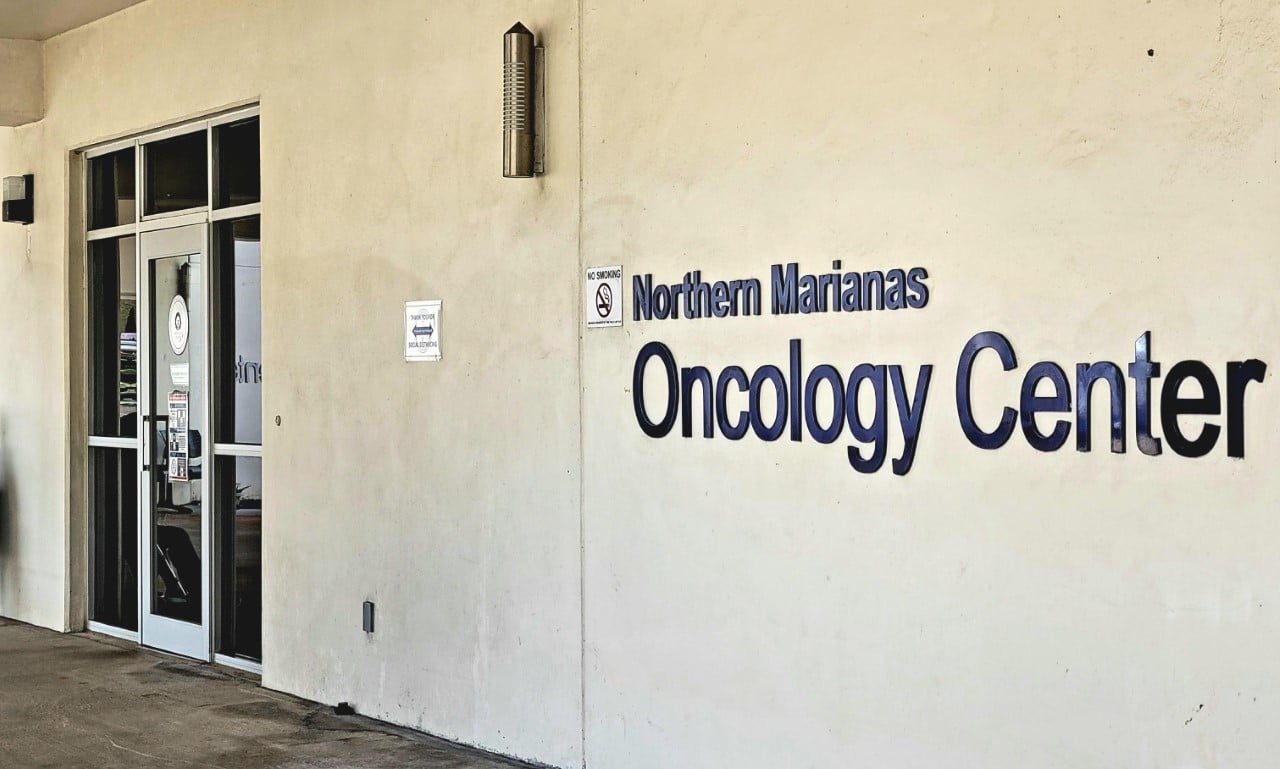
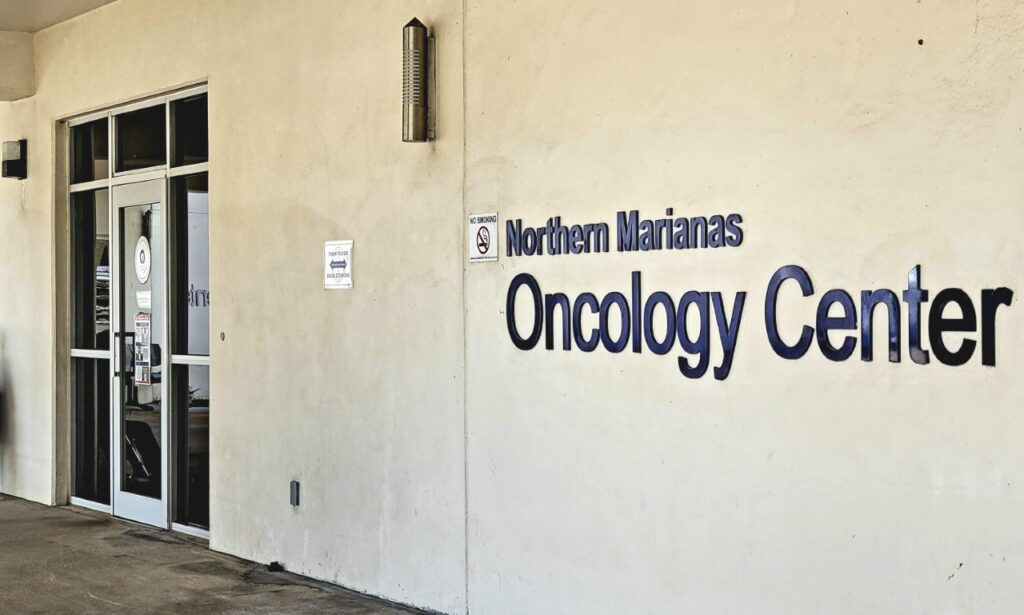
The Northern Marianas Oncology Center is located next to the CHCC hemodialysis center on Navy Hill.
The official logo of the Northern Marianas Oncology Center.
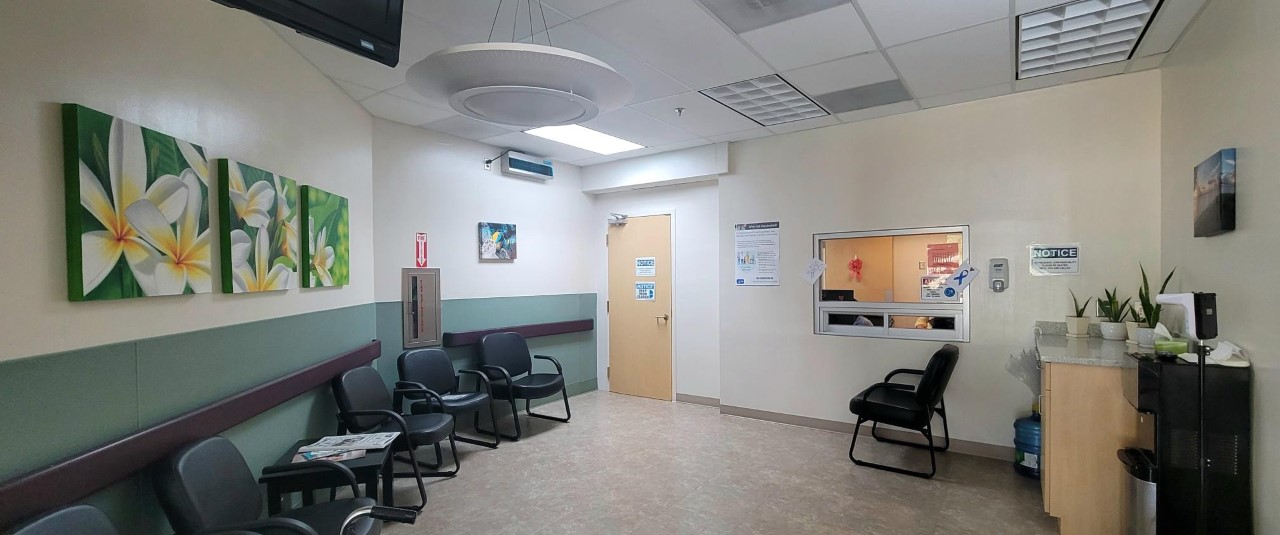
The waiting room of the Northern Marianas Oncology Center.
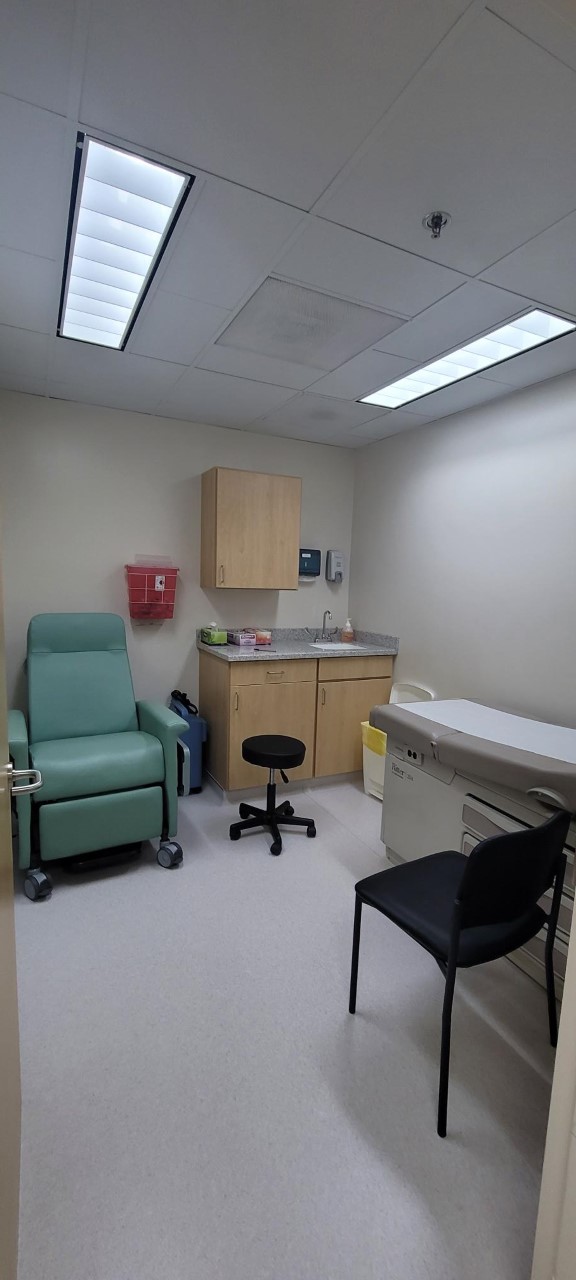
An examination room at the Northern Marianas Oncology Center.
