





CNMI transitional workers or CW-1 touchback rules will definitely affect the local economy, Department of Labor Secretary Vicky Benavente said on Tuesday.
“Our economy is just beginning to recover from the pandemic and its economic effects…and now we’ve got to deal with the departures of workers…. It’s a tough time but I believe we are up to the challenge,” Benavente said.
Asked how many CWs will leave the CNMI, she said: “We don’t have control of the count of CWs in the CNMI. It’s USCIS that has been tracking CWs in the CNMI. We can track CWs only if their employers post the positions on our online list of job vacancy announcements.”
She said once the CWs leave the CNMI, “we will have fewer skilled workers than we need to run our economy.”
Benavente said CNMI DOL has been helping businesses prepare “for the expected exodus of contract workers.”
“What we’ve been doing is posting many job announcements for local businesses to try and attract local and other U.S. qualified workers, but of course that’s a challenge here and also in the United States. What we’re seeing here [labor shortage] is something not new or specific to the CNMI,” Benavente added.
“But we have some students who are graduating from high school, and some returning residents who want to come back home and help with the challenges. It’s a good time…to get together, all the stakeholders, the government, and see what we can do about this challenge — it is a challenge,” she said.
In the meantime, Benavente is encouraging all employers “to follow the intent of the law…as we also continue to communicate with our federal partners.”
She said CNMI DOL is drafting a letter to U.S. Citizenship and Immigration Services to “voice the concerns of the private sector.”
USCIS “needs to hear from key stakeholders, the government and our private sector, about what is going on in the CNMI regarding workforce development and training,” Benavente added.
According to the USCIS “touchback” rules, a foreign worker may not be granted CW-1 status beyond three consecutive petition validity periods “unless the [worker] has departed and remained outside of the United States for a continuous period of at least 30 days after the expiration of the third consecutive petition validity period and before the filing of any new petition on behalf of the beneficiary.”

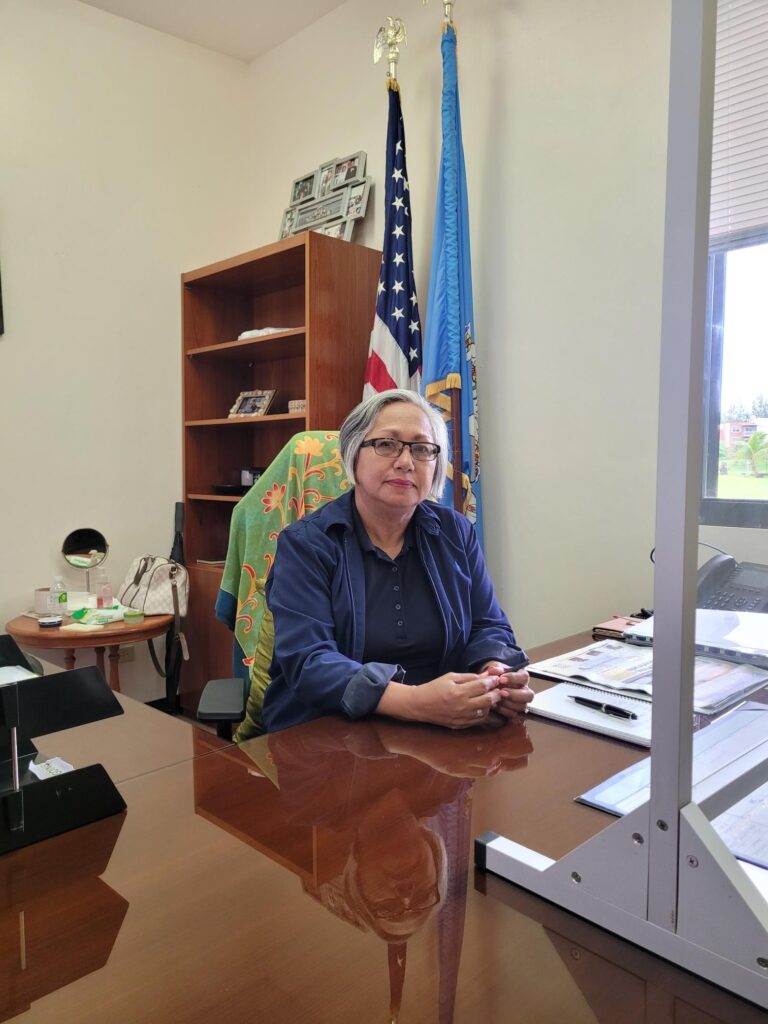
Vicky I. Benavente
