





NOTING that the CNMI is still in the typhoon season, Commonwealth Utilities Corporation Executive Director Gary Camacho said community members should consider the importance of typhoon preparation.
He said CUC is encouraging the public to immediately implement safety measures within their homes and businesses and to be alert to electrical, water and wastewater safety concerns in case a storm approaches the islands.
“We’ve been in the typhoon season since June and it will last throughout December,” he added.
He noted that Typhoon Nanmadol recently hit Japan while Hurricane Fiona has “deluged” Puerto Rico.
Camacho said CNMI residents should “ensure that your household has adequate drinking water supply, water containers if you don’t have a water tank, batteries for flashlights, and if you have a generator, stock up on fuel supply accordingly.”
During a storm, get in a safe place, buckle down, stay in place and wait for the storm to subside, Camacho added.
Residents should also expect a disruption of utility services, he said.
“We will try to hold the power and water services as long as possible, but if it becomes very dangerous and could be very detrimental to our programs, then we will shut the power down,” Camacho said.
For their part, CUC personnel will be in designated areas to try to sustain services, he added.
“We will do the best we can, as we have done in the past….[and] we will review and assess and try to bring up the affected utility system accordingly and safely.”
In addition, he said CUC, in collaboration with the Emergency Operations Center and CNMI Homeland Security, “will continuously put out information regarding the affected areas, and how we are progressing, and how we are restoring water and power in those areas.”
Camacho said CUC has “personnel that are more than capable, and we have teams from other areas that are willing to assist.”
He added, “There were times when we brought in hundreds of linemen and a lot of equipment, including the largest plane in the world, the Antonov, which in 2015 brought a good number of 60-foot trucks, and a large number of linemen and engineers from a variety of different locations.”
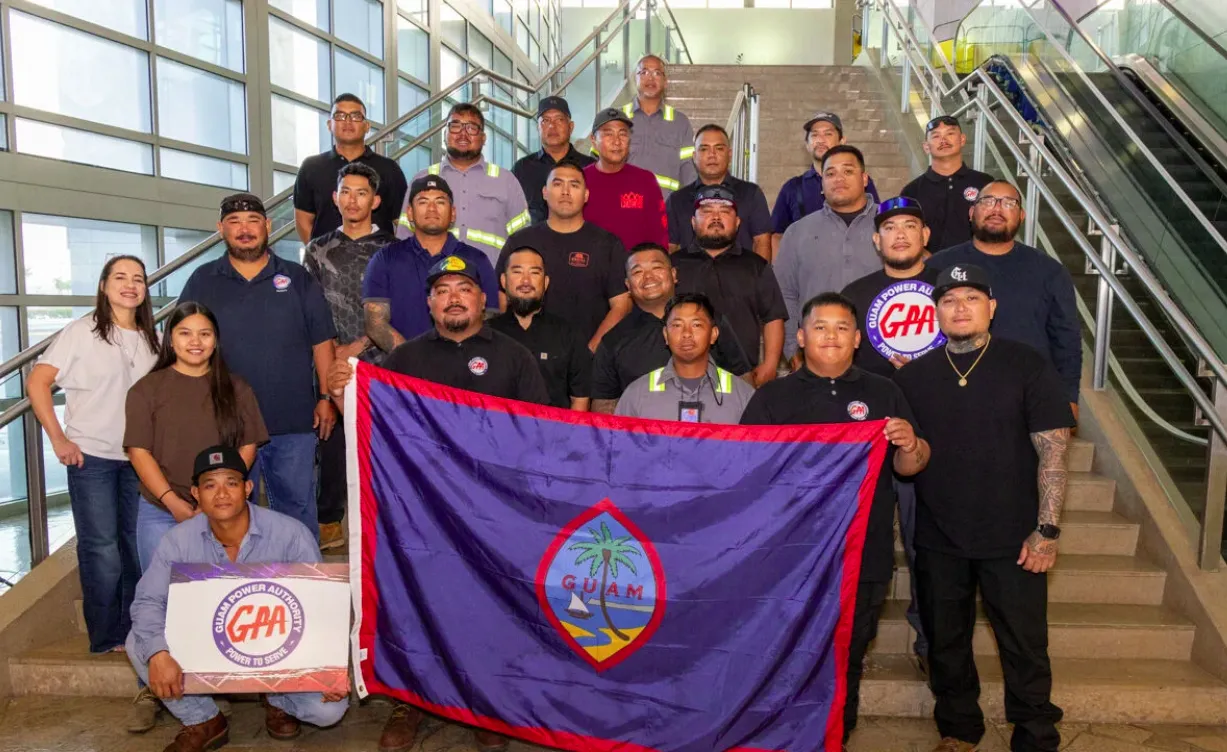
Camacho said CUC has “a good relationship with Guam Power Authority, the utility company of the Federated States of Micronesia, and a good number of utility companies in the U.S.”
Following a storm, “we have to be extremely careful because there could be serious damage out there, and if parts of the power system are still energized, we want to be very clear: people should stay away from fallen, dangling or damaged electric wires,” Camacho said.
“As for water supply which is very essential,” he added, “it will probably be the number one effort that we need to address early on, as early as possible, but of course an assessment will take place, a review of the extent of the damage, a report of where the damage is.”
He said Saipan has 142 deep wells whose pumps are powered by electricity.
“The generators that worked there during Typhoon Yutu have been replaced,” he added. “Although not all the projects were completed, the generators are in place. If there is no damage to the water line, we will turn on the deep wells, but if there’s damage to the water wells then there’s nothing that electricity can do.”
For more information on typhoon preparedness, go to CUC’s website at https://www.cucgov.org and click the “Typhoon & Safety” section.
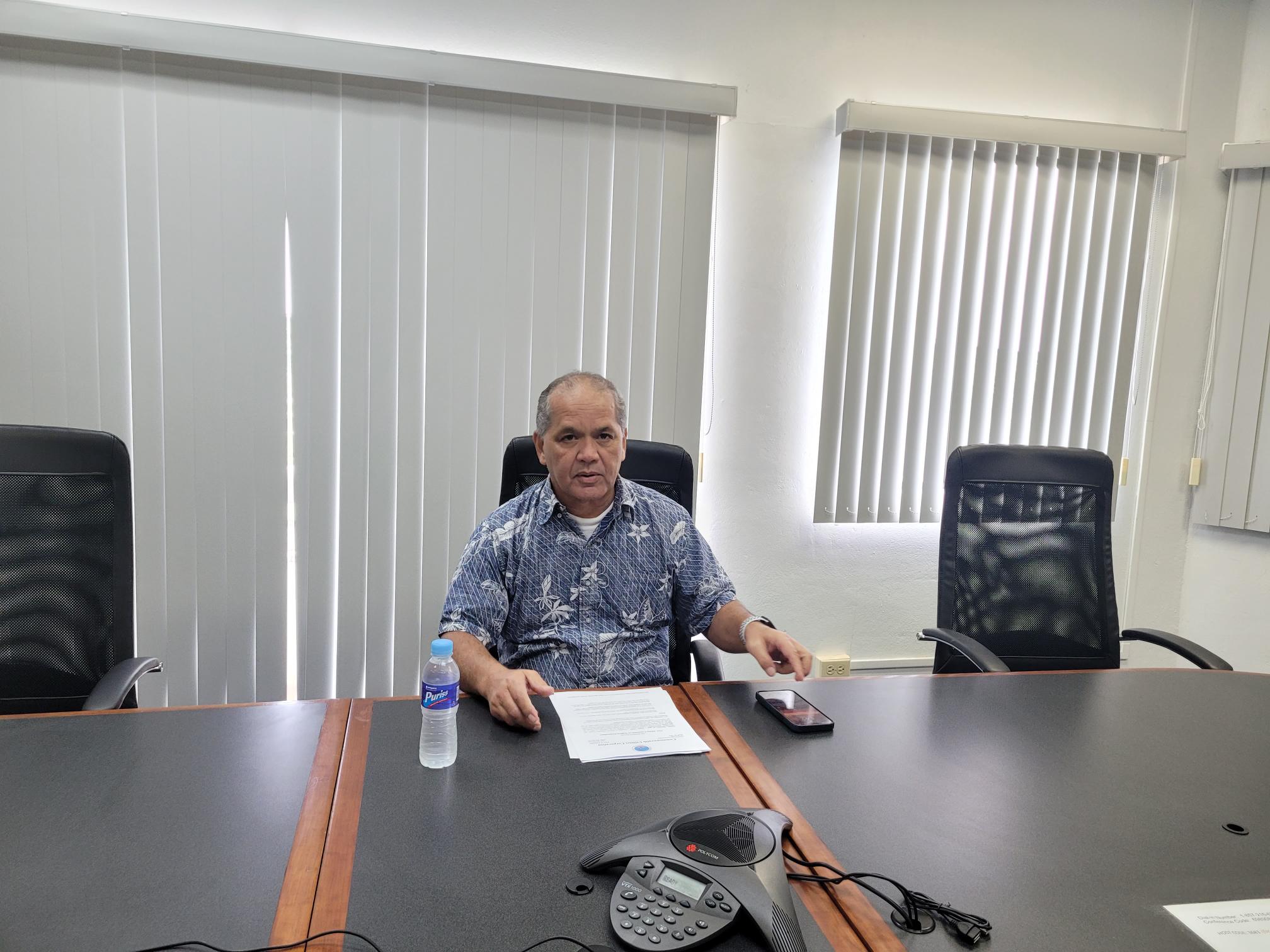
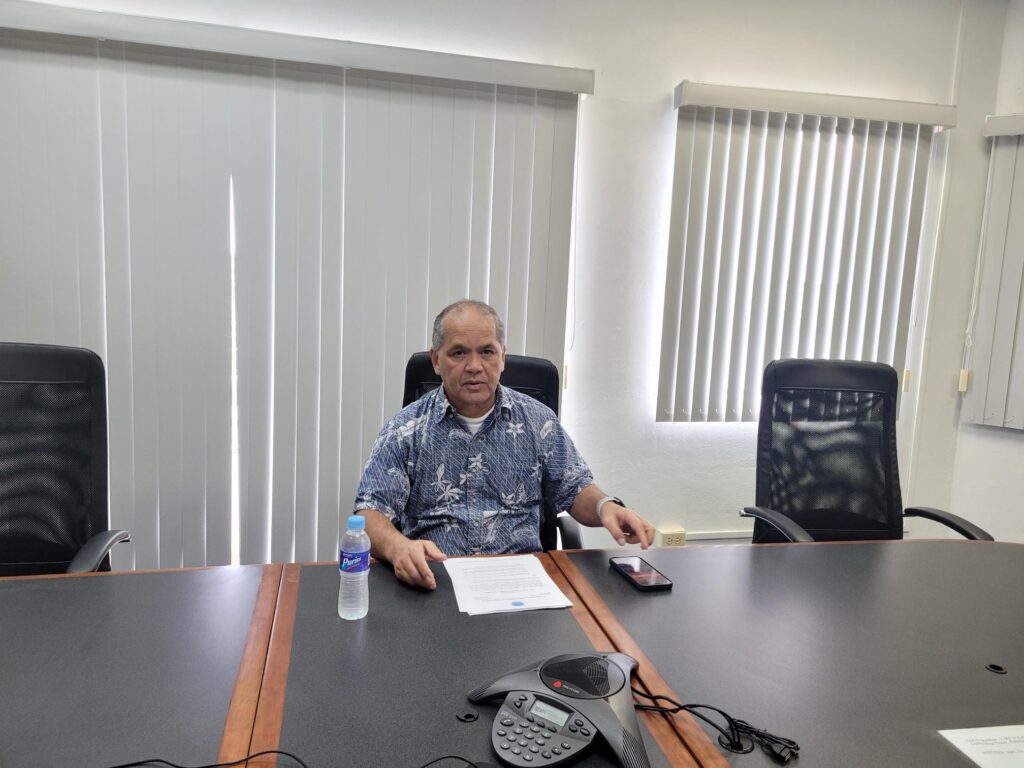
Commonwealth Utilities Corporation Executive Director Gary Camacho speaks to reporters Tuesday.
