







DEPARTMENT of Public Lands Secretary Sixto K. Igisomar said the recently passed House Bill 22-84, unless amended, “will be unfair and unjust to all CNMI residents abiding by the rules in occupying public lands.”
Introduced by House Floor Leader Ralph N. Yumul, the bill proposes to “repeal and reenact 2 CMC § 4323 and 2 CMC § 4324(c) to mandate the Department of Public Lands to review all past and pending claims and to grant such title to qualified persons; and for other purposes.”
“I am worried that this bill, if it becomes an act, will authorize individuals who have illegally accessed public lands after January 9, 1978, without a permit to be automatically granted 1.5 hectares of property, or individuals who are currently occupying public lands with a proper permit (i.e., agricultural, ranching or grazing temporary occupancy permit) to be given fee simple title to 1.5 hectares of public lands,” Igisomar said in a letter to Sen. Karl King-Nabors, chairman of the Senate Committee on Judiciary, Government, Law and Federal Relations which is reviewing H.B. 22-84.
The committee has asked DPL to comment on the bill.
Igisomar said 2 CMC § 4323 states in part that DPL “shall waive any requirements, limitations or regulations relating to the agricultural homesteading program in effect prior to January 9, 1978. Any person who can demonstrate continuous and actual occupancy or use of public land for agricultural purposes for a period of 15 years prior to January 9, 1978, or who can demonstrate that he or she would have continuously and actually occupied or used public land for agricultural purposes for a period of 15 years prior to January 9, 1978, but for the U.S. military’s or Trust Territory Administration’s removal of the person from such land, shall be legally entitled to all the rights and interest of ownership of such land, and the Department of Public Lands shall convey such land by deed to any person who complies with procedures and requirements for granting of deeds established under 2 CMC § 4324.”
Provided, however, “that those persons eligible under this section shall include the following: (1) A person who has occupied the land continuously for fifteen years prior to January 9, 1978; and (2) Members of the same family that have occupied the same land continuously for fifteen years prior to January 9, 1978, although no one family member has been on the land continuously for fifteen years.”
Igisomar said January 9, 1978, is a very significant date in the CNMI’s history as it was the day when the local Constitution became effective.
He noted that the phrase “prior to January 9, 1978” is mentioned five times in 2 CMC § 4323.
“It was used as a reference time point for eligible persons of Northern Marianas Descent who satisfied the 15 years of continued and actual occupancy or use of public land,” he said. “In order to invoke 2 CMC § 4323, a person who was at least 18 years old, must have started to continuously and actually occupy or use public land for agricultural purposes for 15 years no later than January 10, 1963,” Igisomar added.
He said the agricultural homestead waiver program began back in the 1950s and 1960s.
The government back then encouraged residents to farm and raise livestock because vacant public lands were abundant and available, Igisomar said.
“This is no longer the case,” he added.
Presently, the availability of public lands, especially in Saipan, is very limited, he said.
“To be sure, Saipan does not have an agricultural homestead program like they do in Tinian and Rota [but] DPL is currently challenged to identify public lands in Saipan for new village homestead subdivisions,” Igisomar said.
Lifting the current restrictions of 2 CMC § 4323 will open a floodgate for any person to deny any future residential homestead development, a new public school, public safety, and public health facilities for our future generations, Igisomar said.
He noted that H.B. 22-84 proposes to repeal and reenact 2 CMC § 4323 by replacing the current provision “for a period of 15 years prior to January 9, 1978” with the vague “for a period of 35 years or more.”
He said the bill does not even state at what point in time the 35 years will begin to run.
If the bill is enacted into law, Igisomar said any person can claim that he or she has continuously occupied or used public land for agricultural purposes for a period of 35 years or more, and should be issued a deed.
DPL opposes the proposed changes “for the reason that H.B. 22-84 is not in line with the original intention of the Agricultural Homestead Waiver Act,” he added.
“This bill would give away title to public land that may have been entered illegally and without permit — even when proper policies and regulations are in place,” the DPL secretary said.

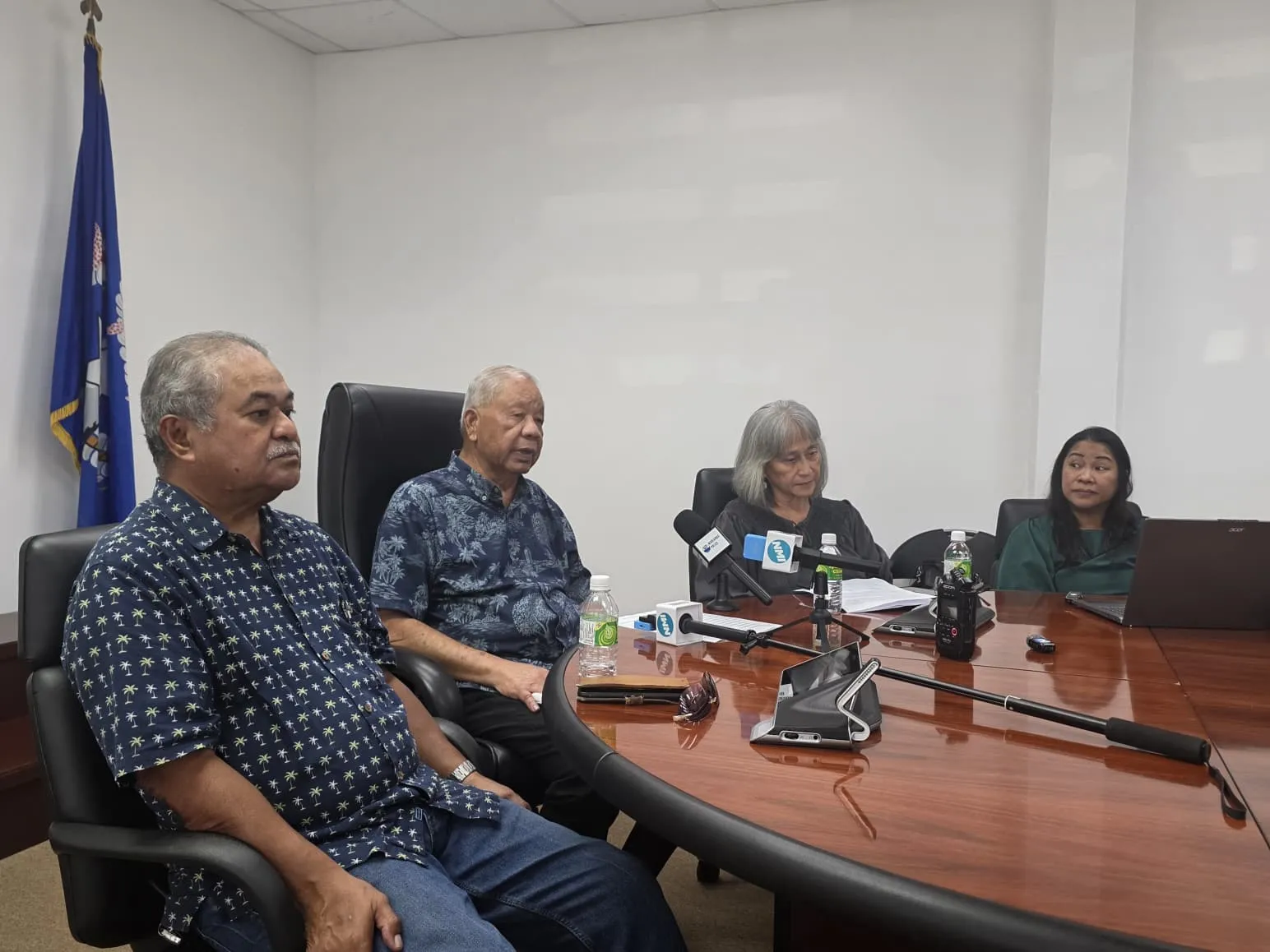
Sixto K. Igisomar
