




MAJURO — The European Union placed the Marshall Islands on its tax haven blacklist earlier this month, surprising government officials in Majuro.
It is the second blacklisting for the Marshall Islands, which operates offshore corporate and ship registries, in six years. The EU put the RMI on its tax haven blacklist in late 2017. The RMI got off the blacklist in 2018 and had remained off it until the EU’s move this month.
The blacklisting signifies the EU’s determination that the Marshall Islands is non-cooperative on tax matters. The blacklisting will likely continue until October this year, when the EU is scheduled to update the list.
“Marshall Islands facilitates offshore structures and arrangements aimed at attracting profits without real economic substance by failing to take all necessary actions to ensure the effective implementation of substance requirements,” the EU said.
But Marshall Islands Minister of Finance Brenson Wase pushed back on this decision by the EU. “The Marshall Islands has engaged in an open, transparent dialogue with the EU and made every effort to fully clarify, implement, follow up and monitor the implementation of its commitment to the EU,” he said in a letter to Maria Jose Garde, the chair of the EU’s Code of Conduct Group February 4. “We feel strongly that we are indeed a cooperative jurisdiction and hold the EU authorities and their process of engaging with us in high esteem.”
The addition of the Marshall Islands and three other countries, including Russia, brings the EU blacklist to 16 countries and territories, including in the Pacific Palau, Guam, Fiji, American Samoa, Samoa and Vanuatu. The EU’s latest blacklisting included in addition to RMI Russia, Costa Rica and the British Virgin Islands.
In addition to writing to the EU’s Garde, Wase also wrote to EU Ambassador for the Pacific Sujiro Seam, who last month visited Marshall Islands from his Suva base.
“The European Union welcomes the Republic of Marshall Islands’ level of engagement and cooperation on criterion regarding fair taxation of the EU list,” said a statement provided by the European Union Delegation for the Pacific. “However, the European Union regrets that the Marshall Islands has not made sufficient progress to avoid their inclusion in Annex I of the EU list. Despite the unfortunate outcome, European Union remains committed to working together with the Marshall Islands, to help the jurisdiction properly enforce the standard and ensure its de-listing at the next update of the European Union list, scheduled for October 2023.”
Wase in his letter to Garde was emphatic in stating “the Marshall Islands full and unequivocal commitment to full cooperation with the EU. We have addressed and always will address any concerns you might have.”
Wase requested the EU to reconsider the decision.
“The Marshall Islands has been a compliant jurisdiction since 2019 and has worked in close cooperation with the EU before, during, and after that time,” said a statement about the blacklisting issued by authorities in Majuro last week. “In light of recent communications from the EU that the ‘(the Marshall Islands) level of commitment is highly appreciated and the Code of Conduct Group fully recognized (the Marshall Islands) efforts in these two years of monitoring,’ the listing in Annex I was quite unexpected, without prior notice, and without any specific details of what precipitated the listing.”
The statement added: “Although the Marshall Islands has consistently worked with the EU and other international bodies, the regulatory environment has changed drastically. Recent negative publicity with respect to developments in the Marshall Islands present a significant risk for ensuring the continued compliance rating of the nation, not only with the EU, but with other international regulators and will likely result in additional scrutiny from these international bodies.”
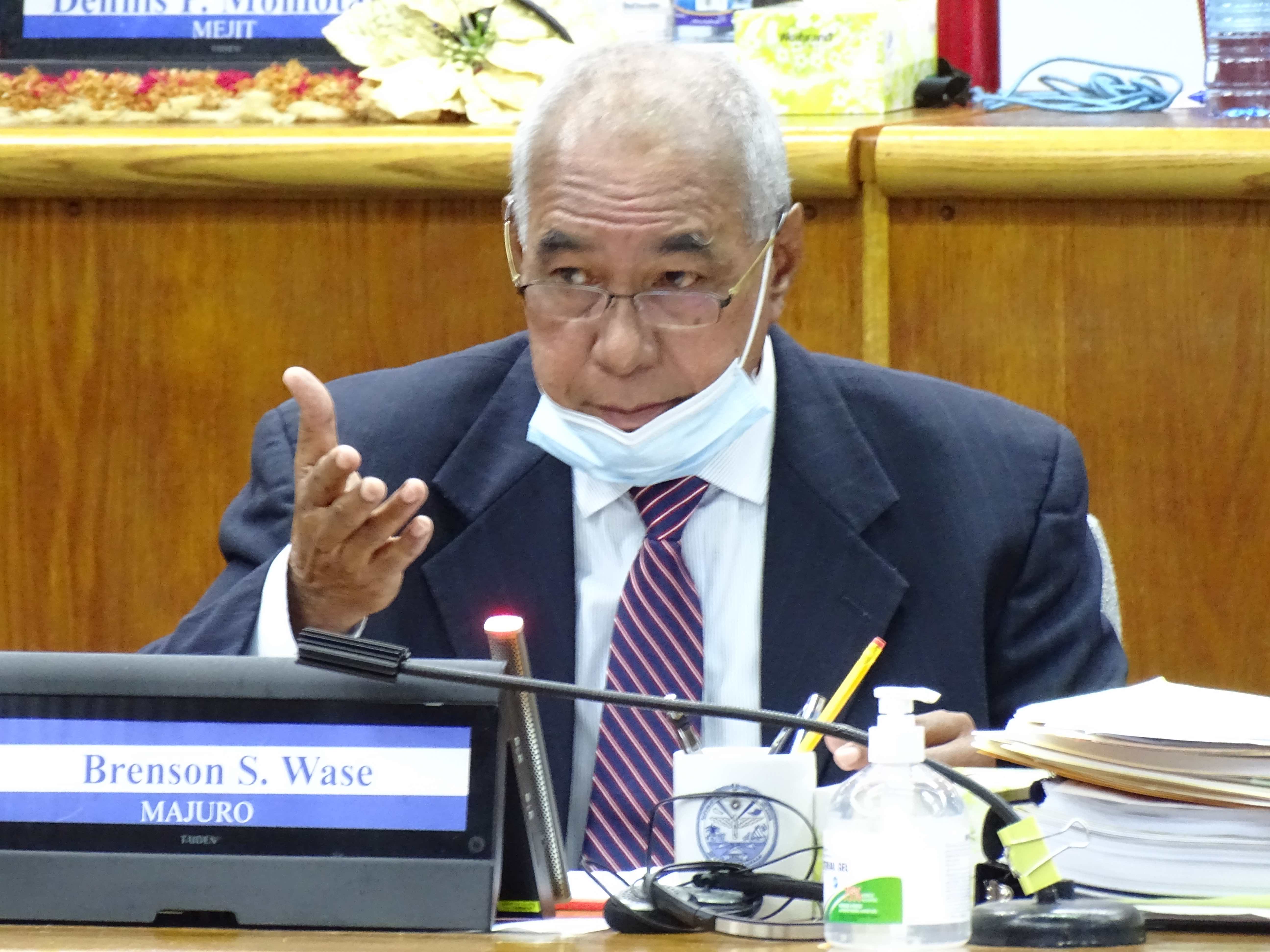
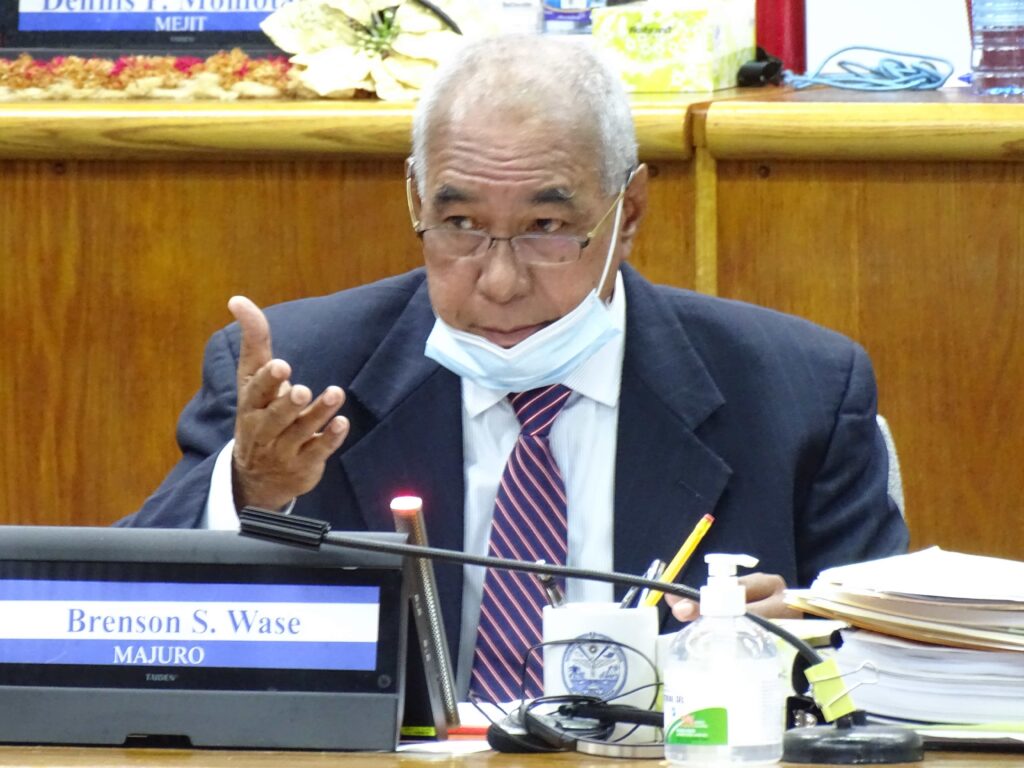
Marshall Islands Finance Minister Brenson Wase, in an August 2022 file photo from parliament, has questioned the EU blacklisting of the Marshall Islands.
