





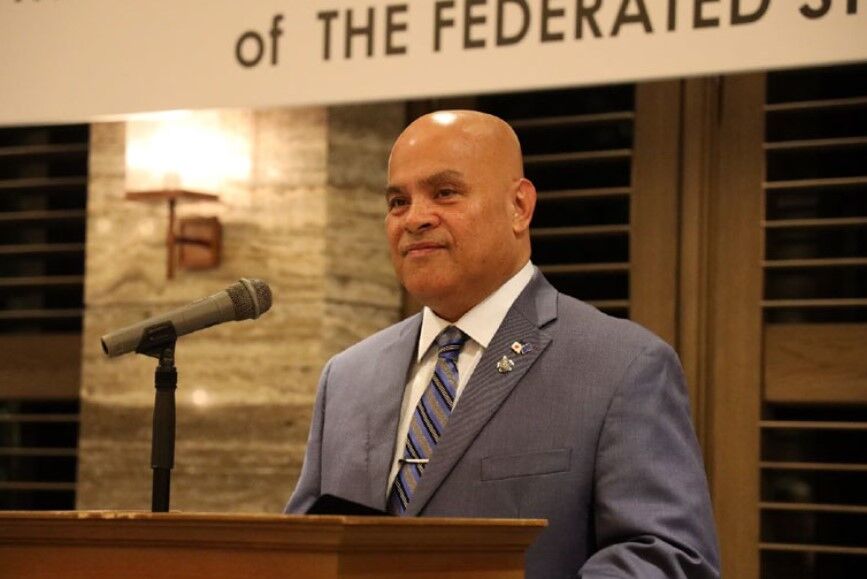
PALIKIR, Pohnpei (FSM Information Services) — On July 10, 2022, David W. Panuelo, president of the Federated States of Micronesia (announced that the FSM will join the Alliance of Countries for a Deep-Sea Mining Moratorium.
Originally launched by the Republic of Palau on the margins of the 2nd United Nations Oceans Conference, in partnership with the Deep Sea Conservation Coalition and the World Wildlife Fund, and already joined by the Independent State of Samoa and the Republic of Fiji, the Alliance of Countries for a Deep-Sea Mining Moratorium calls for a moratorium (i.e. a temporary prohibition and/or pause) on the issuance of new deep-sea mining exploration contracts, exploitation contracts, and an adoption of the Mining Code in international waters by the International Seabed Authority.
It is the intention of President Panuelo to solicit the support of other Members of the Pacific Islands Forum or PIF, either on the margins of the forthcoming meeting to be held in Suva, Fiji, or during the PIF Leaders’ Retreat. In this regard, the FSM president would solicit other Pacific Island Countries to pledge to support and implement a moratorium on deep seabed mining, issuing of new exploitation and new exploration contracts, and the adoption of seabed mining regulations for exploitation, until rigorous and transparent impact assessments have been conducted.
Such assessments would ensure the environmental, social, cultural, and economic risks of deep seabed mining are comprehensively understood, including how biodiversity loss and species extinction can be prevented.
It is the view of the FSM national government that deep seabed mining should not occur until the precautionary principle, ecosystem approach, and the Polluter Pays principle have been implemented.
It is the view of the FSM national government that deep seabed mining should not occur until policies to ensure the responsible production and use of metals, such as the reduction of demand for primary metals, a transformation to a resource-efficient circular economy, and responsible terrestrial mining practices, have been developed and implemented.
It is the view of the FSM national government that deep seabed mining should not occur until public consultation mechanisms have been incorporated into all decision-making processes related to deep-sea mining, ensuring effective management allowing for independent review and, where relevant, that the free, prior, and informed consent of indigenous peoples is respected, and consent from potentially affected communities is achieved.
“Deep-sea mining plausibly offers a genuine pathway for countries (and corporations) to achieve significant wealth while providing essential resources for global development and civilizational enrichment,” President Panuelo said in a statement.
“It is equally plausible that deep-sea mining offers a genuine pathway to the systemic collapse of our oceanic ecosystems, resulting in mass starvation and mass environmental destruction, thereby pronouncing the impacts of anthropogenic Climate Change and the instillation of abject economic suffering to peoples and communities who do not benefit from mining activities but feel their direct impacts,” he added.
“What I relay as plausible is not extreme or even very imaginative. Sea-based oil drilling seemed a good enough idea to those seeking wealth that they did it in the Gulf of Mexico, which never positively impacted the Louisiana fishermen who were not consulted on the work and had no agency in the decision to do it. But they certainly felt the impacts when the Deepwater Horizon spill occurred in 2010,” Panuelo said.
“Micronesia is very proud of its conservation-based commitments, such as the Micronesia Challenge and Blue Prosperity Micronesia. Through these programs, the FSM has committed to protecting a minimum of 30% of our ocean territory, 50% of our coastal marine territory, and 50% of our terrestrial territory by 2030. We have also committed to effectively managing 100% of our ocean territory by 2030. It is unlikely we can effectively manage our ocean territory without being aware of the impacts of deep-sea mining, which I believe is an unsustainable solution.”
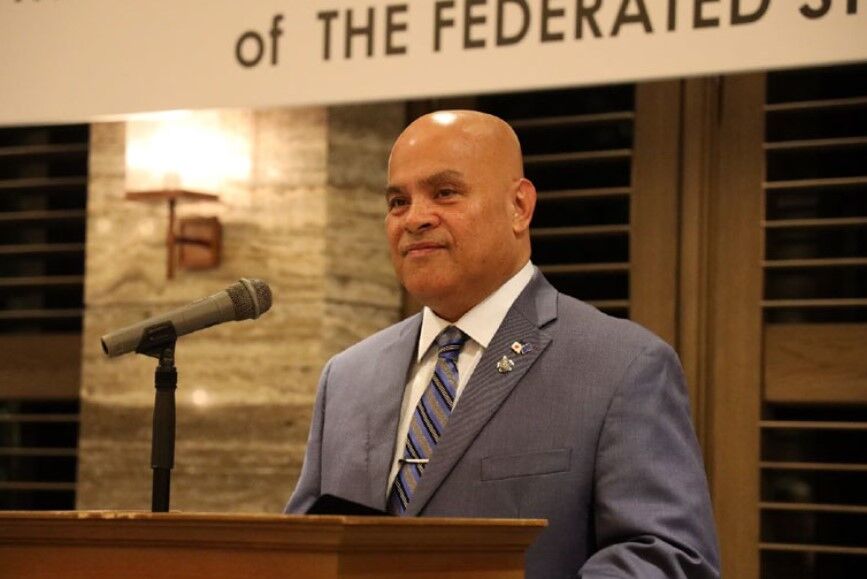
David W. Panuelo
