






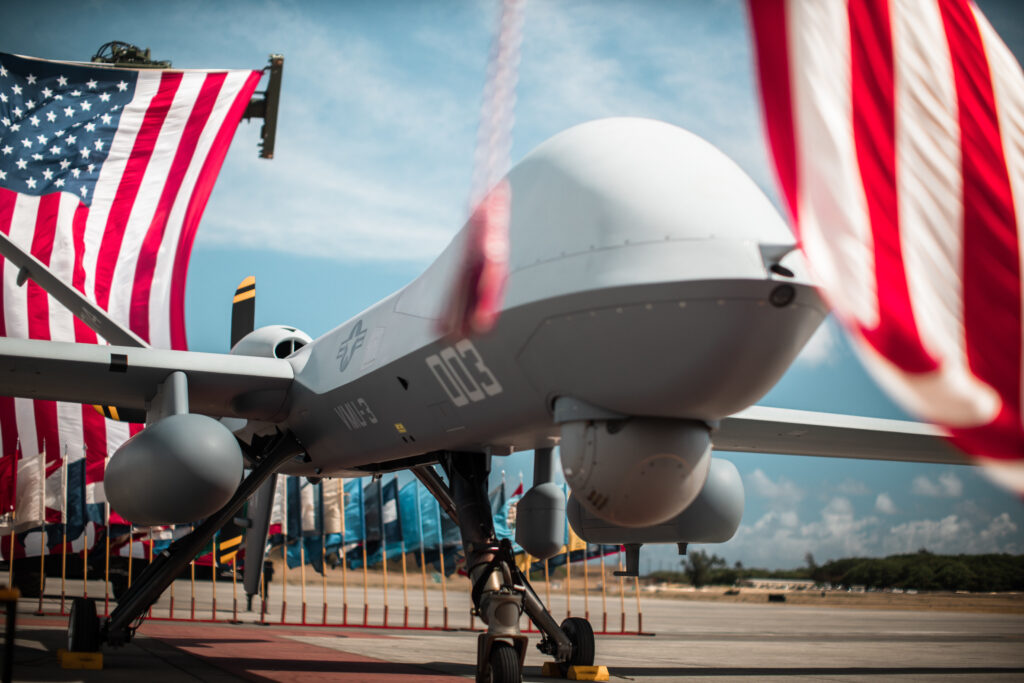
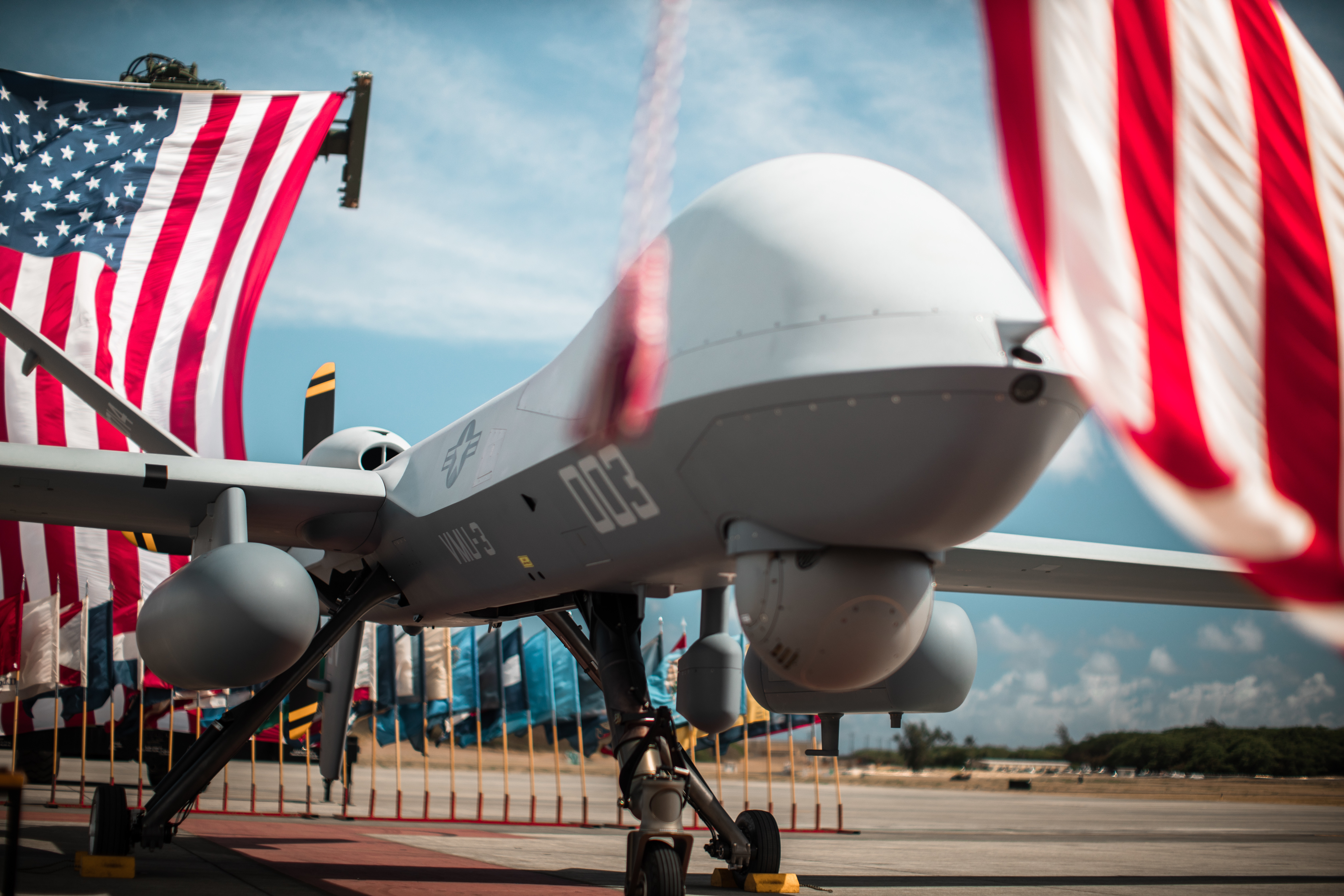
The U.S. Marine Corps MQ-9A MUX/MALE is formally unveiled during a ceremony for Marine Unmanned Aerial Vehicle Squadron 3 (VMU-3), Marine Aircraft Group 24, 1st Marine Aircraft Wing at Marine Corps Air Station Kaneohe Bay in Hawaii, Aug 2, 2023. The ceremony commemorated the squadron’s years of dedicated effort and work to reach Initial Operational Capability with the MQ-9A. VMU-3 can support the Marine Air-Ground Task Force by providing multi-surveillance and reconnaissance, data gateway and relay capabilities, and enabling or conducting the detection and cross cueing of targets and facilitating their engagement during expeditionary, joint and combined operations.
GOVERNOR Arnold I. Palacios was invited to testify today, Thursday, in an oversight field hearing that the U.S. House Committee on Natural Resources is conducting at the Hilton Hotel in Tamuning, Guam at 10 a.m.
The oversight hearing is titled, “Peace Through Strength: The Strategic Importance of the Pacific Islands to U.S.-led Global Security.”
According to the hearing memorandum, participants will examine the importance of the U.S. territories and the Freely Associated States to the United States’ ability to counter the People’s Republic of China’s “malign influence and maintain our nation’s strategic interests in the region.”
Aside from Governor Palacios, the other Pacific leaders on the panel of witnesses are Guam Gov. Lou Leon Guerrero; Palau Finance Minister Kaleb Udui Jr.; Federated States of Micronesia acting Foreign Affairs Secretary Ricky Cantero; Marshall Islands Foreign Affairs and Trade Minister Jack Ading; Guam National Guard Adjutant General Brig. Gen. Michael W. Cruz; Guam Vice Speaker Tina Barnes; retired U.S. Army Brig. Gen. Roderick Leon Guerrero; and World War II survivor Irene Sgambelluri.
In his memorandum on Wednesday, Governor Palacios informed all department heads that “I will be out of the Commonwealth from Aug. 23, 2023 to Aug, 26, 2023 on official business.” He said Lt. Gov. David M. Apatang will be acting governor until his return.
“I advise all departments and agencies to ensure all actions, documents and correspondences during this time reflect this assumption of authority. Please extend your full cooperation and assistance to Lt. Gov. Apatang as he assumes this additional responsibility,” the governor said.
According to the hearing memo:
• There are three U.S. territories in the Indo-Pacific region: American Samoa, Guam, and the Commonwealth of the Northern Mariana Islands. The U.S. also has international agreements or Compacts of Free Association with three Pacific Island countries: the Republic of Palau, the Republic of the Marshall Islands, and the Federated States of Micronesia, collectively referred to as the Freely Associated States.
• The U.S. Pacific territories and the FAS are the lynchpin of the U.S. strategy in the Pacific. As part of the Second and Third Island chains, these islands are home to U.S. military bases and enable the U.S. to protect its interests in the Indo-Pacific. Furthermore, the Compact agreements with the FAS provide the U.S. with the right to strategically deny foreign militaries from operating within the FAS and their territorial waters.
• While the U.S. has historically enjoyed good relations and ties in the Indo-Pacific region, Beijing has increasingly sought to reshape regional political, economic, and strategic alignments. This has especially been the case with the U.S. Pacific territories and the FAS.
• The People’s Republic of China has sought to take advantage of the relatively weak economies and governance structure of island nations. Through offerings of economic aid and infrastructure development, the PRC has leveraged its resources to affect political outcomes and perceptions of the U.S. in the region while waging political warfare to gain undue influence and/or destabilize island nations.
• To counter PRC influence and to maintain the U.S. capacity to secure its interests, the U.S. must remain engaged with the FAS region and respond to malign PRC coercive activity.
