






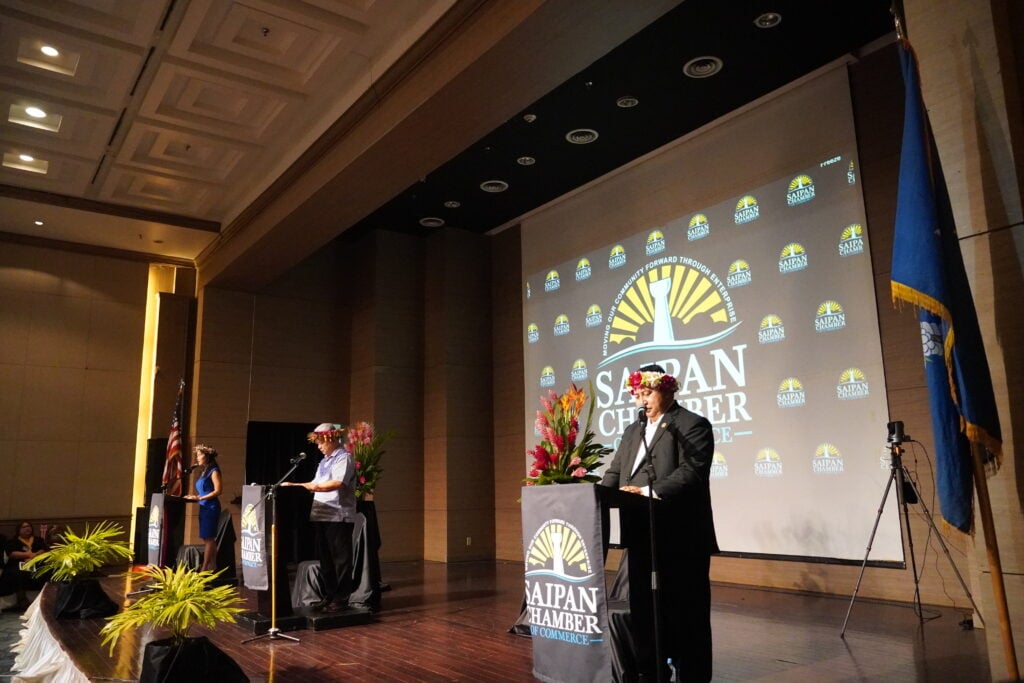
DURING their debate on Thursday evening, the three gubernatorial candidates answered several questions about CNMI issues involving the economy, the environment, among other topics, and how they plan to address them.
The candidates — Democratic Rep. Tina Sablan, Independent Lt. Gov. Arnold I. Palacios and Republican Gov. Ralph DLG Torres — were asked about the following questions.
Solid waste management
Question: Various waste management initiatives have surfaced, including banning of plastic bags, limiting the use of Styrofoam containers, and universal garbage collection. What are your plans to address solid waste management throughout the CNMI to keep our islands clean for our residents and potential investors?
Sablan, whose running mate is Rep. Leila Staffler, emphasized her professional experience as a waste reduction and recycling coordinator for the Bureau of Environmental and Coastal Quality-Division of Environmental Quality.
“This is a subject that’s very near and dear to my heart,” she said. “Solid waste management is a huge part of our plans for economic development and infrastructure development, for public health, and for a cleaner environment. I support a ban or restriction on plastic bags and Styrofoam. We are one of the last places in the Pacific to not do that yet. We have passed legislation a number of times in the House… and we continue to try to get it out of the Senate,” she added.
“What we really need, CNMI-wide, is a comprehensive system of solid waste management that includes sanitary landfills, which…we have funding to help, especially our neighboring islands of Tinian and Rota, to develop sanitary landfills, as well as transportation. But we need a more comprehensive program, and that includes collection, waste reduction, recycling, and then proper disposal. Part of our Sablan-Staffler administration plans will be to pursue that system and make universal collection open to everybody, including low-income families who may need that assistance.”
Palacios said when he was a member of the 13th House of Representatives, legislation was introduced to provide a revenue stream for the operation of the new landfill and the Environmental Beautification Tax.
He added that through U.S. congressional support, $56 million was provided to the CNMI for solid waste issues.
“That is what we need. We need to get out of our seats and do something because today. Tinian has a transfer station, but doesn’t have a landfill. Rota has a dock that needs to be addressed. [As for] Saipan, we’re still trying to address the overfill of the landfill,” he said.
He added that he and his running mate, Saipan Mayor David M. Apatang, “will make sure that [they] do whatever is necessary to with the resources that we have.”
Torres, for his part, said, “Nothing is more important than our environment. Nothing. People travel here from around the world, spending thousands of dollars, and that is through the [Governor’s Council of Economic Advisors which] came up with the universal garbage collection [system]. That is action. That will address all these concerns that we have here, including Rota [and] Tinian. When you want something done, you need something that’s comprehensive for the entire Commonwealth, and I am proud to announce that we have done that and we continue to do that.”
He thanked BECQ, including its Division of Coastal Resource Management, for its enforcement through citation of violators.
He likewise asked businesses, residents, and visitors to help take care of the CNMI’s environment “because this is what we have.”
“Again, as governor, we continue to make sure that our environment is taken care of,” said Torres whose running mate is Senate Floor Leader Vinnie F. Sablan.
In her rebuttal, Rep. Tina Sablan said, “There has been a lot of talk for many years about the need for a universal solid waste collection system. Talking about it doesn’t equate to action. The fact is that we still have open dump sites on Tinian and Rota, we still have a landfill that is failing and that we need to address. That’s where we need action, and that’s what the Sablan-Staffler administration will address and prioritize.”
Brain drain
Question: Reports have shown that many high school graduates leave the CNMI for various reasons, including the pursuit of higher education and military service. How would your administration entice them to return to the CNMI and join your local workforce?
According to Palacios, “One of the biggest reasons why a lot of our students after graduating from college not return home is the lack of opportunity and the low pay scale that we provide. As governor, we will take a look at raising the minimum wage. I know that that is probably going to be something very unpopular with the chamber of commerce, but at the end of the day, do we want to continue sending our kids to school and not coming back home? We need to provide them with that opportunity.”
He added, “Let’s be honest about this. We’ve spent so many millions of dollars in scholarships, in financial aid for our children, and many of them do not have the same opportunity that they see in the United States or in Hawaii or in Guam for that matter. We need to give them the opportunity to come home. I came home. I didn’t have a lot of opportunities, but my father told me that I needed to come home to help the Commonwealth. After finishing college, I wanted to stay in the States because the opportunities were there.”
“We need to provide them all [with] employment opportunities,” Palacios said. “Today, we have actually a lot of college graduates and military leaders that have come home because they want to help the Commonwealth and provide, [while] also lifting our society and our community through [their] education that we have invested in.”
Torres said in order to entice students to return home, the CNMI needs to build a strong economy.
“That’s exactly what my administration has been doing to bring back the economy,” he said, noting the resumption of flights from major tourism markets such as Japan and South Korea.
He added that plans to boost tourism in the CNMI include bringing in visitors for Australia and other jurisdictions, which he said will entice investors to invest in the CNMI.
Torres said he is proud to continue to support the Northern Marianas Technical Institute and the local workforce.
He said there is also $165 million in funds from the U.S. Department of Defense for a project that will encourage returning residents to realize that there are opportunities here in the CNMI.
“That’s exactly what Vinnie and I will continue to advocate for: sources here that will bring our kids opportunity here and abroad,” he said.
Rep. Tina Sablan said a strong workforce is key to economic development.
“I agree completely that the time is now to raise wages and the standard of living and strengthen worker protections in our laws. I have introduced a bill to do just that, [which] is now pending in committee,” she said.
She said part of the Sablan-Staffler administration’s plans for economic development is the “Come Home Initiative,” under a “Marianas Jobs Now” Program which will match people with job and training opportunities, and recruit local talent, including those living abroad.
“One of the reasons people leave is not just for lack of opportunity, but because they believe that there isn’t any fairness and opportunity. We want to establish the foundations to assure them that there will be fairness, that they will be able to compete, and there will be equal opportunities for gainful employment and success in the small businesses that they may want to come home to,” she said.
Blighted buildings
Question: Investors, as well as visitors, coming to Saipan for the first time may see blighted buildings scattered throughout the island. With clean and aesthetically pleasing surroundings being important to investors, visitors, and residents alike, how do you plan to address the aesthetics issue and enforce Saipan zoning regulations, such as the Nuisance Abatement and Blighted Property Maintenance Act of 2018?
“I understand how important it is to entice our new investors to come in,” the governor said. “There’s a lot to offer here. There are challenges and yes, we do have some money, but [the Zoning Board] is also there to provide and educate and enforce what the law is.”
He added, “We need to continue to bring in new investors to show them what the CNMI has to offer: our beauty. We’re working on making sure that there’s better access and better resources and permitting and so forth so that it’s business-friendly.”
“At the same time,” he said, “I would like to also give new investors an incentive, perhaps even a tax break, new money to come in, an incentive [for] new employment here in the CNMI.”
Rep. Sablan said the Zoning Board must first come up with regulations to enforce the Nuisance Abatement and Blighted Property Maintenance Act of 2018.
“That has been pending for a long time, and we just need to do it. That’s part of enforcement,” she said.
“Second, I’d like to bring up the big white elephant in the room that’s actually in Garapan, the hugest blighted building on this island, in the heart of our tourist district, the casino and the failure that that represents. The responsibility for that blight falls squarely on this administration,” she added.
“Let’s be honest about that. It’s a failure, and it’s probably structurally unsafe at this point, and we need to do something about that, and in our administration, we will have to assess the structural viability of that blighted building. Before we can even move forward with revitalizing Garapan, we have to address that elephant,” she said.
Noting that the Zoning Board has been in existence for over a decade, Palacios said when he was in the Legislature, the Saipan and Northern Islands Delegation passed the blighted property legislation.
“Here we are asking, going out, and looking for investors when the first thing that investors look at [and say is], ‘Wow, this place is dirty. There doesn’t seem to be any order.’ The first thing that we need to do is enforce the regulations and the laws that are already in the book. We need to give Zoning the resources that they need, and hold them accountable to enforcing the regulations as they are supposed to [do],” he said.
Torres, in his rebuttal, said the CNMI has done all that it can to enforce these said regulations.
He asked that private sector to continue to follow regulations, especially if they have received citations.
“We [have] beautiful islands…. We need to continue to maintain that, but everybody needs to do their part,” he said.
Non-communicable diseases
Question: A healthy population generates a productive workforce. Studies show that the CNMI has higher rates of non-communicable diseases, such as diabetes, obesity, and high blood pressure. How would your administration support and promote a healthier CNMI?
Sablan said her administration would take a holistic approach to public health.
“Health is wealth…and it starts with funding our health care system,” she added.
“This administration has been atrociously delaying in transferring funds that we have appropriated and funds that have been allocated from ARPA for our healthcare system,” she said. “Millions are owed. They may dispute the numbers, but we all agree that millions are owed to CHCC going back years.”
She added, “As for how we combat the problem of NCDs, diabetes, cancer, heart disease, we also need to raise revenues to support public health initiatives in the Commonwealth, and I support doing so through tax policies, effective taxation, to combat the scourge of NCDs that’s killing our people. We’ve introduced legislation for tobacco taxation, and we worked with the Commonwealth Healthcare Corporation and advocates [to tax] sugar sweetened beverages. Tobacco and sugar sweetened beverages aren’t necessities. We can tax them when we know that there are huge risk factors for NCDs. Then we direct those revenues to CHCC.”
Sablan said her administration would also look at ways to expand access to insurance, working with the CNMI delegate in U.S. Congress to finally gain full parity in Medicaid.
“I’d also like to offer an affordable buy-in program through Medicaid, through the government’s insurance program, and then promote healthy living including mental health. This governor recently vetoed a critical piece of legislation that would have expanded access to mental health through telepsychology through the Psychology Inter-jurisdictional compact. We will keep pushing for that, and I will sign that legislation when I am governor.”
Palacios said “public health is a big issue… Obviously, it’s [about] prevention… Growing up…we didn’t have this much NCDs, [like] diabetes. Why? Because we ate right, and our people exercised, fished, farmed, and cleaned around. Isn’t it unfortunate that today we don’t even have sports as a curriculum in our schools? That should be put back… Dave and I want to support everything and anything that our public health care service asks of us, including giving them the resources that they need.”
Torres emphasized the Fit-to-Lead program that he implemented in the executive branch this year, in which employees are given two hours a week to focus on their overall health, including their mental health.
“We have that right now. We are doing that… I think that’s doing a great job for everyone,” he said.
He added that in his administration, monetary incentives were offered to athletes who competed in the Pacific Mini Games earlier this year, which was hosted by the CNMI.
Torres said he hasn’t seen Rep. Sablan introduce any bill that would increase the budget or address healthcare.
Sablan, in her rebuttal, mentioned the healthcare bills she has introduced, including a measure to improve and expand mental health services and access to mental health services which the governor vetoed.
In his veto message, the governor said although he supports the bill’s intent, “the authors of the bill did not include any information detailing what the estimated annual costs will be to administer PSYPACT nor any funding support via appropriation to support this annual financial commitment for the Commonwealth.”
Labor shortage
Question: The workforce is a critical component of any market economy. In view of the skilled manpower shortages in the Commonwealth, how do you plan to address this issue given the annual decline of CW-1 visas and this program set to end by 2030?
Palacios said he would achieve this through partnerships with the business community in creating training programs for needed job skills, and providing incentives.
“Let’s be honest, the days of the CW-1 status or program are numbered,” he said.
He said the CNMI should “embrace” the H visas, and a pathway to improved immigration status.
He said the CW-1 program is unique and has a sunset provision carved out by the federal government.
“Guam is thriving with the H visa. Why can’t we? The problem is that we seem to be afraid and scaring ourselves. Today is the day we need to begin that [program]. The U.S. Congress told us, ‘Don’t come to us again.’ They told us that [U.S. Congressman Gregorio “Kilili” C. Sablan] is not going to help us with this because he has already helped us [so] many times [with] the CW-1 program. We need to wake up, ladies and gentlemen. I hope and I urge the chamber to take this stance,” Palacios said.
Torres said nothing is more important than the workforce.
“But even if you employ every U.S. citizen here who is [able to work], we still need contract workers. That is a fact. And I am proud to say that I have invested in NMTI millions of dollars to continue to promote our own resources here. We have excellent resources here. We’re working with [Northern Marianas College, the Public School System and even] the [Department of Defense]…. I’ve been negotiating to make sure that the opportunities stay here in the Commonwealth, where our resources are you: our locals,” he said.
Rep. Sablan said she and her running-mate envision all educational institutions working in concert, as well as the CNMI Department of Labor working with employers, to create pathways for job training and apprenticeships.
“We will build a robust apprenticeship program in our administration,” she said, citing her “Marianas Jobs Now” initiative.
What also needs to be done, she added, is to “update” the CNMI’s wage laws and to “be more competitive in that arena.”
She also emphasized the importance of supporting legislation that would give stability and relief to CW-1 families and employers.
“CW-1 individuals and families need to be part of our transition to 2029,” she said.
Palacios said his administration would sit down with the CNMI’s delegate in the U.S. Congress, and the local Legislature, to have one position on this issue.
IPI casino
Question: What do you plan to do with the unfinished Imperial Palace Casino Resort in Garapan, and what do you think is the best way to handle the exclusive casino license and make this industry a viable tax revenue source?
Governor Torres said, “I voted for the gaming industry for one reason and for one reason only: to protect our retirees, because that was the only industry that was able and willing to provide funds for our retirees.”
“We do have regulations to regulate our gaming industry,” he said, “and if there’s anything to change, if anyone’s going to complain, it is the Legislature, who makes laws and amend laws. I have not seen any bill to amend anything in regards to either gaming, whether to reduce it from [being an] exclusive [license] to three or other business licenses. But for me, any business here in the CNMI needs to do their share because we do have our enforcement. But at the end of the day, I will continue to provide and support businesses that will take care of our retirees and I will be there to sign a law if there’s any changes that need to be done.”
Rep. Sablan said gaming can be a productive part of the CNMI tourism economy, but only if it’s well-regulated and run by responsible operators selected in a fair and open bidding process.
“But this casino has been a complete and utter catastrophe. And again, the responsibility for that falls on this administration. And it all started with those fact-finding trips, all-expenses-paid, which Mr. Torres went on, to Hong Kong and Macau. We don’t know what happened on those trips, but we know the disaster that happened when they came back, and now my administration will have a huge mess to clean up, thanks to them,” she said.
For his part, Palacios said he would place a lien on IPI’s assets.
“I cannot believe that this government has yet to do that. They owe us $50 million! What are we waiting for?!” he said.
He added that he will also abolish the exclusive license and open it up.
“We need to vet [applicants]. This is a very sensitive industry, and we need to properly vet the applicants and the proposals that come in. It’s unfortunate that this is where we’re at with this casino. I hope that one day, soon, somebody’s going to make a proposal to take over that building, whether it’s [to turn it into] a casino or something else,” he said.
Torres said the casino industry is the most regulated industry in the world, adding that he is glad that the CNMI has a gaming commission that issues citations.
“But you cannot change laws arbitrarily. You need laws to be passed by the Legislature. And I urge the Legislature to change the law so that I can implement that today. I wish this law had been changed two years ago,” he said.
High costs of utilities
Question: High costs of utilities affect the cost of doing business and the quality of life for CNMI residents. How would you address this issue, and would renewable energy be a part of your solution, and if so, how?
Rep. Sablan said renewable energy would be a part of her administration’s plans.
“We need to finally begin this transition to a clean energy future and reduce our reliance on fossil fuels. The CNMI bleeds $50 million, at least, in fuel alone through the Commonwealth Utilities Corporation. We have aging inefficient power plants, and so much potential for renewable energy,” she said.
She added that the CNMI needs to update its renewable energy portfolio standards and Energy Action Plan which she noted is included in her administration’s plans.
“I also want to address though the root of our issues at CUC, and that really is governance. We don’t have a functioning public utilities commission, and there are these gaps in key positions for qualified professionals in CUC. We have decades of non-compliance, especially with federal water mandates, and we keep slapping on Band-Aids on aging inefficient power infrastructure,” she said.
“My priorities will be compliance with the stipulated orders for water and wastewater, especially to hire qualified professionals, and finally deliver clean drinkable water for the people of the Marianas. We have $100 million for water infrastructure alone. That will be part of our infrastructure plan.”
Palacios, for his part, said high utility costs are one of the top concerns of CNMI community members.
He said he had the opportunity to directly converse with CUC Executive Director Gary Camacho regarding alternative energy, noting that Guam has already taken the lead in these efforts to provide efficient energy to its community.
Palacios said his administration would ensure that crucial engines are fixed, adding that he would also see to it that CUC to provide alternative energy to the people of the CNMI.
Torres thanked CUC employees for their hard work, then noted that a new engine is already on its way, adding that this is a result of good leadership.
He said the CNMI Public School System will soon have solar panels across all schools.
“That is definitely progress, and that’s addressing our issue today,” he said, adding that his administration will continue to advocate for renewable energy that results in utility discounts.
Typhoon resiliency
Question: Typhoons have caused much destruction to our power distribution system, businesses, and homes. Reports indicate that super typhoons may become more frequent in this region. What are your plans to establish a more resilient community that will bounce back faster than in the past?
Palacios said the CNMI was very fortunate that the Federal Emergency Management Agency was on the ground when Super Typhoons Soudelor and Yutu hit the islands.
He said FEMA has been assisting the CNMI’s recovery efforts, even to this day.
He said the CUC board of directors and the executive director need to harden the CNMI’s infrastructure, noting that he had argued with the executive director regarding the lack of adequate water supply in the immediate aftermath of Yutu.
“The power system was down and we did not have the generators on standby to power those water wells,” he said, adding that he is glad that today, the CNMI has more resources and is better prepared.
Torres said the CNMI is more vigilant today than it has been in the past decade.
“You’ve seen how fast we’ve recovered. We recovered even faster because of the relationship and the partnership that I have [with federal agencies]… All the wells that we have now, we have generators ready to pump them when we need them,” he said.
He added that the CNMI is working on installing underground cable for all three main islands.
“That is what you call leadership: making sure that we harden our infrastructure here. Under Vinnie and I, we would continue to maintain that relationship and make sure that those fundings that we have here are being utilized for everyone that calls the CNMI home,” he said.
“I’m sorry,” Rep. Sablan said, “but last I checked, we have a number of projects funded by FEMA that have been unacceptably delayed, going all the way back to Soudelor, Mangkhut, and Yutu. Look around at our schools. We should be hardening them and making them more resilient for more severe storms and for climate change. How many of our schools are basically still in a state of disaster? There is no excuse for that.”
She added, “My administration will prioritize the fixing of our schools, will prioritize implementing all of these projects that have been unacceptable today, and we will also look at putting more lines underground. That needs to be part of our climate resilience plan.”
Palacios said, “Thank God for being a U.S. citizen,” noting the several federal partnerships that the CNMI has.
Medical referrals
Question: With millions of dollars spent annually on medical referrals, how do you plan to expand healthcare services within the CNMI and reduce the number of off-island referrals?
Torres began his response by thanking all healthcare clinics, doctors, and nurses for their service. “It is important,” he added, “to start addressing medical referral and we have done that I have done that under this administration.”
Noting the MRI and the hyperbaric chamber that the CNMI recently acquired, Torres said these will reduce medical referrals by 70%. He also noted the CNMI’s current work to expand its only hospital’s intensive care unit rooms, operating rooms, and radiology center.
“We are starting to put all of the resources in for public health because I know how important it is to make our healthcare here the number one priority. Once we start eliminating healthcare being provided outside of the CNMI, everyone here that has family will be taken care of here. You don’t have to do medical referrals. You don’t have to do other fundraising because our MRI and our hyperbaric chamber and our expansion of the ICU is forthcoming. That is the investment that I am currently [making]. Under Vinnie and I, we will make sure that this funding and this project continue to move forward and provide public health for everyone that calls the CNMI home,” Torres said.
Rep. Sablan said as chair of the House Committee on Health and Welfare, she has worked on legislation to restructure and reform the CNMI medical referral program, working closely with CHCC and other stakeholders.
“Because as many people did not realize at the time, there has never been enabling legislation for that program, and the governor’s office never had the legal authority to run medical referral services in the first place, so we passed that legislation. We had a ton of public hearings, and the idea was to reform the program so that it could be sustainable. That legislation is now sitting with the Senate,” she said.
“As for MRI, that funding needs to go to CHCC. It was allocated over a year ago and the governor didn’t start working on it until we started asking, ‘What is the status?’ and CHCC said that there is no status, there is no money, no updates.”
Palacios said when he became lt. governor, one of the very first things he looked at was the CNMI medical referral program, which, at the time, cost roughly $20 million a year.
He said the bulk of these costs were for airfare and lodging.
“Why is it that some of our people have to wait three to four weeks on Guam just to get an MRI? Those costs continue to escalate. That’s why we’re here,” he said.
Torres said he is waiting on the CHCC to give him specs for the MRI and the cardiology center so that the administration can move forward.
“Everyone here knows our healthcare, [and although there are] challenges, we provide better healthcare today than we have in the last 10 years. Under Senator Vinnie and I, we will continue to make sure that these MRI, cardiology center, hyperbaric chamber, increasing the ICU and operating room — these will eliminate medical referral patients. That will solve everything,” he said.
Agriculture and fisheries
Question: Agriculture and fisheries in the CNMI have yet to reach their full economic potential. What is your plan to support local farmers and seafood producers to achieve viable operations while ensuring that environmentally sustainable practices are established?
Rep. Sablan said her administration will support the expansion and development of the CNMI’s agricultural and seafood production industries.
She said she and Staffler see these industries as being compatible with tourism because they tap into local resources, including human resources, creating job opportunities, exporting products for local markets.
“We import so much of our food and in general, local food production is better for health. It’s better for the economy. It’s better for the hotels, the restaurants, and the public school kids that eat local produce and local fish, so we will support that,” she said.
“We envision a realignment of all the agencies that have the resources to support agricultural and fisheries producers,” she said, referring to the Department of Lands and Natural Resources, NMC-Cooperative Research, Extension, and Education Services, and the CNMI Small Business Development Center Network.
“We need to just do it,” Palacios said, recalling his past experience in the Division of Fish and Wildlife.
“I had the wherewithal to ask the South Pacific Commission to provide a training program here back then. I’m happy that a lot of our people have gone into bottom fishing. That is where the money is,” he said.
Palacios said he and his running mate will work with experts, such as those at NMC-CREES, to reinvigorate the CNMI’s agricultural sector.
“In order for you to do what they need, you need to be like one of them,” the governor said. “I am a farmer and I am proud to be a fisherman.”
He said his administration has opened a co-op which is “an excellent way of giving our locals the opportunity to sell their products.
“And I am proud to say that it has been very successful,” he added.
He said he has invested $1 million each on the Rota agriculture industry, the Tinian cattle industry, and the Saipan seafood production industry.
“Folks, those are the programs that give your own locals the opportunity to showcase what they have, because as a farmer, all you need is a little help, and this is the help that we provide. Under Senator Vinnie and I, we will continue to advocate for every farmer and every rancher that calls the CNMI home, whether it’s on Rota, Saipan, Tinian, or the Northern Islands,” he said.
According to Rep. Sablan, “I think we can’t overemphasize the importance of creating these collaborative networks and realigning the resources that already exist to provide the technical assistance, the research, and the other support that farmers and fishermen would need in order to build their businesses and produce quality product that will be desired on the market and could supply local markets as well.”
Tourism
Question: Visitor arrival data show that the CNMI does not have a high percentage of repeat visitors. Visitor exit surveys continue to reveal two primary concerns, which include the absence of nighttime activities and a lack of indigenous cultural experiences.
Palacios said one of the glaring answers that tourists give in their exit surveys is that they don’t return to the CNMI because of the islands’ uncleanliness.
“We need to improve our tourist sites. We need to promote sports tourism and cultural tourism… We need to begin to really nurture our culture if we’re going to participate in this industry,” he said, adding that the CNMI has failed to provide resources to the Indigenous Affairs Office and the Carolinian Affairs Office.
He noted that several million dollars were spent on travel bubbles that yielded roughly 1,000 visitors to the CNMI every month.
“We wasted opportunities… We need to seriously reinvest in our tourism economy,” he said.
Torres said tourism is the CNMI’s number one industry.
“I am proud to say that through the [Governor’s Council of Economic Advisers], we pushed to make the CNMI a world-class destination. You don’t realize it today, but you are going to realize it tomorrow. The work has been done during the pandemic, making sure that all of our tourist sites are top notch,” he said as thanked private partners for revitalizing tourist sites.
He said he has been pushing hard to revive the CNMI’s tourism industry and indigenous dance groups, reaching out to several market sources.
“Under Senator Vinnie and I, we will continue to make sure that our tourists are welcome here in the islands,” he said.
Rep. Sablan in her rebuttal said: “I’d like to ask, has Mr. Torres actually visited these tourist sites? Because I do and I see broken rails, broken steps, non-functioning restrooms, no shower facilities. We could have been using this time during the pandemic to really clean up and beautify these islands to make them more livable for the people who reside here and also for the people who come to visit, to make them want to come back again and again.”
She added, “We need a massive cleanup on all of our islands, but especially in our tourist sites and in the villages, so that tourists want to come and visit. We need to plan for sidewalks, bicycle lanes, trees, and flowers. There’s so much that we could do. One other thing I’d love to see in the CNMI — and this is a more long term goal, we need a cultural center to celebrate the cultures of these islands and teach them to our younger generations and share them with our visitors. There’s so much that we can celebrate and so much that we have to offer.”
Palacios noted that his running mate, Mayor Apatang, has been spearheading beautification projects at Sugar King Park and other tourist sites, and is currently involved in a tourism educational exchange program.
Government budget
Question: Business and investor confidence are affected by the fiscal health of its government. With ARPA funds to run out soon, what are your plans to address government budget constraints while not raising taxes and fees?
Governor Torres reiterated the importance of creating a strong economy, which he said can only be done through reviving the CNMI’s tourism industry because it creates job opportunities and generates revenue.
He said it is likewise important to invest in NMTI, which focuses on filling the needs of the local workforce.
“Under Lt. Governor Vinnie and I, we will continue to make sure that we move forward with our travel destination here in the CNMI, and [beautifying it so visitors will] appreciate Saipan, Rota, Tinian, and the Northern Islands. That is how you make the CNMI a growing economy, by giving every island the opportunity to grow,” he said.
Rep. Sablan said the CNMI is receiving more than $2 billion that is supposed to assist with recovery efforts and building for the future.
“There is no transparency at all on how these funds are being spent,” she said. “The priority of my administration will be to prepare a report on the fiscal condition of this government and make it available online in a format that everybody can read and understand, so that we know how these funds are being spent, how they’ve been allocated, what we have left, and where we go from here.”
She added, “One other thing I want to say is that we need to tackle public corruption because there’s a real cost to that. What undermines investor confidence more than anything else is whether they can get a fair shake and dealing with this government. That will also be a priority in my administration.”
Palacios, for his part, said “we continue to talk about things here, but we need to get out, get it done, and stop wasting funds. The federal government has given us billion dollars of opportunity. We could be rebuilding our infrastructure.”
He challenged community members to visit tourist sites to see their conditions for themselves.
In his rebuttal, Torres said, “Well, ARPA funds are meant to be spent to stimulate the economy. Hiring 2,000 people? I’ll do it again.”
He said he has also revived the operations of several local hotels and airlines.
“That is partnership. We have to work with all of our private partners and the government. Vinnie and I will both continue to strengthen that partnership because we know how important our businesses are to our community; they provide opportunities,” he said in closing.
The general election will be on Tuesday, Nov. 8.
According to the CNMI Constitution, “If no candidates receive more than one half of the total votes cast and counted for the offices of the governor and lieutenant governor, on the fourteenth day thereafter, a runoff election shall be held between the candidates for governor and the lieutenant governor receiving the highest and second highest number of votes cast and counted for those offices.”
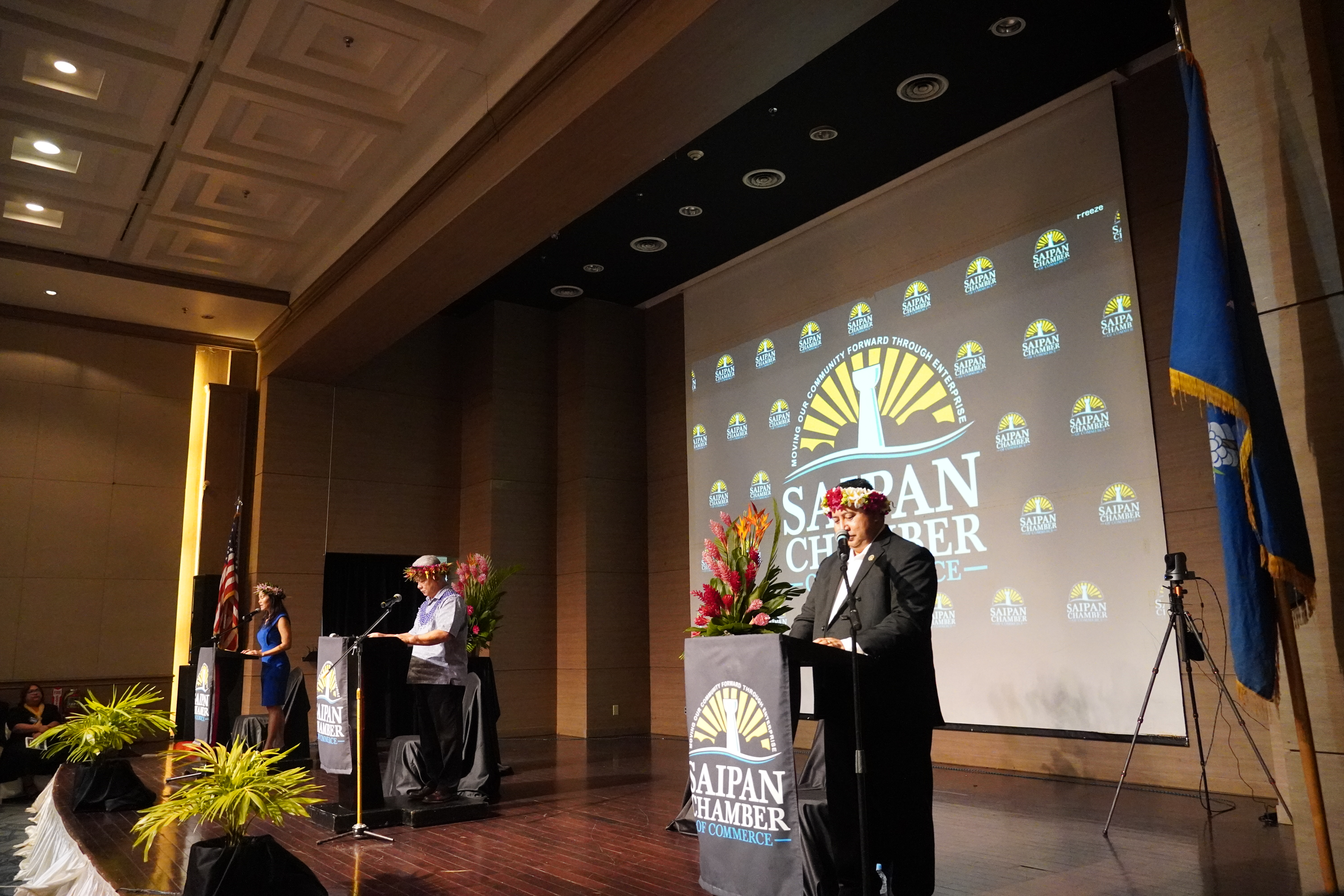
From left, Democratic Rep. Christina Marie Elise “Tina” Sablan, Independent Lt. Gov. Arnold I. Palacios, and Republican Gov. Ralph DLG Torres stand on stage during the debate.
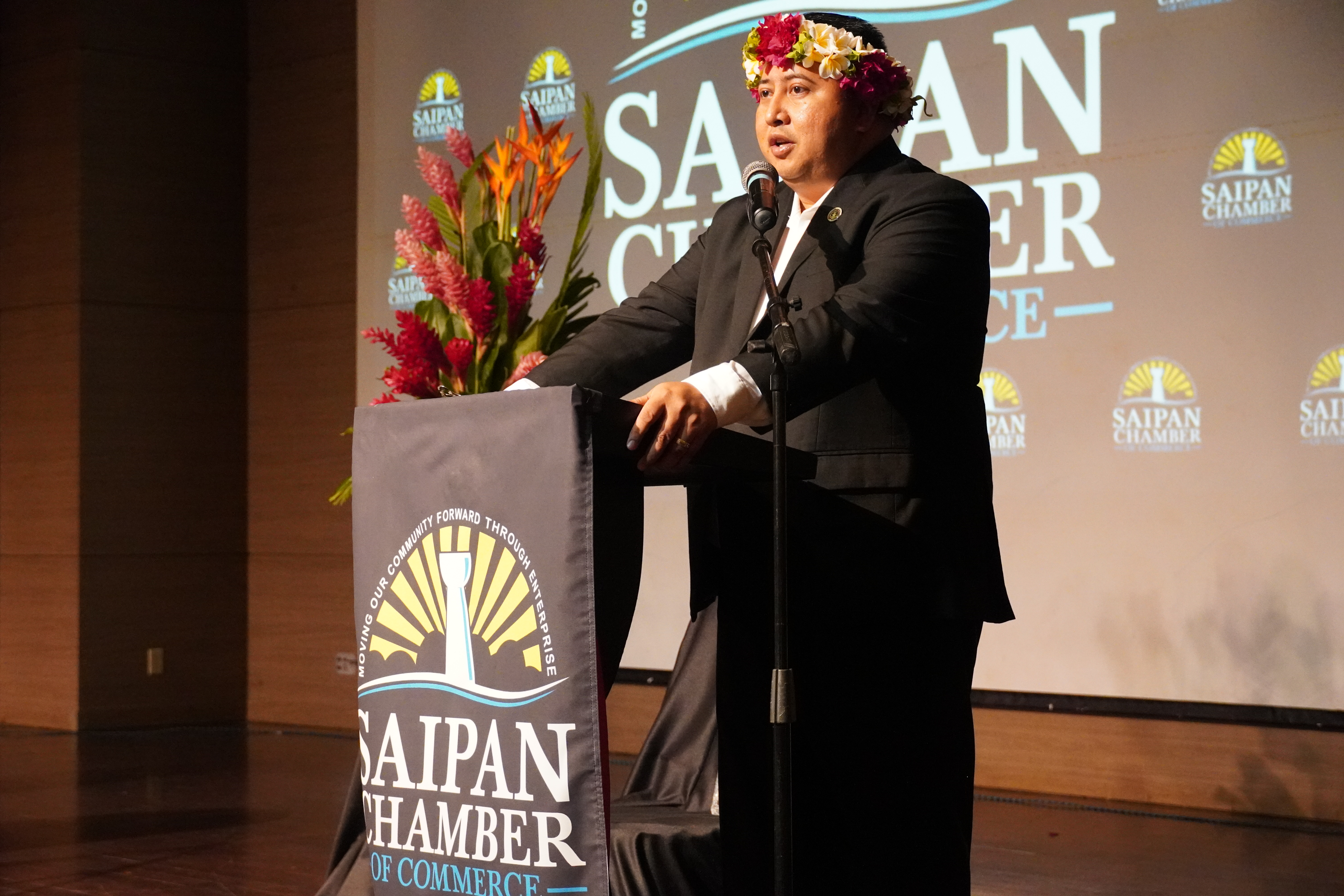
Republican Gov. Ralph DLG Torres responds to a question.
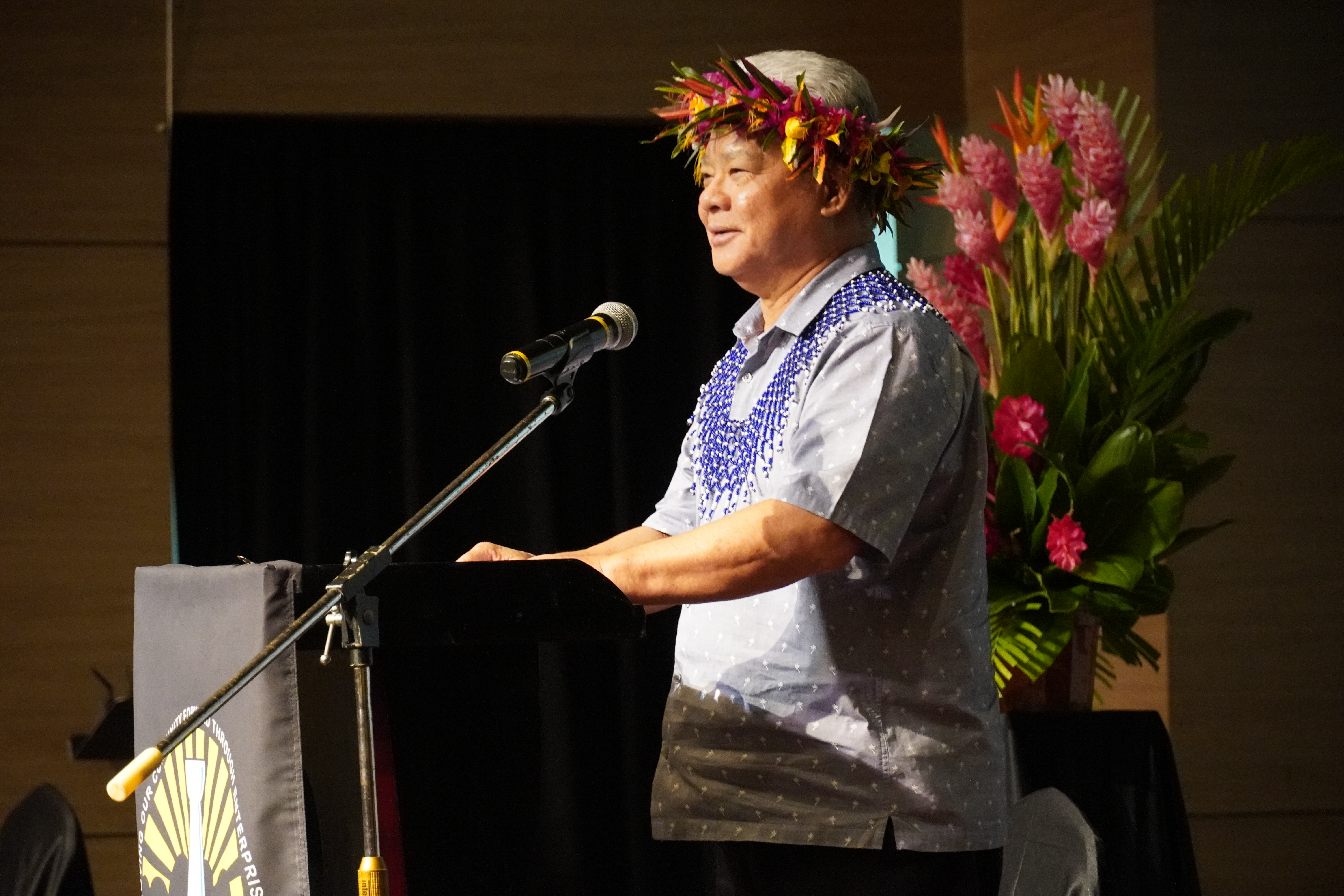
Independent Lt. Gov. Arnold I. Palacios smiles before the start of the debate.
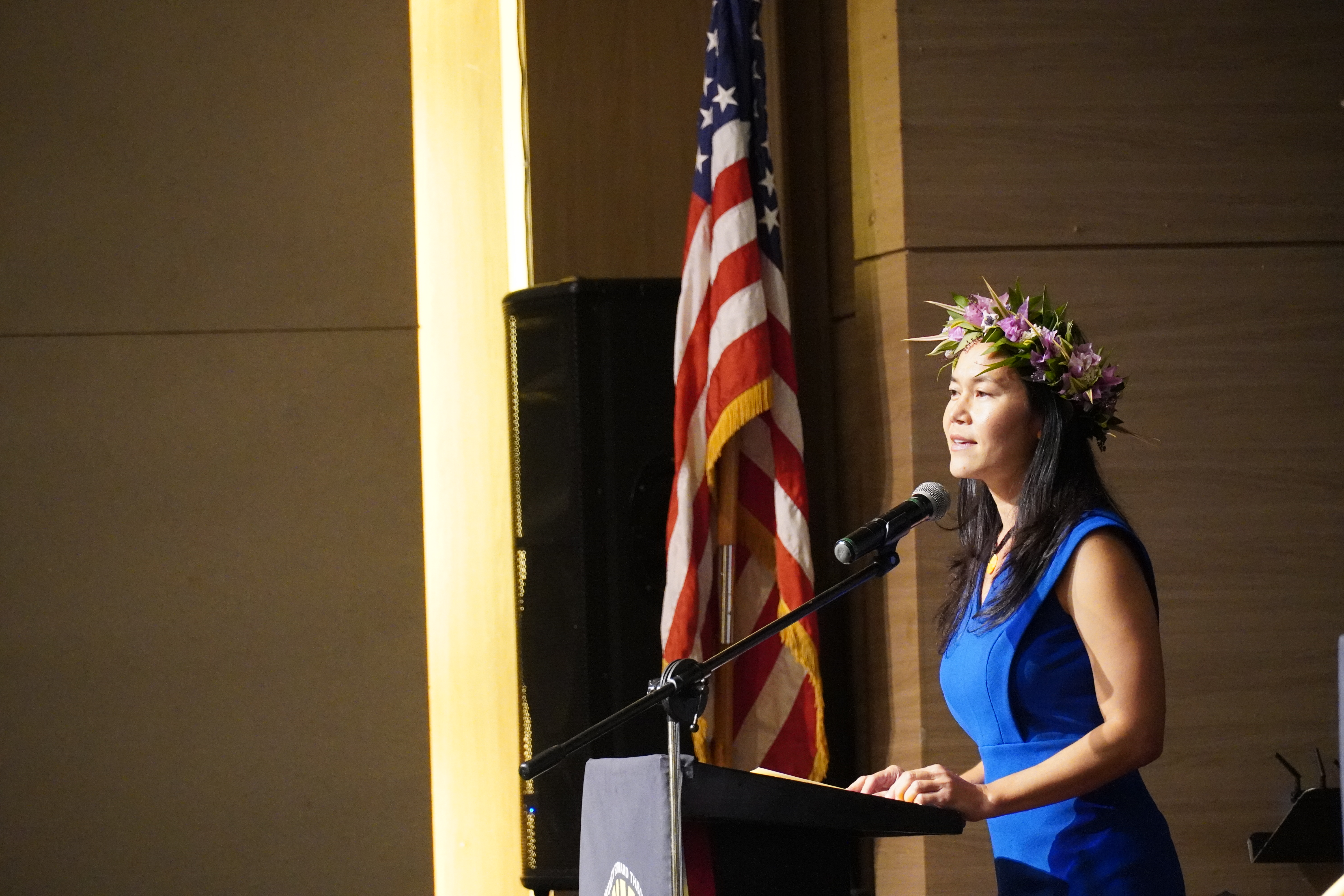
Democratic Rep. Christina Marie Elise “Tina” Sablan answers a question.
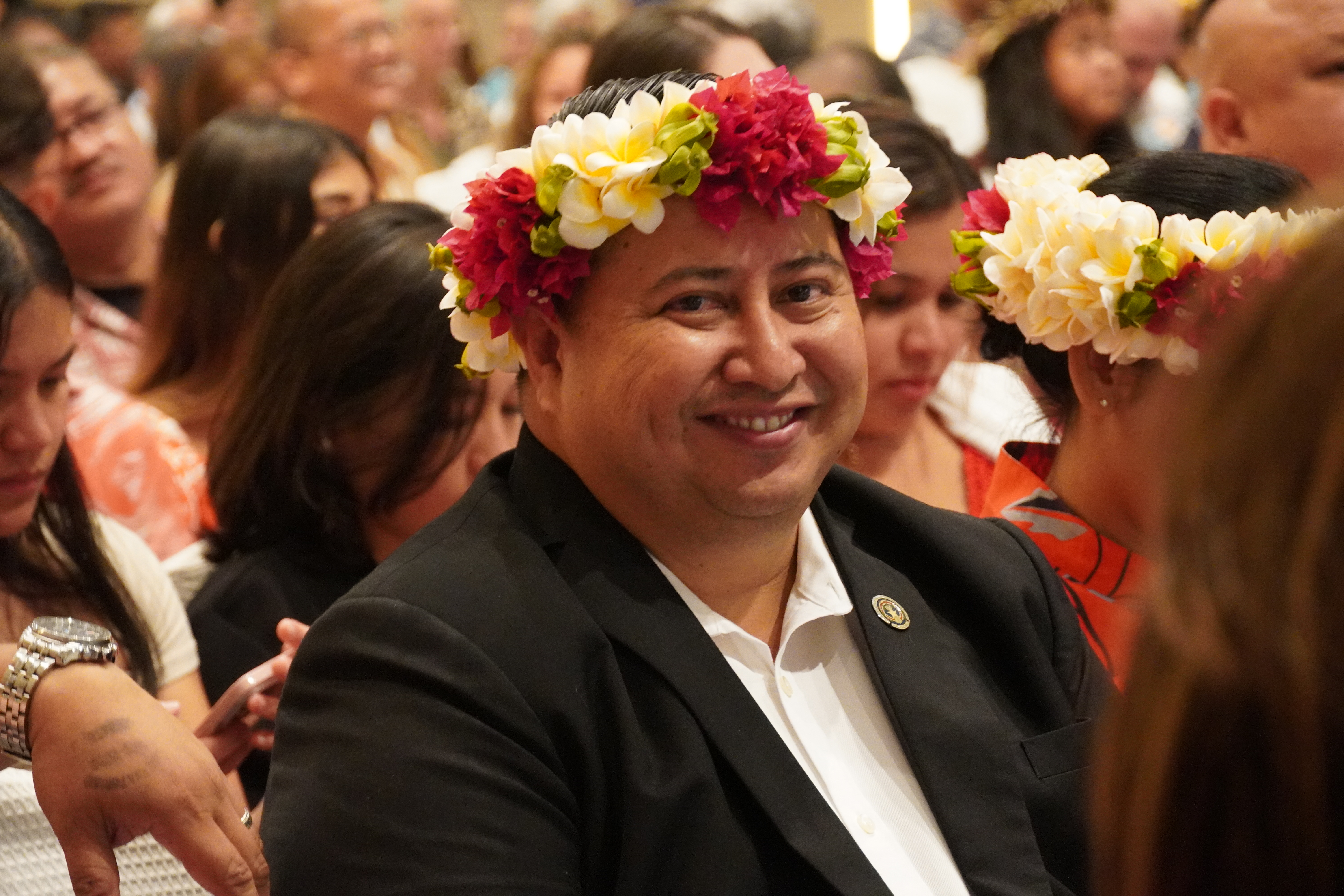
Republican Gov. Ralph DLG Torres smiles while seated, waiting for the debate to begin.
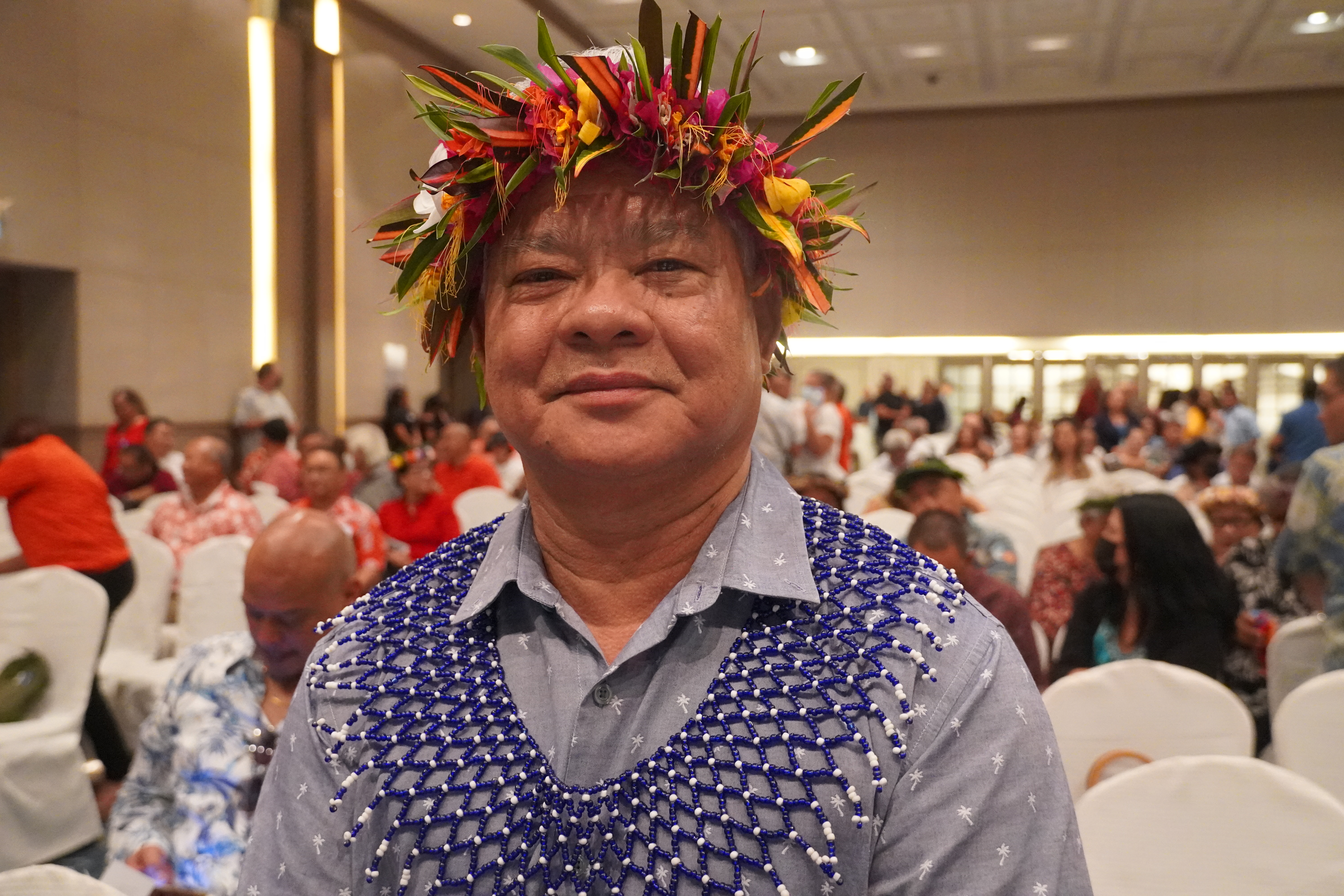
Independent Lt. Gov. Arnold I. Palacios poses for a photo during the debate’s intermission.

Democratic Rep. Christina Marie Elise “Tina” Sablan smiles during the debate’s intermission.
