




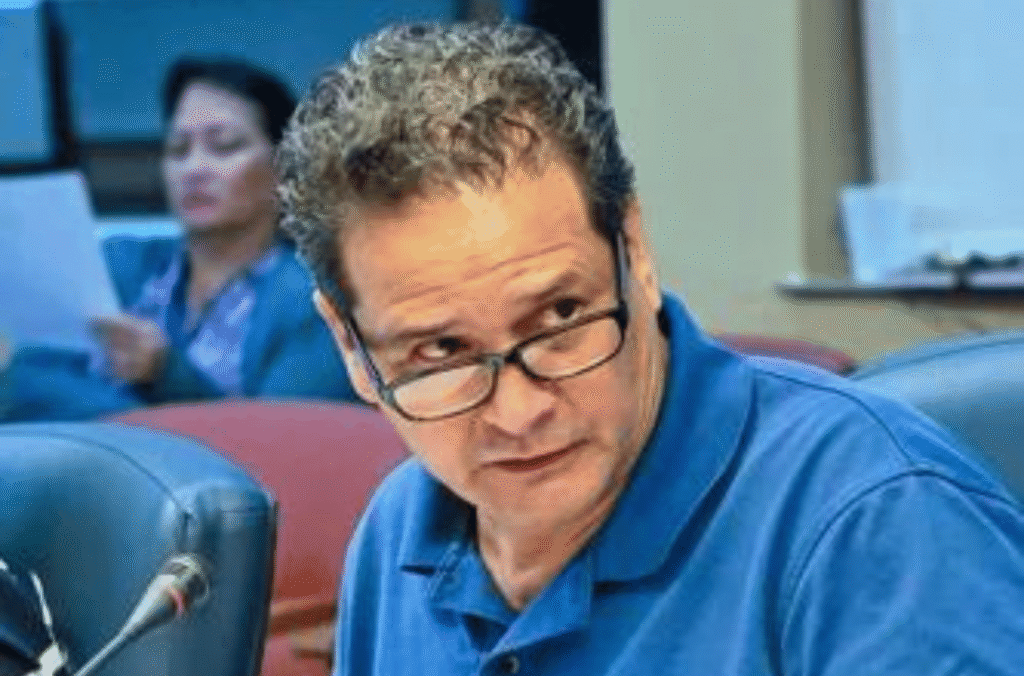
HAGÅTÑA (The Guam Daily Post) — Information previously provided on the proposed missile defense system for Guam wasn’t enough for the Guam Waterworks Authority to suitably understand how the project will impact the island’s existing water and wastewater systems or the Northern Guam Lens Aquifer (NGLA), according to comments submitted in August by GWA General Manager Miguel Bordallo.
“Detail information on water and wastewater current and future demand will be required for each of the proposed (missile defense) sites under consideration. It is our understanding that there will be over 750 troops, however, their families and contracted employees required to support the Missile Defense Agency’s (MDA) operation will increase the island’s population by over 4,000. This population growth will affect the water supply and wastewater collection and treatment capacity throughout the island,” Bordallo stated.
The U.S. military is proposing to build a 360-degree Enhanced Integrated Air and Missile Defense System on Guam in light of the growing military threat from China. Twenty potential sites across the island were identified for the project, but the final tally and locations may still change.
The Missile Defense Agency and its military partners are preparing an environmental impact statement (EIS) on the project. A notice of intent for the EIS was published in early May, and comments were accepted between May 5 and Aug. 18, known as the scoping period.
Like many government agencies, GWA and the Guam Power Authority submitted comments discussing needs and concerns with the missile defense project.
GWA concerns
The NGLA, for example, provides the vast majority of drinking water on Guam and is a shared source carefully managed by technical experts, environmental regulators and utility providers, according to Bordallo.
“GWA has worked with the (Department of Defense), as part of the One Guam Initiative, in an effort to improve water and wastewater service, to explore opportunities for (interoperability) between GWA and DOD infrastructure and to build resilient and reliable water and wastewater systems for the island. … Impacts can be jointly managed under an appropriate mutual venue such as One Guam Water coordination. MDA should consider participation in this partnership and collaborative effort,” Bordallo stated.
The general manager also stated that the EIS should provide sufficient information on water and wastewater demands at each site, as well as information on planned redundancies for water requirements and support and life support facilities, such as fire protection systems and family housing or fire stations.
While water resources will be analyzed under the proposed EIS, that analysis should consider surface water in addition to groundwater, according to Bordallo.
Moreover, it’s difficult to completely understand the impact from the ongoing military buildup, specifically to the NGLA from U.S. Marine Corps Base Camp Blaz in Dededo, because the actual arrival of U.S. troops from Japan to Guam is still several years away, Bordallo stated.
“Analysis on the cumulative impacts especially related to water withdrawal may be necessary to adequately assess the impact of overall remaining capacity of the NGLA from the increase in activities needed to support this (missile defense) project,” he added.
GWA also noted that fuel storage facilities, fire stations and gas station, as well as other support facilities, might be located within the island’s Groundwater Protection Zone. Certain activities may present a risk to groundwater quality and existing GWA water wells, Bordallo stated.
“The EIS should provide complete information on all chemicals and potential contaminants including oils, fuels, and other chemicals that may enter the NGLA due to the proposed activities at each of the candidate sites and support facilities (and) provide sufficient detail on preventative measures to ensure that contaminants do not enter the groundwater,” Bordallo added.
In order to support requirements for the missile defense project, additional studies for utilities and infrastructure for potable water and wastewater for current and future capacity demands should be discussed with GWA at the earliest convenience, Bordallo said.
The Guam Daily Post asked the general manager if GWA received subsequent information since submitting its comments or if it has had additional engagement with the military, but a response was pending as of press time.
GPA seeks battery storage
GPA noted in its comments for the missile defense system that it has taken major steps to improve the resiliency and efficiency of the power system, but it’s clear that any future investments “must consider the role of the military.”
That sentiment is encapsulated through the “One Guam, Green Guam” approach to the military buildup, which focuses on investing in local capabilities that are sustainable, based on clean energy and will reduce the high cost of energy, according to GPA.
One investment that the Department of Defense could make would be in the installation of a 180-megawatt battery energy storage system (BESS), the power utility stated.
“As Guam’s only power provider, GPA must ensure they have an adequate supply of generation capacity to reliably meet demand during peak time. If the power supply cannot meet demand, the frequency drops. If the frequency falls too much, it can lead to a complete collapse of the grid. In the event of frequency instability, underfrequency load shedding (UFLS) is activated in order to avoid power cuts,” GPA stated.
“The installation of BESS can effectively contribute to enhancing frequency stability of isolated power systems by injecting active power after a disturbance quickly and thus avoiding or reducing load shedding,” the utility added.
A grid-connected battery system coupled with renewable energy could also serve as a backup system in case the power grid goes down, according to GPA. That could decrease the size of generation systems used solely for backup power, in addition to creating redundancy and establishing a renewable backup system, the utility stated.

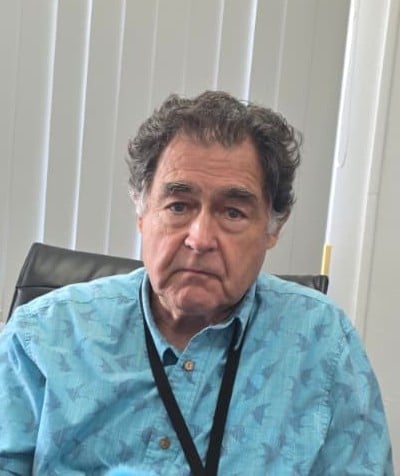
Guam Waterworks Authority General Manager Miguel Bordallo Nov. 28, 2023, at the Gloria B. Nelson Public Service Building in Mangilao.
