



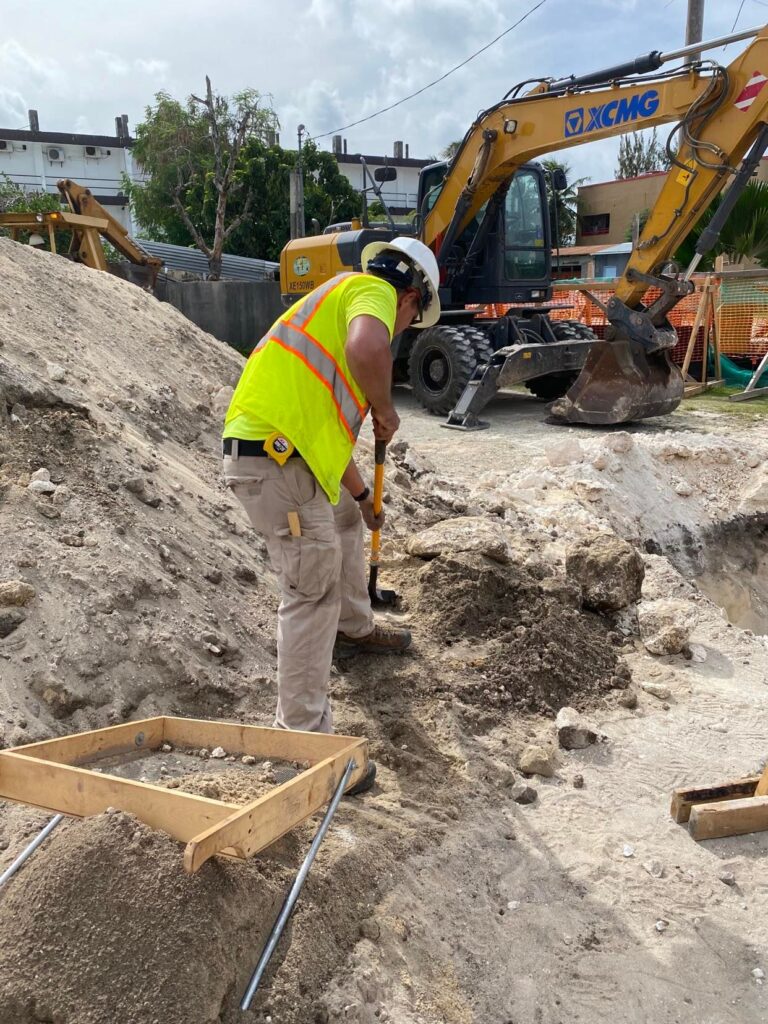
In order for any federally funded earth moving activity to proceed in the CNMI, archaeological reviews must be conducted. On May 10, 2022, the governor’s Infrastructure and Recovery Program Archaeology Team monitored a drainage improvement project at the intersection of Apengah and Ghillis streets. The NMHC CDBG-DR Program project is funded by the U.S. Department of Housing and Urban Development. The Commonwealth Utilities Corp. proposed the replacement of the existing sewer line to prevent flooding of the Apengahg Avenue/Ghillis Street intersection so that San Jose residents may have less flooding and drainage worries.

IRP Archaeologist Scott Bierly shoveling and shifting through soil samples.
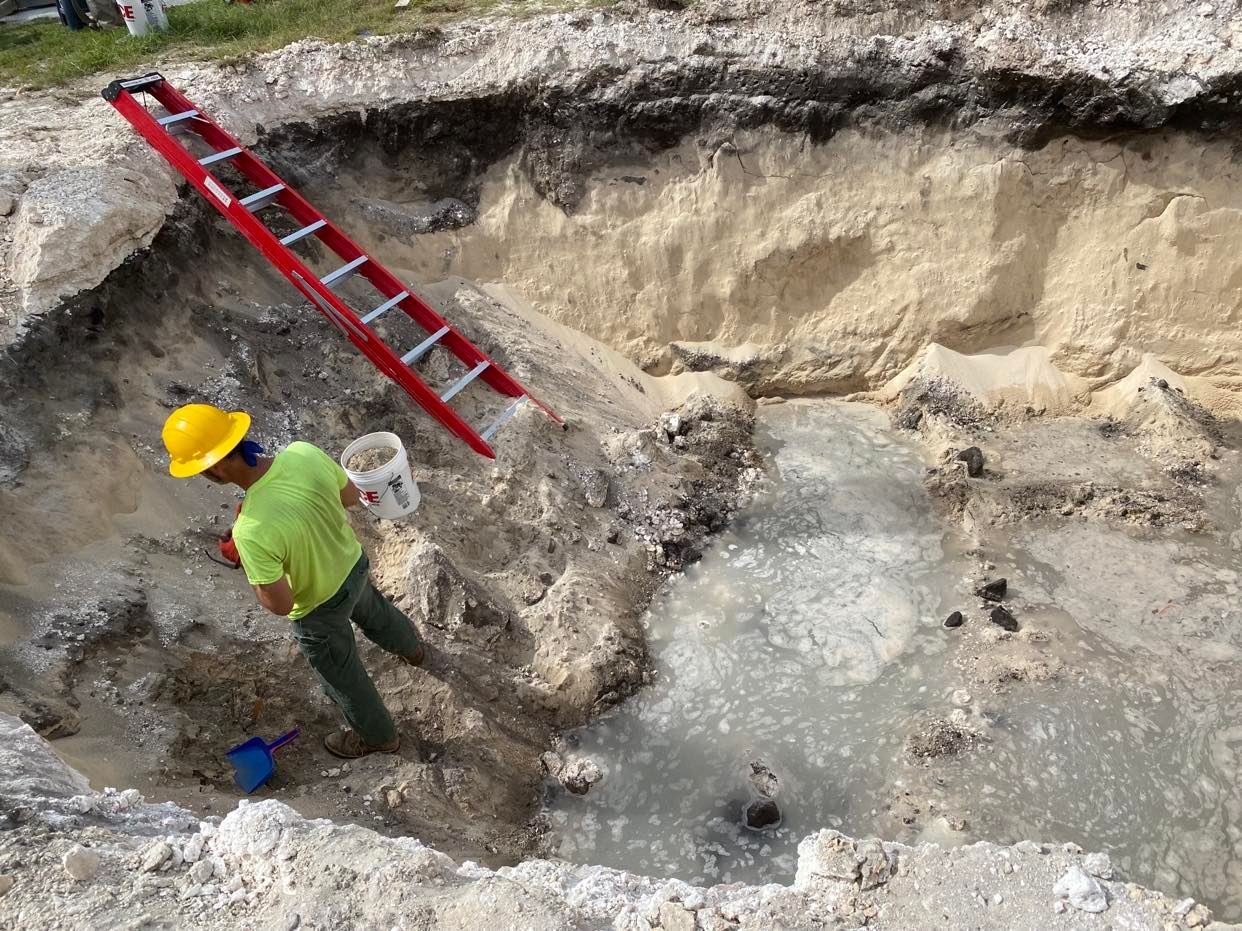
IRP Lead Archaeologist Jeremy Freeman collecting soil samples.
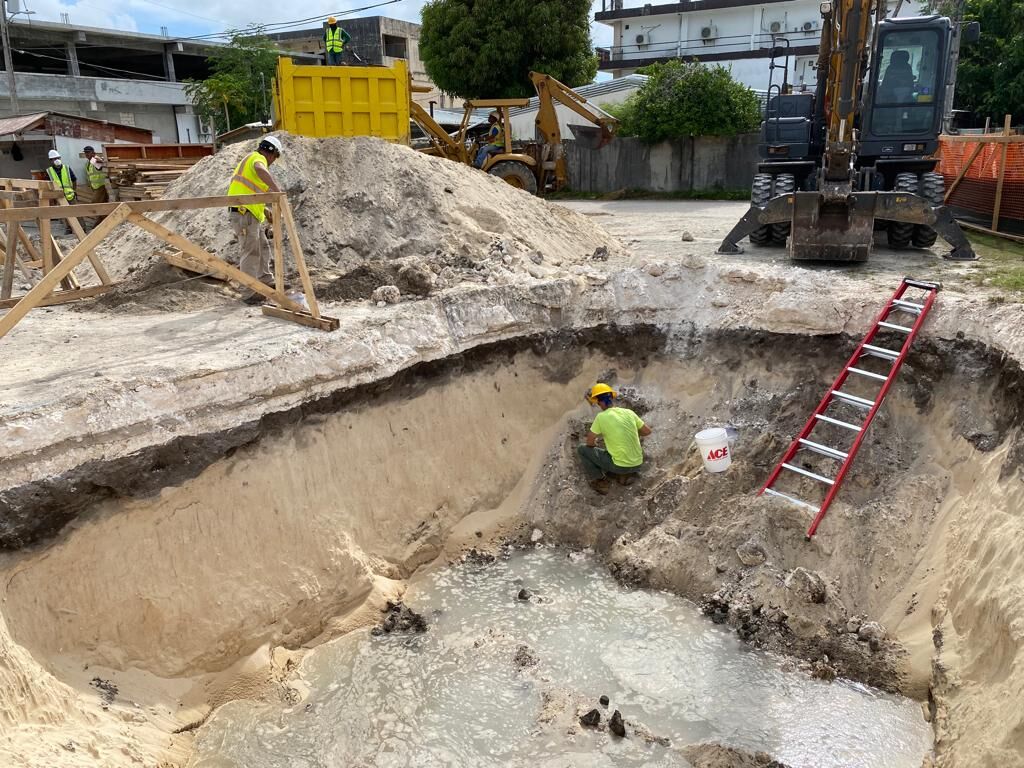
The IRP Archaeology Team field work is documented in a project report and submitted to HPO for review. The approval of a report helps a project move forward in the permitting process.
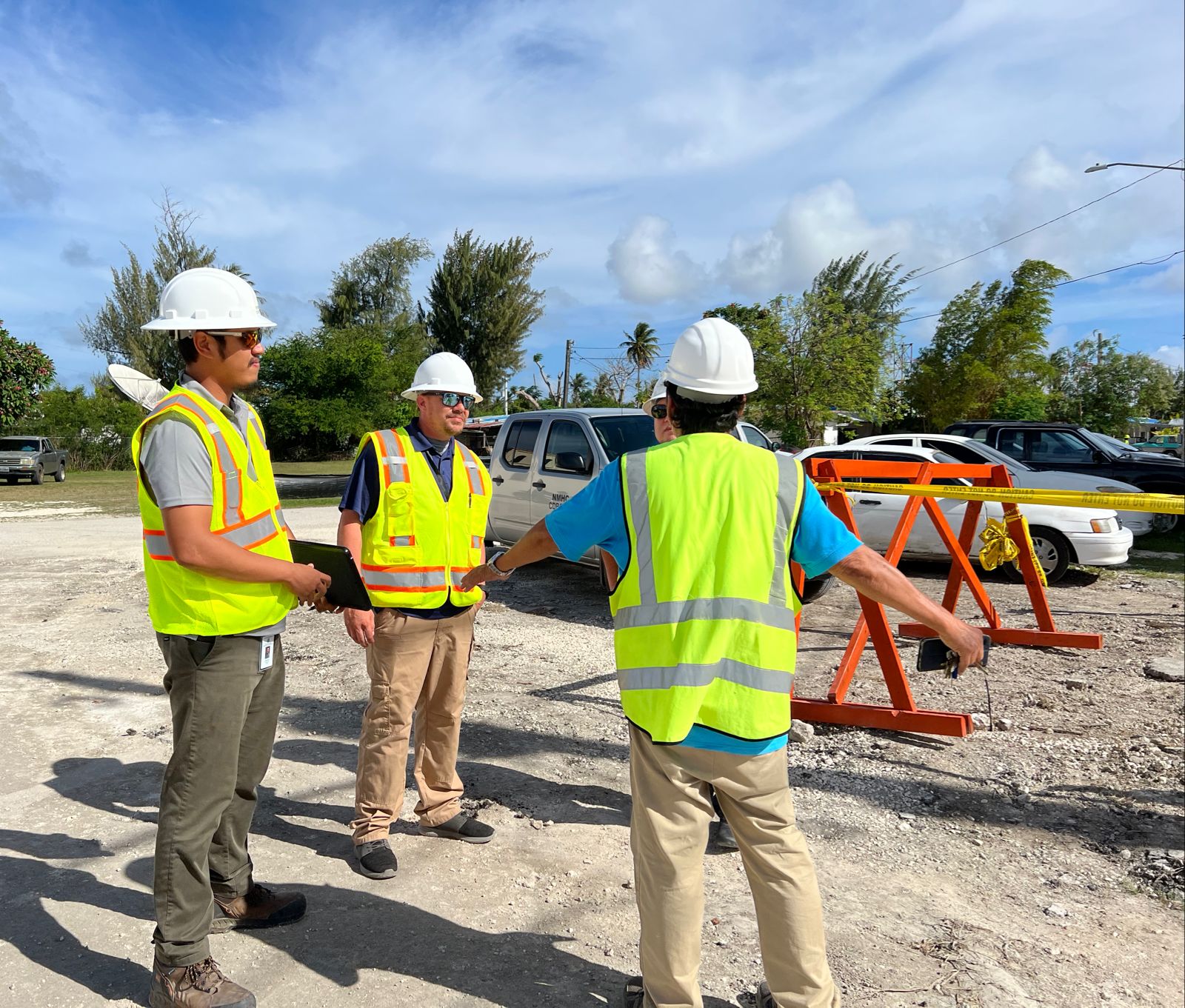
From left, Keith Kintol, IRP inspector; Mike Fields, CBDG-DR inspector; and Rex Richa- Yachtze, project foreman discuss the asphalt removal and replacement for Apengahg Avenue and Ghillis Street as part of a drainage improvement project on May 19, 2022.

At the Sugar Dock Pavilion rehabilitation project site, Mariano Iglecias, IRP civil engineer and Frank Santos, DPW building code inspector conduct a final inspection for the structure on May 13, 2022. The IRP project was substantially completed in 18 days — far below the 45 days initially allotted for completion. As one of the favorite spots for community gatherings, the pavilion will now be a safer and more resilient structure for the entire community to enjoy.
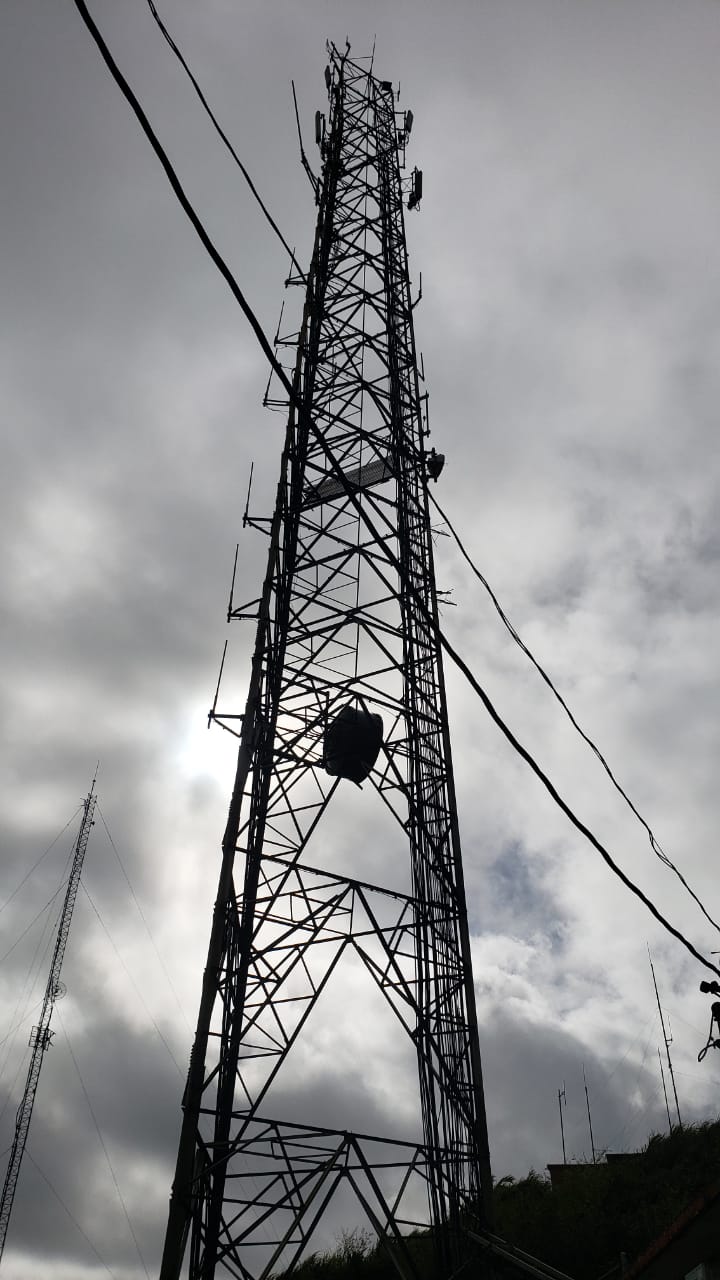
This Homeland Security and Emergency Management communication tower on Mt. Tapochau inspection photo was taken by IRP inspector Reno Celis. IRP Engineering assisted in developing the scope of work for the tower, funded through the NMHC CDBG-DR Program. The IRP Archaeology team completed the archaeological review required by the funding agency. The communications tower is over 27 years old and serves as the main communications platform for the CNMI. A 2015 inspection report revealed significant corrosion on the tower’s structural members and fasteners, and recommends the replacement of defective members to stabilize the main structure.
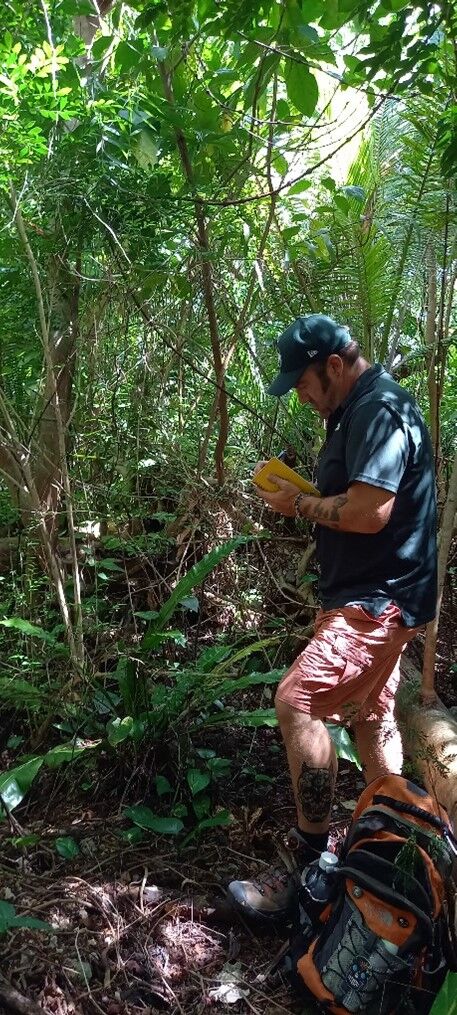
IRP Lead Wildlife Biologist Randy Teal completes a threatened and endangered species survey on May 23, 2022 for a DPW project in Gualo Rai to help create a new ponding basin and reduce water runoff to the streets.
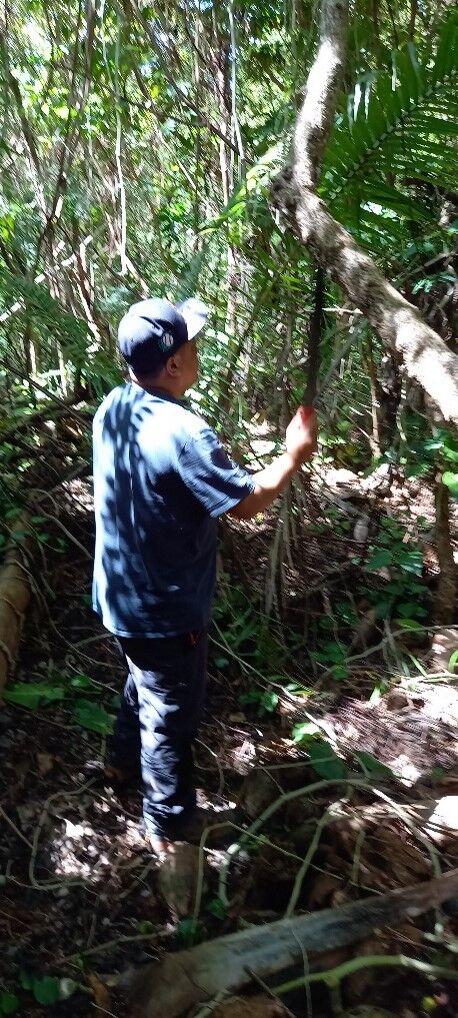
IRP Wildlife Technician Jay Camacho uses a machete to cut a transect in the jungle on May 20, 2022 so that threatened and endangered species surveys can be completed for a new ponding basin in Gualo Rai.
