



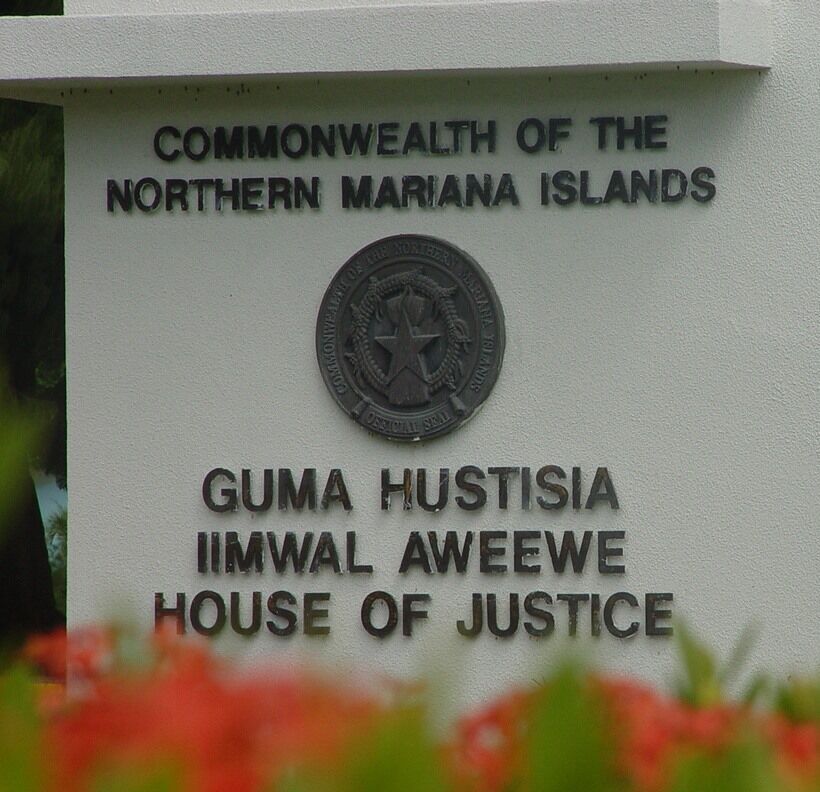
SUPERIOR Court Associate Judge Wesley Bogdan has dismissed without prejudice the subrogation claim of Marianas Insurance Company Ltd. in small claims court for lack of matter jurisdiction.
An online legal dictionary defines subrogation as “a term describing a right held by most insurance carriers to legally pursue a third party that caused an insurance loss to the insured. This is done in order to recover the amount of the claim paid by the insurance carrier to the insured for the loss.”
Judge Bogdan said the “plaintiff is certainly entitled to pursue [its] subrogation claim, but in the appropriate civil case forum wherein more complex insurance subrogation claims, procedures and defenses ensuring due process is provided for all the parties as set out in the NMI Rules of Civil Procedure.”
Attorney Mark Scoggins, who represents Marianas Insurance, stated that a car driven by Dave Picente and owned by Yaping Tao was involved in a car accident with a vehicle insured by Marianas Insurance.
Picente was allegedly at fault. Marianas Insurance — and Tao’s insurance provider — thereafter paid out claims, prompting the plaintiff to file a complaint at the small claims court on Sept. 22, 2020 requesting $5,000 from the defendants (Picente and Tao) as an insurance subrogation claim.
The court order noted that Picente — who was the driver of the vehicle involved in the accident — has not appeared or been served.
Judge Bogdan said Tao failed to appear at the March 3, 2021 hearing which had been scheduled to hear defenses, offsets and/or counterclaims, “and again it is unclear whether her insurer had notice of this subrogation action filed against Tao.”
At a previous hearing in March, Judge Bogdan, “voiced his initial reservation regarding whether the small claims court was the proper venue for insurance subrogation claims — specifically concerning the lack of details as to plaintiff’s claim and use of the small claims court forum to litigate cases in which an insurance company appears as a third-party subrogee.”
To date, the judge added, he is “unaware of, and has not heard of insurance subrogation claims in the Superior Court small claims forum.”
Scoggins said because the Superior Court is a court of general jurisdiction capable of hearing all civil actions in law and in equity, the small claims court — as a branch of the Superior Court — can hear insurance subrogation claims.
Scoggins added that because the Commonwealth Rule of Civil Procedure 83(a) allows for the small claims court to hear any civil action within the jurisdiction of the court (if the value of the claim is $5,000 or less), the small claims court can hear subrogation insurance claims as long as it is for a claim of less than or equal to $5,000.
But in his 11-page order, Judge Bogdan said, “The particulars involved in this case reveal [that] two different insurance companies have apparently already settled claims involving the actions of one defendant (who was the cause of an automobile accident), and another defendant who was an owner and insured party of that vehicle involved in the accident.”
Therefore, the judge said, “The instant matter involves no such debt based on a contractual relationship.”
“Ms. Tao’s insurance carrier and Marianas Insurance have evidently already paid claims to some unknown person and the issues raised in this case have nothing to do with unpaid car payments,” the judge added. “These details are important, but unlikely to be disclosed during the small claims procedures. There is no contractual relationship, in this case, between Ms. Tao as a debtor and Marianas Insurance Co. Ltd. as a creditor.”
Moreover, the judge said, “The subrogation and/or assignment of insurance policy rights introduces an entirely new corporate party into the legal analysis which is represented by counsel against a pro se defendant.” Pro se means the individual is representing himself.
Judge Bogdan said, “While the instant matter is limited to the issue of a subrogation claim, numerous other jurisdictions have restricted the already-limited jurisdiction of small claims court to expressly prohibit other types of civil actions and procedures.”
He said these “statutory schemes reflect the basic tenets of small claims court being a court of limited jurisdiction, created to provide a forum for people with relatively small, uncomplicated claims to navigate those claims without legal counsel.”