








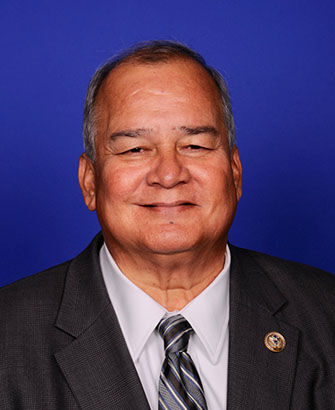
U.S. Congressman Gregorio Kilili Camacho Sablan was among the lawmakers who asked Department of Veterans Affairs officials earlier this month on the best ways to implement the PACT Act, a bipartisan measure that expands healthcare benefits for veterans exposed to toxins during their military service.
The PACT Act stands for Sergeant First Class Heath Robinson Honoring Our Promise to Address Comprehensive Toxics Act of 2022.
Sablan said there is only one doctor contracted to treat veterans in the CNMI, Dr. Norma Ada, forcing veterans to seek off-island healthcare.
“For me in my district, there was a lot of response to the passing of the PACT Act and signing it into law. We’re encouraging our veterans that if they think they have an issue, they should go to va.gov/pact and start a process, but in my district, I don’t have a VA doctor; I have a doctor contracted for service,” Congressman Sablan said to the VA officials.
He asked if doctors are required to send patients off-island for a better health assessment and to receive needed services or treatments.
“Please keep in mind that we are thousands of miles from my district,” he added.
Dr. Shereef Elnahal, undersecretary of Veterans Affairs for Health, said, “We take it as our primary responsibility to inform veterans from every demographic, every region in the country and throughout our territories, that this option, these new benefits, are available to them. That responsibility falls on us at VA. I will say that the outreach efforts are specifically targeted to folks who we think may qualify. If you think there are gaps in our ability to reach veterans that you represent across the vast territory that you represent… please let us know.”
He added, “We do try to fill gaps in care capacity in any way we can, and one of those ways is contracted physicians and providers. We are trying as much as possible to hire more physicians in our roles at VA, because we feel that those physicians are best equipped to meet veteran needs. That’s why one of our top legislative priorities is, of course, to relieve us of the statutory cap on salaries, especially for specialty physicians for whom we are really struggling to compete in the market. The fact is, we pay sometimes over a million dollars per physician for contracted doctors, when we can exceed the $400,000 cap at a much lower total number if you’re able to employ them.”
For his part, John Boerstler, Veterans Affairs’ chief veteran experience officer, said, “We have started a program called the Veterans Experience Action Centers, especially effective in rural areas where it’s hard to access VA facilities and care. What these are essentially are three-day enrollment spreads where veterans and their families have an opportunity to sign up ahead of time for appointments during that three-day period, and then our system actually calls them and helps them file a claim, helps them enroll in VA health care, and helps answer any other questions that they may have so that they have a world class experience, and so it’s directly tied to outcomes. There are many other opportunities to do this elsewhere.”
Congressman Sablan then said, “My question was, ‘Are doctors required to inform the veteran that they should get additional help?’ and I’m glad that Dr. Elnahal said yes.”
Sablan added, “No disrespect, but the way it was said was that veterans across the country and the territories. Territories are in the country. They’re not outside of the definition of country. We are a part of the United States of America, so we’re not the country and the territories; we are the country. We’re in there.”
Sablan noted that the CNMI does not have a Community Based Outpatient Clinic, but he is working on that.
“It’s going to take some time, but again the veterans looked at this as something promising for them, those who may have difficulties, and I believe that they have a right to think that, and I believe that the PACT Act does address those issues,” he said.
The congressman then asked if veterans were to register for PACT Act benefits, what happens if there are not enough funds in the Toxic Exposures Fund to meet the veterans’ health needs?
Dr. Elnahal said, “Well, what I’ll say to that, sir, is that that is why we are advocating very, very hard to make sure that the toxic exposure fund is funded adequately to be able to meet the execution needs of this legislation. I will say that for VA health care at [the Veterans Health Administration], we do benefit — thanks to you and this committee and Congress at large — from an advanced appropriation that insulates us from some of these other budget debates, so that we can continue and not disrupt veteran health care. That said, we view the toxic exposures fund as absolutely critical and I thank you for highlighting it.”
Topics of the hearing included speeding up the claims process, hiring veterans, and informing veterans of expanded health care access.
To view the hearing in its entirety, visit https://www.c-span.org/video/?524659-1/veterans-affairs-officials-testify-toxic-exposure-legislation
For more on veterans’ benefits through the PACT Act, visit https://www.va.gov/resources/the-pact-act-and-your-va-benefits/
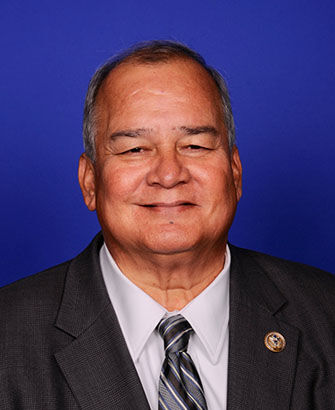
Gregorio Kilili Camacho Sablan
