





HAGÅTÑA (The Guam Daily Post) — Lawmakers heard testimony from several officials Wednesday on Bill 116-37, which aims to tighten regulations around quarrying activities on Guam.
Speaker Therese Terlaje wrote the measure, calling it the culmination of extensive research and collaboration with regulatory agencies.
Bill 116 would limit extractions in agricultural zones specifically to biological extractions, and would ensure that mining and quarrying don’t bypass the review process by placing those activities under conditional uses in M2 heavy industrial zones, according to the speaker.
Further, the bill would amend existing rules to require a special permit for mining or quarrying, and would set a 5-acre limit on clearing, grading, grubbing, filling, excavating, embanking and stockpiling activities.
The speaker said her committee convened an informational hearing in April on existing laws and guidelines for mineral extraction on Guam.
In that hearing, the Guam Environmental Protection Agency testified that a regulatory gap existed in the identification of operations and in the permitting process, in which applicants are engaged in quarrying but claim they aren’t, and the land use permitting body has said it doesn’t know how to respond or make the determination itself, Terlaje said.
According to the speaker, Guam EPA said defining quarrying or surface mining in law would help resolve the issue and place it back in the realm of land use determinations, adding that Guam EPA currently flags 20- to 50-acre projects with large cuts as quarrying, while the outfits in question had been permitted for clearing and grading.
Intent to quarry
Capt. Brian Bearden, of the U.S. Public Health Service, the chief engineer overseeing the Water Division at Guam EPA, said Wednesday the agency has seen numerous applications for so-called grading activities that would “clearly trigger any reasonable definition for quarrying,” as he read Guam EPA’s testimony.
Randy Romero, the building inspection and permits administrator at the Department of Public Works, agreed that many applicants are not truthful in their scope of work, which isn’t discovered until after extraction begins.
Bearden said he tended to disagree, adding that it can normally be determined from the moment of application that grading plans are actually intended to quarry.
“One of the reasons this came up was because we were getting so many complaints that we were holding up clearing and grading permits for these people really engaged in quarrying. The reason we were doing that was because there is a provision; … it was written in such a way that it somewhat gave us the authority to look at these things and decide if it was quarrying or not,” Bearden said.
“That’s where we started to run into this problem where (the Department of Land Management), which reviewed it at first, said, ‘No, it’s just grading.’ We looked at it and said it’s very obvious this is quarrying. You can tell by looking at this (application),” Bearden added. “We were calling this out as quarries and we were placing these applications on hold as Guam EPA, not as DPW, and telling the contractor that this is quarrying, come back to us with your Land Use Commission conditional use approval letter. And that’s where it was holding things up. Then we had all kinds, of course, pressure and such from all directions to release those, and that’s where this (bill) kind of came about.”
Romero said Wednesday that DPW denied a permit renewal for Smithbridge Guam in 2020 for clearing and grading at the Guam International Raceway, where such activities have been described as mining. DPW also issued a notice of violation for quarrying activities, not related to the raceway, near the solar farm and Marbo Cave area in Mangilao, according to Romero.
“A permit was issued for clearing and grading, and we found out they were actually extracting and mining. We issued a notice of violation to that and activity had stopped,” Romero said.
At the onset of Wednesday’s hearing, the speaker noted that in late 2021, Guam EPA began flagging clearing and grading permits that appeared to involve quarrying. So far, the agency has identified 12 permits that exceed three acres and 10 permits of five acres and above, the speaker said. It also issued at least 16 notices of violation between 2018 and 2021 for clearing and grading, Terlaje added.
Different approach
But while Guam EPA supported the intent of Bill 116, Bearden said the agency suggests taking a different approach than creating a new permit type for quarrying, adding that local laws and regulations, in conjunction with federal regulations and permitting systems, already contain sufficient technical provisions to address large earth-moving activities.
“What we believe to be necessary is the creation of clear definitions within the zoning law, which would empower the Department of Land Management and Guam Land Use Commission to enforce their existing land use permitting system. … Based on numerous conversation with our staff, (Land Management) reviewers have conveyed that without a definition of what constitutes quarrying, they do not believe they are in a position to question such claims, and thus (Land Management) approval … is granted without the requirement to obtain a zone change or conditional use permit through the GLUC,” Bearden said.
Guam EPA proposed two definitions: one for quarry; one for quarrying.
The speaker said she couldn’t find rules related to mining or quarrying in Guam EPA rules, but Bearden said those activities are covered in rules regarding excavations.
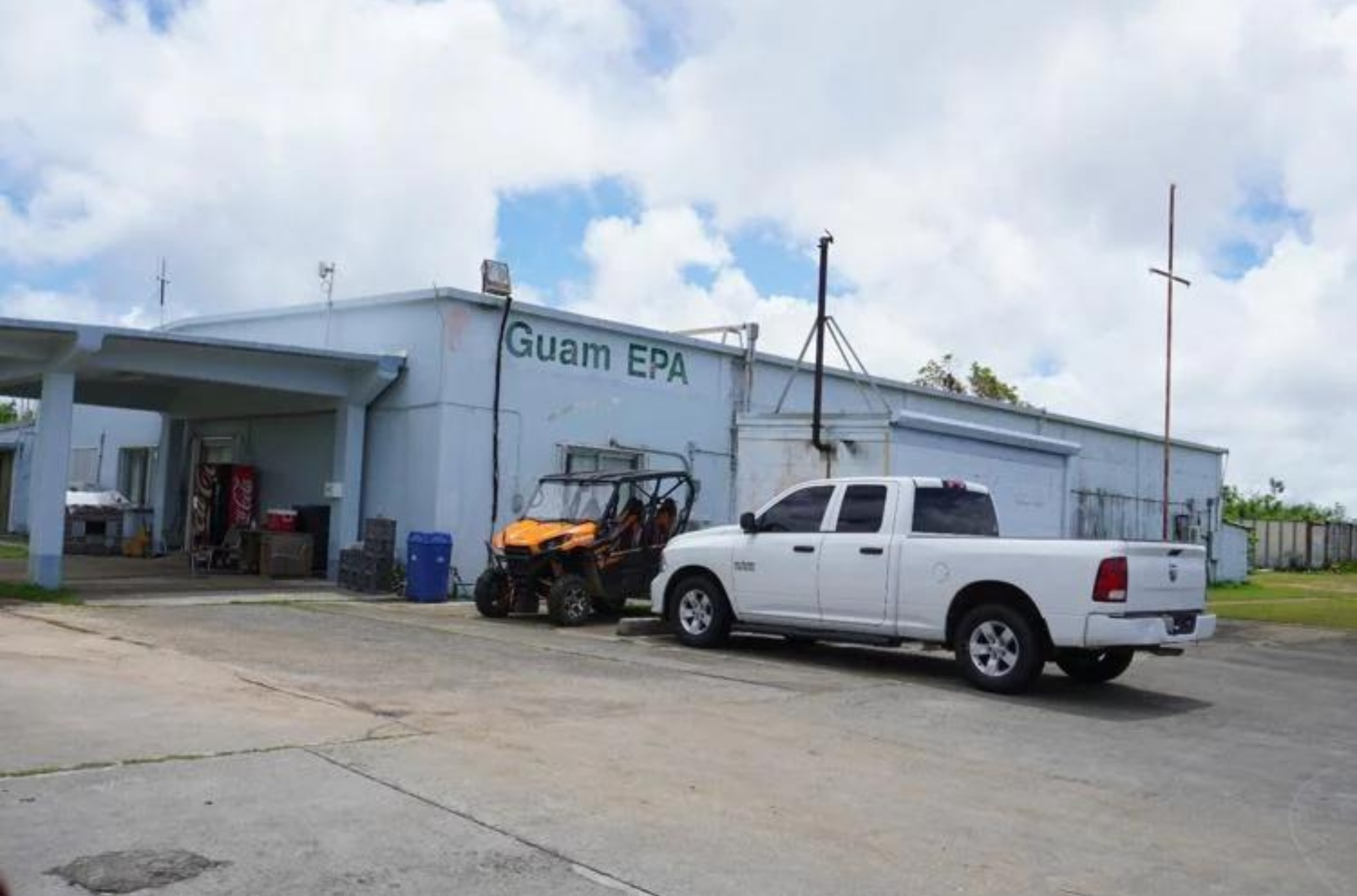
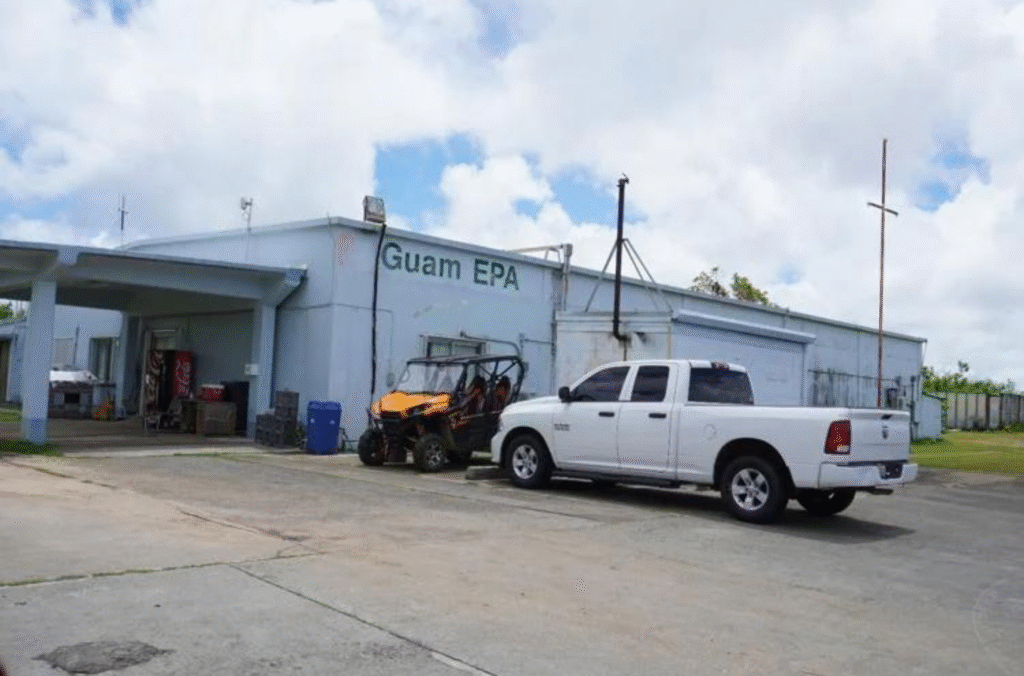
The Guam Environmental Protection Agency is seen June 26, 2023, in Tiyan.

Speaker Therese Terlaje presides over a public hearing held June 23, 2023, at the Guam Congress Building in Hagåtña for the status of the CHamoru Land Trust Commission’s eviction of Guam International Raceway.
