





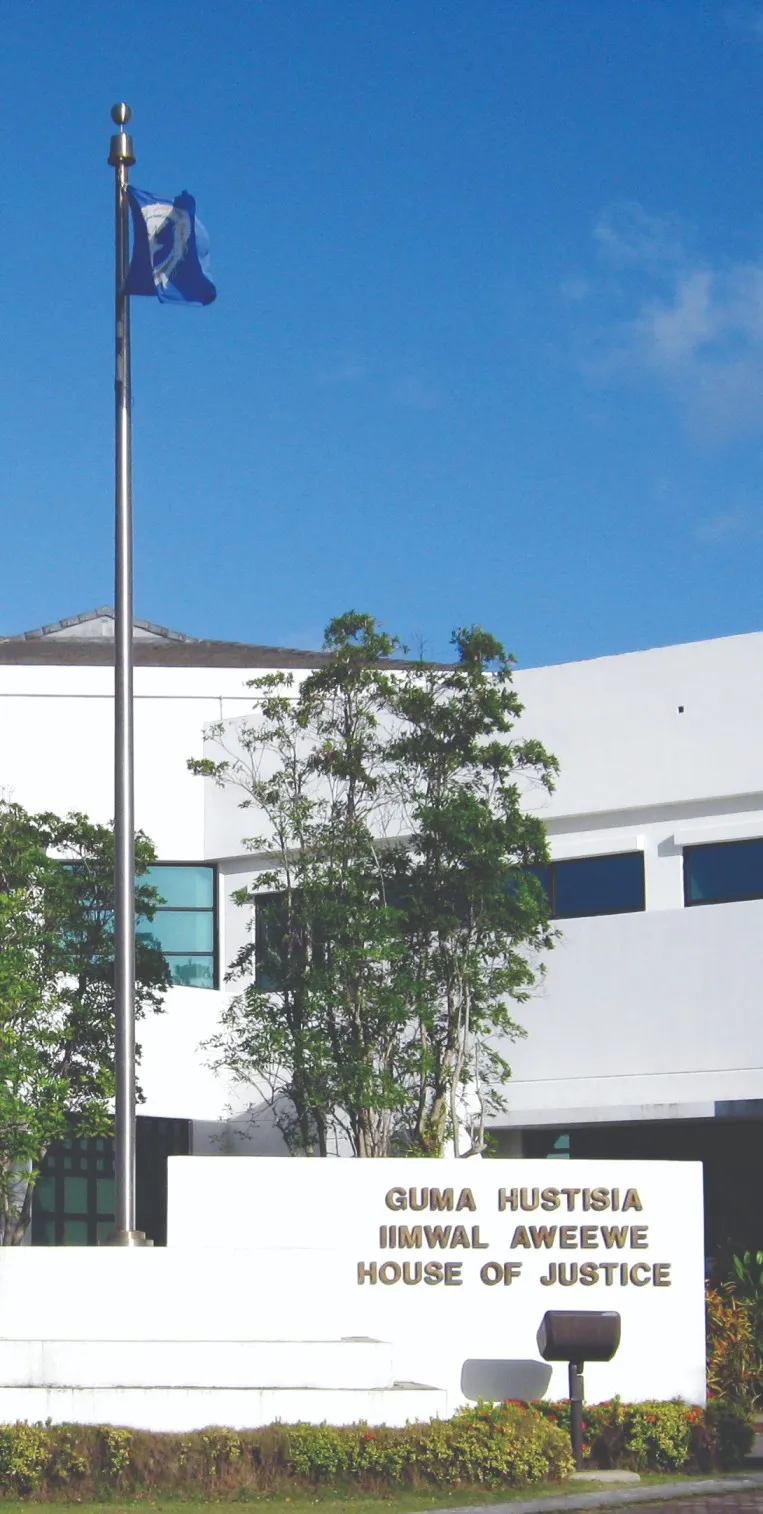


CHIEF Judge Ramona V. Manglona of the District Court for the NMI has dismissed without prejudice the lawsuit of Melvin Castro against the U.S. Army.
“Without prejudice” means the complaint can be refiled.
Castro sued the Army for rejecting his application because of a fractured finger.
Castro, who represented himself, demanded a settlement of $500,000 from the Army.
According to the draft complaint he filed in federal court, “fabricated medical causes were imposed [on] him (non-self-inflicted scars on left wrist).”
“[A] fractured finger is not cause for disqualification,” he added.
Castro said he was “able to surpass minimum scores for physical evaluation tests during time in service despite having an incapacitated finger on [the] left hand.”
He also said that he was not institutionalized for any mental illness.
He said a “re-entry examination was conducted at Portland, Oregon military entrance procession station,” and that he was “denied again at the recruiter’s station on Saipan.”
Castro filed his lawsuit on June 1, 2021 and requested the court to waive the filing fees.
Having reviewed Castro’s application, Judge Manglona granted the application to proceed.
However, because Castro seeks monetary relief from a defendant who is immune from such relief and his challenged decision is not reviewable by the federal court, Judge Manglona dismissed the complaint with leave to amend it.
In her order last week, the judge said the “United States and its agencies enjoy sovereign immunity and can only be sued in the event that Congress waived such immunity.”
She said one waiver of sovereign immunity is with the Federal Tort Claims Act or FTCA, which allows individuals to bring tort claims for money damages against the United States for injury or loss of property caused by negligent or wrongful acts or omission by government officials acting within the scope of their employment.
However, she added, “the FTCA also exempts various intentional torts from its application, including ‘[a]ny claim arising out of…misrepresentation, deceit, or interference with contract rights.’”
The judge said Castro’s claim for “fraudulent denial of re-enlistment into the Army” given the Army’s alleged fabrication of medical causes “clearly sounds…fraud or misrepresentation.”
The FTCA therefore does not apply, and Castro’s claim against the Army must be dismissed given sovereign immunity, the judge said.
Additionally, she said, internal military decisions are generally nonreviewable and present a nonjusticiable issue.
“In the Ninth Circuit, an internal military decision is only reviewable if the plaintiff (1) alleges a violation of a recognized constitutional right, a federal statute, or military regulations; and (2) exhausts all available intraservice remedies. Once a plaintiff meets both prerequisites, the court must still weigh four factors to determine whether review should be granted: (1) the nature and strength of the claim, (2) the potential injury to the plaintiff if review is refused, (3) the extent of interference with military functions, and (4) the extent to which military discretion or expertise is involved,” the judge said.
Here, she added, Castro fails to meet either of the prerequisites by failing to allege any violation of a constitutional right, federal statute, or military regulation and failing to allege that he exhausted all intraservice remedies.
“Thus, at this juncture, his claim is premature and nonreviewable.”
The judge also noted that Castro has communicated with court staff “multiple times during the pendency of the court’s review of his complaint and gives notice to him that it does not appreciate nor condone the use of profanities and abusive language.”
“Such obscenity in court proceedings may result in sanctions, ranging from a finding of civil contempt with monetary sanctions to criminal contempt and the imposition of incarceration,” the judge said.

