

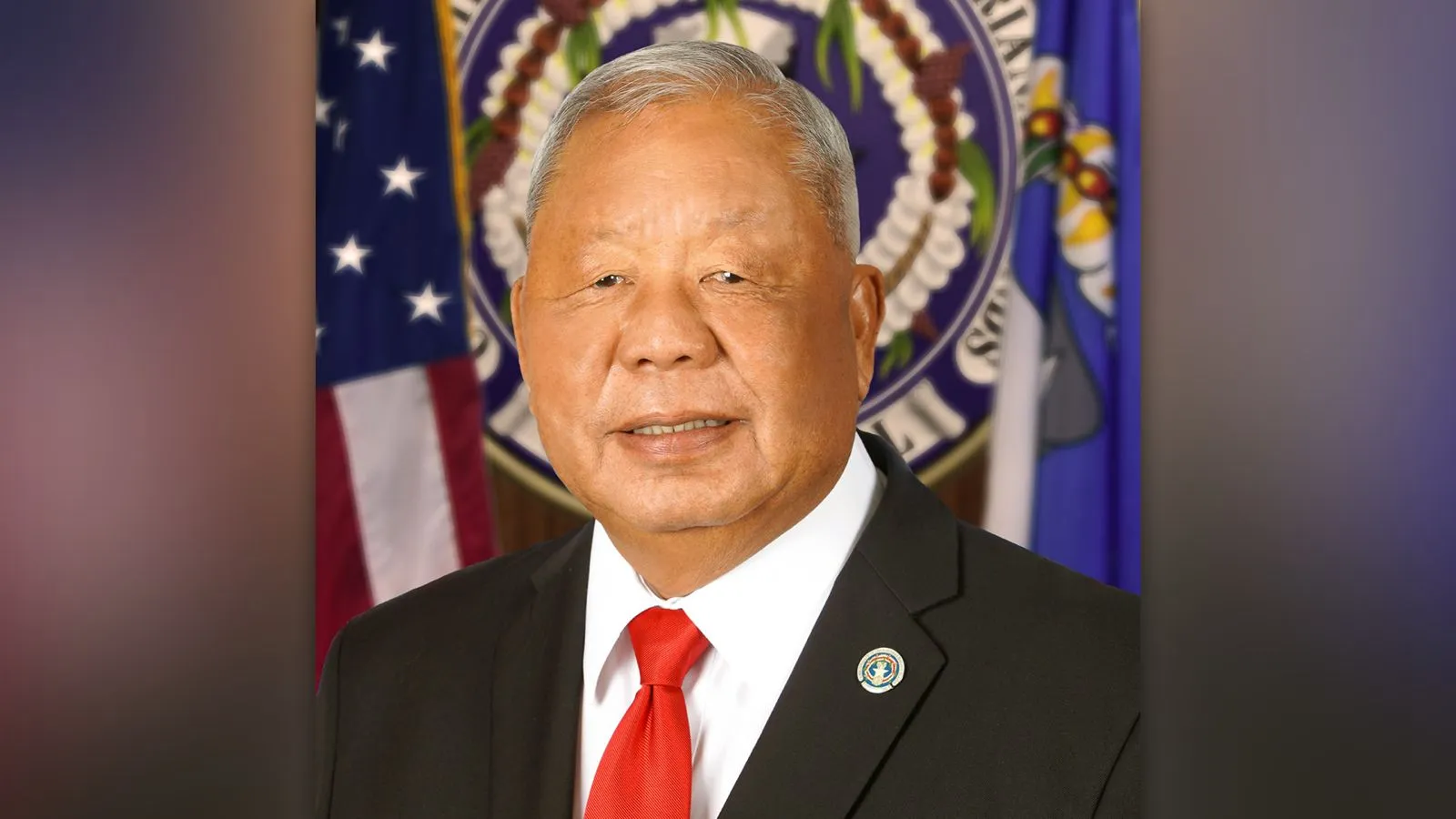



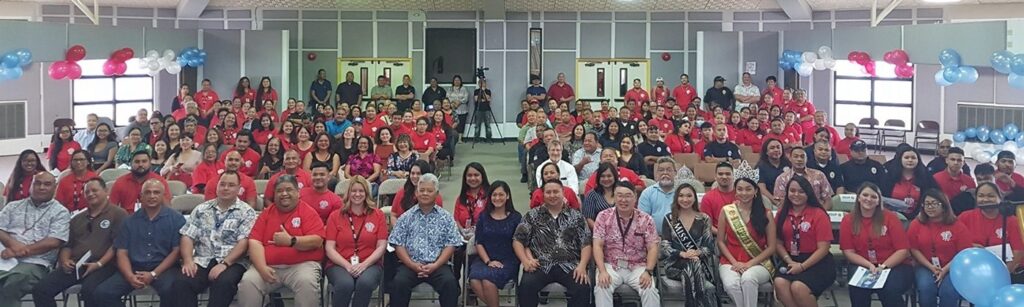
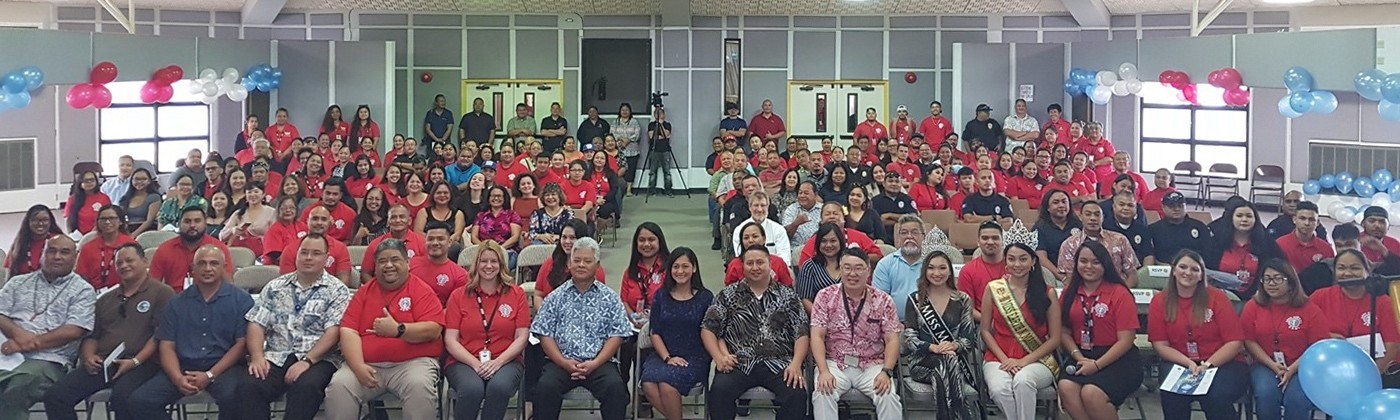
On Thursday, Gov. Ralph DLG Torres and Lt. Gov. Arnold I. Palacios sign a proclamation declaring April 1, 2020 as CNMI Census Day. Photo by K-Andrea Evarose S. Limol
On Monday, 2020 CNMI Census manager Claudio K. Norita, U.S. Census adviser Colleen Joyce, and assistant manager of field operations Lorenza Aldan held a press conference to discuss details of their operations.
Enumerators, crew leaders, field operators, and all employees involved in the enumeration phase completed a 16-hour training prior to conducting fieldwork. Crew leaders, field operations, and other supervisors received additional training.
Enumerators will be going door-to-door until May 30, 2020. A follow-up will be conducted by June 30, 2020. All islands in the Commonwealth will be counted, including the Northern Islands.
Census interviews last about 45 minutes, depending on the answers given by the interviewee. There are about 47 questions, with skip patterns.
The questions encompass several factors, including educational background, income, household size, and current physical structure of the home.
Enumerators will not ask sensitive information, such as social security numbers, citizenship, and immigration status.
Enumerators can be clearly identified by two forms of identification: a CNMI Census badge and a federal Census badge. Interviewees have the right to request to see these two forms of identification to verify an enumerator’s identity.
There will be either one or two enumerators conducting interviews in each household. To date, there are over 200 enumerators in all. Although they are currently at full capacity, 2020 CNMI Census is still accepting applications, just in case there are current employees who choose not to move forward with the project prior to its completion date.
The 2020 CNMI Census has interpreters for interviewees who have difficulty communicating in English. Chinese, Korean, Japanese, and Bengali interpreters are available. In addition, there are enumerators who are multilingual and can also assist with interpretations as needed. Interpreters are sworn into confidentiality, and receive the same training as enumerators.
Interviews are conducted at the convenience of the interviewees. Should they be unavailable, the enumerators will leave business cards for interviewees to contact them to make a follow-up appointment.
Enumerators are part-time employees whose hours are flexible. Those who do not have full-time jobs are available to work all day — including austerity Fridays — seven days a week. They will visit households during reasonable times of the day, as late as around 8 p.m.
Should residents be off-island for a short period of time during this phase, as long as at least one person is home during the enumeration phase, they will be counted. Interviewees are required to be at least 15 years of age and be knowledgeable about household information, such as the average cost of utilities for their household.
“The enumeration phase is the core of the census,” Norita said. He added that the enumeration phase — otherwise known as the outreach phase — aims to collect data and ensure that everyone is counted, regardless of citizenship or immigration status.
This project was kickstarted when enumerators set out last month to check the accuracy of the 2010 CNMI Census maps. The census is conducted every 10 years, “and a lot can happen in 10 years,” said Norita, so it was important to update their maps prior to commencing their enumeration phase this past Sunday.
Enumerators will be collecting data via paper-based questionnaires, which will later be computerized in their main office. They will have the informational copy of the data-collecting process, which takes into account a maximum of five people in a household. Should a household have more than five people, enumerators are trained to fill out continuation copies.
The main office is responsible for quality control, a process that involves follow-up, in order to review enumerators’ work. After the data collected is computerized and reviewed, the main office sends the count to the US Census Bureau in the U.S. for evaluation. More details will gradually be released to the public from 2021 to 2023 as they are made available.
The data collected can be utilized by government agencies, private sector, public sector, and all citizens for numerous purposes, including determining whether it is necessary for legislators to redistrict. The population count also helps to determine how to allocate federal grants, such as those related to FEMA relief funds.
The 2020 CNMI Census requests the public’s full cooperation during this enumeration phase, in order to ensure that every single person in the Commonwealth is counted. They would like to emphasize that interviews are confidential, and should not be conducted by enumerators who know the interviewee personally.
The office would also like to note that should the public need to reach them after hours regarding validating an enumerator’s identity, they are instructed to contact the Department of Public Safety, which has been provided with a complete list of all 2020 CNMI Census employees and their identification.
