





The House and the Senate have not taken a position on the proposal but some lawmakers said the money for Jenner & Block should instead be used for public education and other basic needs of the community.
Gov. Benigno R. Fitial, his special legal counsel Howard P. Willens and Finance Secretary Eloy Inos held a closed-door meeting with lawmakers yesterday morning. The meeting ended at noon due to an unannounced blackout.
Willens and other administration officials were supposed to brief legislators about the CNMI’s current economic situation and outlook as well as discuss U.S. labor laws as early as Thursday but the meeting was postponed due to power outages.
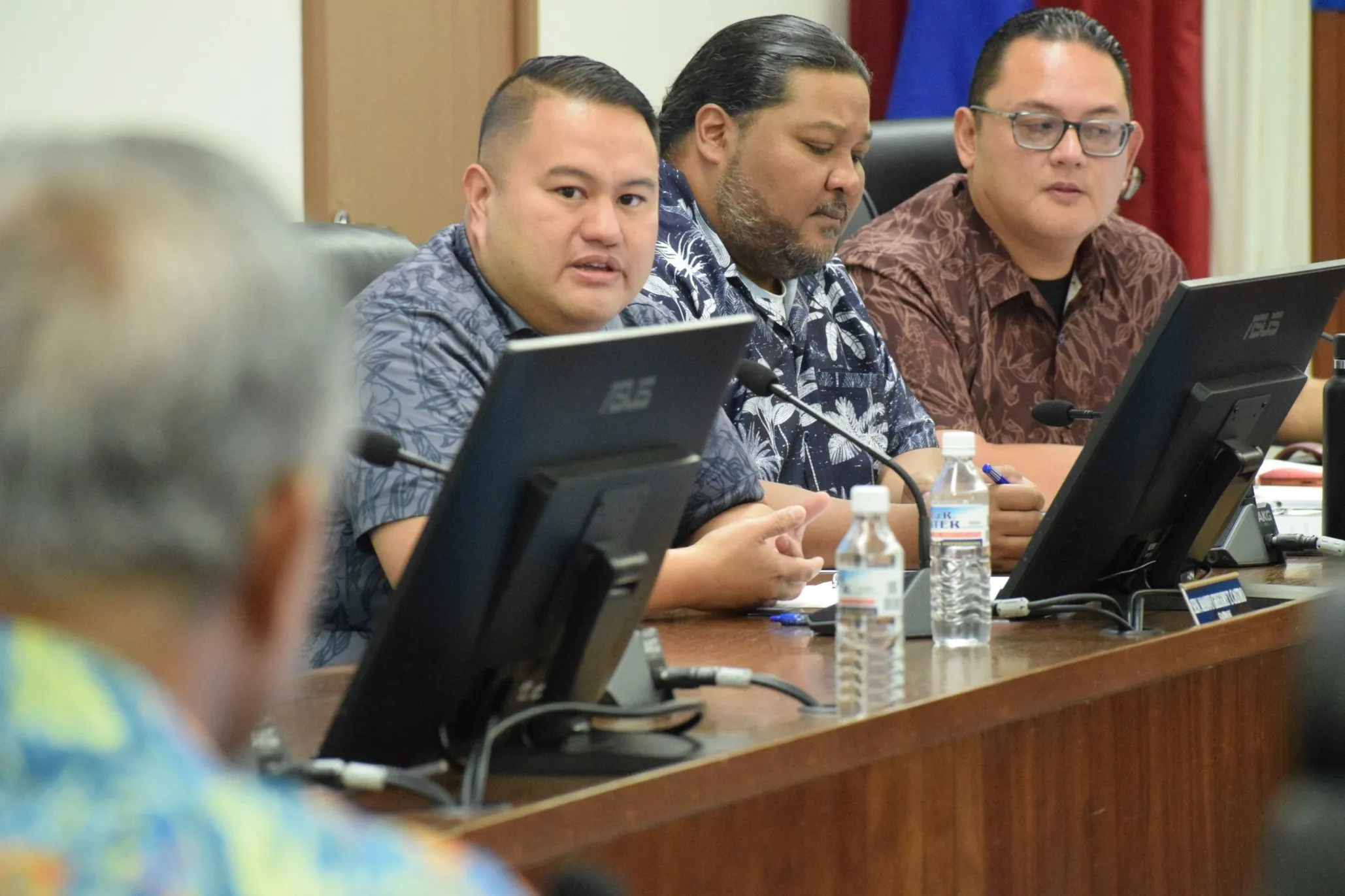
Rep. Tina Sablan, Ind.-Saipan, said the presentation was a propaganda opportunity for the administration to persuade lawmakers to support what she described as a “false litigation against the federal government.”
“Everybody is concerned about what’s going to happen as a result of this law. But I’m not convinced that litigation is the best option nor should it be the first resort,” she said. “To negotiate with the federal government will be cheaper than suing them at this point.”
Money is the dilemma
The governor first retained Jenner & Block in June with funding from “private investors.”
“I asked how much the litigation would cost the CNMI if public funds were made available as they were requesting. They estimated a time frame of six to eight months before any decision might be rendered at a cost of approximately $50,000 every month,” said Sablan.
Speaker Arnold I. Palacios, R-Saipan, refused to comment, saying that the matter will be discussed by the House today.
Senate President Pete P. Reyes, R-Saipan, said he needs a lot of convincing to support the proposed litigation against the U.S. government given the economic crisis on the islands.
“I need to be convinced that a lawsuit is necessary and if it is in the best interest of the CNMI then we need to really take a look at it. At this time, I need to be convinced that it is necessary,” he said.
Right to self-government
During his presentation, Willens said the CNMI administration’s main arguments will be focused on the federalization law’s impact on the commonwealth’s right to self-government under the Covenant as well as its negative impact on the labor pool.
Fitial has said there is very little hope that the U.S. Congress would respect the CNMI labor system and he reiterated his fear of an economic doomsday scenario once the islands are stripped of foreign labor.
“We have about 18,000 foreign workers in the commonwealth — about two-thirds of our total workforce. Only a small percentage of these workers are likely to qualify for H visas. The others will be allowed to remain in the CNMI only if federal officials give special CNMI-Only permits to individual employers allowing them to hire foreign workers,” said the governor.
“But the law requires that the number of these special permits be reduced to ZERO by the end of 2014, unless the U.S. Secretary of Labor grants an extension of the so-called transition period,” he added.
Sablan said if that’s the case, then the CNMI should support the move to give qualified foreign workers permanent residency status.
“Their primary argument is that the lost of these foreign workers in such a short period of time would impact us tremendously. Well, we have workers who have been here for years. So why not petition them for residency and he [Willens] couldn’t answer that question,” she added.
Willens told lawmakers the CNMI stands to lose over $400 million in economic activities over the next five years due to the federalization law.
Some lawmakers, however, are puzzled over this estimate as there was no expert cited to back-up the claim.
