




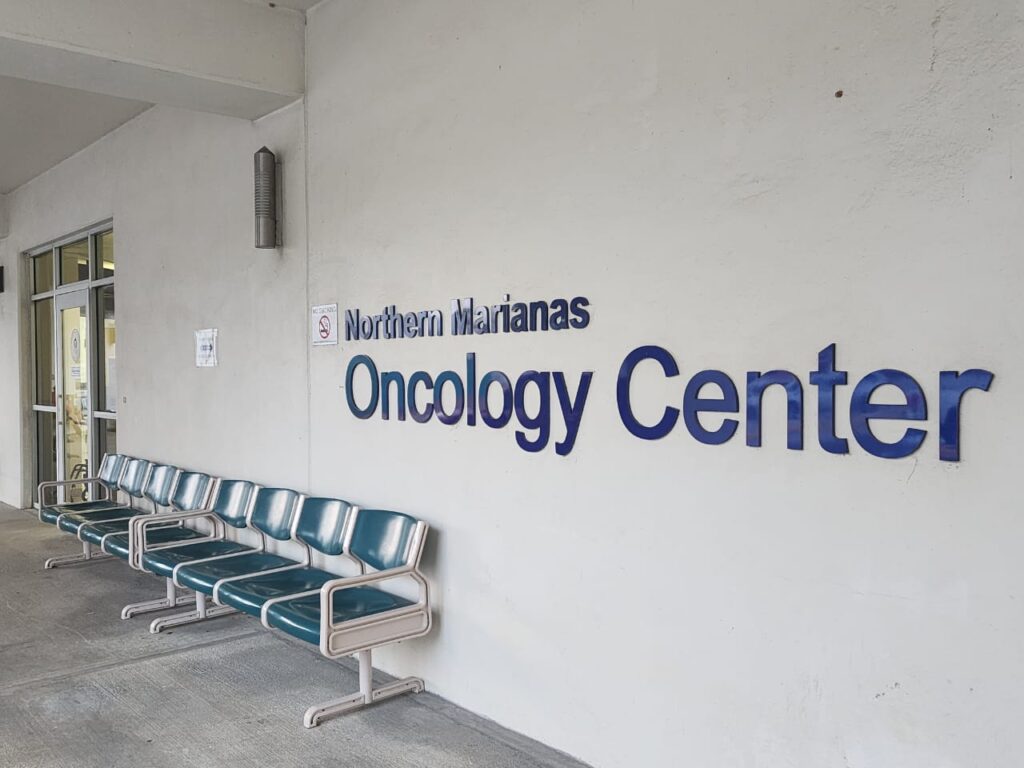
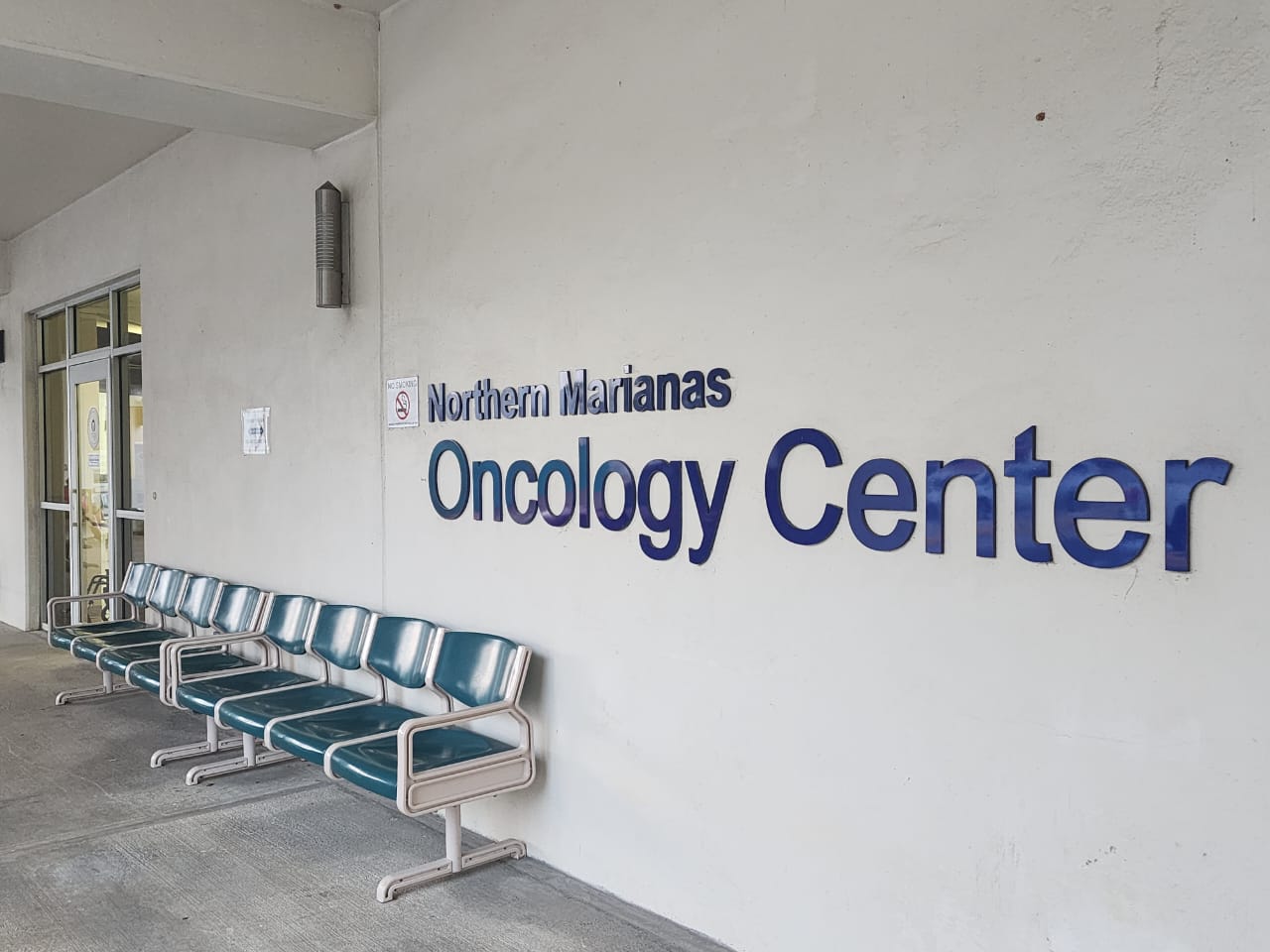
The Commonwealth Healthcare Corp.’s Oncology Center.
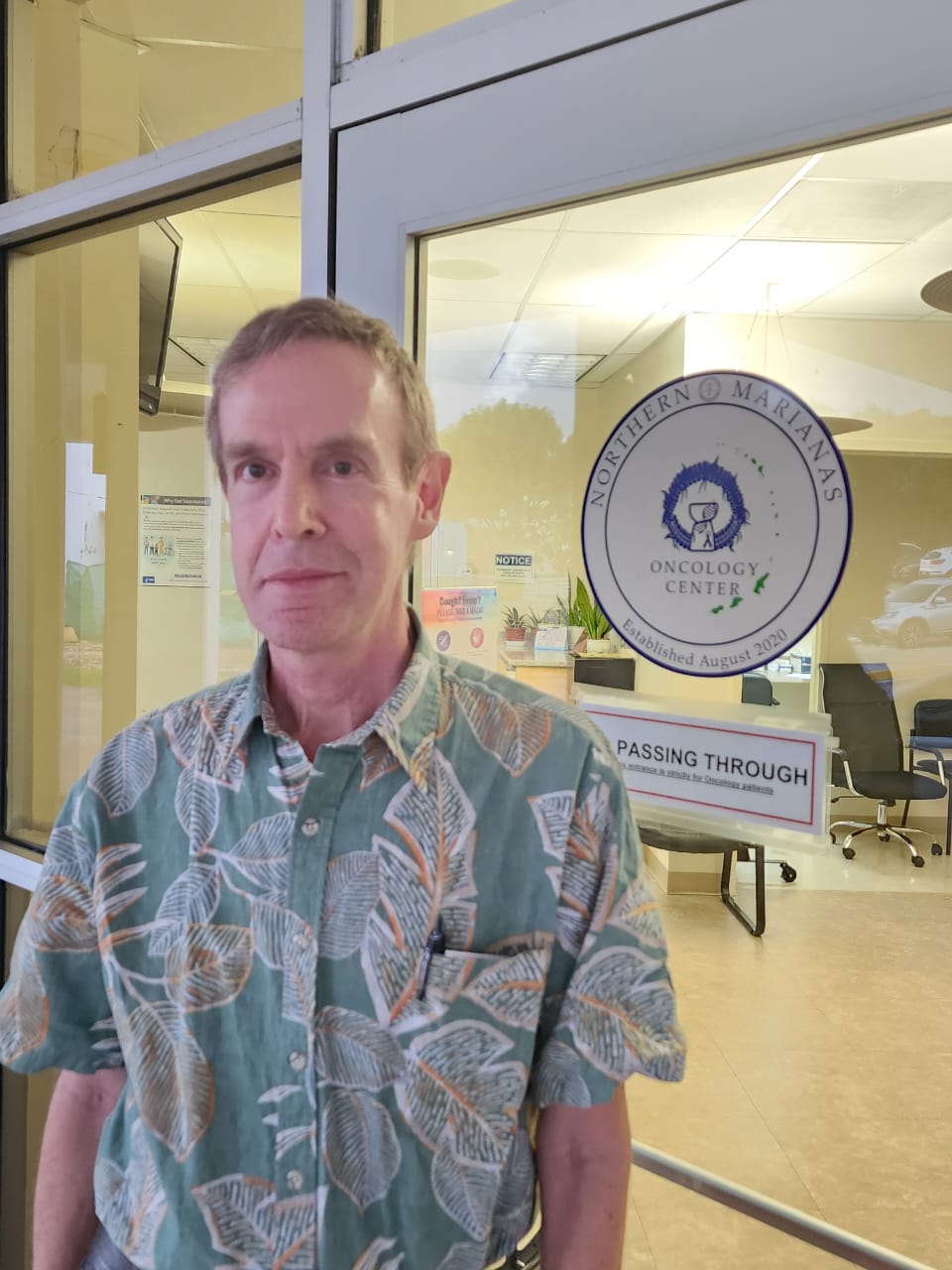
Dr. Peter Brett
THE Commonwealth Healthcare Corp.’s oncology center has improved patient outcomes in the CNMI, CHCC Chief Executive Officer Esther L. Muna, PhD, said.
Prior to the opening of the oncology center in 2020, patients were sent off-island for oncology services, according to a CHCC analysis and report on the utilization and associated costs of the CNMI Medical Referral Program.
In 2019, the report said, 291 patients or 16% of all referrals were sent off-island on medical referral for oncology services. This number dramatically decreased to 17 patients in 2020, the report added. CNMI medical referral services records also show that from 2014 to 2019, patients seeking oncology services made up an average of 16.5% of all off-island referrals.
In a separate interview, CHCC Board Chairman Juan N. Babauta said off-island referrals for oncology-related illness have dropped by 70% since the oncology center opened in 2020.
But Muna said while the referrals have decreased, the CNMI’s only hospital is now seeing more patients for oncology services.
One of them is Felipe Q. Atalig, a former member of the Marianas District Legislature and the Congress of Micronesia, and a delegate to the first constitutional convention in 1976.
In an interview, Atalig said he is proud of the CNMI’s oncology center, adding that it has been a great help not only to him but also to his family because it minimizes his medical expenses since he no longer has to go off-island.
“It was a very wise decision that CHCC opened an oncology center here,” said Atalig who is now 84 years old.
Early detection
Muna said the oncology center has improved access to services that allow for early detection. It increases the chance that the early stages of cancer will be detected.
“It improves patient outcomes, which has always been the goal of the program,” she added.
In the event of treatment-related emergencies, the center allows for more rapid responses and interventions by “facilitating a comprehensive and coordinated healthcare approach within the CHCC health system,” Muna said.
She noted that medication can cost between $20,000 and $30,000 per cycle and each patient is required to undergo six cycles or more of treatment.
According to Babauta, the oncology center spends $200,000-$300,000 a week for the services it provides to patients who would have been referred off-island.
Muna said the real benefit of having an oncology center is “the value of getting the treatment here on island.”
“Sometimes when we think about [medical referral] expenses, we only think about lodging, subsistence allowance and the travel cost, but the reality [includes] the expense of having to leave your work,” Muna said.
Having oncology services on island “is not just as a matter of saving money but also about saving lives and giving the patient a chance to fight cancer here on island,” she said.
Muna said CHCC is now identifying more cancer cases at an early stage. More lives could be saved, she added.
Muna reiterated that CHCC is “paying a lot of money for oncology, but the value to the community is huge.”
“You are saving people’s lives by detecting it early. Patients are being treated and have a fighting chance. Care can be delivered locally, so that patients can stay on island in their community with their family and friends,” she said.
Culturally sensitive
In a separate interview on Monday, Dr. Peter Brett, the lone oncologist in the CNMI, said since they started the oncology center about four years ago, “we’ve been successful in helping people…and primarily, the main benefit is to keep care local, keeping people close to their family and friends.” This means that some patients can continue to work instead of having to go far away where they can’t work.
Brett said they are also trying the best they can to keep the care “culturally sensitive.” At the CHCC oncology clinic, he added, “I think we provide the best we can, a culturally sensitive care.”
Brett, an oncologist in California for 30 years, said some people don’t get screening to detect cancer early or follow prevention strategies “so the NMI have a lot of cancer patients because of that.”
“We have to change that,” he said, adding that CHCC offers a free cancer prevention screening program. “We really try to promote that, to pick cancer early,” he added.
