







“From the beginning of 2010, I let the board know that there was close to $1.6 million in unobligated expenditures that we had to deal with,” said CPA Executive Director Edward M. Deleon Guerrero in an interview with Variety last Friday.
He said those were expenditures that CPA could not avoid.
CPA, he added, will ask the Federal Aviation Administration how the ports authority can apply the Passenger Facility Charge, or PFC, revenue.
“If FAA agrees with our interpretation, we may be able to meet the bond indenture requirement,” said Deleon Guerrero.
According to the FAA website, the PFC program allows the collection of fees up to $4.50 for every enplaned passenger at commercial airports controlled by public agencies. It stated that airports use these fees to fund FAA-approved projects that enhance safety, security, or capacity; reduce noise; or increase air carrier competition.
Based on the draft independent audit conducted by Deloitte & Touche for CPA for fiscal year 2010, the ports authority didn’t meet the bond ratio.
CPA comptroller Derek Sasamoto said it had earlier been communicated to the board that the agency would not be able to meet the bond ratio of 1.25.
Currently, CPA’s bond ratio stands at 1.06 for the airport and 1.36 for the seaport.
According to Sasamoto, “There are things developing right now that may change the situation — drastically — that is still pending discussion with FAA and eventually Deloitte again.”
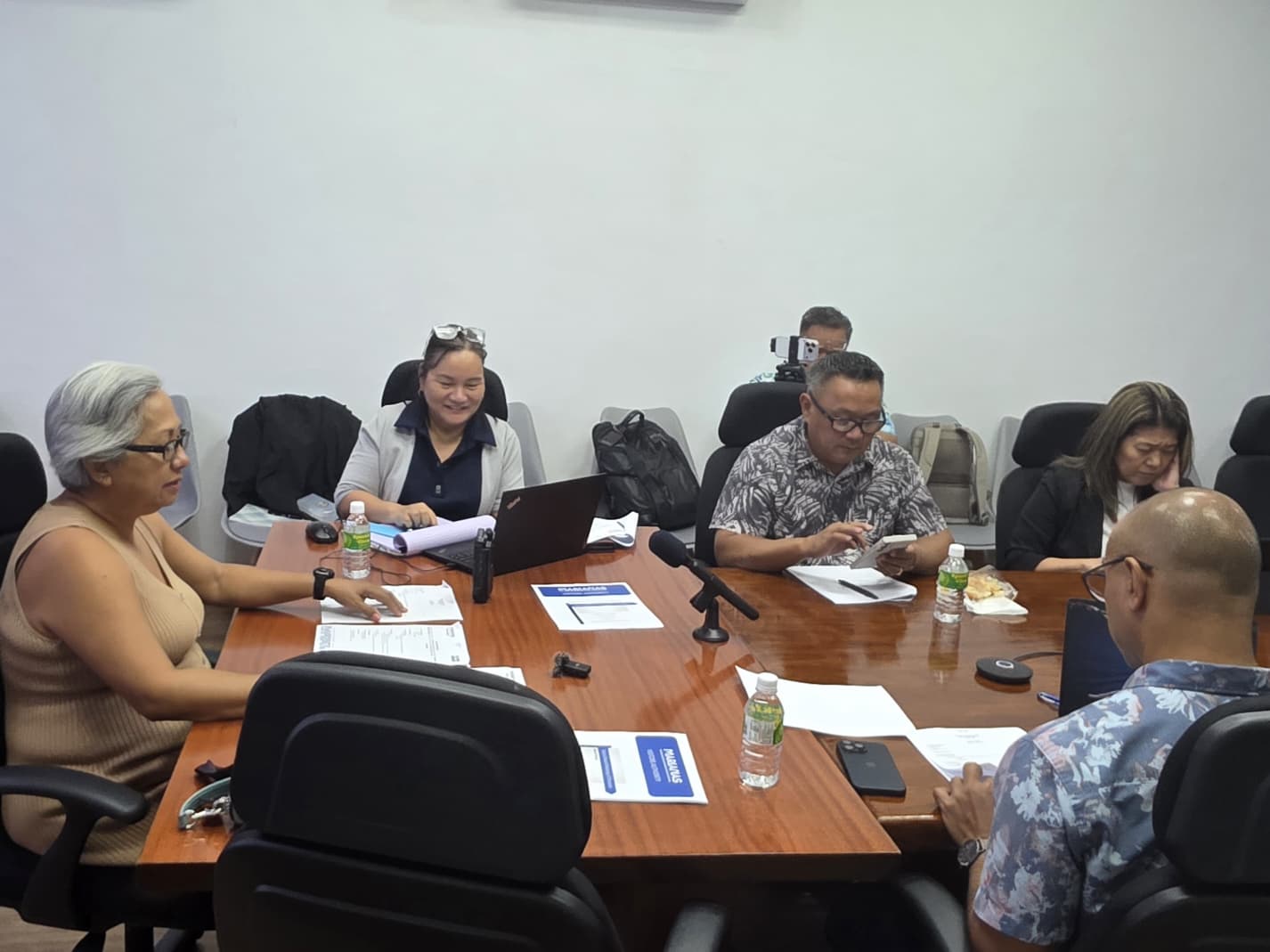
It was discussed in last Friday’s special board meeting of CPA that there were disagreements over the proper application of regulations and definition of reimbursements.
Sasamoto also rectified the figure stated in the CPA board meeting minutes that the bond ratio for seaport was 1.36 and not 1.06.
“Seaport has always been in compliance with bond indenture [agreement],” said Sasamoto.
He explained that it had already been expected that the agency would not be in compliance for the last fiscal year; however, “barring the ability to use the PFC revenue in its entirety, we do not anticipate compliance.”
Deleon Guerrero reiterated what he earlier reported to the board that it was due to the unexpected $1.6 million expenditures that CPA had to settle.
Sasamoto said CPA faces a shortfall. “Right now, we are projected to be short of $798,000.”
However, he said this will still change.
“But if we get our way with PFC revenue, we should be in excess of revenue of more than $800,000.”
Sasamoto reported two other findings: non-compliance with Buy American Clause and inventory.
He said the first finding was rooted in the decision of the agency to buy Public Address system parts from Japan and Taiwan when Efrain Camacho was still executive director.
He said Camacho requested for a waiver.
Board member Benigno M. Sablan agreed that the other parts needed that came from Japan and Taiwan were high quality and better than their American counterparts.
“We didn’t execute the ‘Buy American Clause.’ During Efrain Camacho’s term [as executive director] CPA requested a waiver as the parts of the PA system were from Japan and Taiwan. We couldn’t get them from the U.S. so we need a waiver for that,” Sasamoto said.
He added that more than likely, Deloitte is going to clear that finding.
As for the finding on inventory, Sasamoto clarified that CPA did conduct an inventory.
“Deloitte assumed that we didn’t conduct an inventory. We conducted an inventory in Sept. 2010 before the end of the fiscal year. We had it all documented. So we provided them all the information. When it is all said and done, most likely, we’ll have one finding which is not in compliance with the bond.”
Should CPA get cleared with these two findings, CPA is left with dealing with the finding on the bond ratio.
“But if we do get our way, after talking with FAA, we should have zero findings,” Sasamoto said.
Previously, Variety reported that CPA had no findings for FY ’09 but anticipated non-compliance for FY ’10 for the bond indenture agreement.
However, Deleon Guerrero, during his presentation before the members of the Saipan Chamber of Commerce in March, that he guaranteed CPA would meet the bond ratio for the current fiscal year.
In March, he reported that CPA was at 1.30 “and will continue to move up in our bond ratio. That will be our pledge from now on.”
CPA issued revenue bonds twice in 1998 and once in 2005.
CPA issued for the airport a 1998 Series A $20,050,000 tax-exempt revenue bond pegged at 6.5 percent interest and payable on March 15 and Sept. 15 of each year, from Sept. 1998 to 2028. This was used to partially refund an outstanding $8.25 million 1987 Series B tax-exempt bonds.
It also issued a 1998 Series $33.775 milion tax-exempt revenue bond for the seaport with a 6.6 percent interest, and payable in 30 years.
The ports authority issued a revenue bond in 2005 for the seaport in the amount of $7.225 million to finance the paving of the container yard area.
