





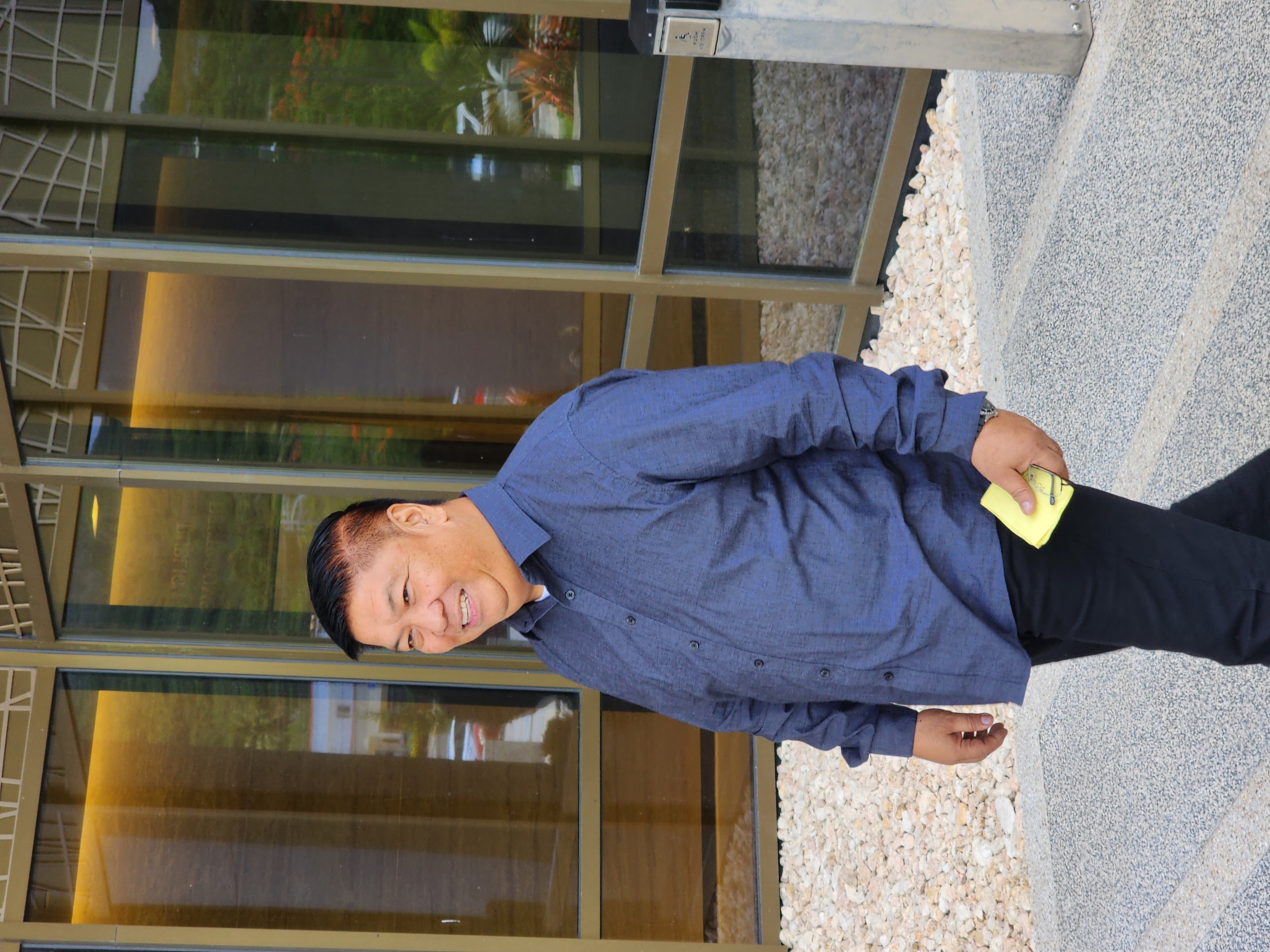
Boni Sagana
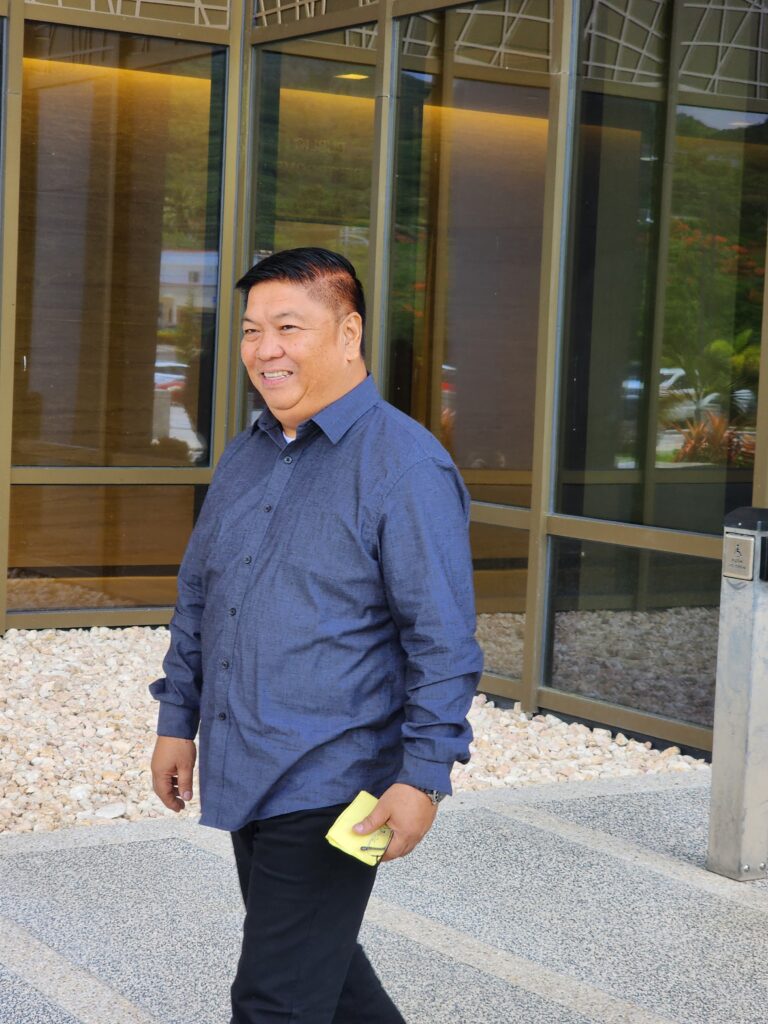
ATTORNEY Richard Miller, in his sentencing memorandum, told the federal court that his client, Bonifacio “Boni” Sagana, has been a pillar of the Filipino and foreign worker community in Saipan for more than 30 years.
On July 19, 2023, a jury found Sagana guilty of conspiring with Bernadita Zata in producing a fraudulent CNMI driver’s license.
Sagana will be sentenced on Dec. 18 at 1:30 p.m. by Chief Judge Ramona V. Manglona of the District Court for the NMI.
Assistant U.S. Attorney Albert Flores Jr. has asked the court to sentence Sagana to 37 months in prison.
Miller, for his part, said, “There is a substantial disparity between the guidelines range that the defense asserts is correct, 0–6 months, and the one advocated by the [federal] Government and Probation, 33–41 months. Much of the disparity starts with a disagreement over the appropriate Chapter Two guideline, §2B1.1 or §2L2.1.”
Miller said Sagana’s “ultimate recommendation to the court…will depend, in part, on the presumptive range that the court finds before it considers the §3553(a) factors. It will also depend on the sentence the court imposes this Friday, December 15, in Case No. 23-cv-00007, on former BMV Director Juana Leon Guerrero.”
Miller said, “There is a continuum of conduct in the Bureau of Motor Vehicles driver’s license fraud cases with those individuals who sought a driver’s license for themselves at the lowest end, and the public servant who ran BMV and permitted such schemes to take place at the top.”
“The culpability of a middleman, which describes the conduct for which Mr. Sagana has been convicted, is somewhere in between,” Miller added.
The statutory command to “avoid unwarranted sentence disparities among defendants with similar records who have been guilty of similar conduct, cannot be stronger than it is in this set of cases,” Miller said.
He said he had conferred with the prosecutor by telephone and was authorized to tell the court that the prosecutor does not object if the defense supplements its memorandum with a more specific sentencing recommendation after Leon Guerrero’s sentencing.
Attached to Miller’s memorandum were exhibits and news clippings regarding Sagana’s community activities.
“He was president of the Multi-Sectoral Overseas Filipino Workers Movement or MOVERS and the Dekada Movement that advocated, in the early 2000s, for fair treatment of foreign workers in the Commonwealth and fair labor and immigration laws, both local and federal, affecting foreign workers. MOVERS and Mr. Sagana won recognition from federal and CNMI environmental agencies and officials for their contribution to environmental cleanup here,” Miller said.
In addition, the Philippine consulate general appointed Sagana as chairman of the special board of inspectors for overseas absentee voting, Miller added.
“Boni has been a good family man. He has raised two families here, including seven children who have excelled at school. Many are successful working professionals,” the lawyer said.
Five of Sagana’s children and grandchildren have written letters “expressing their gratitude for the love, support and encouragement he has given them, and telling how much he means to them,” Miller said.
“Boni’s good works and solid reputation in the community are attested by dozens of letters of support from people he has helped,” Miller added.
They attest that Boni is “a good man and a responsible father and continues to support the community through his positive impacts,” Miller said.
During the trial, he added, the court heard testimony from two persons, Joyce Estabillo and Adrian Ramin, whom Boni lawfully helped with their immigration applications without charging them a fee.
“The many letters of support from community members attest that he routinely offered such assistance without expecting anything in return,” Miller said.
In 2015 the CNMI enacted the Commonwealth Real ID Act in order to comply with the federal Real ID Act of 2005.
Under the federal act, only driver’s licenses that were issued upon proof that the driver is a U.S. citizen or has (or has applied for) lawful U.S. immigration status would be valid identification for interstate travel or certain other benefits.
The purpose of the CNMI Real ID Act was to bring the Commonwealth into full compliance with the federal act, Miller said.
“Bernardita Zata…passed her driver’s test and was lawfully issued a driver’s license before the CNMI Real ID Act went into effect. There is no evidence that she was anything but a careful driver who obeyed the CNMI’s traffic laws. She posed no more danger on the road than any other driver does. But because of the 2015 Act she could not lawfully renew her license — not because of a record of bad driving or license suspensions, or for failing a vision test, but simply because she was out of immigration status, a fact that has no bearing on her ability to drive safely,” Miller said.
The nature of this particular offense conduct is not among the more serious, he added.
“It didn’t involve physical violence or spread drugs through the community. Even within the sphere of licensing drivers, the particular conduct for which Boni was convicted did not entail getting a license for someone who couldn’t pass the driving test or otherwise had been shown to be a dangerous driver. For these reasons, the nature and circumstances of the offense do not support a lengthy sentence,” Miller said.
