


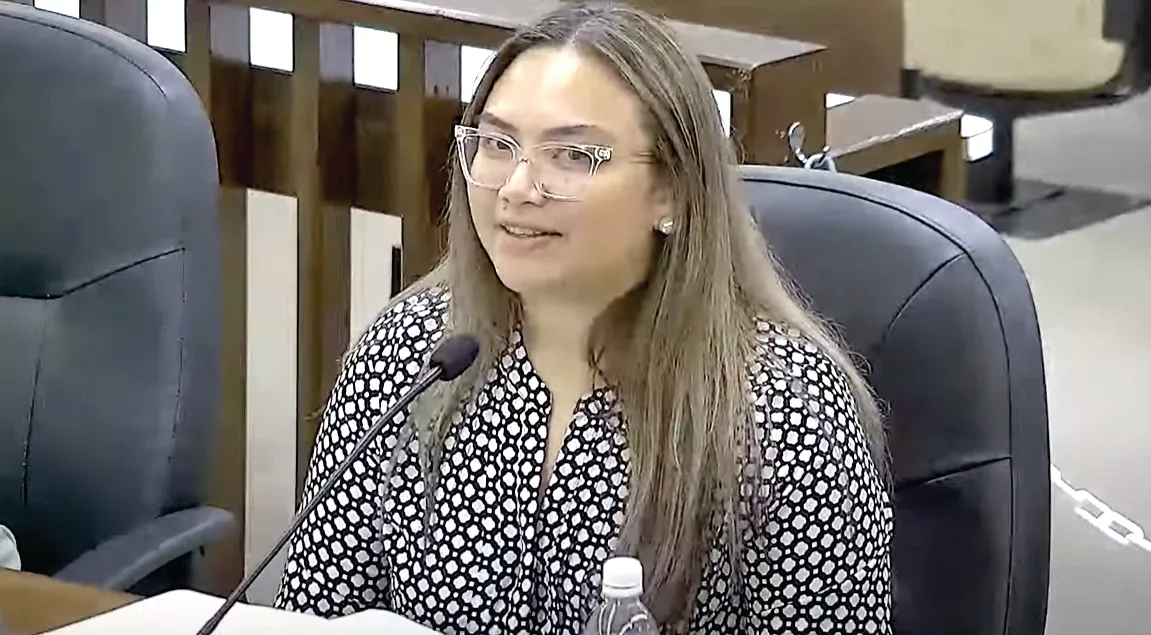



In her testimony before the U.S. House Subcommittee on Fisheries, Wildlife, Oceans and Insular Affairs on Thursday, acting Deputy Assistant Secretary for Policy Kelly Ryan said, “DHS is working to ensure that we continue to have the best information available and that we take into account the unique and special circumstances of the transition and of the circumstances that exist in the CNMI at this time — especially the economic challenges faced by the CNMI in restoring its economy, implementing minimum wage increases, and increasing tourism and other investments.”
DHS, she added, is fully aware of the challenges facing the CNMI economy and considers it a priority and goal to support existing businesses when developing policies and regulations to implement the federalization law.
She said DHS believes that communicating the decisions made on these issues is essential to a successful transition.
DHS, she added, is working toward publication of the final rule on transitional workers, and is “aware of the concern and interest of stakeholders on its issuance in view of the statutory expiration on Nov. 28 of large numbers of ‘grandfathered’ CNMI work authorization permits.”
She reiterated that DHS has been collaborating with interagency partners to ensure that the federalization law is “implemented in a manner that will minimize any adverse effects on the CNMI.”
Kelly spoke about the steps taken by the department in implementing the law in the CNMI.
In recognition of the CNMI’s reliance on Russian and Chinese tourists, DHS Secretary Janet Napolitano exercised her discretionary authority in October 2009 to parole into the commonwealth “on a case by case basis” eligible travelers from both countries, Kelly said.
Moreover, she added, DHS identified groups of individuals who may not necessarily fall within the current U.S. Immigration and Nationality Act, or INA, classifications and for whom the CNMI classifications authorized by the federalization law may not be appropriate.
Kelly said the department’s U.S. Citizenship and Immigration Services implemented a policy under which it favorably considers members of four designated groups (CNMI permanent residents, immediate relatives of CNMI permanent residents, spouses and children of deceased CNMI permanent residents, and immediate relatives of citizens of the Freely Associated States) for a grant of parole subject to case by case review.
She said DHS promulgated a number of regulations to set forth the processes and procedures for seeking federal immigration status in the CNMI.
She spoke about the granting of nonimmigrant, or E-2, status to long-term foreign investors in the CNMI who were granted long-term status by the CNMI government.
She said the USCIS conducted outreach on the regulation on Saipan and is currently accepting applications from eligible investors, their spouses and children.
Part of the implementation efforts by DHS were the meetings with stakeholders and agencies, including a Feb. 24, 2011 meeting between Immigration and Customs Enforcement Executive Associate Director for Enforcement and Removal Operations Gary Mead, Gov. Benigno R. Fitial, CNMI Attorney General Edward T. Buckingham and other CNMI government representatives that resulted in an Intergovernmental Service Agreement to obtain ICE detention space in the CNMI Department of Corrections facility at a bed day rate of $89.
Kelly said DHS established an Application Support Center on Saipan in pursuit of the implementation efforts.
Regarding H.R. 1466 sponsored by Congressman Gregorio Kilili Camacho Sablan, Kelly said DHS agrees that the unique circumstances of the CNMI often deserve special consideration and carefully crafted policies taking them into account. “We will carefully examine the bill and work with the sponsors of the legislation to explore solutions to this important matter,” she added.
The bill will grant CNMI-only status to certain nonresidents, including those with U.S. citizen children.
Back-up plan
Sablan said the hearing revealed that DHS has a back-up plan if the worker regulations are not in place by the end of the immigration transition period. “We have contingency plans,” Sablan quoted Ryan as saying. “We hope to not have to use them.”
This was somewhat reassuring, Sablan said, “but what we really need are the worker regulations; and finding out the reasons for the delay in issuing them was one of the more important reasons that the subcommittee…held a lengthy hearing on Thursday.”
He noted that the regulations have now gone to the U.S. Office of Management and Budget for a final review which normally can take up to 90 days.
“Ryan was tight-lipped on the content of the regs, but when I asked if we can expect the regs out within the 90 days, she said, ‘yes,’” Sablan said.
“Because this is the federal government delays can occur. So, I asked Ryan for the record whether the department would be able to issue parole to workers when their umbrella permits expire. ‘Yes,’ she said. I also made sure that the department could authorize those workers to work, because parole in itself does not permit employment. Ryan assured the subcommittee that if there are no worker regulations by November that DHS could give workers parole, for which there is no fee, and permission to continue working,” the congressman added.
Also during the hearing, Duty Free Shoppers Saipan president Marian Aldan-Pierce said the uncertainty about the final rules of the Guam-CNMI Visa Waiver Program has caused investors to hold off on spending and on planning for future growth.
Pierce, who is also the Marianas Visitors Authority chairwoman, recommended that the final rule be published and that China and Russia be added to the list of countries from which visitors could come without obtaining a visa in advance.
She advocated the rule covers the CNMI and Guam or “only the CNMI, based on the CNMI’s record to date of having visitors from China and Russia return to their respective countries and due to the limited amount of military assets and activity in the CNMI.”
