






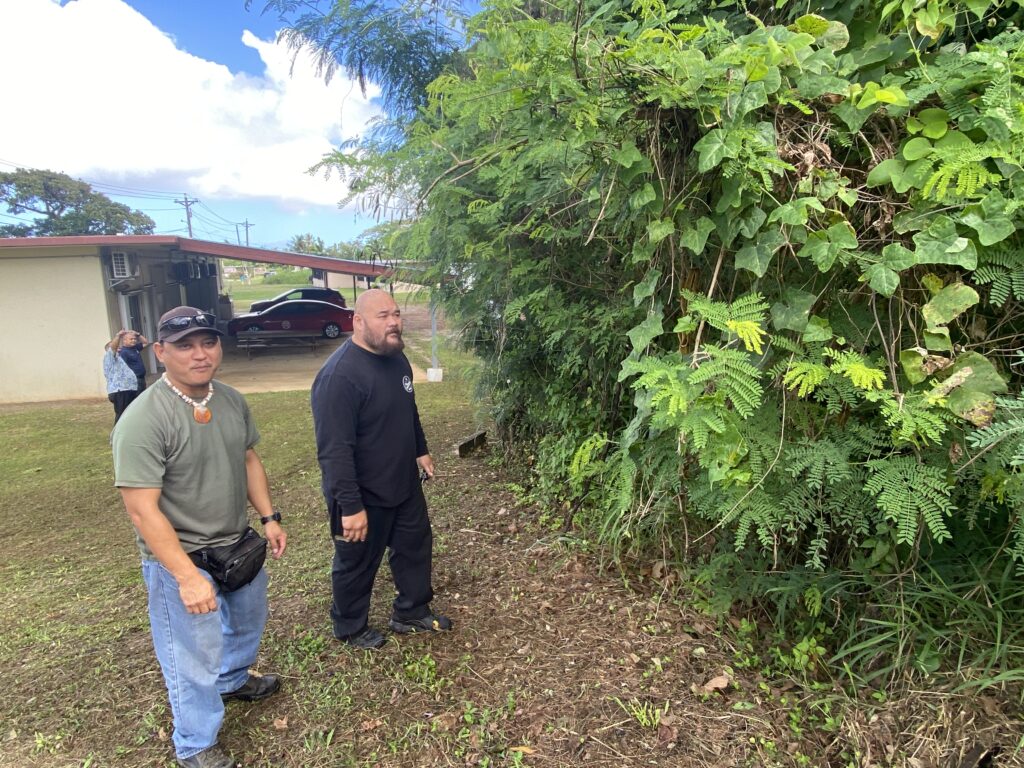
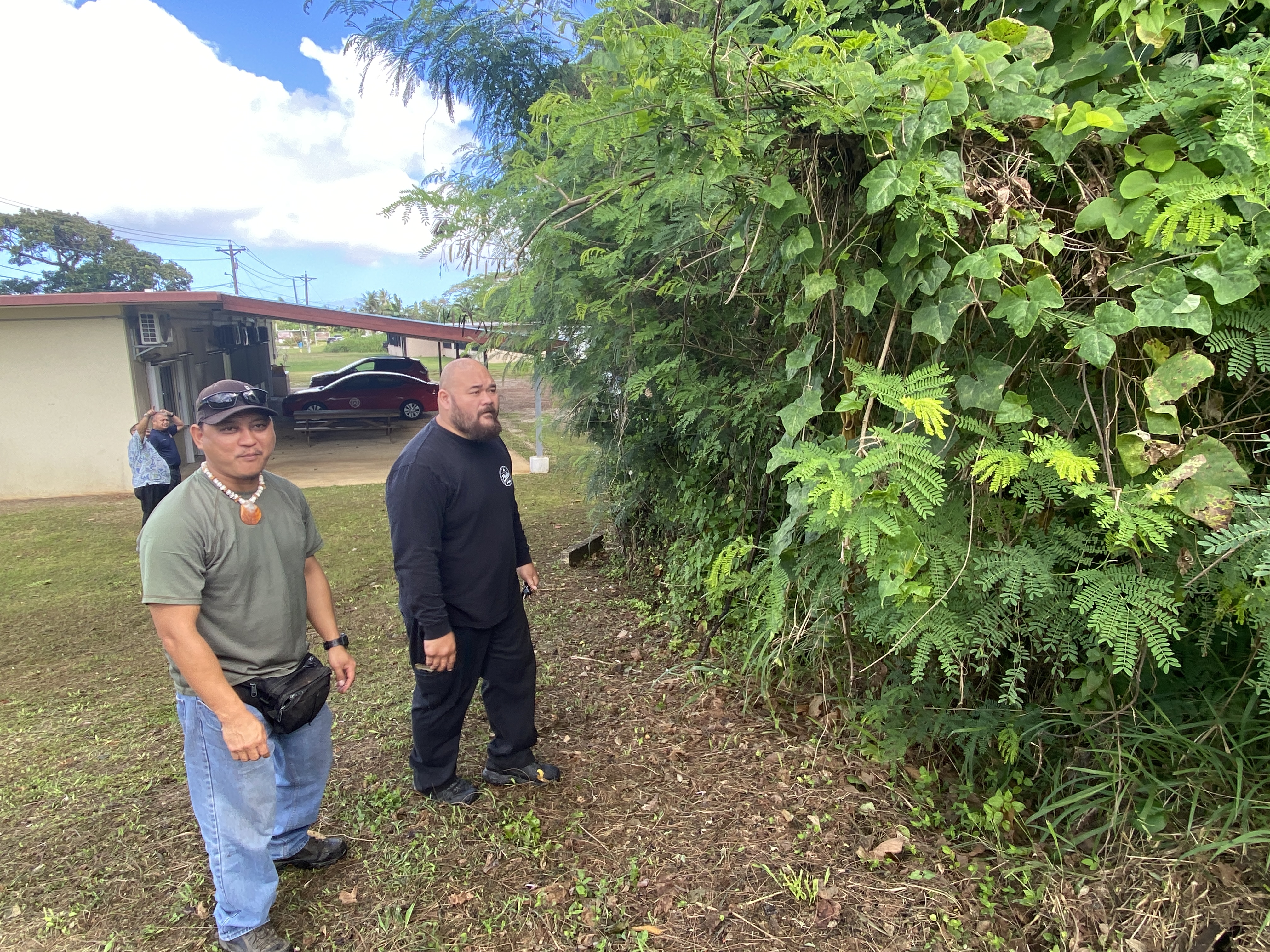
Invasive Species Technicians Jesse Deleon Guerrero and Andrew Lizama show Variety a velvet bean plant near their office.
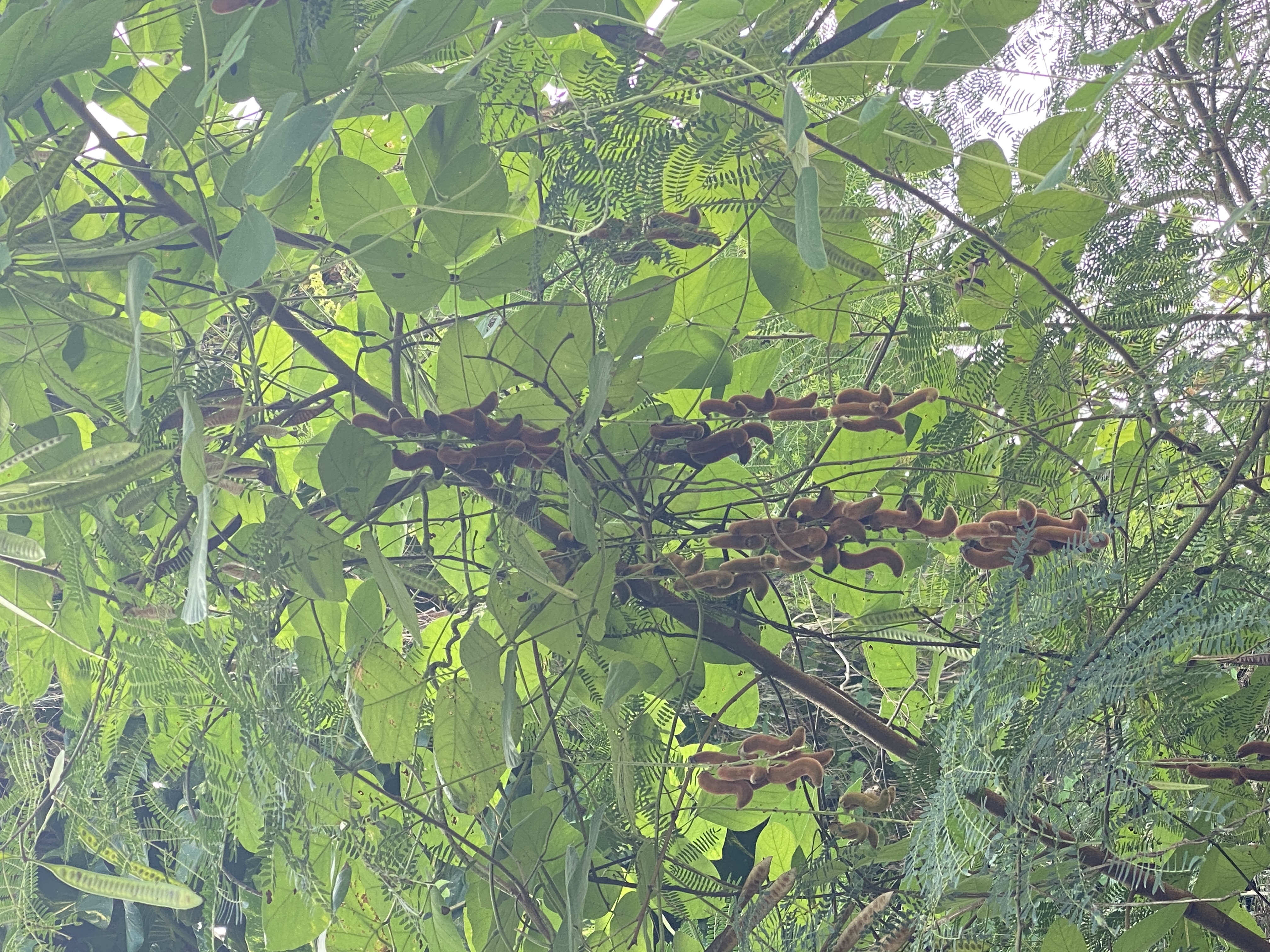
The velvet bean can grow up to 50 feet high, Invasive Species Technician Jesse Deleon Guerrero said. The spicules on the beans can become airborne and then fall onto residents, causing severe itching.
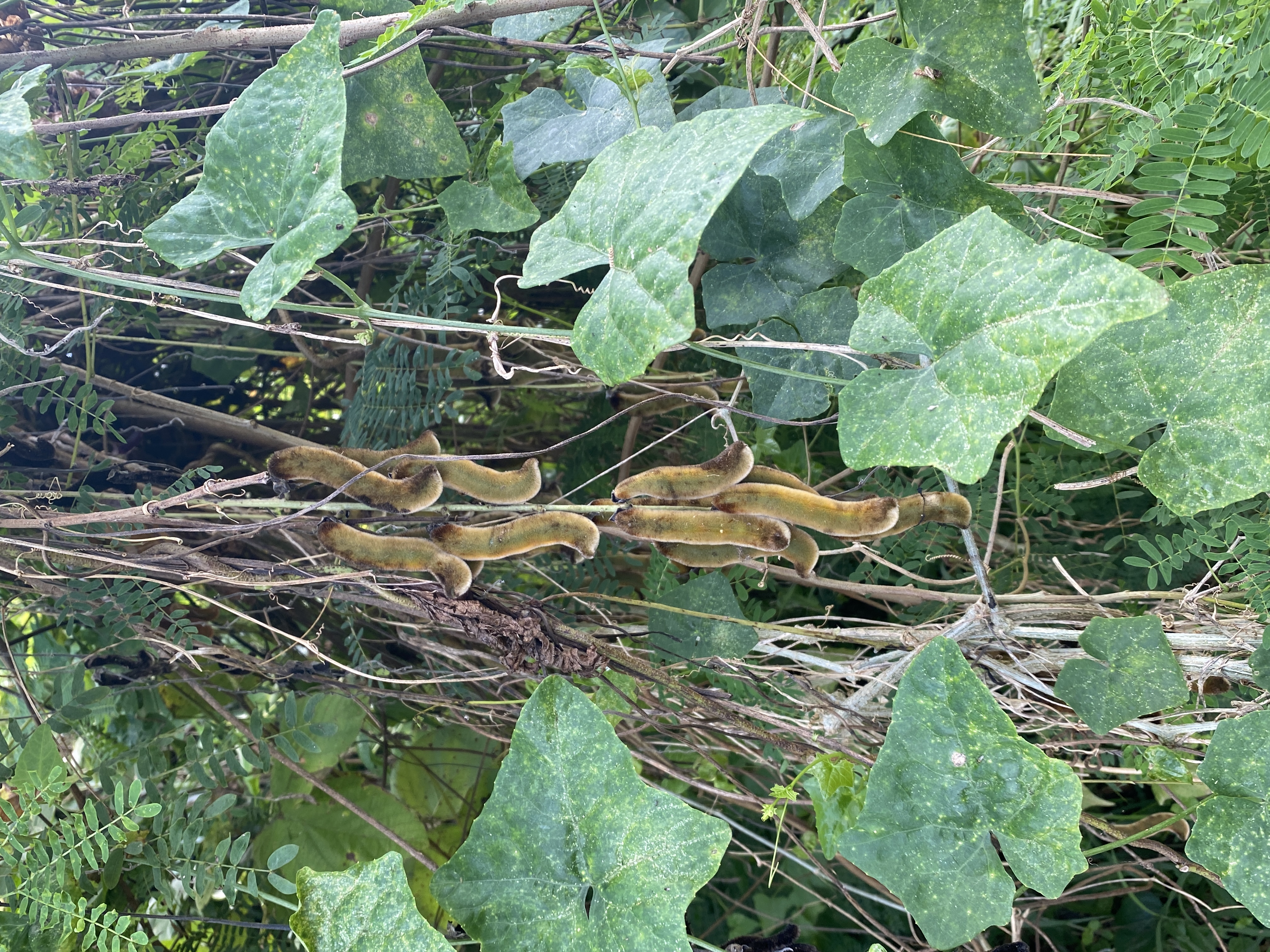
The hair-like spicules of the velvet bean are a health hazard, and the vine’s seeds have an ability to lay dormant for a long time.
IN response to the invasive Mucuna pruriens vine on Saipan, the Department of Lands and Natural Resources has initiated eradication measures.
The vine is native to Africa and parts of Asia.
According to a DLNR release, a common name for the vine is velvet bean, which refers to the hair-like spicules found on the vine’s fruit. DLNR said these spicules, as well as the vine itself, pose a “significant negative impact on the environment and health of the local community.”
DLNR said the spicules can “cause severe itching.”
“People complain when they have it around their houses,” DLNR’s invasive species technician Jesse Deleon Guerrero told Variety.
“When it’s windy, the fruit has loose [spicules] and when the wind blows they fall off and start flying,” he added.
He said some community members experienced respiratory irritation in addition to the severe itch that the spicules cause.
“The vines can grow up to 50 feet,” Deleon Guerrero said. “It grows over tall trees, and any vegetation under it actually suffocates and the [plant] dies.”
Andrew Lizama, another DLNR invasive species technician, said the velvet bean can be found all over the island, but “the highest concentration is in the north, from San Roque to Marpi.”
Lizama and Deleon Guerrero physically uproot the vines and remove them from hosts, or they cut the vine off from its roots.
Deleon Guerrero said either method works to kill a vine.
The pair also sprays herbicides on wide swaths of land overgrown with the vine.
Deleon Guerrero said landowners should be aware that the velvet bean can have a long dormancy period.
“The seeds, once they’re ripe and fall down, they can be idle for a while until they have a good view of the sunlight and a lot of rain. They can be dormant for a while, maybe six months to a year. Then they’ll start sprouting.”
He said an unsuspecting landowner might think they have a plot of land cleared and can leave it unattended, only to later return to a plot overrun with velvet bean.
If anyone comes into contact with the plant, they must wash their skin with soap and water, DLNR said.
They should also handle contaminated fabric with caution, DLNR added. The spicules may be removed by using some kind of adhesive surface, like a piece of tape, to get the hair-like particles off.
For more information regarding the Invasive Species Program, contact (670) 322-9830/4.
