


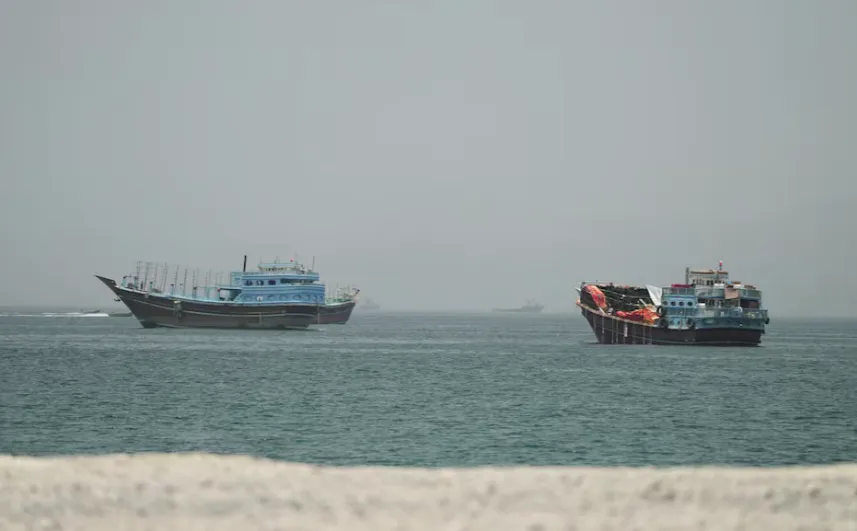


Daniel, said there are up to 10 prepositioning ships spread around the CNMI, South Korea and Japan at any given time.
“We are responsible for all of the prepositioning ships in all of the Western Pacific. We range to as far south as Palau to as far north as the Korea,” he said.
But some of these ships are being recalled to the U.S. either for repair or replacement as part of their unit’s global restructuring program.
“I really don’t want to get into the exact numbers but there will be fewer ships here,” Daniel told the Variety in an interview yesterday. “The Maritime Prepositioning Ships Squadron structure worldwide is currently undergoing some change.”
“There’s going to be a brief period of time where we will have fewer ships in the CNMI. Our ships have been taken out of service and the replacements aren’t due to arrive yet or we have ships that had gone back to the United States for routine maintenance and will eventually return to Saipan,” he added.
This year is the turn of Maritime Prepositioning Ships Squadron, or MPSRON, Three to go through the maintenance cycle.
MPSRON Three includes MV 1st LT Jack Lummus, SS Maj. Stephen W. Pless, MV Cpl. Louis J. Hauge Jr., MV PFC James Anderson Jr., MV 1st Lt. Alex Bonnyman, USNS 1st Lt. Harry L. Martin, USNS Watson, USNS Dahl, MV A1C William H Pitsenbarger, SS Cape Jacob and SS Petersburg.
These ships have been sent to different combat and noncombant missions like Operations Desert Storm and Iraqi Freedom in the Persian Gulf and Restore Hope in Somalia.
They have also supported numerous exercises and operations from California to Korea.
The U.S. Navy pays the CNMI government a certain fee for hosting the prepositioning ships.
Change of command
Daniel said “a prepositioning ship is a floating warehouse. It has prestaged combat equipment and cargo that the Marines need to do their mission. So rather than having tanks, trucks, jeeps, humvees, artilleries, food, tents, cots, everything the Marines would need, stay at a warehouse or a depot, we put it on ships and prestaged it around the world. So that if we ever need these Marines, we can fly the people and the equipment is already in place in theaters that’s why it’s called the prepositioning combat equipment ships.”
Every squadron carries supplies and equipment that can sustain the needs of 17,000 Marines for up to 30 days, according to the MPSRON Web site.
Each ship has a helicopter landing deck, capable of landing CH-53E Super Sea Stallion helicopters and is configured with equipment repair and maintenance shops for any eventualities.
Daniel will soon end his 12-month tour of duty in the Western Pacific Region.
He will be reassigned to San Diego, California where he will be in charge of the Maritime Expeditionary Security Group 1 at the Imperial Beach.
Capt. Jeff Pack will be the new commander of MPSRON Three.
In a separate interview, Pack said he wants to “maintain the readiness of the ships and enhance the people’s morale and make sure that we are a positive presence of the Navy.”
The flagship has 15 staff members who work with ground contractors to maintain the prepositioning ships.
The commodore of the prepositioning ships squadron is routinely changed every year.
Daniel said he enjoyed his stay in the CNMI and hopes to come back as a tourist.
“I love my assignment here. I enjoyed it greatly. I hope to come back to Saipan sometime, probably as a tourist or a visitor. It’s been a wonderful experience. I really love the islands and I love the CNMI,” he said.
He said one of the most challenging decisions he experienced during his tour of duty here was to relocate some of the ships to South Korea due to budget constraint.
“I love Saipan and it breaks my heart because I know how important the ships are for Saipan. It was difficult to do,” he recalled.
