



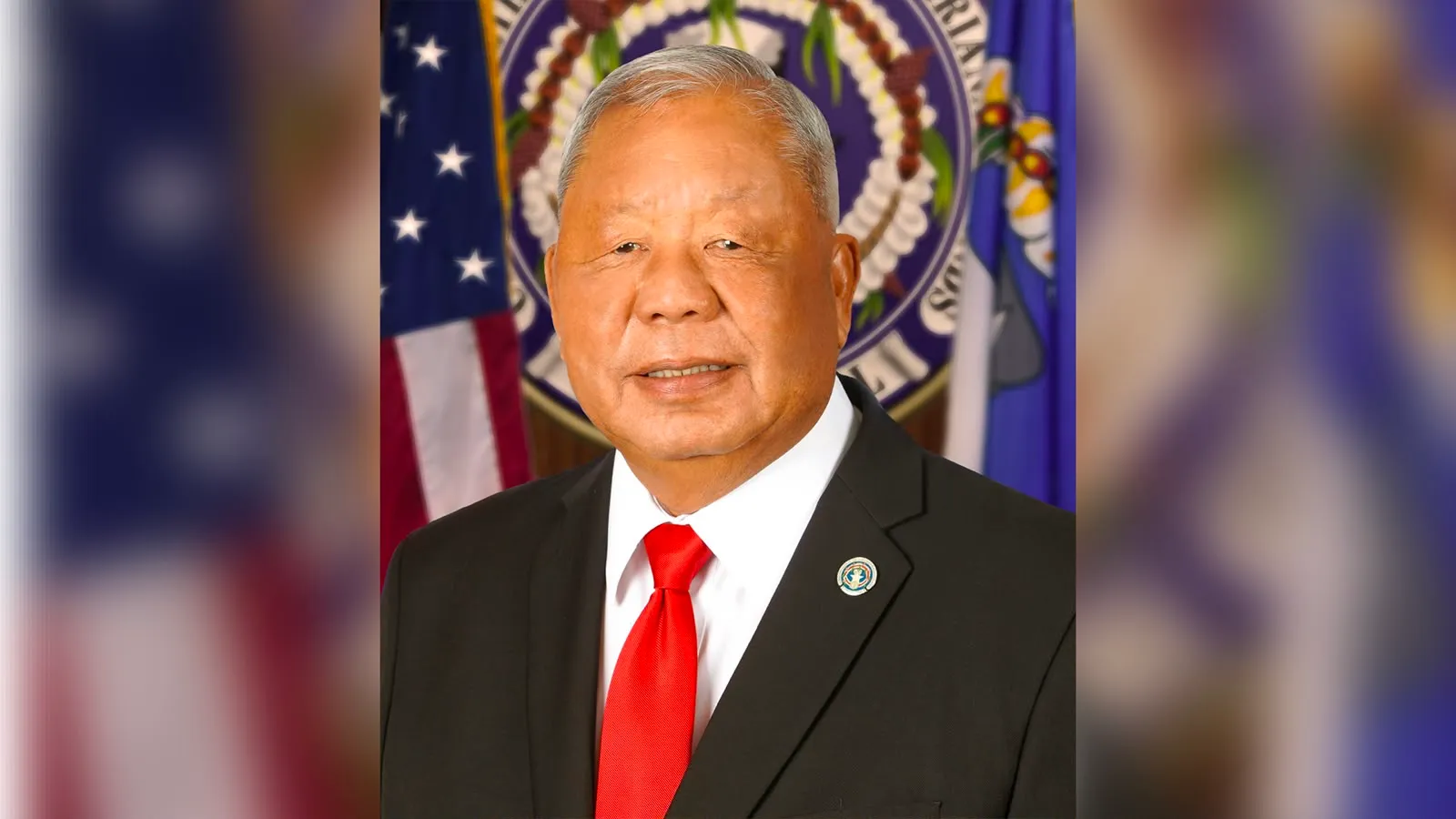


“When I became governor in January of 2006, I came into this office with some high expectations. I came in with one mission in mind: to improve our economy for the benefit of the CNMI. The goal was to produce a better economy and improve our standard of living,” the governor said in his 16-page State of the Commonwealth Address which he delivered in the House chamber yesterday morning.
“Our goal of economic recovery, however, was compromised by a few critical challenges: a budget crisis, a CUC crisis, federalization, and a global economic downturn. Over the past three years, the commonwealth essentially faced the perfect financial storm,” he added.
The 64-year-old governor who is seeking re-election in Nov. said he is willing to take the challenge of fixing the islands’ wrecked economy if given the chance to serve for another term.
“Lt. Gov. Eloy Inos and I still have much unfinished business. We need to continue addressing our primary challenges and complete the job of meeting our economic recovery mission in spite of the obstacles in our way,” he said.
Unorthodox and proud of it
Fitial who served thrice as speaker before his election as governor in 2005 said the economic challenges that the CNMI faced when he took his oath of office were great.
The Saipan garment manufacturing industry then started folding up after the World Trade Organization lifted the garment quota to the United States and Japan Airlines pulled out its 14 flights a week between Tokyo and Saipan.
“Both of these events gravely affected our two largest industries, garment manufacturing and tourism, and resulted in substantial revenue losses for our government, which was a bloated, deficit-ridden government we inherited in 2006,” the governor said.
He said the situation calls for drastic and unpopular decisions.
He cited as example the abolition of the defunct Marianas Public Lands Authority which was replaced by the Department of Public Lands.
“By doing this with strong legislative support, we finally ended a long nightmare of public abuses and dramatically curtailed government spending on exorbitant consultants, legal fees, and travel expenses, as documented by the Office of the Public Auditor,” he said and noted that although he would like to see those officials prosecuted he will leave that up to government prosecutors — who are under the executive branch.
From a continuing resolution of $213 million in fiscal year 2005, the government’s current budget shrank to $148 million.
Fitial said cost-cutting measures were necessary to keep up with the government’s meager resources amid an economic meltdown.
“We sold cars, cut fleet cards, and cut automobile costs. We eliminated government cell phones and reduced government travel costs. We reduced compensation for consultants and we reduced the number of consultants from the previous administration,” he said.
“And we imposed austerity holidays for one fiscal year with legislative support — something that had never been done before,” he added.
The governor also highlighted the success of his administration’s efforts in solving Saipan’s power crisis that caused thousands of hours of blackouts for years.
The governor placed the Commonwealth Utilities Corp. under a state of emergency which allowed him to enter into a contract with the U.K.-based Aggreko to rent 15 megawatts of generators for CUC.
“Critics were initially skeptical of Aggreko, but Aggreko saved the CNMI from the dark and now we won’t need Aggreko for much longer. We fixed our power plants and we will soon generate adequate reserves to keep our power flowing and end the constant state of emergency for CUC,” the governor said.
The governor reiterated the administration’s position that the Retirement Fund should agree to a mediation process instead of pushing through with court proceedings in determining how much and when the government should pay the pension agency.
“The Fund’s lawsuit squanders precious government resources and will not produce money for the Fund. We all need to work together to find solutions to protect the Fund, with cooperation rather than confrontation,” he said. “I urge all parties to suspend litigation and engage in good faith mediation to resolve these issues.”
The governor said the islands’ challenge to revive its ailing tourism-based economy remains a top priority.
He stressed though that the CNMI is not the only destination experiencing difficulty.
“These are difficult economic times for many places around the world, especially the United States, which is still reeling from a credit crisis, a mortgage and housing crisis, a recession, high unemployment, the collapse of big banks, and the bankruptcy of major U.S. automakers,” he said.
“The CNMI is not immune to these global economic developments. We are also affected. We are not the only jurisdiction facing harsh economic realities,” he added.
But despite these bleak realities, the governor said there is still something to look forward to in the future.
He said some Korean investors are pushing through with their major tourism-related projects like new hotels and casinos.
Moreover, he added, there are two U.S.-based companies interested to put up a shipyard hub on Saipan as the region anticipates economic growth due to the military buildup on Guam.
