



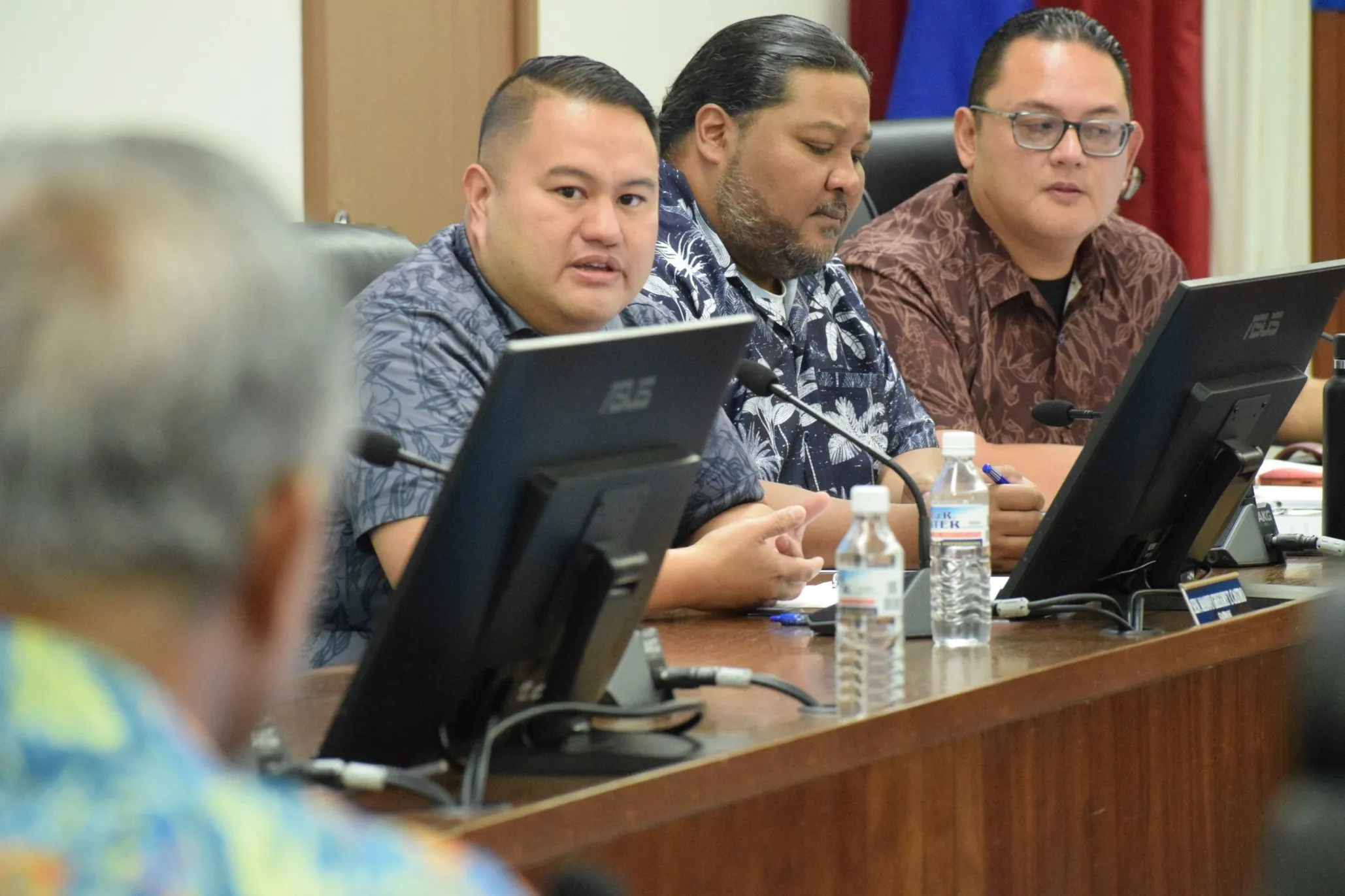


The meeting discussed an expanding energy crisis and increase in the overall cost of living brought about by the exorbitant cost of global oil.
Most of the discussions focused on the quickly expanding energy and food costs the FSM and the rest of the North Pacific region are facing.
Other topics discussed were the FSM-U.S. Compact budget consultations for fiscal year 2009, infrastructure sector projects in the nation, the 5th-year U.S.-FSM Compact II review, climate change, the FSM submarine fiber optic cable project and a vocational training center to be established in Pohnpei in response to the U.S. military buildup on Guam.
Weilbacher said they wanted to arrive at collective understanding on decisions that will help the FSM “along in its development process.”
Ehsa brought greetings from the traditional chiefs of his state and stated that “a very frank discussion” was necessary to overcome the major challenges of the day.
He emphasized a need to focus on the nation’s infrastructure development prerogatives.
Mori set the tone early on fuel and energy, stating that it is one of the most critical issues for the FSM and that “concrete action” will be required.
Mori also highlighted the rising cost of both food and fuel, and called for the state governments to follow the lead of the national government in using surpluses to increase salaries throughout the nation in order to stimulate the economy and offset continuing inflationary trends.
Johnson, representing Chuuk Gov. Wesley Simina, noted the seriousness of the issues for the nation, and particularly for their state, which continues to struggle under government reforms and infrastructure development delays.
Anefal highlighted points on energy and the high cost of imported food, and the reality that the prices for both have “gone beyond the reach of many people.”
The council adopted resolutions that called for a more efficient mobilization of infrastructure fund and projects in the FSM; compliance in the usage of Compact carry over funds; official recognition and support of the Association of Micronesian Utilities and the designation of state energy policy workgroups; the need to develop a national climate change policy closely aligned to the nation’s ongoing energy policy development; and to move ahead immediately in working with the U.S. to mobilize funds and implement the submarine fiber optic cable project.
The next council meeting is tentatively scheduled to be held in Chuuk, in October.
