


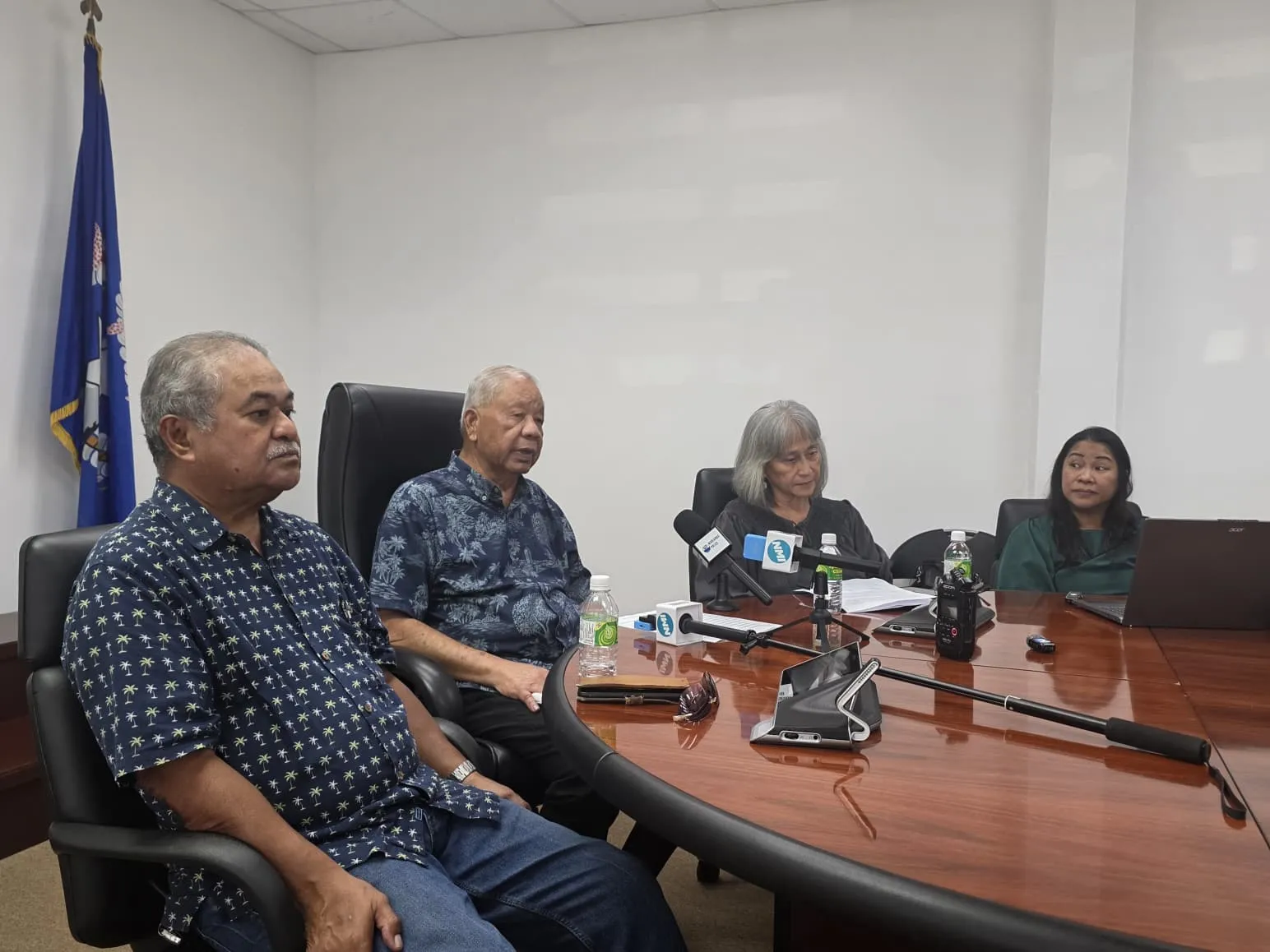
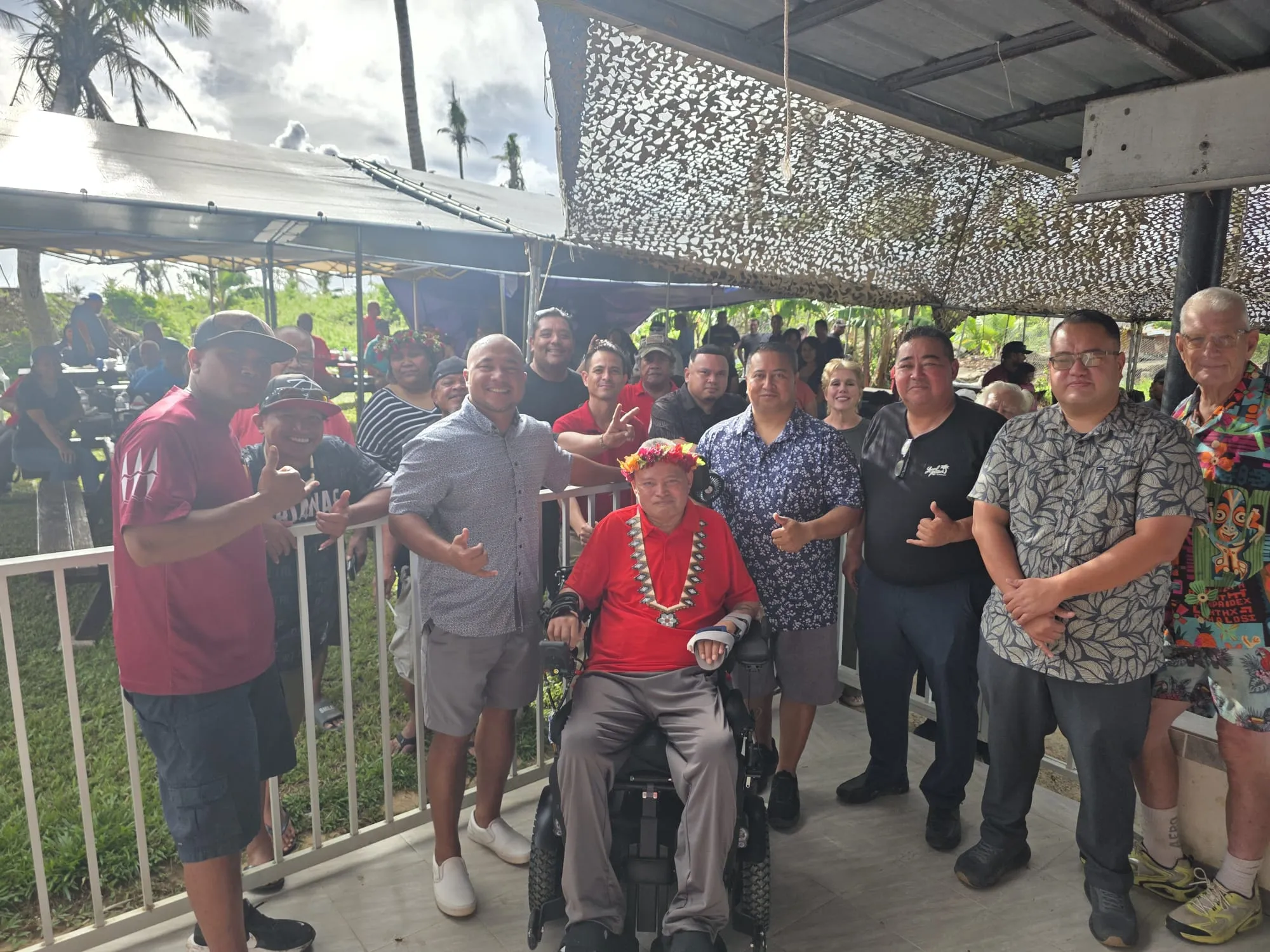


Vice President Alik Alik and some members of the president’s cabinet and staff were also in attendance.
After dinner, Mori said he had three topics to address:
• The constitutional difficulty with Public Law 15-74 which transfers the program management unit to the Department of Transportation, Communication, and Infrastructure.
• The constitutionality of Congress appropriating money designated as foreign financial assistance.
• Public Law 15-70, which states that the president will select one member from the FSM government to serve on the Joint Economic Management Committee board and the other member will be selected from a list of four nominations, each state governor nominating one person.
Mori said his legal advisors told him that Congress has encroached in the presidential sphere of responsibility when it passed P.L. 15-74.
In response, several members of Congress said it is the president’s duty to enforce the law.
If the president doesn’t enforce the law, then the only way for lawyers to agree over it is to go to court, some lawmakers said.
But everyone agreed that they don’t want legal issues to slow down the progress that has been made and they will look for common ground on these issues.
“If we can find a way to move forward, that’s what I’d like to see. We don’t want to get stuck in court and arguing,” Figir said.
Both sides agreed that there needs to be more dialogue, but that the way forward should be clearly defined in the Constitution.
They said it needs to be reviewed and the direction agreed upon.
Regarding the JEMCO board, Mori said P.L. 15-70 puts him in an awkward situation, since two of the governors nominated themselves.
He stated that he has already drafted an amendment to the law and submitted it to the 16th Congress for consideration.
The consensus of the group was that the new JEMCO law does put the president in a tough situation.
They said the law needs to be amended to give the president the ability to pick JEMCO members or to specify that governors cannot select themselves.
