

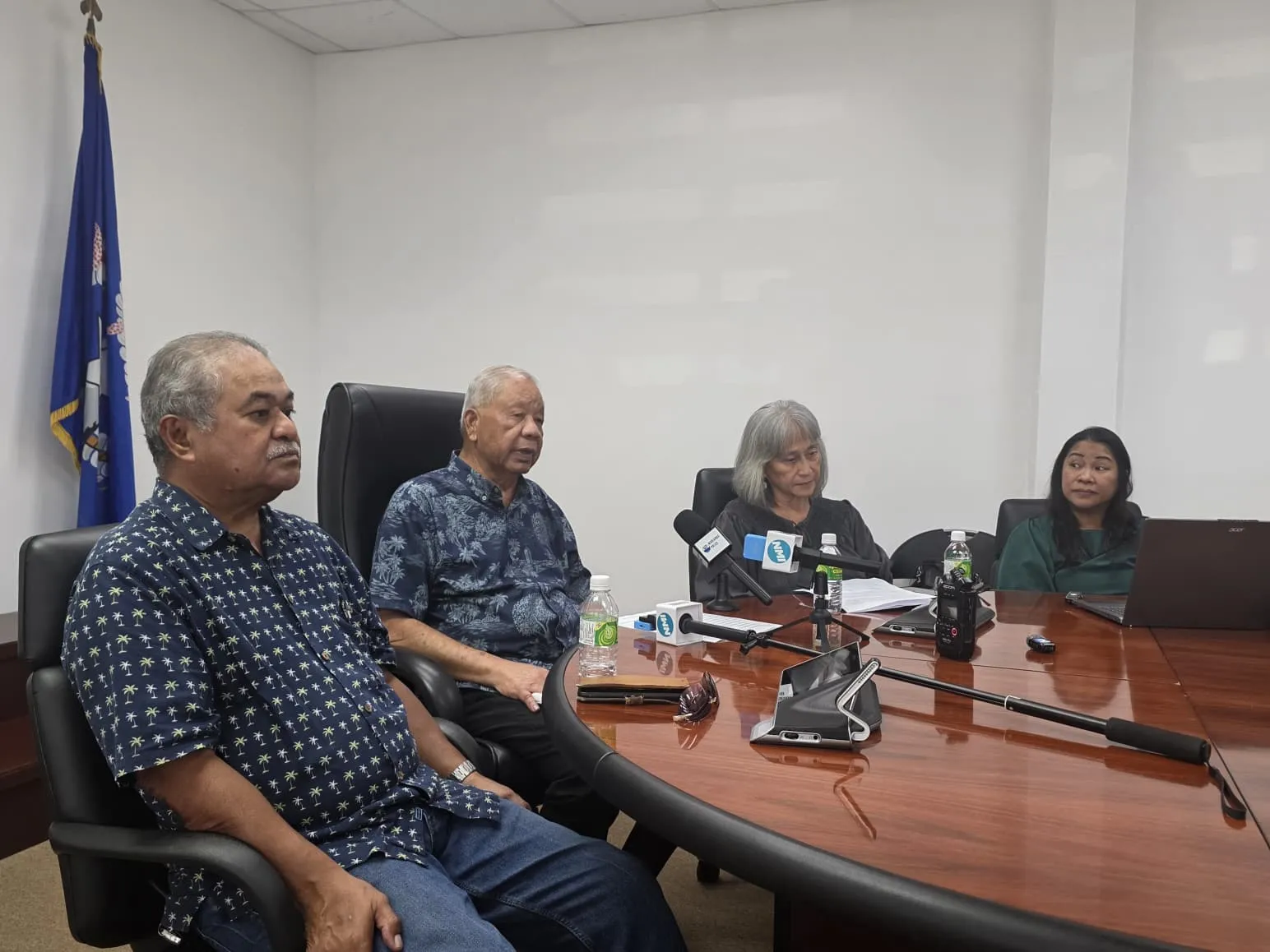


The working groups are in the process of identifying metrics that would be used to alert the CMCC in advance, of warning signs that would have an adverse impact to the infrastructure and the environment, which would lead to the working groups’ recommendations to adjust the construction schedule to mitigate the impacts, said Eddy Reyes, director of the Guam Buildup Office.
The five working groups are construction, utilities, transportation, cultural/natural resources, and housing.
In his opening remarks, Gov. Eddie B. Calvo said he relied on the experts to provide critical information so the buildup maintains a positive track.
Calvo said Guam continues to play a key role for national security in the Pacific region and is confident the buildup will happen.
The construction working group told its audience that because the timeline for the buildup was “moving to the right,” meaning the timeline has moved from 2014 to 2017, the expected impact of 20,000 H2-B workers identified in the Final Environmental Impact Statement has been minimized.
“The whole construction schedule is shifting to the right so we don’t have that peak buildup period. So what it means is that we don’t have to bring as many H2-B temporary construction workers. There’s the opportunity to use the local workforce, or those coming from FSM or those coming from the U.S., so there’s wider opportunities,” said Reyes.
We’re not going to have the surge of temporary construction workers that was conditionally identified in the final environmental impact statement.
Reyes said the Record of Decision, which was released in September 2010, already anticipated that the schedule was “moving to the right; so we’re looking forward to the relocation at least three years later.”
Reyes said this will slow down the pace of construction which minimizes the impact on the environment.
Vice Speaker Benjamin J.F. Cruz, who was also at the presentation, said the information by the five committees needed to be shared with the business community, so they are made aware that this buildup delay was not caused by anything locally, but by the financial realities facing both the governments of the United States and Japan. “The Department of Defense has yet to submit a master plan, despite this plan being due more than a week ago,” said Cruz.
Cruz said it was unfortunate that business people still want to believe that the buildup will happen in 2014.
“I remain concerned for those in the private sector, who may have over-extended themselves because of the military’s initial plans, which even powerful members of Congress are calling too expensive and unrealistic.”
Sen. Rory Respicio, who was also at the presentation, said the meeting was informative, and felt there was a great deal of planning and coordination between the federal and civilian governments.
“What fascinates me is that all this planning doesn’t seem to follow the Record of Decision, which calls for a buildup to take place in 2014. I appreciate the new, adaptive program management approach to this buildup, and this new information needs to be shared with the public,” the senator said.
Respicio said there was no doubt the buildup will happen, but without clarity on the specifics, “no one should claim that we are moving in a new direction or even articulate a ‘one Guam approach,’ absent working through the Guam First Commission.”
