





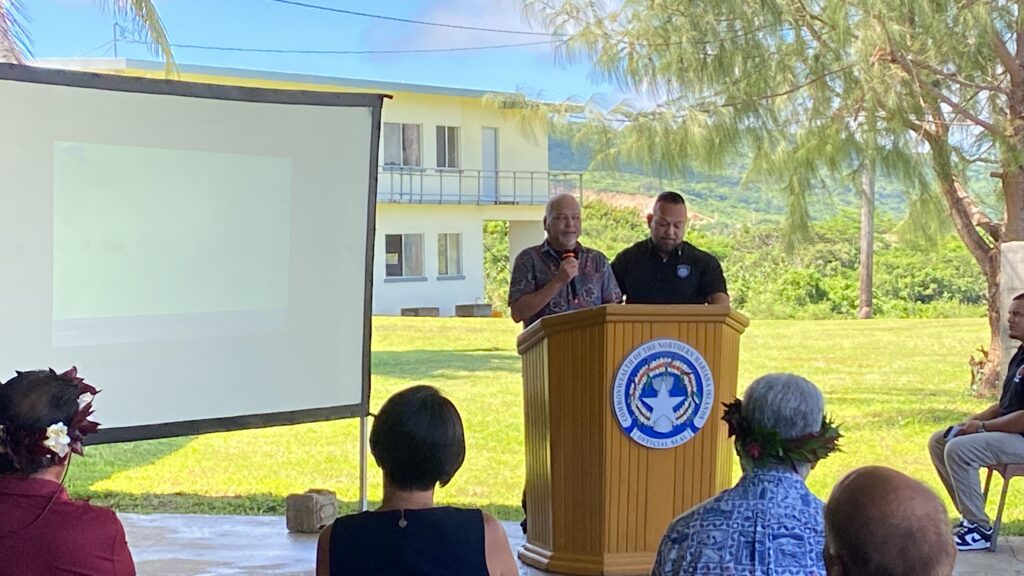
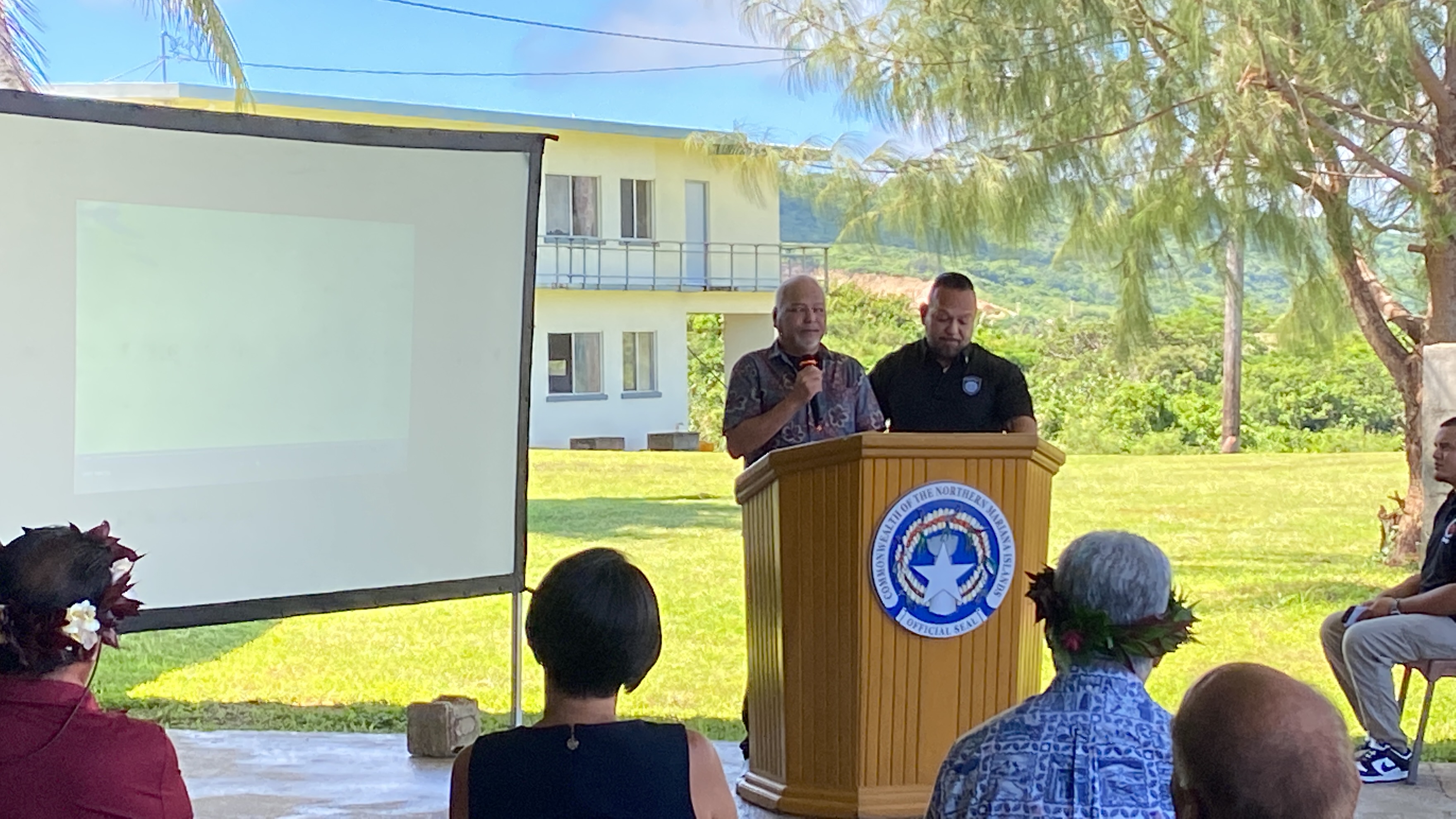
Charles Torres, left, testifies about his recovery next to his brother Anthony Torres.
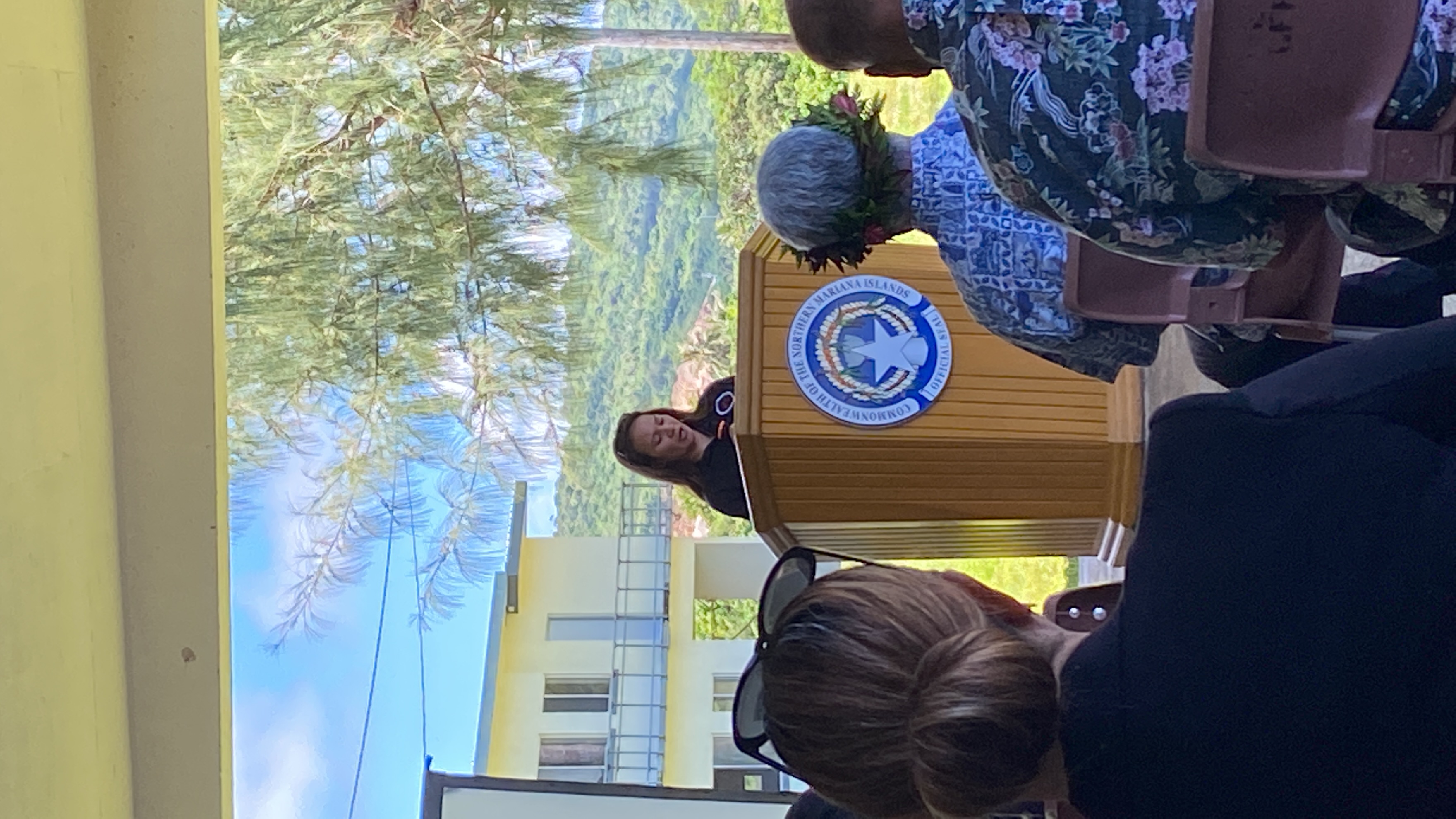
Manuela Guerrero said she experienced a spiritual awakening and used it to find success at HOPE Recovery Center.
STAKEHOLDERS and other community members celebrated the Hinemlu Ohala Para Enteramenti or HOPE Recovery Center’s sixth anniversary on Thursday, Sept. 14, in Marpi.
Department of Corrections Commissioner Anthony Torres called drug addiction and substance abuse a “root cause” of crimes in the CNMI, and said that HOPE Recovery Center is a “crucial” partner in reducing the recidivism rate.
“With a clear focus on rehabilitation, we’re not just transforming lives, but also enhancing public safety in the process,” Torres said, adding that the recovery center gives individuals struggling with addiction “the support they need to heal and overcome their challenges.”
Torres recounted his experience as a corrections official in the states who witnessed violent inmates change their ways because of rehabilitative services.
He said the work of HOPE Recovery Center benefits the wider community.
“By continuing the support and treatment services after an individual’s time in the correctional system, we can ensure a seamless transition back into society and reduce the chances of them falling back into old habits and ways,” Torres added.
He then handed the microphone to his brother, Charles Torres, who spoke about the ways the HOPE Recovery Center benefited him.
“My story is not unique,” Charles said. “Like many others I fell into a trap of drug addiction. Many people like me are not bad people, we just made bad choices.”
He said he found it difficult to initially take part in the program, adding that he looked after his elderly parents, and feared what could happen to them while he was mandated by the court to stay at the center for 30 days.
He also had his doubts that he would be able to kick his addiction to crystal meth.
But with the encouragement of his parents, Charles stayed in the recovery program.
“The first two weeks was difficult,” he said, “but the center staff did everything possible to keep me focused on my treatment.”
He said being on the grounds of the treatment center in and of itself was healing — HOPE is located off the main road that cuts through Marpi.
“I stand before you today not as an addict in recovery but a survivor … who has fought a battle … that many deemed unbeatable,” Charles said. “And yet here I am, proof that the drug court and recovery centers work.”
Judge Teresa Kim-Tenorio, who oversees the drug court, spoke of the necessary role the recovery center plays.
She said the HOPE Recovery Center has been a partner of the drug court as long as the center has been opened.
“There are about 20 people here who I know intimately — I know their stories, and I’m sitting here smiling because I know where they’re at now,” the judge said. “It gives me so much gratification and hope for the continuance … of recovery in our community.”
She called drug addiction a “disease” and said others should as well.
She said recovery center clients and client family members have approached her with stories of how the center has “changed their lives.”
“They are grateful for a safe space for persons in recovery to heal and gain the tools needed to be sober,” she added.
Manuela Guerrero is one such client.
Guerrero said initially her “denial” slowed her recovery. She describes going in and out of the program for years, engaging in a cycle of treatment, drug relapse, arrest, “and repeat.”
But Guerrero experienced a “spiritual awakening” when the pandemic separated her from her support system — her mother and children.
“I was done,” Guerrero said. “So I came back to [the recovery center] for the fourth and my last time. With the help of the dedicated efforts of the staff and the comprehensive treatment provided I was able to complete and embark on a transformative journey of recovery.”
