



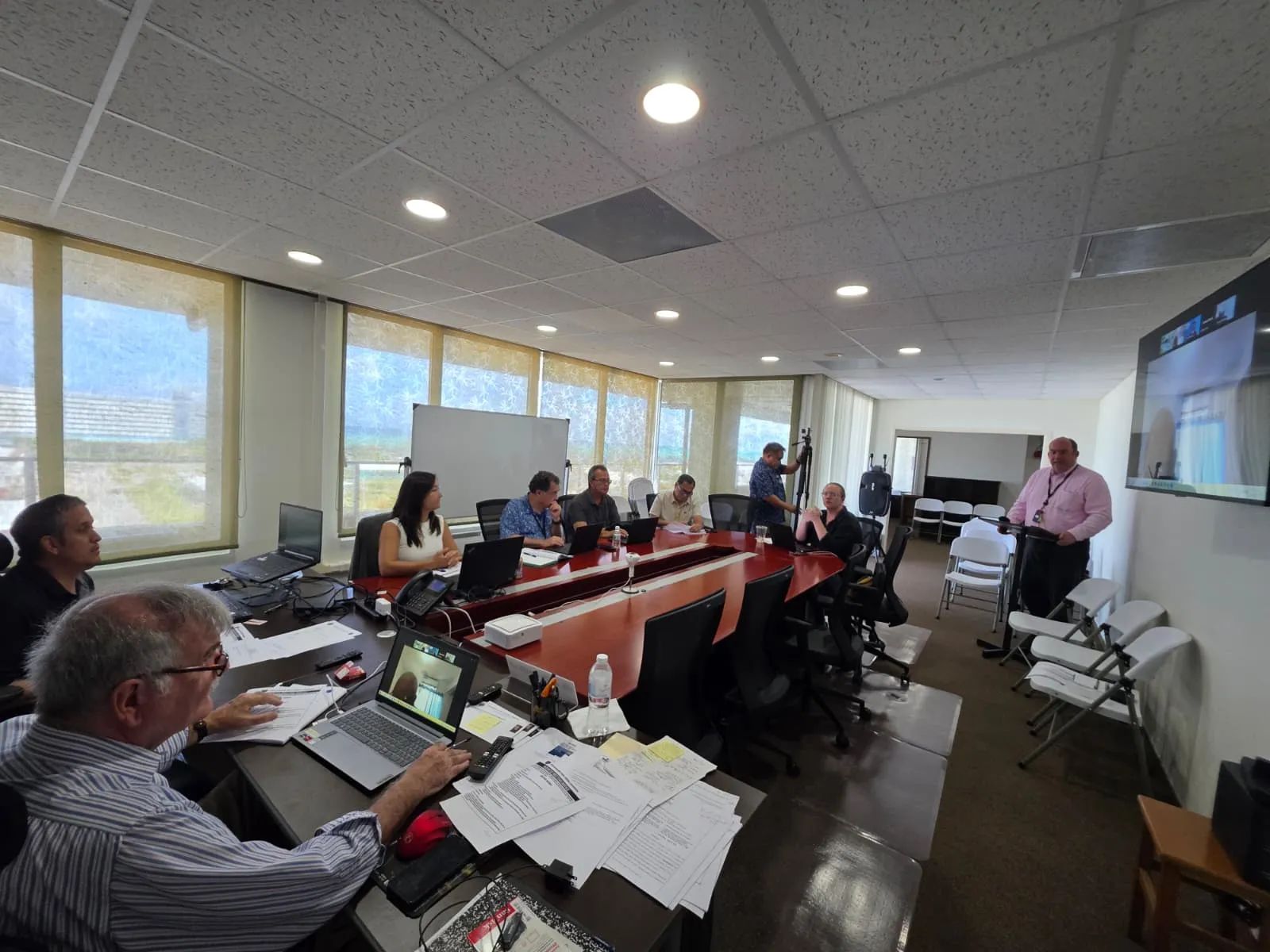



“It’s not very far sighted to view change as bad,” Phil Roberts, Operations Director of Tri-Marine International Ltd., a Singapore-based tuna company that owns fishing boats, processing plants and trades tuna globally, said in Majuro during the Parties to the Nauru Agreement fisheries talks. “Change is coming and we need to adapt our businesses accordingly.”
The eight nations that comprise the PNA — Papua New Guinea, Solomon Islands, Palau, Federated States of Micronesia, Kiribati, Nauru, Tuvalu and Marshall Islands — have been meeting in Majuro since the weekend, and are expected to announce plans to ban fishing in high seas pockets located between their exclusive economic zones and to restrict fishing using “fish aggregation devices,” or FADs, as a way to cut catches and increase the price of tuna.
“We all recognize the need for a greater return from this common resource,” Marshall Islands Fisheries Minister Mattlan Zackhras told the PNA officials earlier this week.
Scientists have warned for the past three years that bigeye and yellowfin tuna — both prized in United States and Japane sashimi markets — are at their maximum sustainable catch limits or possibly being over-fished in the Pacific. PNA officials are pushing for a 30 percent reduction in catches over the next three years.
“We’re keen on good management for fisheries,” said Roberts.
“Unrestrained fishing is a bad thing for the industry because eventually we won’t have any tuna left.”
He said the “laissez faire” approach to fishing that has characterized the industry for decades “is no longer an option.”
