




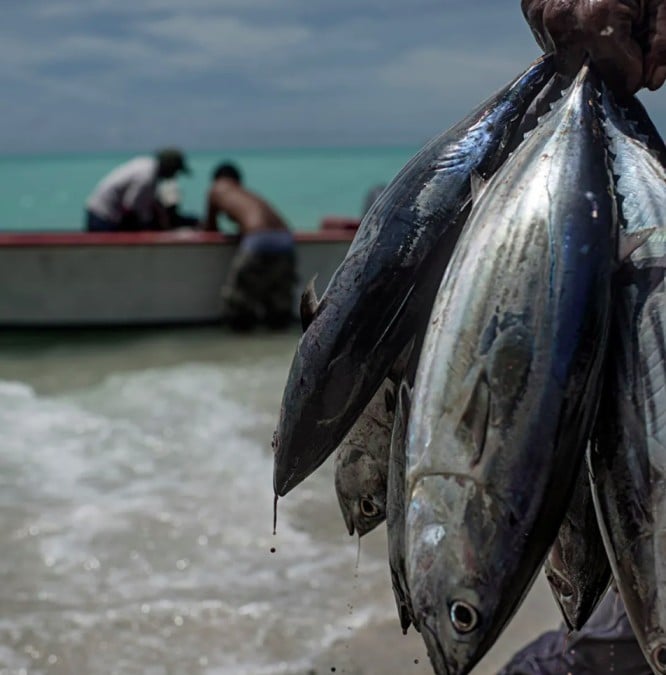



Longliners target bigeye tuna, a lucrative catch for the voracious sashimi markets in Asia but one that scientists warn is being heavily overfished. The eight PNA island nations control waters where the bulk of the Pacific’s $3 billion annual tuna haul is caught. Until recently, they’ve focused on the purse seine industry — the fishing vessels that use a massive net to catch skipjack tuna that is used for canning.
Starting in January, the PNA countries will no longer sell licenses for individual longline vessels, which use hooks and lines to catch tuna.
Instead, PNA is shifting the boats to a “vessel day scheme” that sells a limited number of days to fishing companies that are based on size and sophistication of vessels.
The new “vessel day scheme,” or VDS, for longline fishing boats is “aimed at stimulating domestic development of the longline fishery, enhancing PNA’s control of tropical longline fisheries, and is further testament to PNA’s role in ensuring effective conservation and management of this fishery,” said PNA Director Dr. Transform Aqorau, who is based in Majuro at the PNA headquarters.
But Aqorau blasted the foreign flagged longline industry, saying that it has failed to provide tuna catch data for the past five years, and also criticized the Western and Central Pacific Fisheries Commission for lack of support for islands attempting to develop their domestic fishing industries.
A vessel day scheme for purse seiners went into effect last year. But this is the first major change in the licensing regime for the longline fleet, which numbers more than 1,000 boats in the region.
Five years ago, PNA agreed with fishing nations to set longline vessel catch limits by country under which the vessels were flagged, a scheme Aqorau said PNA only partially agreed with but accepted because of an urgent need to bring some regulation and sustainability to an out-of-control segment of the Pacific tuna industry.
But part of the agreement was distant water fishing nations were to provide catch data as part of helping with stock assessments for the long-term viability of the bigeye tuna industry. “There has been no effective verification or monitoring of longline bigeye catch limits,” Aqorau said. “No major longline state has provided the operational catch and effort data which they are obliged to provide and which is essential for verification, and no progress has been made on a catch documentation scheme.
This means that the flag-based bigeye catch limits are an ineffective sham.”
Aqorau said there has also been a lack of encouragement by foreign fishing interests for the small island developing states attempting to develop their domestic fishing operations.
“PNA leaders have had enough of selling licenses and being observers,” said Maurice Brownjohn, PNA’s commercial manager. “We need more participation in jobs, manufacturing, joint ventures.” While PNA has made some headway in this, it is meeting resistance from a number of foreign fishing nations wanting to maintain the status quo.
Aqora said there have been systematic efforts by the Western and Central Pacific Fisheries Commission Secretariat and the United States to remove the modest benefit provided by an exemption for small island nations to fish for bigeye without proposing an alternative form of recognition of sovereign rights of PNA members to develop their domestic longline fleets, even though the United States has demanded an exemption from bigeye tuna catch cutbacks for its own fleet, Aqorau said.
