




SAYING that prospective jurors should have been asked more by the judge about their media exposure regarding the case against Bonifacio Sagana, defense attorney Richard Miller reiterated that his client should be granted a new trial.
According to the prosecution, Sagana conspired with Bernadita Zata in producing a fake CNMI driver’s license. On July 19, 2023, jurors found Sagana guilty of conspiracy to unlawfully produce an identification document.
Sagana, represented by Miller, filed a motion for a new trial “in the interest of justice, pursuant to Rule 33 of the Federal Rules of Criminal Procedure.”
Miller said Sagana’s “Sixth Amendment right to trial by an impartial jury was violated by pervasive and false pretrial publicity, in this small community of the Northern Mariana Islands, that Mr. Sagana had fled Saipan before he could be arrested.”
Assistant U.S. Attorney Ashley Kost, one of the prosecutors, asked the court to deny the motion.
“The court’s discretion was well reasoned, appropriate, and afforded [Sagana] due process of a fair trial,” she added.
“The court specifically questioned prospective jurors about pretrial publicity of the case during jury selection to ensure an impartial jury,” Kost said. “Here, defendant has failed to establish there was any impartiality by the jury that weighed the evidence and ultimately rendered a unanimous verdict of guilty.”
In reply, Miller said the U.S. government “does not dispute that the Commonwealth is a small community, or that the local press falsely reported that Mr. Sagana fled from Saipan before he was arrested, including in print the morning of the jury selection and on TV the eve of the jury selection. The only thing the [U.S.] government enlists to argue the pretrial publicity was insignificant is the potential jurors’ reaction to a general question posed to the entire room during voir dire.”
Miller added, “This argument is flawed because it is precisely the manner of voir dire that is in question here. If the voir dire was inadequate, how can the [U.S.] government, or anyone for that matter, turn around and say voir dire showed that there was no issue with pretrial publicity?”
Voir dire “is the process by which prospective jurors are questioned about their backgrounds and potential biases before being chosen to sit on a jury.”
“With the publicity falsely depicting Mr. Sagana as someone who had fled to avoid arrest being great and occurring even on both the eve and the day of the jury selection in this small community, more care should be taken than asking the entire room a general question about their exposure to pretrial publicity and waiting for someone to raise their hand,” Miller said.
“Had half of the prospective jurors in this case were specifically and individually asked about their exposure to pretrial publicity, Mr. Sagana believes that more prospective jurors would have acknowledged being exposed to media coverage regarding this case,” Miller added.
But because “only a general question to the entire room was asked, the prospective jurors’ reaction is simply unreliable as an indicator of media exposure and prejudice,” he said.
The court allowed Sagana to remain released after the jury found him guilty.
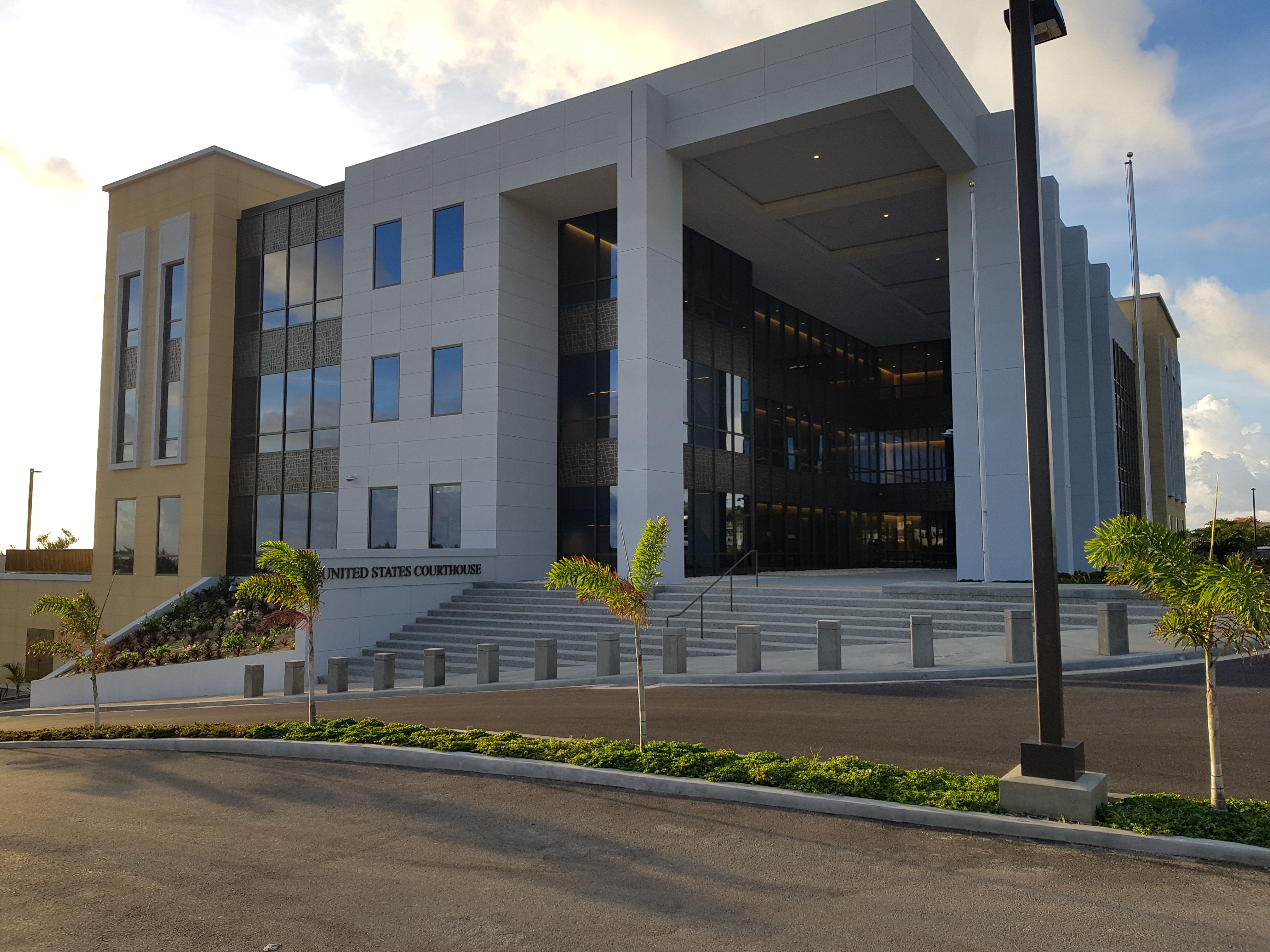
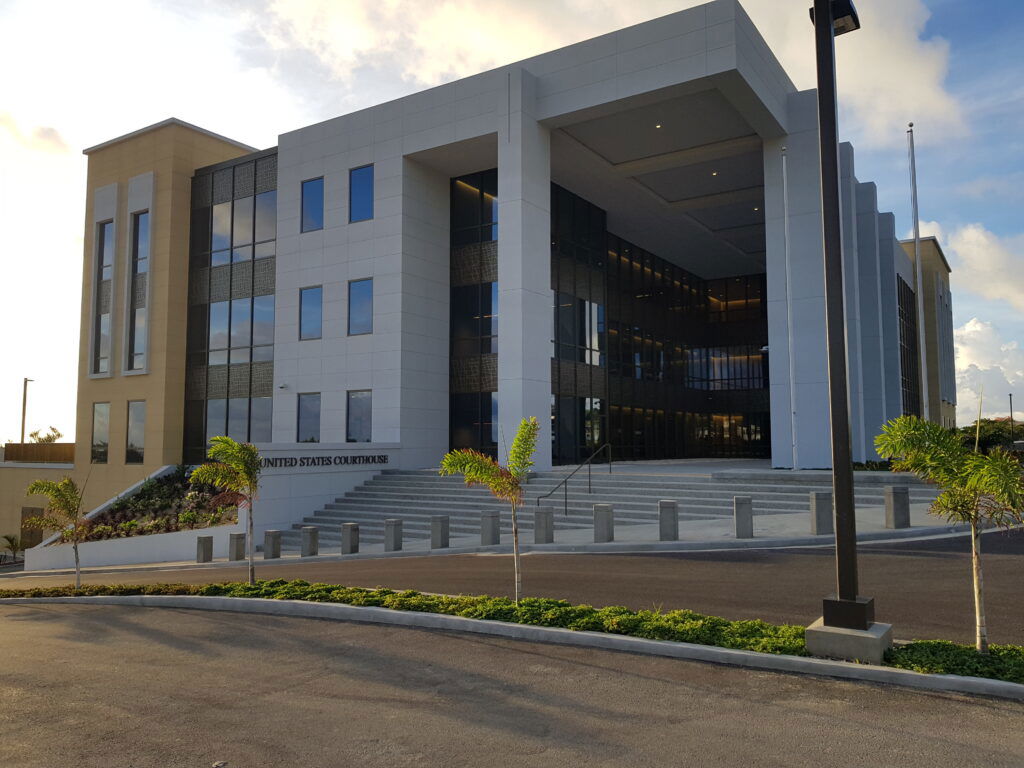
The United States Courthouse in Gualo Rai, Saipan.
