



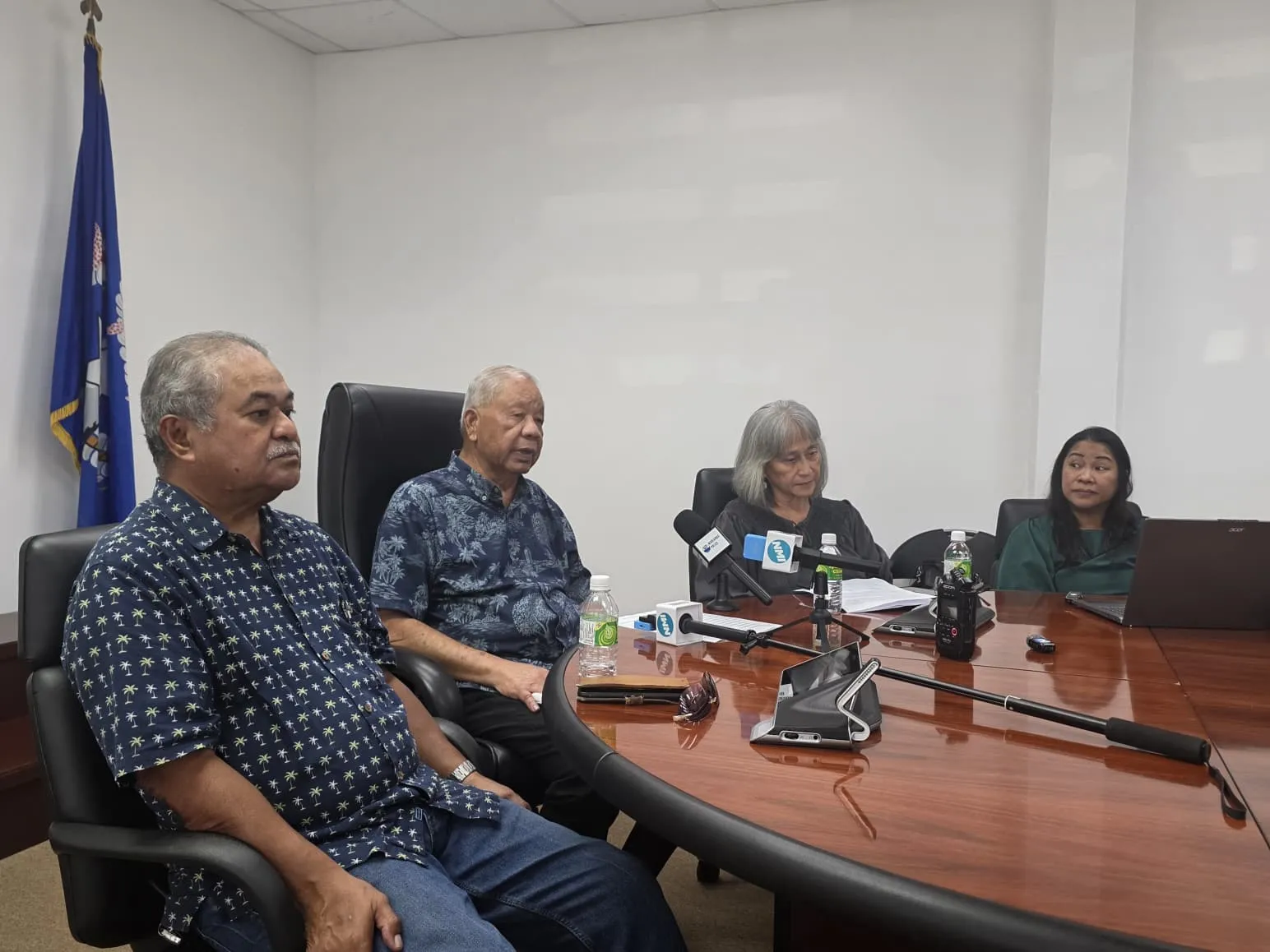


Divided into four groups, the pre-summit participants were given 15 minutes to come up recommendations on four target industries — call center, edu-tourism, agriculture and aquaculture.
Their goal was to find out what legislation is needed to help these industries thrive in the CNMI.
Commerce Secretary Michael Ada said the brainstorming session discussed the type of legislation needed to help develop new industries.
“Do we let the industry develop and then pass legislation to further develop it? Or do we set the tone first, through legislation, so that the industry can be developed?” Ada asked.
It is important that the administration, the Legislature and the private sector work together to answer these questions, he added.
In the case of edu-tourism, for example, Ada said the private school seeks stricter legislation against school that do not abide by the rules.
There is a significant number of students from Asia studying in the CNMI and many of them are sponsored by local residents.
“Do we allow the sponsorship scheme to go on? Or do we put regulations in place that prohibit them?” Ada asked.
There must be some boundaries to promote a healthy edu-tourism industry, he added.
Senate legal counsel Tony Cabrera cited the restrictions on foreign students that will soon be imposed by federal immigration law.
For agriculture, protecting local farmers by raising the excise tax on imported products is a key issue.
“If we prevent people from importing, are we able to produce these products ourselves?” Ada asked.
Rep. Joseph C. Reyes, R-Saipan and one of the pre-economic participants, said the CNMI should develop a call center industry.
It has minimum impact on the environment and does not have to go through land use rules, he added.
For his part, Sergio Loya, project manager for Management Analysis Inc., said the CNMI has taken a big leap in terms of aquaculture, production.
He cited a recent U.S. Department of Agriculture survey that indicates an increase in local aquaculture products from 6,600 pounds in 2002 to 66,150 in 2007.
He also cited the “strength” of Northern Marianas College’s Cooperative Research, Extension and Education Services in providing knowledge and skills to the public.
Acting Department of Lands and Natural Resources Secretary Richard Seman enumerated the challenges in developing local agriculture.
These include the size of land that can be reserved for farming and financial and logistical needs.
