





By Bryan Manabat
[email protected]
Variety News Staff
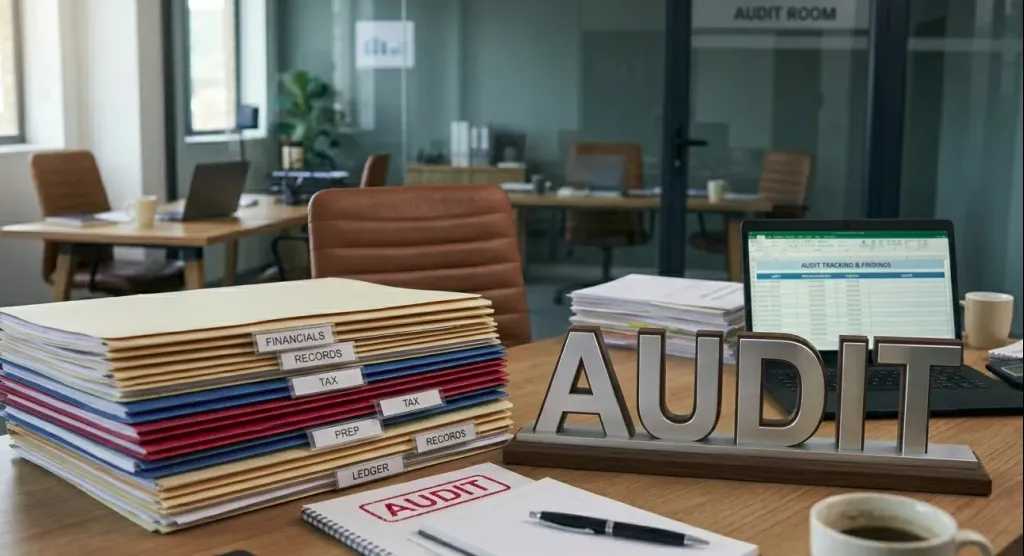
THE Commonwealth Utilities Corporation ended fiscal year 2024 with stronger overall finances, a growing net position and an unmodified, or “clean,” audit opinion. However, auditors again flagged weaknesses in procurement controls, marking the third consecutive year the utility failed to meet its own bidding requirements.
In its annual audit released on April 2, 2026, Burger Comer & Associates reported that CUC’s financial statements “present fairly, in all material respects,” the utility’s financial position for fiscal years 2024 and 2023. The auditors identified no material weaknesses but reported one significant deficiency related to procurement practices.
Operating loss narrows; net position improves
CUC posted a $13.6 million operating loss in FY 2024, an improvement from the $14.8 million loss recorded the previous year.
The loss was offset by $15.7 million in capital contributions and federal grants, resulting in a $7.65 million increase in net position and bringing the utility’s year-end total to $171.8 million, up from $164.2 million in FY 2023.
Key financial developments included:
• Net operating revenues increased to $103.4 million, up 2.1% from FY 2023.
• Operating expenses rose slightly to $117 million, driven by higher administrative and supply costs.
• Fuel costs, CUC’s largest expense, declined by $2.7 million as global fuel prices eased.
• Accounts receivable decreased significantly after CUC and the central government offset $10.9 million in unpaid utility bills against the government’s 1% Office of the Public Auditor fee obligation.
The audit also noted a significant one-time benefit: $10.3 million in recovered bad debts, which contributed to the increase in net position.
Capital assets grow; long-term debt declines
CUC increased its capital assets to $127.3 million, up from $124.6 million the previous year, reflecting continued investments in power, water and wastewater infrastructure.
Construction in progress totaled $28.7 million, with more than $25 million in active contracts.
Long-term debt fell to $312,500 from $687,500 as CUC continued making payments on environmental remediation settlements with the U.S. Environmental Protection Agency and the U.S. Coast Guard.
Procurement deficiencies continue
The audit’s sole finding, designated as Finding 2024-001, again centered on procurement practices.
Of the 32 transactions tested:
• Eight contracts failed to meet the required 30-day public notice period.
• Two contracts failed to meet the required 30-day bidding period.
In all cases, CUC lacked documentation showing that the executive director approved a shortened timeline, as required by regulation.
The same issue appeared in the FY 2023 and FY 2022 audits and remains unresolved.
Auditors warned that shortened or undocumented bidding periods “may have limited vendor awareness and participation and reduced competition,” increasing the risk of disputes and noncompliance.
CUC accepts finding, pledges corrective action
In its response, CUC management accepted the finding and said it implemented new controls beginning in FY 2025, including:
• Cross-checking procurement timelines between the Procurement and Accounting divisions.
• Ensuring all bid notices run for the full 30 days on CUC’s website and in print media.
• Documenting any exceptions approved by the executive director.
Comparison to previous audit
The FY 2023 audit also resulted in a clean opinion but identified two findings: procurement deficiencies and reporting issues related to the federal American Rescue Plan Act program.
The ARPA reporting issue was resolved in FY 2024, but procurement deficiencies were not.
Financially, CUC’s FY 2024 performance showed improvement across several key indicators:
• Operating loss decreased by $1.2 million.
• Net position increased, reversing the prior year’s $4 million decline.
• Accounts receivable improved due to government offsets and debt recovery efforts.
• Fuel costs declined, easing pressure on operating expenses.
Despite the improvement, the utility continues to rely heavily on federal grants and capital contributions to offset operating losses and fund infrastructure improvements.
Bryan Manabat was a liberal arts student of Northern Marianas College where he also studied criminal justice. He is the recipient of the NMI Humanities Award as an Outstanding Teacher (Non-Classroom) in 2013, and has worked for the CNMI Motheread/Fatheread Literacy Program as lead facilitator.
