





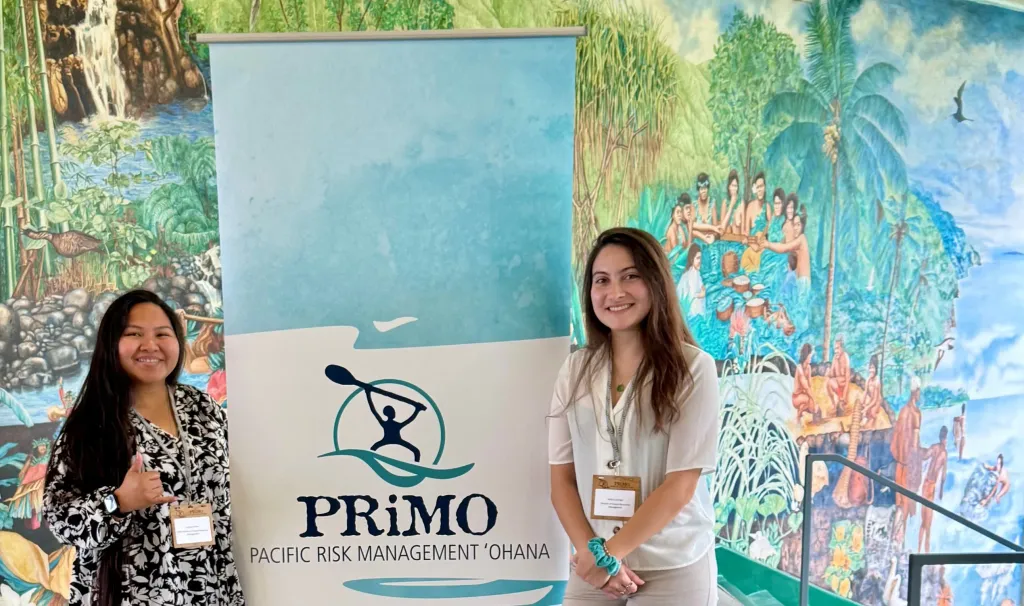
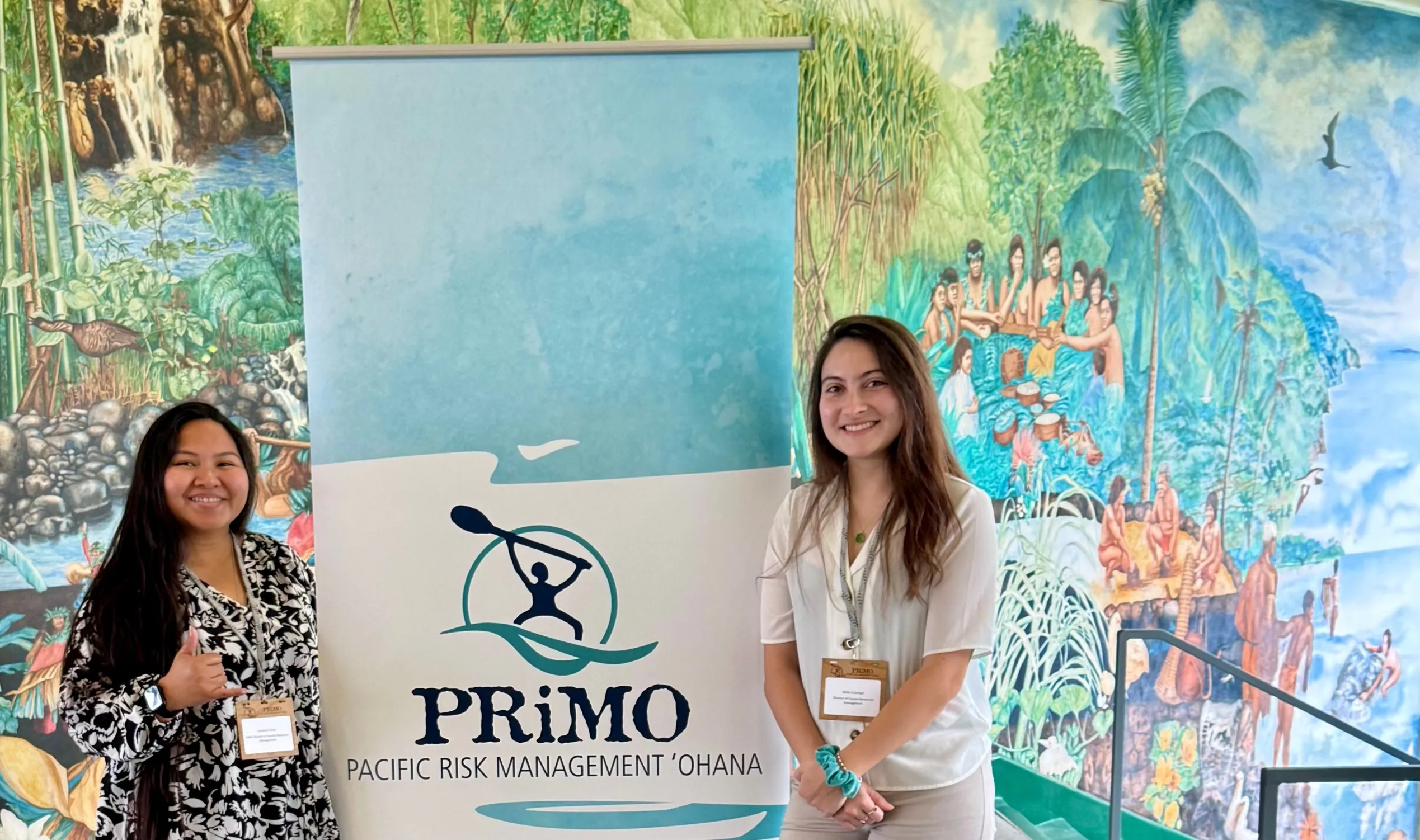
HONOLULU, Hawaiʻi (DCRM) — Jovahna Flores, coastal zone communications coordinator, and Kellie Cutsinger, NOAA coastal fellow, with the Division of Coastal Resources Management, attended the Pacific Risk Management ‘Ohana or PRiMO Conference from March 16–18, 2026, at the University of Hawaiʻi at Mānoa.
DCRM’s participation was federally funded.
The annual conference brought together professionals, practitioners, and community leaders from across the Pacific region to share knowledge, tools, and strategies focused on disaster preparedness, climate adaptation, and community resilience.
The conference began with a preconference training on “Building Risk Communication Skills,” led by the NOAA Office for Coastal Management, which focused on strengthening communication strategies to effectively engage communities and encourage action to reduce risk.
Throughout the three-day conference, Flores participated in sessions addressing a wide range of issues impacting island communities.
Key topics included climate adaptation initiatives in Alaska Native communities, shoreline rebuilding efforts in Lahaina following wildfire and coastal erosion impacts, sustainable wastewater solutions for island environments, and the use of drone technology and geospatial data to support resource management and disaster response.
Additional sessions emphasized regional collaboration, disaster preparedness for hazards such as landslides and flooding, and conservation strategies including land acquisition and community-based planning. Discussions also highlighted the importance of integrating traditional knowledge with modern science and fostering partnerships to strengthen resilience across Pacific Island communities.
Reflecting on the experience, Flores shared, “The work we do as environmental stewards is not just hard work — it is heart work. This conference reminded me why I chose this field and reinforced the importance of coming together as one Pacific to strengthen resilience in our island communities.”
The PRiMO Conference provided a valuable opportunity for DCRM to engage with regional partners, exchange best practices, and bring back knowledge that will support ongoing efforts in the Commonwealth. From addressing shoreline erosion and flooding to preparing for storms and environmental changes, the insights gained will help strengthen local strategies that protect natural resources and enhance community resilience.
DCRM remains committed to applying these lessons through its programs and outreach efforts to support a more resilient and sustainable CNMI.
