






By Bryan Manabat
[email protected]
Variety News Staff
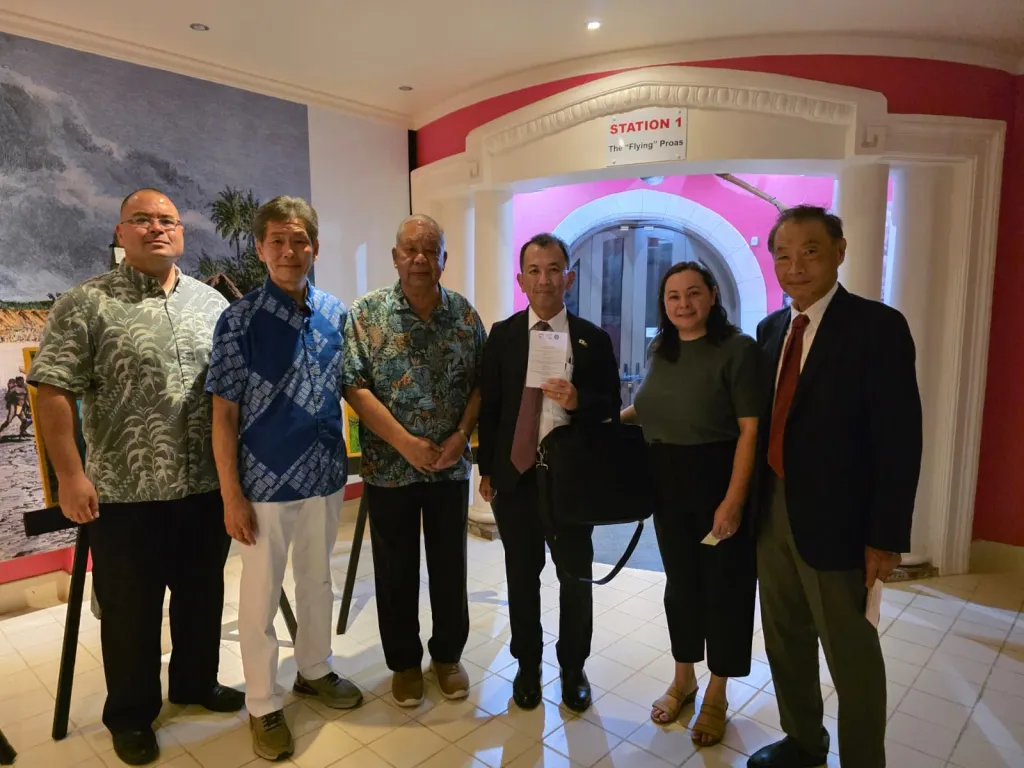
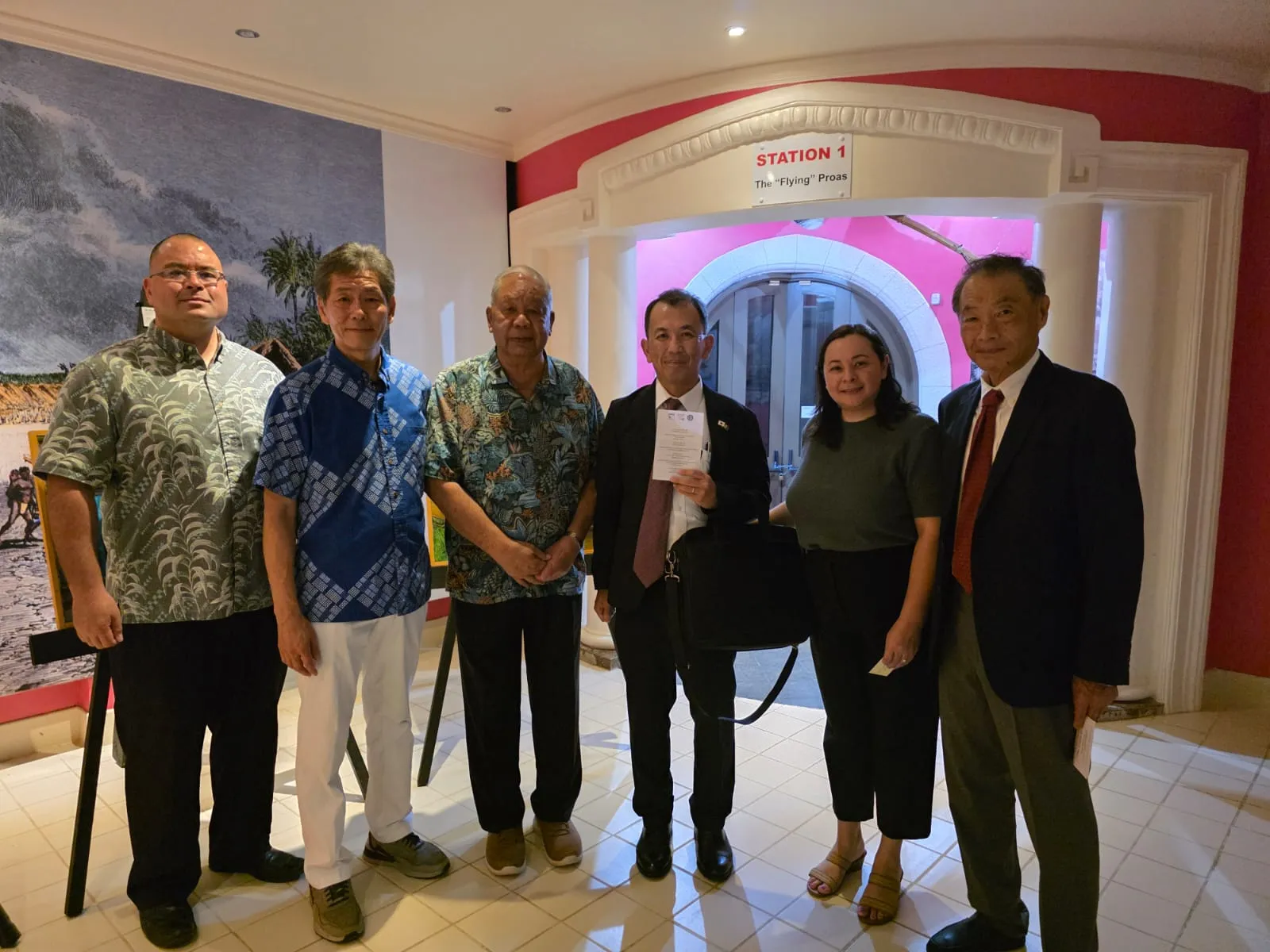
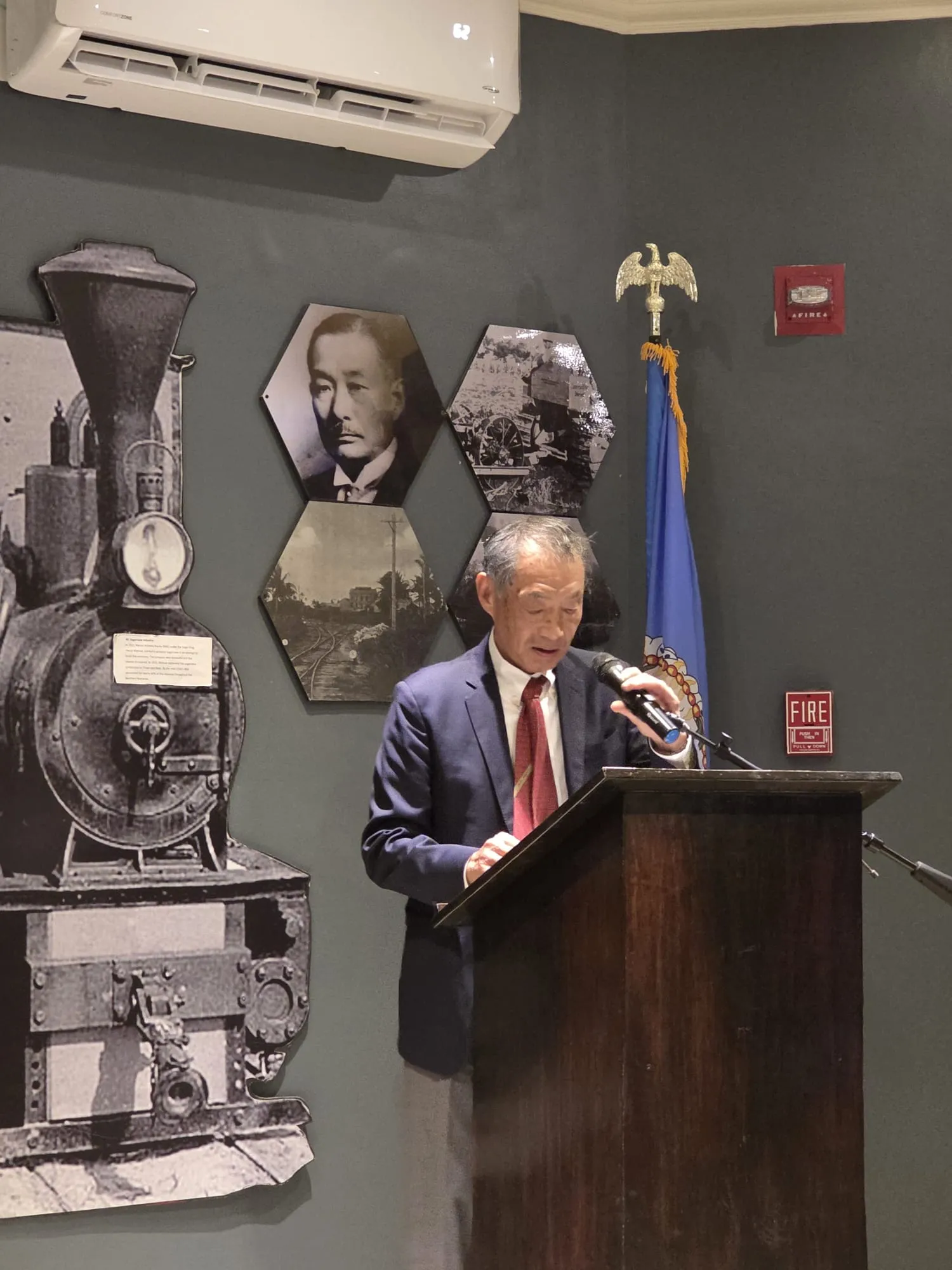
THE NMI Museum of History and Culture opened a special commemorative exhibit on Thursday, Jan. 15 to mark the 150th birthday of Haruji Matsue, the “Sugar King” whose early 20th-century sugar industry transformed Saipan’s economy and landscape.
The opening ceremony drew community members, government leaders and visiting dignitaries, including Matsue’s grandson and the event’s keynote speaker, Keiichiro Saeki, who traveled from Japan to honor his grandfather’s legacy.
The exhibit features rare photographs, documents and family artifacts tracing Matsue’s rise from a young entrepreneur who came to Saipan in 1921 to study the feasibility of sugar production, to the head of a vast agricultural enterprise that employed thousands and reshaped the island’s infrastructure.
In his remarks, Saeki reflected on his grandfather’s journey and the family’s enduring connection to the Marianas.
“In 1921, at the age of 45, my grandfather came here to explore the possibility of a sugar business,” Saeki said. “By 1922, he was managing operations with 3,000 Japanese workers. After failing twice, he succeeded in 1935. When he was 49, his business flourished along with other industries — until war destroyed everything.”
Saeki said the family learned in the 1960s, through a Japanese travel program, that Matsue’s bronze statue — erected in 1934 by Japanese and local residents — had survived World War II.
“Thanks to the people of the Northern Mariana Islands, the statue of my grandfather still stands,” he said. “I express my deepest gratitude to all of you, including your parents and grandparents. He would have wanted this historical structure to remain a symbol of mutual prosperity.”
Saeki also shared personal memories, including a final family dinner in Tokyo shortly before Matsue’s death on Nov. 29, 1954 — coincidentally the same date he founded his sugar company in 1921. He recalled his mother, Matsue’s second daughter, returning to Saipan in 1971 at age 47 to see the statue again, nearly 40 years after attending its unveiling as a child in 1932.
Looking ahead, Saeki expressed hope that historical ties between Saipan and Japan would continue to strengthen. He noted that Japanese tourist arrivals have declined to about 3,000 annually — “the same number of workers when the sugar business began,” he said — adding, “I sincerely hope arrivals will again exceed 40,000 a year.”
Sugar King’s legacy
Japan’s newly assigned consul to Saipan, Tomi Yoshiyuki, said Matsue’s achievements remain foundational to relations between Japan and the Commonwealth.
“While visiting historical sites related to Japan, I gained deep respect for the pioneers who contributed to the development of the Northern Marianas,” Yoshiyuki said. “Among them, the achievements of Haruji Matsue are especially significant. They continue to shape the friendship between Saipan and Japan, and I am committed to strengthening that relationship.”
House Speaker Edmund Villagomez said the event deepened his understanding of the scale of Matsue’s operations.
“To learn that Matsue started with 3,000 employees and eventually employed 40,000 — that’s nearly the population of the CNMI today,” Villagomez said. He recalled stories from his grandmother about sugarcane trains and the industry’s impact on island life. “This is a very significant part of our history.”
Marianas Visitors Authority Managing Director Jamika Taijeron said the exhibit offers a rare opportunity to revisit a defining era.
“The sugarcane industry shaped our islands and connected us to Japan in ways that still resonate today,” she said. The exhibit coincided with Saturday’s Saipan Sugar King Railroad Run, which followed the historic 81-kilometer route once used to transport cane. “Together, the exhibit and the run show how our ‘Far From Ordinary’ brand brings history, culture, adventure and environment together for meaningful visitor experiences,” she added.
‘Welcome home’
Gov. David M. Apatang welcomed Saeki back to Saipan, calling the island “also your home.”
“Your grandfather, the founder of the sugar industry on Saipan, called this island his home,” Apatang said. “The name Matsue was a household name. His legacy has survived all these years, and his greatness lives on.”
Saipan Mayor Ramon “RB” Camacho said Matsue’s vision reshaped the island’s economy and communities.
“Through the South Seas Development Company, he built plantations, mills and railways that connected people and created opportunity,” Camacho said. “His legacy endures in the resilience and innovation of our people. May his memory continue to inspire future generations.”
The exhibit will remain open at the NMI Museum of History and Culture from Jan. 16 to 23, offering residents and visitors a deeper look at one of the most influential figures in Saipan’s modern history.
Bryan Manabat was a liberal arts student of Northern Marianas College where he also studied criminal justice. He is the recipient of the NMI Humanities Award as an Outstanding Teacher (Non-Classroom) in 2013, and has worked for the CNMI Motheread/Fatheread Literacy Program as lead facilitator.
