





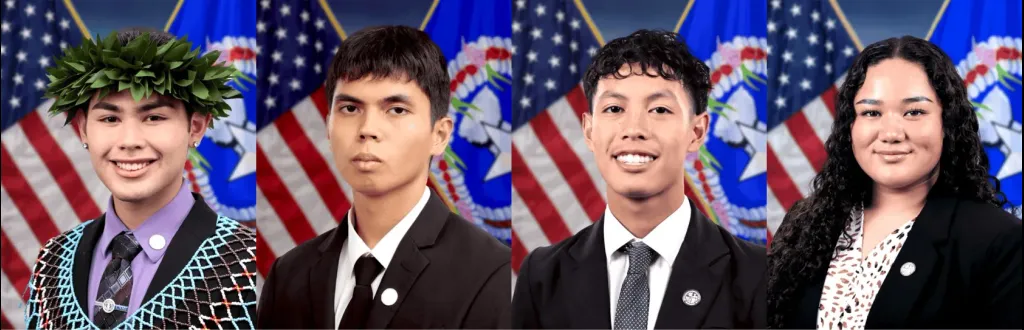
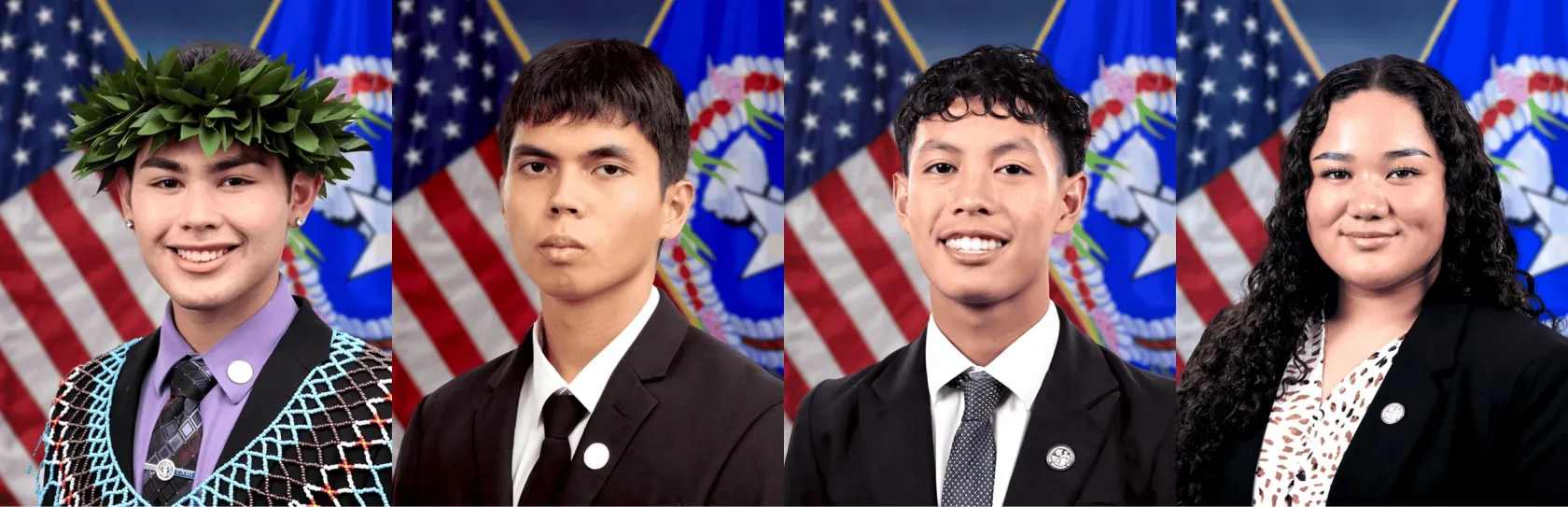
(Press Release) — The 20th CNMI Youth Congress held its 1st Day, 6th Regular Session in the House chamber on Capital Hill last month, introducing three bills and adopting one resolution.
Each measure proposes reforms that its authors hope will foster meaningful and positive change if enacted into law.
Youth Congress bills, when passed, are forwarded to the governor and the presiding officers of the Legislature “for disposition.”
Youth Congress Bill 20-02, introduced by Saipan Southern High School Youth Sen. Mathew J. Salas, aims to reduce access to and possession of vaporizers and vaporizable products among school-age children in the CNMI.
The proposed legislation responds to growing concerns about youth vaping, citing public health risks associated with nicotine addiction and lung injury. The measure would require retail establishments to keep vaporizers and related products in secured areas behind counters, preventing direct self-service access — particularly near checkout areas where youth-targeted impulse purchases often occur.
Additionally, Salas said the bill would authorize educational institutions to confiscate such products if found unlawfully possessed on school property and calls for policy development addressing student violations, including mandatory education on the hazards of tobacco use.
Youth Vice Speaker Monique Lou’isa P. Mendiola of Marianas High School, together with Youth Congress Speaker Vinnie Juan Q. Sablan of Kagman High School, introduced Youth Congress Bill 20-03, titled the Student Mental Health Resource Awareness Act of 2026, which aims to improve student awareness of available mental health and crisis support services.
The bill would require secondary schools in the CNMI to include contact information for locally available mental health and crisis support resources on student identification cards. Supporters note that students carry identification cards daily, making them an effective and discreet tool for communicating access to support services. The legislation does not mandate student participation in any program or require disclosure of personal information.
Implementation would rely on coordination between schools and the Commonwealth Healthcare Corporation to ensure accurate and up-to-date resource information.
The final bill introduced, Youth Congress Bill 20-04, was authored by Youth Sen. Victor Nash M. Santos of Saipan International School. Known as the CNMI Youth Sports Protection Act of 2026, the proposal would require background checks for youth-affiliated sports administrators, coaches, trainers, and instructors.
Originally introduced in the 19th Youth Congress and passed during its sine die session, the measure is designed to enhance safety in youth sports environments by mandating criminal background checks for individuals whose roles involve supervision of or interaction with minors. These checks would be required at the start of employment and renewed every two years.
Santos, an athlete himself, said the bill applies to organized youth sports activities across public and private schools in Saipan, Tinian, and Rota, including athletics, volleyball, canoe paddling (va’a), soccer, basketball, and softball. Proponents say the measure would help strengthen trust and ensure safer interactions within youth sports programs.
Youth Speaker Sablan referred each bill to the appropriate standing committees, where they will be considered before final voting by the full body at future sessions.
MHS-Seisa High School relationship recognized
Along with the three bills, the body adopted a resolution honoring one of the longest-running cultural exchange programs in the CNMI. Youth Congress Resolution 20-04, introduced by Mendiola, recognizes Marianas High School’s longstanding relationship with Seisa High School, dating back to the 1980s and spanning nearly four decades.
Mendiola, who also serves as MHS Student Council vice president, expressed appreciation in the resolution to the educators, administrators, students, alumni, host families, and community leaders who have helped sustain the sister-school relationship for more than two generations.
She also noted that the partnership has helped cultivate leadership, cultural awareness, academic enrichment, mutual respect, and global citizenship, while reinforcing shared values of friendship, cooperation, and peace among participating students.
