






(CHCC) — On March 24, 2024, the Commonwealth Healthcare Corporation along with the rest of the world recognizes World TB Day and the importance of global strategies to one day end tuberculosis or TB.
What is World TB Day?
March 24 commemorates the date in 1882 when the mycobacterium tuberculosis was first discovered, a bacterium that causes TB.
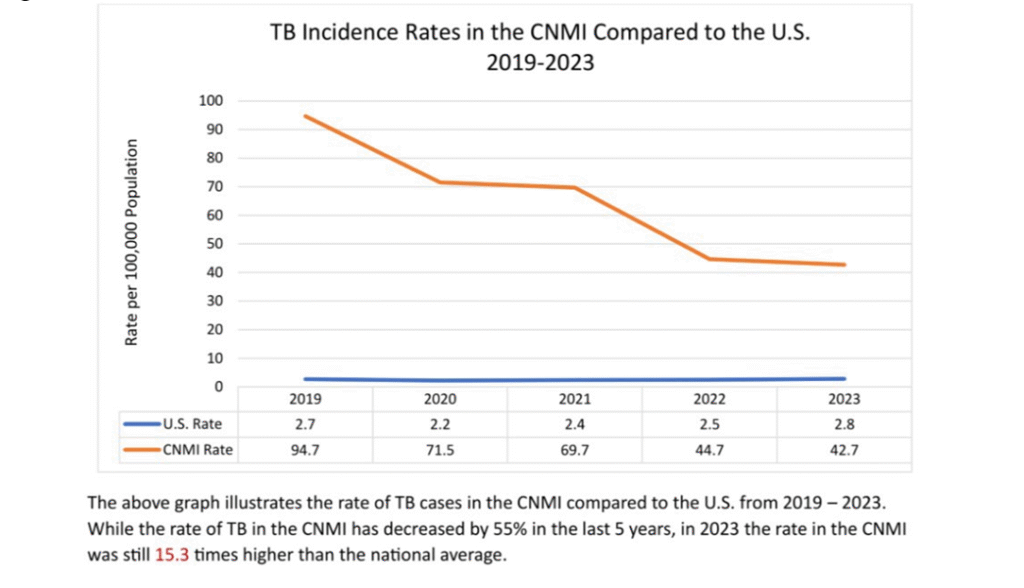
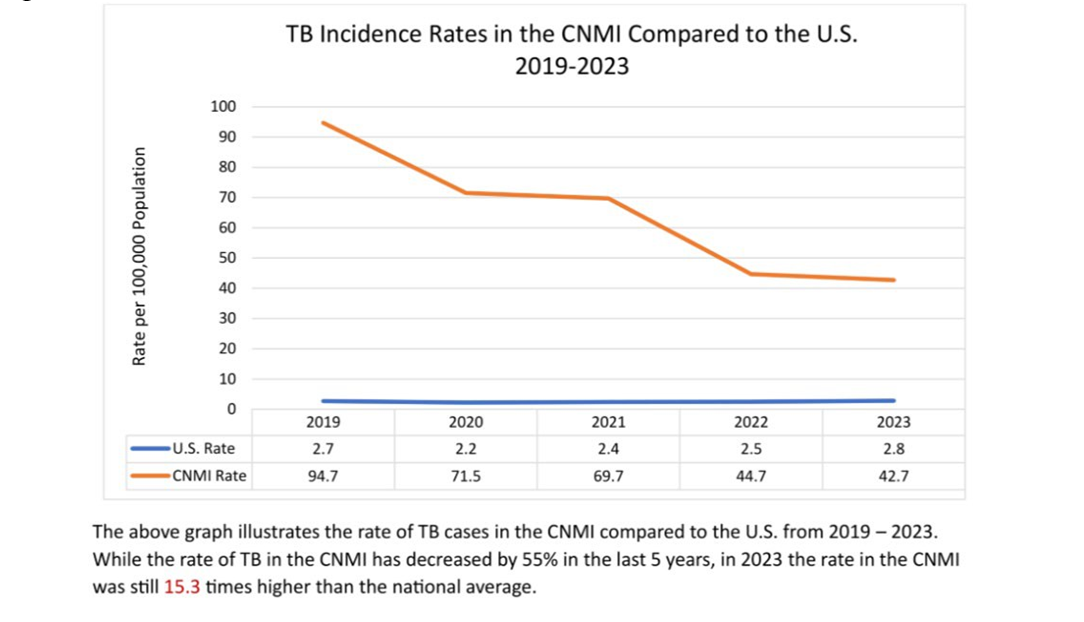
Today, 142 years later and after all the advancements made to find its cure, TB remains a burden and found at higher rates in places like the CNMI. In 2023, the CNMI had 42.7 cases per 100,000 people compared to 2.8 cases per 100,000 in the U.S. This means the rate of TB cases in the CNMI is 15.3 times higher than the U.S.
TB disease versus TB infection
Tuberculosis is a highly contagious but curable disease that is spread from person to person through the air. TB germs are put into the air when a person with TB disease of the lungs or throat coughs, sneezes, speaks, or sings. Persons who breathe in the air containing these TB germs can get either TB infection or disease.
People with latent TB infection or LTBI have TB germs in their bodies, but they are not sick because the germs are not active. These people do not have symptoms of TB disease and cannot spread the germs to others. However, they may develop TB disease in the future. They are often prescribed treatment to prevent them from developing TB disease.
People with TB are sick from TB germs that are active, meaning that they are multiplying and destroying tissue in their body. TB disease usually affects the lungs, but it can also affect other parts of the body such as the brain, kidneys, or spine. Symptoms may include:
• Bad cough that lasts 3 weeks or longer
• Chest pain
• Coughing up blood
• Feelings of weakness
• Weight loss
• Fever
• Night sweats
What should you do?
If you are feeling any of the TB symptoms, please contact your healthcare provider.
CHCC is committed to the CNMI public health and therefore the following services are available to the community for detecting, treating, and controlling the spread of TB:
• Medical evaluation
• Active TB disease and LTBI treatment
• Case management
• Contact tracing for persons who may have been exposed to a person with active TB disease
• Directly observed therapy
CHCC has an established reporting system in partnership with private clinic providers to help with diagnosis and treatment of TB.
For more information about tuberculosis prevention and treatment, call the CHCC Public Health Services TB/Hansen’s Disease Program at (670) 236-8718.
For more information about CHCC programs, follow @cnmichcc on Facebook, Instagram, and Twitter; visit https://www.chcc.health/; or call (670) 234-8950.
